Category: Ethics

  • Friday Fallacy: Equivocation

    In my post on Assessing Arguments I noted that a valid argument is one where it is impossible for the premises to be true and the conclusion false. I gave the following example:

    Premise: All men are under 10 feet tall;
    Premise: John is a man;
    Conclusion: John is under 10 feet tall.

    This argument is valid because it is impossible for both premises to be true and the conclusion false. If it is true that all men are under 10 feet tall and if it is true that John is a man then John cannot be over 10 feet tall. If it were possible for John to be over 10 feet tall then the first premise would mean he could not be a man, which, of course, would contradict the second premise.

    In this post I want to note an important feature of this type of argument. There is an obvious link between the first and the second premises. The first premise makes a claim about all men; it identifies a class of beings, those we call men, and it attributes a property to members of this class. The second premise identified John as a man – a member of the class mentioned in premise one. The fact that both premises refer to the same class of beings is important to the validity of the argument because John is a member of the same class that is stated to be under 10 feet tall; the conclusion, that John is under 10 feet tall, cannot be logically avoided. This argument is valid because the word ‘man’ refers to the same thing in both premises. If the word ‘men’ in the first premise did not refer to the same class John is said to be a member of in the second premise then the argument would not follow.

    This brings me to this weeks fallacy: the fallacy of equivocation. Sometimes the same word has more than one meaning. The fallacy of equivocation occurs when a person uses the same word in different premises but not the same meaning. Because the same word is used the argument appears valid but when one looks at what the word actually refers to in each premise, the argument is not valid.  A obvious example is as follows:

    1. Money put in a bank will earn interest;
    2. A bank is the body of land at the side of a river;

    Therefore:

    3. If you want to earn interest on your money you should put it in the body of land at the side of a river.

    This silly example shows quite nicely how the fallacy works. Both premise 1. and premise 2. make reference to a bank; at a superficial glance the argument might appear valid if what the first premise says of a bank is true and if what the second premise says of a bank is true. The problem is (and in this example it is fairly obvious) the word ‘bank’ in each premise has a different meaning. In the first premise it refers to a financial institution, in the second it refers to a body of land at the side of a river. When one looks at what the terms actually refer to, as opposed to their verbal form, the argument is invalid.

    In this example the fallacy is obvious; the conclusion is so outrageously silly and the premises so uncontroversial that the mistake is obvious. However, in other cases the fallacy can be more subtle.

    The Fallacy of Equivocation

    Here is an example I recently spotted on Common Sense Atheism’s (more…)

  • Debate Review: Sam Harris and William Lane Craig on Divine Command Theory Part I

    William Lane Craig v Sam HarrisLast week Sam Harris and William Lane Craig debated the question: “Is the Foundation of Morality Natural or Supernatural?” at the University of Notre Dame. Given my interest in divine command meta-ethics I found the debate and the subsequent online discussion concerning it extremely interesting. I was particularly interested in how the ‘new atheist’ movement would address this issue given Dawkins’ neglect of moral arguments in The God Delusion. Unfortunately, the debate turned out to be very one-sided. [Both the debate video and the debate MP3 are now online.]

    In this review I will analyse the debate in two parts. In Part I, I will look at the discussion of Craig’s contention that,

    1. If God exists then we have a plausible account of (a) the nature of moral goodness and (b) the nature of moral obligation.

    In Part II, I will examine Harris’s contention that,

    2. If atheism is true then we have a plausible account of (a) the nature of moral goodness and (b) the nature of moral obligation.

    A couple of definitions are necessary here; what both Craig and Harris are defending are rival accounts of what both goodness and moral obligation are. When Craig or Harris offers an account of the nature of goodness, each is offering an account of what moral values and obligation are, that is, their ontological or metaphysical nature. Similarly, when Craig refers to God, he is referring to a personal immaterial being who is necessarily existent, omniscient, omnipotent and morally perfect.

    Craig’s Argument for a Divine Command Theory
    In support of 1(a) Craig argued that if theism is true, goodness could be identified with God himself. His view is that goodness is best understood in terms of an exemplar, that good is identified with the perfect paradigm of a good person and that the goodness of everything else is measured by its resemblance to this paradigm. An analogy to this idea is the official “metre stick” that exists in France today. The metre stick is exactly one metre long, and the length in metres of every other length is determined by comparison with it. In the same way, God is both perfectly good and is the standard of goodness for everything else. God’s goodness, for Craig, is cashed out in terms of certain character traits. To claim God is good is to claim that he is truthful, benevolent, loving, gracious, merciful and just, and that he is opposed to certain actions such as murder, rape, torturing people for fun and so on.

    In support of 1(b) Craig argued that if God exists, moral obligations can be identified with Gods commands. He therefore advocated the version of a divine command theory of obligation proposed by Robert Adams in Finite and Infinite Goods.

    While Craig sketched his account of goodness and obligation in his opening statement, he never offered any actual argument for why he thinks that if theism is true, this account is correct; yet later in the debate he said it was obvious. While I myself agree with a certain version of divine command theory, I think this suggestion is inadequate. There have been many objections raised against such theories in the literature, and hardly any of them presuppose the non-existence of God. I think these objections fail, and most of them fail miserably. But it would be a gross overstatement to claim that, given the truth of theism, a divine command theory is obvious.

    Later in the debate, (more…)

  • Ethical Naturalism and the Euthyphro Dilemma

    Some people argue that moral obligations can be grounded in scientifically verifiable facts about human wellbeing and flourishing. This view is a form of ethical naturalism.  For these people moral rightness is just the property of promoting or enhancing human flourishing.

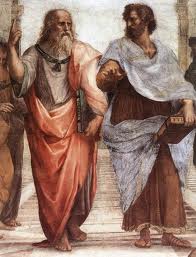
    Plato and Aristotle arguing in the School of Athens

    Plato refuted this argument over 2,000 years ago in his famous dialogue The Euthyphro. The Euthyphro argument is commonly appropriated in the form of a dilemma: “is an action right because it promotes human flourishing or does it promote human flourishing because it is right?

    If ethical naturalists take the second horn of this dilemma and claim that something promotes human flourishing because it is right then things are right prior to, and hence independently of, whether they promote human welfare; so the ethical naturalists’ position here is false.

    If the ethical naturalists take the former horn then morality is arbitrary. If rape or murder or cruelty for fun had the natural property of promoting happiness then rape and murder and cruelty for fun would be morally required but it is impossible for these things to be morally required; so ethical naturalism is clearly absurd.

    Moreover, if things are right because they have natural properties, like promoting human flourishing, then one cannot meaningfully say that human flourishing is good. To say “human flourishing”  is good is just to say that  “human flourishing is human flourishing,” which is just an empty tautology.

    So in short, Plato’s Euthyphro dilemma refuted ethical naturalism 2,000 years ago. Contemporary ethical naturalists who say otherwise just have not read Plato and have never come across this argument before.

    In any event, ethical naturalism is deeply problematic. Throughout history people have appealed to human flourishing and forms of ethical naturalism to justify atrocities. The Inquisition, for example, was often justified by Dominican Theologians on the basis that it was in accord with natural law, and natural law was understood to be grounded in human flourishing. Similarly, wars have been justified on the basis of moral theories based on human flourishing. Stalin and Lenin wanted to bring about human flourishing through a communist utopia and murdered millions in their pursuit of that. And the Americans dropped an atomic bomb on Japan because they wanted to promote the flourishing of American soldiers that were going to invade.

    Finally, it is obviously insulting to suggest that right and wrong are grounded in scientifically verifiable properties like this. There are a large number of people who live morally upright lives who do not believe in ethical naturalism. The suggestion that these people are all immoral is obviously false. Name me one moral action a person who is not an ethical naturalist cannot do? This unanswerable question shows that ethical naturalism is clearly false.

    RELATED POSTS: (more…)

  • Video: Sam Harris v William Lane Craig Debate “Is the Foundation of Morality Natural or Supernatural?”

    Sam Harris and William Lane Craig debated the moot “Is the Foundation of Morality Natural or Supernatural?” at the University of Notre Dame on 7 April 2011. We’ve already linked to the debate  MP3 but here is the video of the whole debate.

    Hat tip: Pondering the Preponderance

    See Matthew Flannagan’s:
    Debate Review: Sam Harris and William Lane Craig on Divine Command Theory Part I


  • World Health Day: Abortion is Not a Health Issue

    Fetus7 April is “World Health Day” and some are using this fact to argue that “abortion is a health issue, not a crime” by way of a “blogswarm”. I find this contention a little curious; claiming that abortion is simply a health issue is an assertion which is supposed to mean that abortion is not a moral issue in any way. However, an assertion is not an argument and proves nothing.

    If a fetus is a human being then feticide is homicide and this obviously makes abortion more than a health issue. But suppose (contrary to what I think is the case) a fetus is not a human being. How does it follow that abortion is a health issue?

    Cutting tissue out of a person’s body does not make something into a health issue. Suppose, for example, that a woman has a boob job. Is this a health issue? No, this  is cosmetic surgery. It might be done in a hospital and by a surgeon but this does not make it into a health issue any more than the fact that a chef might kiss his wife in a resurant makes his romance of her a question of diet. Contrary to what some juvenile males may think, having small breasts is not a disease.

    Of course, one can imagine situations where a boob job might be a health issue. Suppose a woman has breast cancer and the surgeon surgically removes her breast tissue to prevent the cancer spreading. This would be a health issue because cancer is a disease; it is something that threatens life, limb or bodily function and the surgery is necessary to prevent the body succumbing to the disease.

    Pregnancy, however, is not a disease and I find it quite odd that people who claim to be pro-women would suggest that it was.

    Of course, there might be some types of abortion which are a health issue; cases where the pregnancy threatens the life of the mother or threatens to cause her serious injury, for example. But these are not the normal cases or reasons women have abortions.

    I suppose an obvious rejoinder will be raised here; any time a woman does not want to be pregnant carrying the pregnancy to term will be a source of anguish. Similarly, as the World Health Organisation (“WHO”) likes to tell us, health is broader than simply physical integrity like the absence of disease, loss of limb or death. Health is more holistic – it includes economic and emotional well-being, it is the absence of stress and so forth. Hence, abortion is a health issue because women use abortions to gain health in this broader sense.

    We can define health the way WHO does if we like; and if we do, abortion is a health issue. But the problem is that on this definition almost anything one does is a “health issue”. My choice to take a particular career path, marry a particular woman, live in a certain house all can adversely effect my economic well-being, cause me emotional stress and so on.  We can call abortion a health issue only by calling everything a health issue and once we do this the fact that abortion is a health issue becomes of little significance – there would be little point in observing World Health Day.

    So abortion is not a health issue. Moreover, even if it was, it is hard to know what saying it is a health issue is supposed to prove. The whole reason there is a field called medical ethics is because even “health issues” can be subject to moral and ethical critique.  Perhaps instead of chanting slogans about abortion, people should actually examine the moral and ethical issues the abortion procedure raises and engage in some moral reasoning and analysis. Hiding behind “it is a health issue, not a crime” is simply avoidance.

    Check out the counter-blogswarm.

  • Internationalism is Dead: Boneparte’s Descendants

    OK, so we thought that you would want to hear it here first. Internationalism–the idea that nation states are subject to a higher “sovereignty”– is dead. The corpse is rotting. The Libyan “adventure”, called for by the UN, is growing madder than a March Hare. All the problems and faults of internationalism are now clearly displayed. We hear Joan Baez in the background, intoning “when will they ever learn?” Not in a hurry would be our bet.

    Muammar Muhammad al-Gaddafi

    Though internationalism may be dead, the foolishness that is bound up in the heart of unconverted man is likely to keep flogging that particular equine corpse for decades to come.

    Consider the mess that the internationalists are now in. The UN has passed a resolution directing that a no-fly zone be established in Libya. The internationalist community has spoken. Man, the universal overlord of the globe, has determined that what was happening in Libya ought not to be; some kind of nebulous higher ethic was appealed to which mean that “humanity” or “the international community” had to step up and into Libya to sort things out.

    The echoes in the UN Security Council chamber had not died away before they were drowned by arguments between those who voted over what the meaning and application of the resolution. This from Al Jazeera:

    International criticism of the coalition enforcing the no-fly zone has continued to grow, with India joining China in publicly calling for an end to the airstrikes. Jiang Yu, a spokeswoman for China’s foreign ministry, said on Tuesday that the government opposed “the wanton use of armed force leading to more civilian casualties and more humanitarian disasters”. China had already called for a ceasefire.

    S M Krishna, the Indian foreign minister, called for a “cessation of armed conflict”. His office had previously issued a statement on Monday expressing “regret” for the military intervention. Pranab Mukherjee, the country’s foreign minister, said in a speech to parliament that “no external powers” should interfere in Libya. “Nobody, not a couple of countries, can take that decision to change a particular regime,” he said

    The Sydney Morning Herald reports that the Brits cannot even agree amongst themselves as to what the resolution means: can they take Gaddafi out or not? Some say yes; others nay-say. Neither can the French agree amongst themselves. Does the resolution mean that Gaddafi can legitimately stay in power. Yes. No. Maybe. All of the above. Meanwhile, Turkey a member of NATO has announced that it will not allow its airspace to be used in enforcing the no-fly zone, if it goes beyond the UN resolution–whatever it might mean, and no-one knows.

    The announcement came after Turkey, a member of the NATO, warned on Tuesday that it could not agree to the military alliance taking over the enforcement of the no-fly zone if their mission went “outside the framework” of the UN decision.

    Meanwhile in the US, President Obama, a committed internationalist, appeared deeply reluctant to (more…)

  • Contra Mundum: “Till Death do us Part” Christ’s Teachings on Abuse, Divorce and Remarriage

    Anne was clearly angry. She relayed how her former husband had been abusive, had beaten her and sexually violated her. Despite this, however, he had never – as far as she knew – had an affair. Did this mean she had sinned before God for leaving her marriage? Was she now required to remain celibate for the rest of her life? Anne recited Jesus’ words with palpable sarcasm, “whoever divorces his wife, except for adultery, and marries another woman commits adultery.”

    Christian MarriageAnne’s story was the real life face of an intellectual journey and struggle I had faced some years earlier during my theology studies. How should I understand the bibles teaching on divorce? When I was at Bible College I remember two approaches vividly.

    The first was from a marriage counsellor who, when I asked him if we should counsel battered spouses to leave their marriages, responded “no, until death do we part”. He refused to take with any seriousness my suggestion that in some cases the death of one spouse might be a realistic outcome if the battered spouse does not leave.

    The second was a lecturer who argued that the New Testament did not speak unequivocally on this topic. While Matthew’s gospel allowed an exception for adultery, Mark’s gospel seemed to condemn divorce outright with no exceptions. On the other hand Paul, in his epistle to the Corinthians, contended that a person abandoned by their spouse “is not bound”. The Greek in this epistle alluded to the wording of a Jewish divorce certificate, which stated that the person in question had a right to remarry. The lecturer, quite correctly, concluded that Paul allowed divorce and remarriage for abandonment. The lecturer then suggested that because Paul added to Jesus’ teaching so could we.

    Both approaches seemed to me to be evidently problematic. My questions remained equally unsolved by the Pastor who told me that he accepted Jesus’ teaching as correct but did not follow it because it was “impractical” in the real world and in his experience. I was underwhelmed by the author who suggested that because Mark, Paul and Matthew disagreed, we should just choose the one we find the most congenial.

    Then I discovered a study, which to my mind answered my questions and addressed Anne’s concerns. The book was Divorce and Re-Marriage in the Bible: The Social and Literary Context by David Instone-Brewer. Brewer is a scholar of first century rabbinical writings. In his book he places Christ’s teaching within the cultural context of first century Judaism; the results are interesting and enlightening.

    The passage Anne cited comes from Matthew 19. This passage begins with a question from the Pharisees – the Jewish religious scholars at that time – which asked, “Is it lawful for a man to divorce his wife for any reason?” In the dialogue the (more…)