Category: Ethics

  • Pacifism and The Golden Rule

    The Golden RuleLast night I was part of a discussion panel looking at the Ethics of War; I defended classical just war theory. Speaking in defence of pacifism was one of the Waihope three who offered the argument that you cannot use force against an oppressor because of the Golden Rule, typically stated as: ‘do to others as you would have them do to you.’ His idea seemed to be that if you were an oppressor you would not want force used against you so therefore no one should use force against oppressors – this is what the Golden Rule teaches.

    This struck me as odd. One problem with this line of argument is that it interprets the Golden Rule as stating we should do to others what we want them to do to us. This interpretation is obviously problematic. I want a million dollars, does it follow that therefore I should give a million dollars to everyone? I want a nice car does it follow that I should give nice cars to everyone? What the Golden Rule says is that there should be consistency between what we think that people are morally required to do for us and to us and what we are morally required to do for and to others; if I object to someone stealing from me in certain circumstances and condemn that person’s action in doing so as wrong then I am committed to not stealing from that person.

    Once this is understood, I do not think my fellow panellist’s argument works. I am quite happy to accept that if I was trying to kill or seriously maim another human being that others (including the state) would be morally permitted to use force to stop me; I may not want them to but that is not the issue. The issue is whether I think they are are required not to and the answer I think is obviously no.

    In fact, anyone who recognises the government as legitimate must accept that the state can use force against them if they violate certain rules. I would have thought that the laws against assault and homicide would be paradigm examples of this.

  • Just Think – Matthew Flannagan Speaking for ProLife NZ @ Waikato University

    Fetus

    Student group ProLife NZ have launched a campaign entitled JustThink (you can read more about it at the link). To kick things off the Waikato branch has invited Matt to speak on their key messages:

    1. Is an unborn child a human being?
    2. Should it have a right to life?
    3. Should our views on abortion affect others?

    This is an open lecture so anyone interested can come. There will be an opportunity for Questions and Answers so bring your questions!

    The talk will be held in Lecture Theatre S.G.03 at the campus of the University of Waikato, Hamilton, New Zealand from 1-2pm on Wednesday 25 May 2011.

    Dr Matthew Flannagan is an Analytic Theologian and Ethicist. His PhD thesis “Is Historical Opposition to Feticide Defensible in the 21st Century?” was just one of many pieces Dr Flannagan has written on the ethics of feticide (abortion).

    Dr Flannagan is no stranger to the Waikato campus. He completed his undergraduate and first post-graduate degrees majoring in Philosophy at the University of Waikato where he and his wife Madeleine met, founded and led the Waikato campus branch of Students Organised to Uphold Life (SOUL). He was later elected and served as President of the Waikato Students Union.

    Click the link to access all posts on this blog pertaining to the ethics of feticide.

  • No Special Rights, So . . . One Law for All

    Tama ItiWe remain militantly critical of contemporary Maori ideology. We believe it excuses personal and family accountability by resorting to the fallacy of historical determinism: Maori, their leadership tells them, are victims of predatory exploitation by European or imperial powers; the significant cause of social and cultural and spiritual degradation amongst Maori stems from the unjust extortions of the Pakeha. We believe this ideology enslaves Maori and subjugates them more subtly and more potently than any European migration.

    We believe this ideology is a neo-Marxist variant. Maori represent the exploited poor, the weak, from which the hegemonic Pakeha have extracted their pound of flesh. It makes many within Maoridom sunburnt strawberries: brown on the outside, red on the inside. We have smiled at Hone Harawira’s call to arms: he wants to stand up now for poor and disadvantaged Maori, the working stiffs. He opposes exploitative Pakeha, but also (now) monied tribal interests. Maori neo-Marxism is undressing and exposing itself. This is a false Gospel and will betray those seduced by it to their destruction.

    But, at the same time, we believe there are historical injustices wrought by our government which should be addressed. They should be addressed because it is just to do so. At a personal or communal level, our lives should not be made to depend upon the redress of past wrongs and grievances, whether real or imagined. Evil happens in our sinful world. The Christian call is to accept such without bitterness, seek to begin again under the wonderful aegis of Christ Himself, and arise to serve Him where we are, with what we have.

    But there is an obligation to restitute, where possible, those who have suffered injustices at the hands of the state. (Restitution is not always possible, but if it can be done, it ought to be. The state must at all times be under law, and held to account by the law; if not, then we are governed not by law, but despots.)

    In this regard, we were pleased (whilst saddened, and provoked) by historian Paul Moon’s piece in the NZ Herald on the injustice being perpetuated against the Tuhoe people. (For the benefit of our overseas readers, the Tuhoe is a Maori tribe located on the South Eastern part of the North Island of New Zealand.) Here is a synopsis of Moon’s account:

    At the start of May last year, all the indications were that the Crown and Tuhoe were putting the finishing touches on a deal that would see Te Urewera National Park returned to Tuhoe, with enough caveats to ensure that access and other rights for the public would remain practically unchanged.

    Tuhoe would have what all the evidence shows (more…)

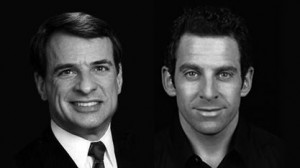
  • Transcript: Sam Harris v William Lane Craig Debate “Is the Foundation of Morality Natural or Supernatural?” UPDATED

    William Lane Craig v Sam HarrisSam Harris and William Lane Craig debated the moot “Is the Foundation of Morality Natural or Supernatural?” at the University of Notre Dame on 7 April 2011. We’ve already linked to the debate MP3 and a playlist of the video and we have published a two part review but now, as an MandM exclusive, we bring you the transcript.

    This transcript is the result of some 32 playbacks of the debate and is accurate down to the “uhs” and “oks”.

    UPDATE:
    Since publishing this transcript, William Lane Craig has emailed us and asked us to adjust the paragraph breaks and punctuation in his sections of the transcript in accord with where he placed them — something he conceded was very hard to get right when one is transcribing from audio. He also provided us with the footnotes for his sources which we have also included below.

    If Sam Harris wishes us to adjust his sections of this transcript in the same manner we are very happy to do so.

    – Madeleine

    Transcript of the Harris v Craig debate

    MODERATOR:

    Welcome to the second installment of “The God Debate”. My name is Michael Rea. I’m a professor of philosophy here at the University of Notre Dame, and the director of the Center for Philosophy of Religion, one of the sponsors of tonight’s event. The Center for Philosophy of Religion was founded in the late 1970s with the aim of promoting cutting-edge research on topics in the philosophy of religion, and in distinctively Christian philosophy. One of our goals in sponsoring the “God Debate” series is to try to bring some of the very issues discussed among our research fellows to a wider, non-academic audience, and in a format that will hopefully be fun and engaging.

    Our show tonight, as you already know, is a debate between William Lane Craig and Sam Harris, coming together for the very first time to discuss the question, “Are the foundations of moral values natural or supernatural?”

    William Lane Craig is Research Professor of Philosophy at Talbot School of Theology in La Mirada, California. He is best-known among philosophers for his extensive and influential work in the philosophy of time and the philosophy of religion. He is known to the wider public as someone who is able to articulate and defend the doctrines of the Christian faith in a way that is highly accessible but also philosophically and theologically rigorous. He became a Christian at the age of 16, pursued undergraduate studies at Wheaton College, and holds two earned doctorates: one in philosophy from the University of Birmingham, and one in theology from the University of Munich. He has authored or edited over 30 books, as well as over a hundred articles in professional journals of philosophy and theology.

    Known as one of the “Four Horsemen” of the New Atheist movement, Sam Harris is the author of the New York Times best sellers: The Moral Landscape, The End of Faith, and Letter to a Christian Nation. The End of Faith won the 2005 Pen Award for non-fiction. Mr. Harris’s writing has been published in over 15 languages. He and his work have been discussed in Newsweek, Time, The New York Times, Scientific American, Nature, Rolling Stone, and many other journals. His writing has appeared in Newsweek, The New York Times, The Los Angeles Times, The Economist, The Times London, The Boston Globe, The Atlantic, the Annals of Neurology, and elsewhere. Mr. Harris is a co-founder and CEO of Project Reason, a non-profit foundation devoted to spreading scientific knowledge and secular values in society. He received a degree in philosophy from Stanford University, and a PhD in neuroscience from UCLA.

    The structure of tonight’s debate will be as follows: Each debater will take 20 minutes for his opening speech, followed by rebuttals of 12 minutes and 8 minutes respectively, and then closing speeches of 5 minutes each. At the conclusion of the debate, we will have about 30 minutes for questions from the audience. If you would like to ask a question, line up behind one of the two microphones in front, or in the balcony. We’re letting Notre Dame students ask the first four questions tonight, so if you are not a Notre Dame student, and somehow find yourself at the front of the Q&A line, please allow a student to go ahead of you.

    Time will be kept strictly. There is a timekeeper in the front who can be seen by both speakers, and once each speaker’s time has elapsed, he will be given at most 15 seconds to finish his final sentence before being rudely interrupted by me, the time enforcer. Because we are keeping the time strict, we ask you to hold all applause and other indications of agreement or disagreement, cheering, crowd-surfing, and the like, until the very end of the debate. Please remember that flash photography, video taping, and active cell phones are all prohibited.

    Finally, remember that Notre Dame is the world’s number one institution in the philosophy of religion, and also has one of the world’s best theology departments. Any questions you don’t get to ask during the 25 or 30 minute Q&A, you can ask of your local faculty in the days and weeks to come. And now, on with the show.

    CRAIG:

    Well, good evening. It’s wonderful to be here at the University of Notre Dame, and I want to begin by

    MODERATOR:

    Bill

    CRAIG:

    thank—

    MODERATOR:

    Sorry.

    CRAIG:

    Sorry.

    MODERATOR:

    I need to—We’re gonna begin each speech with me checking with the timekeeper to make sure that he’s ready, and then the timekeeper is gonna hit “Go”, and then you get to go—

    CRAIG:

    Alright.

    MODERATOR:

    So, so you go—

    CRAIG:

    Sorry—

    MODERATOR:

    —when I say “Begin”.

    CRAIG:

    Sorry for jumping the gun.

    MODERATOR:

    Professor Craig gets, uh, gets the first word in the debate, uh, Dr. Harris gets the last word. Timekeeper, are you ready? This is 20 minutes. Begin.

    CRAIG:

    I want to begin by (more…)

  • Contra Mundum: Stoning Adulterers

    Back in 2005 there was a minor furore when Labour MP Ashraf Choudhary stated he agreed with the Koran’s teaching that people who engaged in homosexual conduct or who committed adultery should be stoned to death. In the media spiral that followed, some commentators pointed out that it was not just Islam that held this view; Christians are committed to the same conclusion. Consider Deuteronomy 22:22 “If a man is found sleeping with another man’s wife, both the man who slept with her and the woman must die. You must purge the evil from Israel” or Leviticus 20:10 “If a man commits adultery with another man’s wife—with the wife of his neighbour—both the adulterer and the adulteress are to be put to death. Often passages like this motivate a rhetorical question “why don’t Christians today stone to death women who commit adultery? After all, this is what the Bible commands isn’t it?”

    Ten Commandments

    I’ll make two points in response to this. First, those who press this line of argument assume that these commands are addressed to contemporary Christians. This is a dubious assumption; the laws occur as part of a covenant or vassal treaty between the tribes of Israel and God. While some of the laws expounded in this treaty reflect rules of justice and equity applicable to all people, Gentiles were not parties to this treaty nor were gentile Christians required to be – something the New Testament spends a lot of time elaborating on.

    Second, and this will be my main focus, this line of argument assumes that these apparent laws function like modern statute law; the assumption is that they are literal and binding commands to kill people who had committed certain crimes. It is also assumed that the author of these laws expected them to be carried out. Interestingly, it is precisely this assumption which many scholars of these laws have questioned. Here I will spell out some reasons why they do so.

    Comparisons between Leviticus and Deuteronomy and other ancient Near Eastern (“ANE”) law codes suggest they are the same genre. One feature of such codes is seemingly harsh penalties. In old Babylonian law, the hand that assaults was severed; a man who kissed another’s wife was to have his lips cut off; a person who stole bees was to be stung by bees; a man who raped another’s wife would be sentenced to having his own wife or daughter raped; a negligent builder whose house collapsed and killed another’s son would be sentenced to having his own son killed, and so on.

    ANE expert Raymond Westbrook notes that these prescribed punishments are both inconsistent with the actual legal practice known to have occurred in these cultures and are often inconsistent with themselves. He notes, “some law codes impose physical punishments and others payments for the same offenses, while some codes have a mixture of the two.” The contradiction is only apparent because, “in highlighting one or the other alternative, the codes are making a statement as to their view of the gravity of the offence.” He argues that the laws “reflect the scribal compilers’ concern for perfect symmetry and delicious irony rather than the pragmatic experience of the law courts.” Westbrook concludes that the method used in ANE legal texts was “to set out principles by the use of often extreme examples.”

    A similar point is made by Old Testament scholar John Goldingay who suggests that many of these laws “were not intended to be enforced” but rather were “promulgated to indicate the moral and social priorities of the law giver.” They functioned to express certain ideals of behaviour, to denounce actions like adultery as really bad and intolerable rather than to define precise penalties for these actions.

    Westbrook points to the practice of (more…)

  • Fallacy Friday: Denying the Antecedent

    This week I will look at the fallacy of denying the antecedent. Before I can elaborate exactly what is involved in this fallacy, it is important to introduce and analyse some valid arguments that are superficially similar.

    Modus Ponens
    One of the very first valid inferences one learns in logic is modus ponens. To use the well worn example that was repeated ad nauseam when I was learning logic (and one I probably bored my students with too) a paradigmatic example of modus ponens is,

    1. If it is raining then the  grass will be wet.

    2. It is raining;

    Therefore:

    3. The grass will be wet.

    Put more abstractly, a modus ponens has the form:

    1’ If P then Q.

    2’ P;

    Therefore:

    3’ Q.

    UnicornModus ponens proceeds with the first premise contending that a conditional statement is true. A conditional statement is a statement about a hypothetical situation; in this case the claim is “if it is raining then the grass will be wet”. Notice that for this conditional to be true, it does not have to actually be raining. On a sunny day it is still true that if it starts raining the grass will be wet. A conditional statement tells us what will be the case if some other thing or event is the case – not what actually is the case.

    Conditional statements of the form “if P then Q” have what logicians call an “antecedent” and a “consequent”. P is the antecedent; in the above example the antecedent is the claim, “it is raining”. In a conditional statement one talks about what occurs if the antecedent is true. Q is the consequent; in the example above the consequent is the proposition “the grass will be wet”. The consequent is what is said to be true if the antecedent is correct.

    Modus ponens proceeds by first affirming that a conditional statement is true and then affirming the antecedent is true. If both a conditional statement is true and its antecedent is true then it is impossible for the consequent to not also be true. This is obvious upon immediate reflection. If the conditional ‘if P then Q’ is true, and P is true, then Q must also be true. Note, that in a valid modus ponens inference, one affirms the antecedent. (more…)

  • Debate Review: Sam Harris and William Lane Craig on Ethical Naturalism Part II

    William Lane Craig v Sam HarrisIn Part I of my review of the debate between Sam Harris and William Lane Craig on the moot “Is the Foundation of Morality Natural or Supernatural? I discussed Craig’s defence of the contention that:

    1. If God exists then we have a plausible account of (a) the nature of moral goodness and (b) the nature of moral obligation.

    I noted that Harris’s attempt to refute this conditional failed miserably. However, he did not just offer a negative case; Harris contended that:

    2. If atheism is true then we have a plausible account of (a) the nature of moral goodness and (b) the nature of moral obligation.

    Harris defended 2(a) by contending that moral goodness could be identified with human well-being, which he “in turn” identified with physical states of the brain. Harris defended 2(b) by identifying our moral obligations with the property of promoting human well-being. Harris suggested that this means that moral questions are scientific questions that can be answered by science.

    Harris’s Argument for Ethical Naturalism
    Harris’s argument for 2(a) consisted of three claims. First, he proposed a thought experiment of a world without conscious beings. Intuitively, we judge that nothing is good or bad in this world because nothing matters to anyone in such a world, since there is no one for anything to matter to. Harris concluded that the existence of goodness is dependent on conscious beings.

    Second, Harris asked us to imagine a world full of conscious creatures who live forever in excruciating pain. We intuitively judge this state of affairs to be bad and we intuitively assume a duty to avoid it.

    Third, since states of consciousness are brain states, science can develop ways of promoting these states.

    However, this argument fails to establish Harris’s conclusion. The first claim shows only that goodness depends on the existence of conscious beings. It does not show that goodness is a state of consciousness. Moreover, the second and third premises affirm that we have a duty to avoid maximising pain and that science can tell us how to fulfil this duty. It does not show that moral obligation is the property of promoting or enhancing human flourishing. Nor does the argument show that science can answer moral questions.

    The argument, in fact, relies on people determining, by moral intuition, what things are good and what obligations we have prior to scientific investigation. After this is determined science is used to ascertain how to fulfil these duties. Nothing in Harris’s argument implies that science can discover what our duties are or what is good in the first place.

    Moreover, as I noted in my previous post, this method involves accepting moral beliefs as properly basic. However, if it is the case that we can accept moral beliefs as properly basic then what is the problem with Alvin Plantinga’s contention that belief in God is properly basic? What exactly is it about religious beliefs that disqualifies them from being basic in the same way Harris contends moral beliefs are? (more…)