The New Zealand Association of Rationalist Humanists (“NZARH”) has a statement of aspirational ideals for the New Zealand state on their website. Entitled “The Tolerant Secular State” it is anything but. The first two sentences of the document exhibit a confusion which is inherent throughout (and commonly found in discussions of church and state): “The […]
Entries Tagged as 'Ethics'
The New Zealand Association of Rationalist Humanists and the Privileging of Secularism
December 20th, 2010 189 Comments
Tags: Doctrine of Religious Restraint · Free Exercise · Freedom of Religion · Harry Potter · Jurisprudence · Lord Voldemort · NZARH · Paul Rishworth · Religion in Public Life · Rights and Freedoms · Secularism · Steven Smith
Download Matt’s EPS Talk “God and the Genocide of the Canaanites” (& other EPS talks)
December 16th, 2010 10 Comments
In November Matt flew to Marietta, Atlanta, Georgia and delivered a talk entitled “God and the Genocide of the Canaanites” for the Evangelical Philosophical Society’s (“EPS”) annual meeting. Matt’ talk is now available to download over here at the EPS website for the very low price of $1.99 USD. The EPS have made available for […]
Tags: Apologetics · Atlanta · Canaanites · Evangelical Philosophical Society · Genocide
God, Morality and Abhorrent Commands: Part III Philip Quinn
November 29th, 2010 5 Comments
In this three-part series I look at some different ways of adjudicating conflicts between apparent divine commands and moral beliefs. I started with Immanuel Kant, I then looked at Robert Adams’ defence of Kant’s position. Now I will complete the series by exploring Philip Quinn’s alternative view. In “God, Morality and Abhorrent Commands: Part II […]
Tags: Divine Command Theory · God and Morality · Kant · Philip Quinn · Robert Adams
God, Morality and Abhorrent Commands: Part II Robert Adams
October 19th, 2010 7 Comments
In this three-part series I will look at some different ways of adjudicating conflicts between apparent divine commands and moral beliefs. I started with Immanuel Kant, now I will look at Robert Adams’ position. In “God, Morality and Abhorrent Commands: Part I Kant” I mentioned Phillip Quinn’s observation that theists can face a particular dilemma, […]
Tags: Divine Command Theory · God and Morality · James Rissler · Kant · Philip Quinn · Raymond Bradley · Religious History · Robert Adams · Selection
God, Morality and Abhorrent Commands: Part I Kant
October 13th, 2010 185 Comments
In this three-part series I will look at some different ways of adjudicating conflicts between apparent divine commands and moral beliefs starting with Immanuel Kant. In “Commonsense Atheism and the Canaanite Massacre” I addressed a question put to me by Luke from Commonsense Atheism, “If Matt did think these events happened literally as described in the […]
Tags: Canaanites · Divine Command Theory · God and Morality · Kant · Luke Muehlhauser · Old Testament Ethics · Philip Quinn · Religious History · Robert Adams
Contra Mundum: Abraham and Isaac and the Killing of Innocents
October 3rd, 2010 124 Comments
Since 9/11 a choir of commentators have claimed that the willingness to murder innocent people in the name of God stems from the progenator of the Abrahamic faiths. Abraham, the father of Christianity, Judaism and Islam is commended for attempting to kill his own son. The account of this episode is arguable the most infamous […]
Tags: Abraham · Contra Mundum · Investigate Magazine · Isaac · John Hare · Killing Innocents
Commonsense Atheism and the Canaanite Massacre
September 23rd, 2010 25 Comments
Luke Muehlauser at Commonsense Atheism has written a review of my argument on the genocide of the Canaanites (Joshua and the Genocide of the Canaanites Part I and Part II). Luke’s comments are largely positive (and I appreciate that a critic of Theism and Christianity sees merit in my position) he does, however, raise a few issues […]
Tags: Canaanites · Commonsense Atheism · Genocide · Luke Muehlhauser · Old Testament Ethics · William Lane Craig

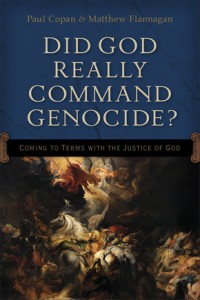 A common objection to belief in the God of the Bible is that a good, kind, and loving deity would never command the wholesale slaughter of nations. In the tradition of his popular Is God a Moral Monster?, Paul Copan teams up with Matthew Flannagan to tackle some of the most confusing and uncomfortable passages of Scripture. Together they help the Christian and nonbeliever alike understand the biblical, theological, philosophical, and ethical implications of Old Testament warfare passages.