On Monday 2 August at the University of Auckland Emeritus Professor of Philosophy Dr Raymond Bradley and Dr Matthew Flannagan (of this blog) debated the topic “Is God the Source of Morality? Is it rational to ground right and wrong in commands issued by God?” Here is the video of that debate. Hat Tip: Thinking Matters […]
Entries Tagged as 'Ethics'
Video: Bradley v Flannagan “Is God the Source of Morality?
September 20th, 2010 19 Comments
Tags: Debates · Divine Command Theory · God and Morality · MandM on Video · Matthew Flannagan · Raymond Bradley
Walter Sinnott-Armstrong and the Moral Scepticism Objection to Divine Commands
September 16th, 2010 9 Comments
In responding to William Lane Craig’s advocacy of a Divine Command Theory (DCT) Walter Sinnott-Armstrong makes the objection that,“The divine command theory makes morality unknowable.” He makes the following argument for this: To see why, consider whether or not it is immoral to eat pork. If the divine command theory is correct, we cannot answer […]
Tags: Divine Command Theory · God and Morality · James Cornman · Keith Lehrer · Patrick Nowell Smith · Walter Sinnott-Armstrong · William Lane Craig
Watch the Video of “The New Atheism, Science & Morality” with Glenn Peoples
September 8th, 2010 62 Comments
http://vimeo.com/moogaloo
The unofficial video of Glenn Peoples’ talk at Auckland Uni “The New Atheism, Science & Morality” is online. Hat Tip: E†B
Tags: Atheism · Glenn Peoples · New Atheists · Sam Harris · Thinking Matters
Dr Glenn Peoples on Science and Morality, Sam Harris & the Claims of the New Atheism @ Auckland Uni
August 18th, 2010 8 Comments
Christian philosopher and blogger Dr Glenn Peoples is coming to Auckland to give a public talk entitled “Science and Morality: Is there a Naturalistic Basis of Moral Truth?” This talk will examine the claims of the new atheism, particularly the work of Sam Harris. Dr Peoples will ask, can the natural world tell us what is […]
Tags: Evangelical Union · Glenn Peoples · God and Morality · New Atheists · Sam Harris · Science and Religion · Thinking Matters
Bradley v Flannagan “Is God the Source of Morality? Is it Rational to Ground Right and Wrong in Commands Issued by God?” The Podcast
August 7th, 2010 5 Comments
On Monday 2 August at the University of Auckland Emeritus Professor of Philosophy Dr Raymond Bradley and Dr Matthew Flannagan (of this blog) debated the topic “Is God the Source of Morality? Is it rational to ground right and wrong in commands issued by God?” While the video is still being edited and formatted, Thinking Matters […]
Tags: Debates · God and Morality · Matthew Flannagan · Podcast · Raymond Bradley · Thinking Matters
Matthew Flannagan’s Opening Statement: Bradley v Flannagan Debate
August 7th, 2010 11 Comments
On Monday 2 August at the University of Auckland Emeritus Professor of Philosophy Dr Raymond Bradley and Dr Matthew Flannagan (of this blog) debated the topic “Is God the Source of Morality? Is it rational to ground right and wrong in commands issued by God?” For the benefit of those who could not be there, who […]
Tags: Alvin Plantinga · Canaanites · Capital Punishment · Chris Tucker · Debates · Divine Command Theory · God and Morality · J J Finkelstein · Joe M Sprinkle · K Lawson Younger · Nicholas Wolterstorff · Philip Quinn · Raymond Bradley · Raymond Westbrook · Robert Adams · Walter Kaiser
Raymond Bradley’s Opening Statement: Bradley v Flannagan Debate
August 5th, 2010 53 Comments
On Monday 2 August at the University of Auckland Emeritus Professor of Philosophy Dr Raymond Bradley and Dr Matthew Flannagan (of this blog) debated the topic “Is God the Source of Morality? Is it rational to ground right and wrong in commands issued by God?” For the benefit of those who could not be there, who […]
Tags: Debates · God and Morality · Matthew Flannagan · Raymond Bradley · Robert Nola
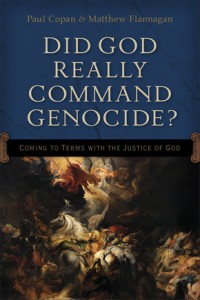 A common objection to belief in the God of the Bible is that a good, kind, and loving deity would never command the wholesale slaughter of nations. In the tradition of his popular Is God a Moral Monster?, Paul Copan teams up with Matthew Flannagan to tackle some of the most confusing and uncomfortable passages of Scripture. Together they help the Christian and nonbeliever alike understand the biblical, theological, philosophical, and ethical implications of Old Testament warfare passages.