Category: Rights and Freedoms

  • Erik Wielenberg and the Autonomy Thesis: Part Three Standard Objections to the Autonomy Thesis, Human Rights and Dignity without God

    In my last post I looked at Erik Wielenberg’s response to the objection that, in the absence of God, people lack compelling reasons to comply with morality’s demands.  A second objection Wielenberg briefly addresses is that without certain theological doctrines, one cannot provide a plausible basis for human rights and dignity.  Wielenberg, here again, takes Craig as paradigmatic.

    defaul1If there is no God, then what’s so special about human beings? They’re just accidental by-products of nature that have evolved relatively recently on an infinitesimal speck of dust lost somewhere in a hostile and mindless universe and that are doomed to perish individually and collectively in a relatively short time[1]

    Craig’s rhetorical question alludes to a serious point, made in more detail by Peter Singer, Louis Pojman, and Nicholas Wolterstorff, this is that it is hard to plausibly accommodate the thesis that all human beings have equal dignity and rights outside a theistic framework. Wielenberg’s response is that human rights are grounded in “non-moral intrinsic properties of human beings” He notes: “Human beings can, reason, suffer, fall in love, set goals for themselves and so on. God or no God, human beings obviously differ when it comes to intrinsic properties than dogs or mere lumps of clay[2]”

    Wielenberg here appeals to certain higher cognitive capacities human beings possess that other animals lack.

    This brief response to Craig is central to his Wielenberg’s rebuttal of evolutionary debunking arguments against moral realism latter in the book. Sharon Street and others have raised epistemological challenges to moral realism by noting that many of our basic evaluative capacities, our disposition to judge certain types of behaviour as morally wrong, has been shaped by naturalistic evolution.  Naturalistic evolution, however, isn’t guided by considerations of truth, in selecting such dispositions, but by adaptability, these basic evaluative judgements exist, because making such judgements enabled our ancestors to reproduce effectively in the environment in which they lived. Street notes “the striking coincide between independent moral truths posited by the realist and the normative views evolution has pushed us towards” and “challenges the realist to explain this coincidence.”[3]

    Wielenberg proposes that “our cognitive capacities” explain the coincidence. Moral rights D supervene upon any creature that possesses certain cognitive capacities.  Seeing these are the same cognitive capacities which produce moral beliefs. It follows that any being which believes it has moral rights will necessarily have them.[4]

    Wielenberg specifies that the supervenience relationship here involves both modal covariation, and a form of “robust causation” analogous to the way theist understand God’s relationship to the created universe, just as Theists believe that God immediately sustains the universe in existence moment by moment simply by willing its existence. So, natural those properties which constitute our higher cognitive faculties, robustly cause the existence of moral rights, without any intermediatory agency or laws of nature.

    This answer both to the grounding of human rights and evolutionary debunking arguments has a cost.  As Wolterstorff [5] and Singer [6].  have both pointed out, while it is true that normal adult humans have the cognitive capacities in question, many important categories of human beings do not. Infants and small children cannot reason, or fall in love, set goals for themselves, nor do they have the developed moral cognition Wielenberg refers to. In fact, David Boonin has noted: “by any plausible measure dogs, and cats, cows, and pigs, chickens and ducks are more intellectually developed than a new born infant.”[7].

    So, Wielenberg’s answer gives us no reason for thinking a child or infant has a rights or dignity, over and above any other animal. In fact, seeing moral rights modally covary with possession of the relevant cognitive faculties, such capacities are necessary and sufficient for the possession of moral rights.  Consequently, His position seems to entail that infant’s small children, and mentally impaired human adults have no moral rights.


    [1] Wielenberg, Robust Ethics 51, the citation is from William Lane Craig and Walter Sinnott-Armstrong God: A Debate Between a Christian and an Atheist (Oxford: Oxford University Press, 2004) 18

    [2] Ibid 51

    [3] Ibid 155

    [4] Ibid 134-175

    [5] Nicholas Wolterstorff Justice: Rights and Wrongs (Princeton NJ: Princeton University Press, 2008) 325-341.

    [6] Peter Singer, Writings on an Ethical Life (London: Harper Collins Publishers, 2001) 186-187

    [7] David Boonin, A Defense of Abortion (Cambridge: Cambridge University Press, 2003), 121, the neurological data is summarised in Michael Tooley’s Abortion and Infanticide (New York: Oxford University Press, 1983) Ch. 11.5.

  • John Corvino on Liberals and Being Judgemental

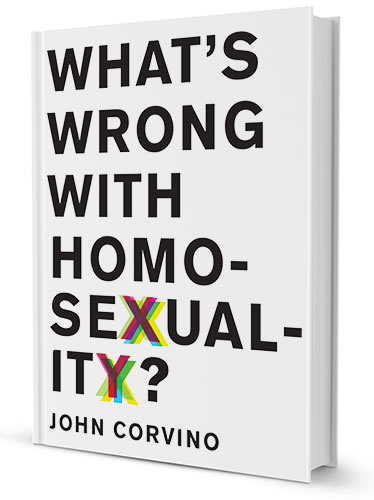
    0199856311bRecently I have been reading John Corvino’s book, “What’s wrong with Homosexuality?” Corvino describes himself as a religious sceptic and is one of the leading defenders of the moral permissibly of homosexual conduct, and also an articulate defender of what is commonly called “gay rights”. In terms of the conclusions we each have, Corvino and I are on very different pages. Yet despite our significant differences, I was pleasantly surprised at how much of his book I agreed with, particularly, his attempt to bring a degree of clear thought to the issue as opposed to the emotionalistic sloganising and rhetorical bullying that so often accompanies this issue.

    I want to share with my readers this gem, which comes from the first chapter:

    “Some people claim that morality is a “private matter” and that, in any case, people’s rights shouldn’t hinge on others’ moral opinions. I think this view is badly mistaken. Morality is about how we treat one another, and thus it is quintessentially a matter for public concern. It’s about the ideals we hold up for ourselves and others. It’s about the kind of society we want to be: what we will embrace, what we will tolerate, and what we will forbid. And while it’s true that a free society grants a good deal of personal latitude here, avoiding legal force except where transgressions infringe upon others’ liberty, it doesn’t follow that morality is irrelevant to the law. People’s moral views strongly influence how they vote, and thus, ultimately, what laws get passed. There’s a philosophical connection as well. Laws depend on moral foundations, broadly speaking, for their legitimacy, and the commitment to “liberty and justice for all” is a moral commitment. So it irks me when my fellow liberals insist that “we ought not judge one another.” I understand where they’re coming from: Moralistic finger-wagging is tiresome, not to mention counterproductive, and nobody likes a know-it-all. One might also point to Biblical support for the directive, though presumably in that context it means that humans have no business making “Final Judgments,” not that we can’t make judgments at all. But as a general rule, the claim that we ought not judge one another is misguided—logically, rhetorically, and morally.  It’s misguided logically because it’s self-refuting. (If we ought not judge one another, then why are you telling me what to do?) It’s misguided rhetorically because it makes liberals seem as if they have conceded “moral values” to the other side, leaving them in the  untenable position of being “opposed” to moral values. And it’s misguided morally, because people have a moral responsibility not only to behave well themselves but also to promote standards of right conduct. The moral tone of society is everyone’s responsibility, liberals included.  This is not to say that we ought to become moral busybodies. Humility is a moral virtue, as is kindness, and those who wield morality as a weapon are at least as confused as those who insist that it’s a “private matter.” But we shouldn’t confuse the rejection of bad moralizing with the rejection of moralizing altogether. Morality is too important for that.”

    Excluding the phrase “my fellow liberals”, I could not agree more with  Corvino’s sentiments.

  • Nonsense on Stilts: Non-Discrimination Rights

    When the Human Rights Act was passed in 1993 I supported the writing of non-discrimination rights into law. At that time I, like many New Zealanders, believed that people had a right to not be discriminated against that the government should protect. Since then, reflecting on the issue has lead me to change my mind. I am now inclined to think that non-discrimination rights do not exist, they are “nonsense on stilts”. Laws which purport to recognise and protect them are recognising and protecting something that does not exist.

    My position now is that discrimination is not wrong, it is morally neutral. It is justified and reasonable to discriminate on certain grounds in certain contexts, and it is unjustified to do so in other contexts. When it is unjustified, what makes it so are factors that have nothing to do with discrimination; these factors would be problematic if applied equally.

    Jake the muss: not a skinny asian womanBefore elaborating my reasons for being sceptical about such rights, let us be clear as to what denying non-discrimination rights does not mean. It does not mean I believe that it is permissible for people to refuse to serve ethnic minorities because one holds to false sterotypes and has unwarranted hatred towards those minorities. Nor does it mean I support depriving women or African Americans of the vote. Likewise I do not support racist lynchings or gay bashings.

    A sceptic about anti-discrimination rights can oppose all these things and still not be committed to supporting the existence of anti-discrimination rights. All that is entailed by my scepticism is that these thing are not wrong because they violate a right to not discriminate, and its clear to me that this is true; they are wrong for other reasons.

    Discriminating against minorities in the manner suggested above is wrong because we have duties to not stereotype and treat people with contempt. If we treated everyone equally in this way it would still be wrong. Similarly, racist lynchings are wrong because they involve kidnapping, assault and homicide. If people were equal-opportunity lynchers who indiscriminately lynched people of all races, sexes, lifestyles and degrees of ability, it would still be wrong for them to do so. Depriving people of the vote is wrong because people have a right to vote, the right is not attached to sex or race, and so on. The point is that the wrongness of these sorts of practices can be adequately explained, and I think is more plausibly explained, without recourse to an alleged right to not be discriminated against. An appeal to “discrimination” misdiagnoses the moral problems with the action complained of.

    Why Discrimination is Not Wrong
    It is not wrong to discriminate. To discriminate against one person in favour of another is to treat the former less favourably than the latter. The problem is that, so defined, discrimination is clearly not wrong. In fact, discrimination is essential to any moral thinking at all.

    To make a moral judgement condemning a particular action involves adopting a less favourable stance towards those who perform that action. We condemn particular actions, and if a person doing those actions lacks an adequate excuse we blame and censure that person for what he or she did. We expect the person to feel guilty and to make appropriate apology and reparations. On the other hand to judge an action is right (more…)

  • Religious Freedom and Non-Discrimination

    Currently I am working on a post on the issue of non-discrimination rights and the morality of discrimination. In the mean-time  I thought I would highlight the thoughtful commentary from James-Michael Smith in this video.

  • Watch Matt on the GCSB Bill on Shine TV

    On 30 July 2013 Matt was interviewed on Shine TV about the Government Communications Security Bureau and Related Legislation Amendment (“GCSB”) Bill. The discussion on the issues of civil liberties, spying in times of threats against citizens is very good. The video is here:

  • Yet Another Lawyer Agrees: Marriage Amendment Act Bill is an Affront to Freedom of Religion and Belief

    Barrister Ian Bassett has given another opinion describing the risks to freedom of religion and belief of Louisa Wall’s Marriage Amendment Act Bill if it is enacted in its presently proposed form, which would include this amendment:

    “Without limiting the generality of subsection (1), no celebrant who is a minister of religion recognised by a religious body enumerated in Schedule 1, and no celebrant who is a person nominated to solemnize marriages by an approved organisation, is obliged to solemnize a marriage if solemnizing that marriage would contravene the religious beliefs of the religious body or the religious beliefs or philosophical or humanitarian convictions of the approved organisation.”

    It is clear that any marriage celebrant exercising their public function who is not covered by the amendment risks being in breach of the New Zealand Bill of Rights Act 1990 and the Human Rights Act 1993 if they refuse to perform their public function as marriage celebrants because it is a same sex couple seeking to be married.

    Injustice

    Church ministers, marriage celebrants, court registrars, church elders, leaders, photographers and caterers and any other person or entity supplying services to the public risks being in breach of the Human Rights Act 1993 if they refuse to supply services to a couple seeking to be married because the couple are same sex. For some this could also mean risking their employment.

    Service providers to the public risk being in breach of the Human Rights Act 1993 if they refuse to supply services to a married couple because the couple are same sex.

    The New Zealand Law Society’s Law Reform Committee headed by Professor Paul Rishworth LLB (Hons) M Jur highlighted the risk to freedom of religion and belief in the Bill in its submission to Parliament:

    “The proposer of the Bill said that the Bill was not intended to compel marriage celebrants to perform marriages contrary to their religious beliefs. However, in the Law Society’s view, Professor Rishworth says it is arguable that marriage celebrants who refuse to perform same-sex marriages will be acting unlawfully under the Human Rights Act 1993, the New Zealand Bill of Rights Act 1990, or both.

    “We want to highlight arguable conclusions which seem to be at odds with the settled intentions of the Bill’s drafters. Whatever the position, the Law Society believes it makes sense to put the matter beyond doubt,” Professor Rishworth says.

    The only thing that the amended Bill puts beyond doubt is that the critics of those raising fears about the Bill’s threat to freedom of religion and belief were wrong. By recommending an amendment the Select Committee are agreeing that a risk existed, as the likes of Ian Bassett, Grant Illingworth have argued, contra to The Human Rights Commission’s claim that all “…religious officials and leaders are free to refuse to perform marriages that are not in accordance with their religious beliefs.”

    Bassett, Illingworth and Rishworth are not alone with their concerns among the legal fraternity.

    Graeme Edgeler, a Wellington Barrister has been quoted in the Herald saying:

    … if an independent celebrant declined to marry a same-sex couple, the couple could then complain to the Human Rights Commission.

    “It’s not about [celebrants] being forced, it’s about people getting in trouble afterwards if they didn’t,” he told APNZ.

    “They’re not breaking any rule in the Marriage Act, but rules in other acts. The main one would be the Human Rights Act, which says you can’t discriminate on the basis on sexual orientation or gender.”

    Auckland Barrister Rachel Wong has raised issues against the Bill.

    This blog’s Madeleine Flannagan LLB, Associate Barrister and Solicitor at Coast Legal, adds her voice:

    “The Bill, in its present form, fails to protect individual freedom of religion and belief (belief being a comprehensive viewpoint not based on religion). The proposed amendment only protects group religious rights, which is little protection at all for most religious celebrants as few denominations hold formal views on marriage, many practitioners of religion do not belong to a group and for those that do they might hold a different personal view on this topic to the group view. The amendment then fails to protect the religious freedom of most religious celebrants just as it utterly fails to protect the freedom of belief of non-religious celebrants who have no group to appeal to to protect their freedom.”

    Ian Bassett’s latest opinion thoroughly analyses the legal effects of the amended Bill, a summary as to whose freedom of religion and belief it protects and whose it does not follows: (more…)