Tag: Judging

  • To Judge or not to Judge: Part Two

    Below is the second part of a talk I delivered at Crossroads Presbyterian Church.


    3. What Did Jesus Mean

    So if Jesus did not command us to refrain from judging others, what does he teach in this passage? I think Jesus is not, in this passage, telling us to “not judge.” He is instead telling us how to judge. He is contrasting judgments that are accurate, useful, and constructive with judgments that involve hypocrisy and grandstanding. He is telling us to avoid the latter so that we can effectively carry out the former.

    Several features bear this out. First, let’s look at the passage. The phrase translated in the NIV as, “Do not judge, or you too will be judged,” was originally written by Matthew in Koine Greek and then transliterated. What is stated is, “Do not judge that you be judged” (Matt 7:1, Interlinear Bible). Note the phrase “that.” In Greek this is not a disjunctive “or,” which suggests alternatives. It is a conjunction which spells out the result, and it is in thejudgementsubjunctive tense. What this means, in layman’s terms, is that the passage states: do not judge if that judgment results in you being judged yourself. This is a reference to a particular kind of judgment, not judging in general.

    This is clearly borne out when we look at the context, which states: “With whatever verdict you judge you will be judged.”

    Here is the point: when I make a judgment about someone else’s character, I implicitly reference a standard which applies to myself as well as to them. If I condemn my brother for stealing, I am assuming it is wrong to steal. That means I am admitting stealing is wrong. If I say an action is wrong and blameworthy, and practise that action myself, I have in essence admitted I am doing wrong and am worthy of blame. I stand condemned by my own words.

    Now let us return to the passage and look at the commandment “judge not” in context:

    3 “Why do you look at the speck of sawdust in your brother’s eye and pay no attention to the plank in your own eye? 4 How can you say to your brother, ‘Let me take the speck out of your eye,’ when all the time there is a plank in your own eye? 5 You hypocrite, first take the plank out of your own eye, and then you will see clearly to remove the speck from your brother’s eye. 6 “Do not give dogs what is sacred; do not throw your pearls to pigs. If you do, they may trample them under their feet, and then turn and tear you to pieces.” (Matthew 7:2-6)

    Here the qualifications are evident. One is not to judge in a way that brings judgment on oneself. For (because) the standard one uses to judge others is the standard by which one’s own behaviour is measured. Jesus goes on to illustrate, with a sarcastic example, precisely what he is talking about: a person who nit-picks or censures others’ minor faults (taking the speck out of their brother’s eye) yet ignores the serious, grave, moral faults in their own life (the log in one’s own eye). This, as Jesus points out, is hypocrisy. His point is that such hypocrisy actually blinds the person’s ability to make competent moral judgments. This suggests that Jesus is focusing on a certain type of judging and not the making of judgments per se.

    In fact, Jesus condemns this type of hypocrisy so that we can judge correctly. Rather than engaging in the kind of judgment Jesus has condemned, a person should “first take the plank out of your own eye, and then you will see clearly to remove the speck from your brother’s eye.” In other words, one should try to rectify the serious moral flaws in one’s own life precisely so one can assist others with theirs. Jesus’s point is that one needs to avoid hypocrisy in order to make constructive and effective moral judgments about others.

    Why is this? Two reasons.

    First, in order to teach people any subject or skill, you actually have to be proficient in that subject or skill. I am a theology teacher. I have had some success, and the reason I have had some success is because I am trained in the relevant disciplines. When I read an essay, I can give constructive feedback because I have spent decades reading theological writings, writing such articles, and thinking about theology. When a student writes, I can give constructive feedback because I have become so proficient and familiar with such writings that I can just see what is lacking or needed.

    Second, the nature of hypocrisy itself blinds people. People often think that a hypocrite is someone who doesn’t practise what they preach. This is incorrect. Anyone who has high moral standards will at times struggle and fail to live up to them due to weakness of the will. The Greek word translated “hypocrite” is actually the word for “actor.” A hypocrite is an actor on a stage who puts on a mask to play a role in front of others. Off stage they don’t play that role. A hypocrite is someone who is pretending—they want to appear virtuous by appealing to standards in front of others, telling them what is right and wrong, but they have no real commitment to those standards.

    So if your values are so warped that you only care about how you appear—what others think, and not what God, who sees all, thinks—your value system is distorted and you cannot make competent moral judgments. The key point is that we need to avoid hypocrisy precisely so that we have the discernment we need to make constructive judgments that will actually enable us to help both ourselves and others in making wise, as opposed to foolish, judgments.

    I think you see the same thing in the reference to “pigs and dogs” in verse 6. Dogs and pigs, to Jews, were unclean animals, and the terms were frequently used to designate people considered to be of low moral character who were “unclean” before God. In this verse Jesus is simply repeating the Old Testament teaching found in Proverbs 9:8, which states, “Do not rebuke a mocker or he will hate you; rebuke a wise man and he will love you.” The reason one is exhorted not to do this is because it fails to be constructive. It is not going to do any good. The implication again is that one should try to make constructive judgments rather than simply provoking anger.

    I can appeal again to my experience as a teacher. When you teach five classes a day with over 25 students a class, you learn to be discerning. There are some students you will invest a lot of time in, giving constructive feedback, because you know they are motivated and will listen and want to improve. There are others you know are switched off and won’t listen or care no matter what you say. You don’t spend a lot of time giving constructive feedback to these students; sometimes doing so will simply provoke a confrontation that wastes your time.

    Just in case I have not belaboured the point enough, my interpretation is further reinforced by what follows these passages:

    15 “Watch out for false prophets. They come to you in sheep’s clothing, but inwardly they are ferocious wolves. 16 By their fruit you will recognize them. Do people pick grapes from thornbushes, or figs from thistles? 17 Likewise every good tree bears good fruit, but a bad tree bears bad fruit. 18 A good tree cannot bear bad fruit, and a bad tree cannot bear good fruit. 19 Every tree that does not bear good fruit is cut down and thrown into the fire. 20 Thus, by their fruit you will recognize them. 21 “Not everyone who says to me, ‘Lord, Lord,’ will enter the kingdom of heaven, but only the one who does the will of my Father who is in heaven. 22 Many will say to me on that day, ‘Lord, Lord, did we not prophesy in your name and in your name drive out demons and perform many miracles?’ 23 Then I will tell them plainly, ‘I never knew you. Away from me, you evildoers!’” (Matthew 7:15-23)

    Here Jesus actually instructs his disciples to make moral judgments about others. He tells them to judge whether a person is a false prophet or not by their “fruit.” Anyone familiar with Old Testament prophetic literature (as Jesus’ hearers were) would know that fruit is a metaphor for character. Isaiah’s use of the metaphor is paradigmatic:

    1 I will sing for the one I love a song about his vineyard: My loved one had a vineyard on a fertile hillside. 2 He dug it up and cleared it of stones and planted it with the choicest vines. He built a watchtower in it and cut out a winepress as well. Then he looked for a crop of good grapes, but it yielded only bad fruit. 3 “Now you dwellers in Jerusalem and men of Judah, judge between me and my vineyard. 4 What more could have been done for my vineyard than I have done for it? When I looked for good grapes, why did it yield only bad? 5 Now I will tell you what I am going to do to my vineyard: I will take away its hedge, and it will be destroyed; I will break down its wall, and it will be trampled. 6 I will make it a wasteland, neither pruned nor cultivated, and briers and thorns will grow there. I will command the clouds not to rain on it.” 7 The vineyard of the Lord Almighty is the house of Israel, and the men of Judah are the garden of his delight. And he looked for justice, but saw bloodshed; for righteousness, but heard cries of distress. (Isaiah 5:1-7)

    The fruit looked for is such things as right conduct, justice, etc. Paul uses the same metaphor when he states that “the fruit of the Spirit is love, joy, peace, patience, kindness, goodness, faithfulness, gentleness and self-control” (Gal 5:22-23a). Jesus makes it clear that he is utilising this metaphor. He goes on to stress that, in this context, the fruit of a prophet is whether he or she “does the will of my Father” and is not an “evildoer.” It is clear then that Jesus here is exhorting his disciples to make moral judgments about other people, to critically evaluate other people’s lives and actions, and to make judgments about their spiritual authenticity based on these judgments. All this would be very odd if it were wrong to judge.

    This is an important skill. In an age of people like David Koresh from Waco, Texas, or Jim Jones, or groups like ISIS and Al-Qaeda who advocate terror in the name of God—or even the many contemporary secular political cults today—people need to be able to make discerning moral judgments about where to lay their allegiance, what is the will of God and what is not.

    So what is the take-home here? I think it is this: the church is called to go into all the world, make disciples of all nations, baptise them, and teach them to obey what God has commanded. Its role is to be a source of moral education, to help people answer the question: How should I live? by providing credible answers—answers that are true and helpful. People need these answers to make important decisions. God wants us to become proficient at this, to do it well, both by learning how to live well and by teaching others how to. That means we need to be able to make moral judgments.

    In this passage Jesus tells us how to do this. There are several things he says here:

    1. Learn to live well in your own life.
    2. Teach others out of this practice.
    3. Use discernment in reading your audience; know when to speak and when to be silent—when it is pearls before swine.
    4. Finally, avoid hypocrisy and grandstanding. You should be trying to live a life pleasing to God, not giving lip service to certain ideas in order to impress others with your virtue.

    Doing this enables you to make constructive judgments that enable the church to be salt and light in a world—a world so confused that it regularly expresses the moral judgment that you should not make moral judgments.


  • To Judge or not to Judge?: Part One

    Below is part one of a sermon I presented at Crossroads Presbyterian Church in Pokeno.

    “Do not judge, or youjudgement too will be judged. 2 For in the same way you judge others, you will be judged, and with the measure you use, it will be measured to you. 3 “Why do you look at the speck of sawdust in your brother’s eye and pay no attention to the plank in your own eye? 4 How can you say to your brother, ‘Let me take the speck out of your eye,’ when all the time there is a plank in your own eye? 5 You hypocrite, first take the plank out of your own eye, and then you will see clearly to remove the speck from your brother’s eye.6 “Do not give dogs what is sacred; do not throw your pearls to pigs. If you do, they may trample them under their feet, and turn and tear you to pieces.”

    There is an apocryphal story going around that goes as follows: A generation ago, the most well-known New Testament passage was John 3:16—“For God so loved the world that he gave his one and only Son, that whoever believes in him shall not perish but have eternal life.” However, now, in this current generation, the most well-known passage is Matthew 7:1—“Do not judge, or you too will be judged.”

    I don’t know if this is an accurate claim. However, it is an apocryphal story because it illustrates a widely held understanding of Jesus’ teaching. Today I want to offer a corrective. I will do three things. First, I will sketch what I take to be a common understanding of this passage. Second, I will give several reasons why I think this interpretation is mistaken—indefensible, in fact. Third, I will offer a different way of reading the passage, which I think is more accurate.

    1.A Common Interpretation.

    Let’s look first at how this passage is commonly understood. Several years ago, I gave a talk on moral relativism for Thinking Matters Tauranga. During that talk, I noted that relativism entails that one cannot apply the moral principles you (or your culture) accept to the practices of other people (or cultures). I was critical of this position, arguing that it suffers from all sorts of problems. Predictably, someone in the audience asked me a question about Jesus’ comments in the Sermon on the Mount:

    “Do not judge, or you too will be judged. For in the same way you judge others, you will be judged.” (Matt. 7:1–2)

    Notice the highlighted word “or” in this passage. It suggests a disjunction: there are only two options—either you refrain from judgement, or you fall under judgement.

    It is common to hear people interpret this passage as a commandment to not “judge other people.” The basic idea is this: judging other people is wrong; if you judge other people, God will judge you.

    In fact, it is common for people to use this statement as a kind of rhetorical club to silence Christian theological and moral critique of various cultural practices. When a particular practice is subjected to such critique, those who engage in the practice will complain they are being “judged,” that Christians are being “judgemental,” and that this is contrary to what Christ taught.

    I believe this is a misinterpretation of the passage. In fact, if one wants an example of the claim that it is wrong to make moral judgements about other cultures in Scripture, the most explicit example actually comes from the men of Sodom in the story of Lot. When the men seek to sodomise Lot’s visitors, Lot condemns what they desire to do as a “wicked thing.” Their response is recorded as follows:

    “Get out of our way,” they replied. And they said, “This fellow came here as an alien, and now he wants to play the judge! We’ll treat you worse than them.” They kept bringing pressure on Lot and moved forward to break down the door.

    Here, the men of Sodom objected that Lot is from a different culture, and yet he dared “play the judge.” In my view, Jesus was not defending the men of Lot’s behaviour in Matt. 7:1–2. I think we need to look closer at this passage that is so often cited.

     2. What Is Wrong with the Common Interpretation?

    Why do I think this common interpretation is mistaken? Several reasons.

    First, the claim that it is wrong to judge other people has absurd implications. Just think about it for a minute. If it is wrong to judge other people, then—since Hitler was another person—it is wrong to say that what he did was wrong. To say that his actions were wrong is to make a judgement about them and, hence, to judge him. Similarly, Martin Luther King Jr. was wrong to criticise racism, and William Wilberforce was wrong to make moral judgements about the slave trade. Taken consistently, the claim that it is wrong to judge entails that we should have no legal system, no laws, and no courts, as all these things involve judging certain conduct as wrong and condemning and punishing those who engage in it.

    Second, not only would these historical and contemporary cases of judging be wrong, but if it were sinful to judge others, then much of the Hebrew Scriptures—parts that purport to describe people faithfully following God’s will—are, in fact, exercises in wrongdoing. The prophets offer, in some instances, scathing moral critiques of (and hence make moral judgements about) the actions of Israel, Judah, and also surrounding nations such as Assyria and Babylon. Isaiah, Jeremiah, Ezekiel, Amos, etc., in uttering such judgements, were engaging in sin. It is not just the Hebrew Scriptures that are implicated in wrongdoing. The opening chapters of the book of Romans contain a moral critique of both the Gentile and Hebrew cultures of Paul’s day. Here is an excerpt:

    Furthermore, just as they did not think it worthwhile to retain the knowledge of God, so God gave them over to a depraved mind, so that they do what ought not to be done. 29 They have become filled with every kind of wickedness, evil, greed and depravity. They are full of envy, murder, strife, deceit and malice. They are gossips, 30 slanderers, God-haters, insolent, arrogant and boastful; they invent ways of doing evil; they disobey their parents; 31 they have no understanding, no fidelity, no love, no mercy. 32 Although they know God’s righteous decree that those who do such things deserve death, they not only continue to do these very things but also approve of those who practice them.

    Paul made harsh moral judgements about other people.

    In fact, if one seriously believes that judging is wrong and contrary to the will of God, then Jesus was a sinner. Jesus, after all, made some very harsh judgements about the Pharisees and Sadducees throughout the Synoptic Gospels. In Matthew’s Gospel, on seven occasions he says, “Woe to you, teachers of the law and Pharisees, you hypocrites!” He proceeds to offer scathing criticisms of their religious and moral practices.

    On at least one occasion, Jesus criticises the Pharisees for not judging people in the correct way. In John 7:21–24, Jesus states:

    Yet, because Moses gave you circumcision (though actually it did not come from Moses, but from the patriarchs), you circumcise a boy on the Sabbath. 23 Now if a boy can be circumcised on the Sabbath so that the law of Moses may not be broken, why are you angry with me for healing a man’s whole body on the Sabbath? 24 Stop judging by mere appearances, but instead judge correctly.

    The problems with this interpretation of Matthew 7:1–2 do not stop there. A little reflection will demonstrate that the claim that it is wrong to judge other people is itself incoherent. It is what philosophers call a performative self-contradiction. To claim it is wrong to judge others is to make a moral judgement—it is to judge that a particular action is wrong. Moreover, when a person announces this to other people, he or she is implicitly making a judgement about other people’s actions. To utter “it is wrong to judge others,” therefore, is to engage in judging others.


  • John Corvino on Liberals and Being Judgemental

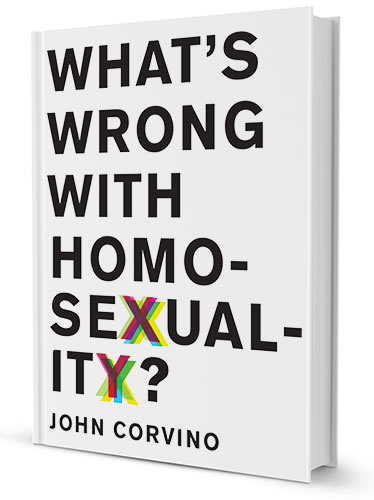
    0199856311bRecently I have been reading John Corvino’s book, “What’s wrong with Homosexuality?” Corvino describes himself as a religious sceptic and is one of the leading defenders of the moral permissibly of homosexual conduct, and also an articulate defender of what is commonly called “gay rights”. In terms of the conclusions we each have, Corvino and I are on very different pages. Yet despite our significant differences, I was pleasantly surprised at how much of his book I agreed with, particularly, his attempt to bring a degree of clear thought to the issue as opposed to the emotionalistic sloganising and rhetorical bullying that so often accompanies this issue.

    I want to share with my readers this gem, which comes from the first chapter:

    “Some people claim that morality is a “private matter” and that, in any case, people’s rights shouldn’t hinge on others’ moral opinions. I think this view is badly mistaken. Morality is about how we treat one another, and thus it is quintessentially a matter for public concern. It’s about the ideals we hold up for ourselves and others. It’s about the kind of society we want to be: what we will embrace, what we will tolerate, and what we will forbid. And while it’s true that a free society grants a good deal of personal latitude here, avoiding legal force except where transgressions infringe upon others’ liberty, it doesn’t follow that morality is irrelevant to the law. People’s moral views strongly influence how they vote, and thus, ultimately, what laws get passed. There’s a philosophical connection as well. Laws depend on moral foundations, broadly speaking, for their legitimacy, and the commitment to “liberty and justice for all” is a moral commitment. So it irks me when my fellow liberals insist that “we ought not judge one another.” I understand where they’re coming from: Moralistic finger-wagging is tiresome, not to mention counterproductive, and nobody likes a know-it-all. One might also point to Biblical support for the directive, though presumably in that context it means that humans have no business making “Final Judgments,” not that we can’t make judgments at all. But as a general rule, the claim that we ought not judge one another is misguided—logically, rhetorically, and morally.  It’s misguided logically because it’s self-refuting. (If we ought not judge one another, then why are you telling me what to do?) It’s misguided rhetorically because it makes liberals seem as if they have conceded “moral values” to the other side, leaving them in the  untenable position of being “opposed” to moral values. And it’s misguided morally, because people have a moral responsibility not only to behave well themselves but also to promote standards of right conduct. The moral tone of society is everyone’s responsibility, liberals included.  This is not to say that we ought to become moral busybodies. Humility is a moral virtue, as is kindness, and those who wield morality as a weapon are at least as confused as those who insist that it’s a “private matter.” But we shouldn’t confuse the rejection of bad moralizing with the rejection of moralizing altogether. Morality is too important for that.”

    Excluding the phrase “my fellow liberals”, I could not agree more with  Corvino’s sentiments.

  • Contra Mundum: The Judgmental Jesus

    Few things are thought to be more morally pernicious than the practice of judging others. Sometimes this is given a theological spin with people citing the Sermon on the Mount “Do not judge, or you too will be judged. For in the same way you judge others, you will be judged, and with the measure you use, it will be measured to you.” (Matthew 7:1-2).

    It is common for this imperative statement to be used as a kind of rhetorical club to silence moral critique of various cultural practices. When a particular practice is subjected to such critique those who engage in the practice will complain they are being “judged.” If the alleged judgers are Christian, the claim that “judging is contrary to what Christ taught” is typically added to the charge.

    I think this is a misrepresentation of the passage and an affront to common sense. I will address the latter point first. The claim that it is wrong to judge other people is problematic; it is so problematic that it is amazing that anyone gives it credence. For example, if it is wrong to judge other people then since Hitler was another person, it is wrong to say that what he did was wrong. To claim that his actions were wrong is to make a judgment about them and if judging is wrong then it is wrong to judge Hitler. Similarly, Martin Luther King Junior was wrong to criticise racism and doing so judged the actions of racists and William Wilberforce was wrong to make moral judgments about the slave trade as in doing so he was judging slave owners. Taken consistently, the claim that “it is wrong to judge” entails that we should have no legal system, no laws and no courts as all these things involve judging others by deeming certain conduct as wrong.

    The problems with this interpretation of Matthew 7:1-2 do not stop there. A little reflection will demonstrate that the claim that it is wrong to judge other people is incoherent. To claim that it is wrong to judge others is to make a moral judgment; in making the statement one is judging that a particular action is wrong. Moreover, when a person announces this to other people he or she is implicitly making a judgment about other people’s actions. To utter that it is wrong to judge others is to engage in judging others. This kind of thinking can easily induce a kind of intellectual vertigo, it is analogous to the person who states, in English, “I can’t speak a word of English” or a person who tries to convince you of the truth of the claim “there is no truth.”

    Fortunately, one does not need to attribute to Jesus such absurd, incoherent, platitudes because it is doubtful that Jesus meant anything quite so stupid. Several factors bear this conclusion out. First, one should note that the claim, “do not judge, or you too will be judged,” occurs as part of the Sermon on the Mount. In this Sermon, Jesus regularly used hyperbole to vividly illustrate a point. One should note that interpreting these hyperboles too literalistically leads to obvious absurdities. For example, Jesus states, when referring to the act of looking at another person’s spouse with lust, “If your right eye causes you to sin, gouge it out and throw it away” (Matthew 5:9). It is evident that Jesus is not advocating self-mutilation but simply making his point about not lusting in a vivid, hyperbolic fashion. Similarly, he commands people to, “do good deeds before men,” (Matthew 5:16) but a few verses later he tells us, “not to do good deeds before men.” (Matthew 6:1). Taken in a strictly literalistic sense this is a contradiction. However, a reading of the context shows these apparently opposing statements are simply vivid illustrations of the same point; one’s good deeds should be motivated by a desire to honour God, to do the right thing and not by a desire to advance one’s own reputation. In light of such contexts the phrase, “do not judge,” should be seen for what it is, a hyperbolic statement illustrating the point elaborated in the surrounding verses.

    Second, when one seeks out this context one can see quite clearly the point being made. The phrase translated in the NIV as, “do not judge, or you too will be judged,” was originally written by Matthew in Koine (a Greek dialect). The Interlinear Bible gives the literal translation here as, “do not judge that you be judged.” In other words, do not judge others in a way that leads one to put oneself under judgement. The surrounding words support this conclusion,

    For in the same way you judge others, you will be judged, and with the measure you use, it will be measured to you. ″Why do you look at the speck of sawdust in your brother’s eye and pay no attention to the plank in your own eye? How can you say to your brother, ‘Let me take the speck out of your eye,’ when all the time there is a plank in your own eye? You hypocrite, first take the plank out of your own eye, and then you will see clearly to remove the speck from your brother’s eye.″ Do not give dogs what is sacred; do not throw your pearls to pigs. If you do, they may trample them under their feet, and then turn and tear you to pieces. (Matthew 7:2-6)

    Here the qualifications are evident. One is not to judge in a way that brings judgment on oneself. The reason for this (“for”) is that the standard one uses to judge others is the standard that one’s own behaviour will be measured by. Jesus goes on to illustrate, with a sarcastic example, precisely what he is talking about; a person who nit-picks or censures the minor faults of others (taking the speck out of their brothers eye) who ignores the serious, grave, moral faults in their own life (the log in one’s own eye). His point is that such faults actually blind the person’s ability to be able to make competent moral judgments. This suggests that Jesus is focusing on a certain type of judging and not the making of judgments per se.

    In fact, the conclusion that Jesus does not mean to condemn all judging of others is evident from the proceeding sentences in the above quote. Rather than engaging in the kind of judgment Jesus has condemned one should “first take the plank out of your own eye, and then you will see clearly to remove the speck from your brother’s eye.” In other words one should try to rectify the serious moral flaws in one’s own life precisely so one can assist others with theirs. One needs to avoid hypocrisy in order to make constructive and effective moral judgments about others. This would make no sense if Jesus meant to condemn all judging by this passage.

    The reference to “pigs and dogs” in verse 6 further bears this out. Dogs and pigs, to Jews, were unclean animals and the term was frequently used to designate people considered to be of low moral character who were “unclean” before God. In this verse Jesus is simply repeating the Old Testament teaching to “not rebuke a mocker or he will hate you: rebuke a wise man and he will love you” (Proverbs 9:8). The implication, again, is that one should try to make constructive judgments rather than simply provoking anger. Constructive judgments involve making judgments.

    Just in case I have not belaboured the point enough, my interpretation is further reinforced by what follows after these passages. While reading a passage in its context is not the strength of many popular critics of Christianity, immediately after the cited passage Jesus goes on to warn about the dangers of religious charlatans, which he, rather judgmentally, refers to as “ferocious wolves” in “sheep’s clothing” (Matthew 7:15). In the age of Osama Bin Laden, David Koresh and Jim Jones the danger of such charlatans needs little further elaboration.

    In exhorting the requisite discernment, Jesus actually instructs his disciples to make moral judgments about others. He tells his disciples to judge whether a person is a false prophet or not by their “fruit.” Anyone familiar with Old Testament prophetic literature, as Jesus’ hearers were, would know that “fruit” is a metaphor for character. Isaiah’s use of the metaphor is paradigmatic; Isaiah famously described Israel as a vineyard that did not bear fruit. In the metaphor, fruit quite clearly referred to such things as right conduct, justice, morality, etc. Paul uses the same metaphor when he states that “the fruit of the Spirit is love, joy, peace, patience, kindness, goodness, faithfulness, gentleness and self-control” (Galatians 5:22-23a). Jesus makes it clear that he is utilising this metaphor. He goes on to stress that in this context the fruit of a prophet is whether he or she “does the will of my Father” and is not an “evil doer.” It is clear then that Jesus here is exhorting his disciples to make moral judgment about other people, to critically evaluate other people’s lives, choices and actions and to make judgments about their spiritual authenticity based on this evaluation. All of this would be very odd if Jesus thought it was wrong to judge.

    Moral judgment of religious leaders, of oneself, of the organisations one is contemplating joining, of people one considers associating with, of the political leaders one supports at the ballot box and broader issues in wider culture is a task essential to both authentic spirituality and the competent navigation of everyday life.

    I write a monthly column for Investigate Magazine entitled Contra Mundum. This blog post was published in the February 10 issue and is reproduced here with permission. Contra Mundum is Latin for ‘against the world;’ the phrase is usually attributed to Athanasius who was exiled for defending Christian orthodoxy.

    Letters to the editor should be sent to: editorial@investigatemagazine.DELETE.com

    RELATED POSTS:
    Contra Mundum: What’s Wrong with Imposing your Beliefs onto Others?
    Contra Mundum: God, Proof and Faith
    Contra Mundum: “Bigoted Fundamentalist” as Orwellian Double-Speak
    Contra Mundum: The Flat-Earth Myth
    Contra Mundum: Confessions of an Anti-Choice Fanatic

  • Sunday Study: The Virtue of Judging – Jesus was not a Relativist

    About a year ago I gave a talk on moral relativism for Thinking Matters Tauranga. During that talk I noted that relativism entails that one cannot apply the moral principles you (or your culture) accepts to the practices of other people (or cultures). I was critical of this position arguing that it suffers from all sorts of problems. Predictably, someone in the audience asked me a question about Jesus’ comments in the Sermon on the Mount,

    “Do not judge, or you too will be judged. For in the same way you judge others, you will be judged, and with the measure you use, it will be measured to you.” (Matt 7:1-2)

    It is common to hear people interpret this passage as a commandment to not “judge other people;” in fact, it is common for people to use this statement as a kind of rhetorical club to silence Christian theological and moral critique of various cultural practices. When a particular practice is subjected to such critique those who engage in the practice will complain they are being “judged,” that Christians are being “judgemental” and that this is contrary to what Christ taught.


    “In other words one should try to rectify the serious moral flaws in one’s own life precisely so one can assist others with theirs.”I think this is a mistaken interpretation of this passage. In fact, if one wants an example of the claim that it is wrong to make moral judgements about other cultures in scripture, the most explicit example actually comes from the men of Sodom in the story of Lot. When the men seek to sodomise Lot’s visitors, Lot condemns what they desire to do as a “wicked thing.” Their response is recorded as follows,

    “Get out of our way,” they replied. And they said, “This fellow came here as an alien, and now he wants to play the judge! We’ll treat you worse than them.” They kept bringing pressure on Lot and moved forward to break down the door.

    Here the men of Sodom objected that Lot is from a different culture and yet he dared “play the judge.” Jesus was not defending the men of Lot’s behaviour in Matt 7:1-2. Hence we need to look closer at this passage that is so often cited.


    First, the claim that it is wrong to judge other people is problematic; it is so problematic that it is amazing that anyone gives it credence. There are several reasons for drawing this conclusion. For starters, if it is wrong to judge other people then, since Hitler was another person, it is wrong to say that what he did was wrong; to say that his actions were wrong is to make a judgement about them and hence, judges him. Similarly, Martin Luther King Junior was wrong to criticise racism and William Wilberforce was wrong to make moral judgements about the slave trade. Taken consistently, the claim that it is wrong to judge entails that we should have no legal system, no laws and no courts as all these things involve judging certain conduct as wrong and condemning and punishing those who engage in it.

    Not only would these historical and contemporary cases of judging be wrong, much of the Hebrew scriptures, parts that purport to describe people faithfully following God’s will, in fact, are exercises in wrong doing. The Prophets offer, in some instances scathing, moral critiques of (and hence make moral judgements about) the actions of Israel, Judah and also surrounding nations such as Assyria and Babylon. Isaiah, Jeremiah, Ezekiel, Amos, etc in uttering such judgements were engaging in sin. It is not just the Hebrew scriptures that are implicated in wrong doing, the opening chapters of the book of Romans contains a moral critique of both the gentile and Hebrew cultures of Paul’s day; Paul made judgements about other people. In fact, if one seriously believes that judging is wrong and contrary to the will of God then Jesus was a sinner. Jesus after all made some very harsh and scathing judgements about the Pharisees and Sadducees throughout the synoptic gospels.

    The problems with this interpretation of Matthew 7:1-2 do not stop there; a little reflection will demonstrate that the claim, that it is wrong to judge other people, is itself incoherent. To claim it is wrong to judge others is to make a moral judgement, it is to judge that a particular action is wrong. Moreover, when a person announces this to other people, he or she is implicitly making a judgement about other people’s actions. To utter it is wrong to judge others therefore is to engage in judging others. This kind of thinking can easily induce a kind of intellectual vertigo. It is analogous to the person who states, in English, “I can’t speak a word of English” or a person who tries to convince you that the claim “there is no truth” is true.

    Fortunately, one does not need to attribute to Jesus such absurd, incoherent, platitudes because it is doubtful that Jesus meant anything quite so stupid. Several factors bear this conclusion out.

    First, one needs to note that the claim, “do not judge, or you too will be judged,” occurs as part of the Sermon on the Mount. In this Sermon, Jesus regularly used hyperbole to vividly illustrate a point; interpreting these hyperboles too literalistically leads to obvious absurdities. In Matt 5:9, for example, Jesus states (when referring to the act of looking at another person’s spouse with lust) “If your right eye causes you to sin, gouge it out and throw it away.” It is evident that Jesus is not advocating self-mutilation but simply illustrating his point about not lusting in a vivid, hyperbolic fashion. Similarly, Matt 5:16 commands people to, “do good deeds before men,” while verse 6:1 tells us, “not to do good deeds before men.” Taken in a strictly literalistic sense this is a contradiction. However, a reading of the context shows these extreme statements are simply vivid illustrations of a point; one’s good deeds should be motivated by a desire to honour God not a desire to advance one’s own reputation.

    Similar things apply to the statement, “to swear not at all.” A statement, which at face value, flatly contradicts both the Old Testament and the practices of Paul and Jesus; however again, an examination of the context shows that this is another hyperbole, illustrating the principle that one should be honest in all one’s dealings, one should not use legal loopholes and so on. In light of this context, the phrase, “Do not judge,” should be seen for what it is, a hyperbolic statement illustrating the point elaborated in the surrounding verses.

    Second, when one turns to this context, one can see quite clearly the point being made. The phrase translated in the NIV as, “Do not judge, or you too will be judged,” was originally written by Matthew in Koine and then transliterated from the Greek. What is stated is, “Do not judge that you be judged” (Matt 7:1 Interlinear Bible). In other words, do not judge others in a way that leads one to put oneself under judgement. This is clearly borne out by the context which states,

    2For in the same way you judge others, you will be judged, and with the measure you use, it will be measured to you.
    3″Why do you look at the speck of sawdust in your brother’s eye and pay no attention to the plank in your own eye? 4How can you say to your brother, ‘Let me take the speck out of your eye,’ when all the time there is a plank in your own eye? 5You hypocrite, first take the plank out of your own eye, and then you will see clearly to remove the speck from your brother’s eye.
    6″Do not give dogs what is sacred; do not throw your pearls to pigs. If you do, they may trample them under their feet, and then turn and tear you to pieces. (Matthew 7:2-6)

    Here the qualifications are evident. One is not to judge in a way that brings judgement on oneself. “For” (because) the standard one uses to judge others is the standard one’s own behaviour is measured by. Jesus goes on to illustrate, with a sarcastic example, precisely what he is talking about; a person who nit-picks or censures others minor faults (taking the speck out of their brothers eye) yet who ignores the serious, grave, moral faults in their own life (the log in one’s own eye). His point is that such faults actually blind the person’s ability to make competent moral judgements. This suggests that Jesus is focusing on a certain type of judging and not the making of judgements per se.


    In fact, the conclusion that Jesus does not mean to condemn all judging of others is evident from the last two sentences in the above quote. Rather than engaging in the kind of judgement Jesus has condemned, a person should “first take the plank out of your own eye, and then you will see clearly to remove the speck from your brother’s eye.” In other words one should try to rectify the serious moral flaws in one’s own life precisely so one can assist others with theirs. One needs to avoid hypocrisy in order to make constructive and effective moral judgements about others. This would make no sense if Jesus meant to condemn all judging by this passage.

    This is borne out by the reference to “pigs and dogs” in the verse 6. Dogs and pigs, to Jews, were unclean animals and the term was frequently used to designate people considered to be of low moral character who were “unclean” before God. In this verse Jesus is simply repeating the Old Testament teaching found in Proverbs 9:8, which states, “Do not rebuke a mocker or he will hate you: rebuke a wise man and he will love you.” The reason why one is exhorted to not do this is because it fails to be constructive to do so. The implication again, is that one should try and make constructive judgements rather than simply provoking anger.

    Just in case I have not belaboured the point enough, my interpretation is further reinforced by what follows after these passages,

    15″Watch out for false prophets. They come to you in sheep’s clothing, but inwardly they are ferocious wolves. 16By their fruit you will recognize them. Do people pick grapes from thornbushes, or figs from thistles? 17Likewise every good tree bears good fruit, but a bad tree bears bad fruit. 18A good tree cannot bear bad fruit, and a bad tree cannot bear good fruit. 19Every tree that does not bear good fruit is cut down and thrown into the fire. 20Thus, by their fruit you will recognize them.
    21″Not everyone who says to me, ‘Lord, Lord,’ will enter the kingdom of heaven, but only he who does the will of my Father who is in heaven. 22Many will say to me on that day, ‘Lord, Lord, did we not prophesy in your name, and in your name drive out demons and perform many miracles?’ 23Then I will tell them plainly, ‘I never knew you. Away from me, you evildoers!’ (Matthew 7:15-23)

    Here Jesus actually instructs his disciples to make moral judgements about others. He tells his disciples to judge whether a person is a false prophet or not by their “fruit.” Anyone familiar with Old Testament prophetic literature (as Jesus’ hearers were) would know that fruit is a metaphor for character. Isaiah’s use of the metaphor is paradigmatic.

    1 I will sing for the one I love a song about his vineyard: My loved one had a vineyard on a fertile hillside.
    2 He dug it up and cleared it of stones and planted it with the choicest vines. He built a watchtower in it and cut out a winepress as well. Then he looked for a crop of good grapes, but it yielded only bad fruit.
    3 “Now you dwellers in Jerusalem and men of Judah, judge between me and my vineyard.
    4 What more could have been done for my vineyard than I have done for it? When I looked for good grapes, why did it yield only bad?
    5 Now I will tell you what I am going to do to my vineyard: I will take away its hedge, and it will be destroyed; I will break down its wall, and it will be trampled.
    6 I will make it a wasteland, neither pruned nor cultivated, and briers and thorns will grow there. I will command the clouds not to rain on it.”
    7 The vineyard of the LORD Almighty is the house of Israel, and the men of Judah are the garden of his delight. And he looked for justice, but saw bloodshed; for righteousness, but heard cries of distress. (Isaiah 5:1-7)

    The fruit looked for is such things as right conduct, justice, etc. Paul uses the same metaphor when he states that “the fruit of the Spirit is love, joy, peace, patience, kindness, goodness, faithfulness, gentleness and self-control” (Gal 5:22-23a). Jesus makes it clear that he is utilising this metaphor. He goes on to stress that, in this context, the fruit of a prophet is whether he or she “does the will of my Father” and is not an “evil doer.” It is clear then that Jesus here is exhorting his disciples to make moral judgement about other people, to critically evaluate other people’s lives and actions and to make judgements about their spiritual authenticity based on these judgements. All this would be very odd if it was wrong to judge.


    In sum then, Jesus never commanded people to “not judge others.” Incoherent and absurd platitudes about it being wrong to judge are the ramblings of the confused and ignorant or are uttered by people mistakenly thinking that being a script writer for a second rate television drama makes them a competent theologian or ethicist. Such platitudes are most certainly are not among the teachings of the New Testament.

    RELATED POSTS:
    Cultural Confusion and Ethical Relativism I
    Cultural Confusion and Ethical Relativism II
    Cultural Confusion and Ethical Relativism III
    With God Anything can be Permitted: Another Bad Argument against Theistic Morality
    On a Common Equivocation
    Video of Matthew Flannagan Speaking on Moral Relativism