Category: Divine Command Theory

  • The Psychopath Objection to Divine Command Theory: Another Response to Erik Wielenberg (Part two)

    In my last post, I expounded the Psychopath objection to divine command meta-ethics (DCM) that has recently been defended by Erik Wielenberg. To recap. Wielenberg suggests that my response to his earlier “reasonable unbeliever’s objection” relies on the following principle:

    R) God commands person S to do act A only if S is capable of recognising the requirement to do A as being extremely authoritative and as having imperative force.

    Wielenberg’ summarises his argument as follows:

    The Psychopath Objection to Divine Command Theory

    [1] There are some psychopaths who are incapable of grasping the authority and force of moral demands. (empirical premise) 

    [2] So, there are some psychopaths to whom God has issued no divine commands. (from 1 and R) .

    [3] So, if DCT is true, then there are some psychopaths who have no moral obligations. (from 2 and DCT). 

    [4] But there are no psychopaths who have no moral obligations. 

    [5.] Therefore, DCT is false. (from 3 and 4)

    I think this argument is unsound. However, before I can elaborate as to why I believe this, a couple of ambiguities in the argument need to be addressed.

    Let’s look first at R.

    R) God commands a person S to do act A only if S is capable of recognising the requirement to do A as being extremely authoritative and as having imperative force.

    As this is worded R lays condition, under which commands can exist. It entails that if someone does not recognise God’s commandments as authoritative or having imperative force, then God has not issued a command. It is unclear, however, that the counterexamples I offered suggest something this strong.  Consider, in particular, the context of my replies. Morrison’s had stated: “Even if he is aware of a “sign” that he somehow manages to interpret as a “command” not to steal, how can he [a reasonable non-believer] be subject to that command if he doesn’t know who issued it, or that it was issued by a competent authority?” (Morriston (2009), 5)

     The situation Morriston envisaged is one where someone is aware of the existence of the command but is unaware of its source.  What is being contested is not the existence of the command but whether unbelievers are “subject to it”. Morriston elaborates what he means by “subject to it” it later in the same paragraph. “[I[f the note is unsigned, the handwriting is unfamiliar, and you have no idea who the author might be, then it is as clear as day that you have no such obligation.” He adds “even if our reasonable non-believer gets as far as to interpret one of Adams’s “signs” as conveying the message, “Do not steal,” he will be under no obligation to comply with this instruction unless and until he discovers the divine source of the message.”

    Consequently, Morriston is not envisaging a situation where no one issues the command. He is instead suggesting that a command has been issued but that it fails to impose an obligation upon the hearer. It was in response to this argument that I offered my counterexamples. Consequently, these replies were not trying to provide situations under which a command exists. They were suggesting conditions under which an existing command can generate an obligation.

    Something similar is true of the other counterexamples consider Evan’s example of the person hiking on the Iran/Iraq Border. Before offering this example, Evan’s describes the argument he is responding to as follows;

    Wielenberg admits that if God exists he would be authorised to impose obligations on human beings… However, the problem is that for this to happen, the recipients of the command must know that the commands come from God, otherwise no obligation is generated.

    Evan’s takes himself to be addressing the situation under which God’s commands impose obligations. Not circumstances under which commands exist.

    Consequently, as R is worded, it is far too strong.   Wielenberg appears to be aware of this point. Early in the discussion, he states:

    Is shall henceforth use command to mean obligation-bestowing command. On this usage, no divine command is issued unless it imposes some moral obligation on those to whom it is issued. It is important to see that this usage may differ somewhat from the ordinary sense of command (Wielenberg (2018), 2)

    If this is correct, then R should be understood as follows:

    R1) If God commands a person S to do act A, this command imposes an obligation on S to do A, only if S is capable of recognising the requirement to do A as being extremely authoritative and as having imperative force.

    To avoid potential unclarity, I will use R1 instead of R throughout the rest of the discussion.

    This brings us to a second and more crucial ambiguity. R1 refers to an “obligation-bestowing” command. However,  the word “obligation” admits of different senses. Historically medieval theologians distinguished between a material and formal sense of obligation. More recent literature has used the words “objective” and “subjective” instead to describe this distinction.  Smith explains: “Objective obligatoriness (or rightness or wrongness) is the deontic status that an action has in virtue of its actual circumstances and consequences” By contrast, “Subjective obligatoriness (or rightness or wrongness) is the deontic status an action has in virtue of the agent’s beliefs about its morally relevant circumstances and consequences” (Smith (2010), 4)

    As an illustration, consider the case of David Cerven, an unarmed man who was shot dead by the New Zealand police in March of 2015. After committing several of armed robberies, Cerven had arranged with the police to meet at a public park where he would turn himself in. When the police arrived, he informed them he was armed and reached into his jacket pulling out what looked like a gun. CCTV footage showed Cerven “putting his right hand into his right-hand pocket, taking his hand out of the pocket and then appearing to clasp both hands together as if to make it look like he had a firearm in his hands”.  Cerven was shot and killed. Subsequent investigation revealed Cerven was unarmed.  (New Zealand Herald, 2018)

    In Smith’s terminology, the shooting of Cerven was objectively wrong. If we look at the actual circumstances and consequences, the police were shooting dead an unarmed man, who was not threatening either them or the public. To kill an unarmed man is morally wrong, and police officers have an obligation not to shoot unarmed people. At the same time, the shooting of Cerven was subjectively permissible. Given what the police knew; that Cerven had stated he was armed, was reaching for what looked like a gun, and the speed in which they had to make a decision, their decision to fire was permissible.

    Donagan (1977) points out that objective and subjective obligations play different roles in moral thinking. “When an agent and his moral counsellors are considering the moral permissibility of a proposed action, the first question to arise is, Is it materially (objectively) permissible?”. The agent is to attempt to discern his objective duties as accurately possible and to perform them.  By contrast, subjective obligations are utilised when a person has acted on what they believe to be their objective obligations, and we are raising questions about culpability and blameworthiness. If the agent act with non-culpable ignorance, even if the act is objectively wrong, he is excused and not subject to blame for performing it. Whereas he does wrong knowingly and intentionally, he is blameworthy. (Donagan (1977), 137)

    There are important connections between objective and subjective senses of the word obligations and significant discussion and debate about how to formulate them and their relationship to each other. These details do not concern us here.  What is pertinent is that the distinction between objective and subjective obligations provides us with two  possible interpretations of R :

    (R1. Subjective) If God’s commands a person S to do act A, this command imposes a subjective obligation on S to do A, only if S is capable of recognising the requirement to do A as being extremely authoritative and as having imperative force.

    (R1. Objective) If God’s commands a person S to do act A, this command imposes an objective obligation on S to do A, only if S is capable of recognising the requirement to do A as being extremely authoritative and as having imperative force.

    The same ambiguity effects premise [4] as well. [4] could mean either:

    [4S] But there are no psychopaths who have no subjective moral obligations. 

    Or

    [4O] But there are no psychopaths who have no objective moral obligations.

    Having clarified some ambiguities in the Psychopathy argument. We can no turn to offering a response. I is my contention that the common distinction between objective and subjective obligation makes trouble for the Psychopath Objection.  In my next post, I will explain why this ambiguity makes Wielenberg’s objection unsound.


    Morriston Wes The Moral Obligations of Reasonable Non-Believers: A special problem for divine command meta-ethics [Journal] // International Journal of Philosophy of Religion. – 2009 . – Vol. 65

    Donagan Alan The Theory of Morality [Book]. – Chicago : Chicago University Press, 1977.

    Evans C Stephen God and Moral Obligation [Book]. – Oxford : Oxford University Press, 2013.

    New Zealand Herald Big Read: The life and death of David Cerven [Online] // nzherald.co.nz. – July 24, 2018. – 8 10, 2019. – https://www.nzherald.co.nz/nz/news/article.cfm?c_id=1&objectid=12094183.

    Smith Holly The Moral Clout of Reasonable Beliefs [Book Section] // Oxford Studies in Normative Ethics / book auth. Timmons Mark. – Oxford : Oxford University Press, 2010. – Vol. 1.

    Wielenberg Erik Divine command theory and psychopathy [Journal] // Religious Studies. – 2018. – pp. 1-16.

  • The Psychopath Objection to Divine Command Theory: Another Response to Erik Wielenberg (part one)

    Recently, Erik Wielenberg has developed a novel objection to divine command meta-ethics (DCM). DCM “has the implausible implication that psychopaths have no moral obligations and hence their evil acts, no matter how evil, are morally permissible” (Wielenberg (2008), 1). Wielenberg develops this argument in response to some criticisms of his earlier work. One of the critics he addresses is me. In some forthcoming posts, I will respond to Wielenberg’s arguments. In this post, I will set the scene by explaining the argument and the context in which it occurs. Subsequent posts will offer criticism of the argument

    1. Wielenberg’s New Argument from Psychopathy.

    Wielenberg calls his new argument the Psychopathy objection. The Psychopathy objection is the latest move in the contemporary debate between Wielenberg and his critics over the defensibility of divine command meta-ethics. By divine command theory, Wielenberg has in mind the divine command meta-ethics (DCM) defended by Robert Adams (1999) (1979), William Lane Craig (2009), William Alston (1990), Peter Forrest (1989) and C. Stephen Evans (2013). This version of DCM holds that the property of being morally required is identical with the property of being commanded by God.

    In previous writings, Wielenberg has pioneered the promulgation objection to divine command meta-ethics. (see Wielenberg (2005), 60–65; Morriston (2009); Wielenberg (2014), 75–80). According to this objection, a divine command theory is problematic because it cannot account for the moral obligations of reasonable unbelievers.

    In making this argument, Wielenberg takes for granted the existence of “reasonable non-believers” people whom “—have been brought up in nontheistic religious communities, and quite naturally operate in terms of the assumptions of their own traditions.” Similarly, “many western philosophers, have explicitly considered what is to be said in favor of God’s existence, but have not found it sufficiently persuasive.” Wielenberg assumes many people in these groups are “reasonable non-believers, at least in the sense that their lack of belief cannot be attributed to the violation of any epistemic duty on their part.” (Wielenberg (2018), 77)

    Wielenberg argues that if the property of being morally required is identical with the property of being commanded by God, then these people would have no moral obligations. Seeing reasonable non-believers clearly, do have moral obligations it follows that, DCM is false. 

    Why do reasonable non-believers lack moral obligations, given DCM? Wielenberg cites the following exposition of the problem from Wes Morriston:

    Even if he is aware of a “sign” that he somehow manages to interpret as a “command” not to steal, how can he [a reasonable non-believer] be subject to that command if he does not know who issued it, or that it was issued by a competent authority? To appreciate the force of this question, imagine that you have received a note saying, “Let me borrow your car. Leave it unlocked with the key in the ignition, and I will pick it up soon.” If you know that the note is from your spouse, or that it is from a friend to whom you owe a favor, you may perhaps have an obligation to obey this instruction. But if the note is unsigned, the handwriting is unfamiliar, and you have no idea who the author might be, then it is as clear as day that you have no such obligation.

    In the same way, it seems that even if our reasonable non-believer gets as far as to interpret one of Adams’ “signs” as conveying the message, “Do not steal”, he will be under no obligation to comply with this instruction unless and until he discovers the divine source of the message. (Morriston (2009), 5-6)

    I have responded to Wielenberg both in my book and in a recent article. I argued that Morriston’s argument contains a subtle equivocation. In the first line above, he expresses a disjunction. A person is not subject to a command if he does not know (a) who issued it, or (b) that it has an authoritative source. The example he cites, the case of an anonymous note to borrow one’s car, is a case where neither of these disjuncts holds. The owner of the car knows neither who the author is, nor whether its author has authority. We can illustrate this mistake, by reflecting on examples where, a person does not know who the author of the command is, but does recognize that it has an authoritative source.

    Consider two counter-examples I offered, first:

    Suppose I am walking down what I take to be a public right of way to Orewa Beach, New Zealand. I come across a locked gate with a sign that says: “private property, do not enter, trespassers will be prosecuted.” In such a situation, I recognize that the owner of the property has written the sign, though I have no idea who the owner is. Does it follow I am not subject to the command? That seems false. To be subject to the command, a person does not need to know who the author of the command is. All they need to know is that the command is authoritative over their conduct. (Flannagan (2017), 348)

    A second counter-example I provided was; 

    Suppose, for example, that an owner of one of the beachfront properties in Orewa puts up a sign that states “private property do not enter, trespassers will be prosecuted” and that John sees the sign and clearly understands what it says. He understands the sign as issuing an imperative to “not enter the property.” John recognizes this imperative is categorical and is telling him to not trespass; he also recognizes this imperative as having authority over his conduct, he also recognizes that he will be blameworthy if he does not comply with this imperative. However, because of a strange metaphysical theory, he does not believe any person issued this imperative and so it is not strictly speaking a command. He thinks it is just a brute fact that this imperative exists. Does this metaphysical idiosyncrasy mean that the command does not apply to him and that he has not heard or received the command the owner issued? That seems to be false. While John does not realize who the source of the command is, he knows enough to know that the imperative the command expresses applies authoritatively to him and that he is accountable to it. (Flannagan (2017), 351)

    In the first example, I am aware of the command but do not know who issued it. Despite my ignorance of the source of the command, I know it is authoritative over my conduct, and hence can be said to be subject to it. In the second example, John does not believe he is being commanded. However, he discerns the imperative expressed by the command and is aware both that it authoritatively applies to him and that he is accountable for performing it. A person who doesn’t believe in God can be subject to his commands if he discerns the imperative the command expresses and percieves its authority. 

    Craig, (2018) Evan’s (2013) and Adams (1999) have raised similar counter-examples. In a dialogue at the University of Purdue between with Wielenberg Craig responded by citing my second example and discussed is subsequently on his podcast. Evan’s gives a similar counter-example. He imagines a person walking on the border between Iraq and Iran, who perceives a sign warning him to stay on the path. Because he is on the border, he does not know whether the Iranian or the Iraqi governments posted the command, yet he knows some government has issued it. (Evans (2013), 113-114) Adam’s argues: “We can suppose it is enough for God’s commanding if God intends the addressee to recognize a requirement as extremely authoritative and as having imperative force. And that recognition can be present in non-theists as well as theists.” (Adams (1999), 268) These examples all suggest that reasonable believers can be “subject to God’s commands” without believing or knowing that God exists.

    In his most recent work, Wielenberg (2018) appears to concede the problem. He concludes that a reasonable unbeliever does not need to recognize moral obligations as God’s commands to be subject to them. However, he suggests this response to the promulgation objection raises a deeper worry. Wielenberg suggests that, behind the responses of Evan’s, Adam’s, Craig and myself is a “plausible principle” which he labels R.

    (R) God commands person S to do act A only if S is capable of recognizing the requirement to do A as being extremely authoritative and as having imperative force. 

    R enables the divine command theorist to claim consistently that a reasonable non-believer has moral obligations. However, Wielenberg contends this comes at a cost; this is because when conjoined with DCM, R implies that Psychopath’s lack of moral obligations. 

    According to Wielenberg “the mainstream view of psychopaths in contemporary psychology and philosophy” which is that lack “conscience and are incapable of grasping the authority and force of moral demands”. Wielenberg states, “According to principle (R) above, since psychopaths cannot grasp morality’s authority and force, God has not issued any commands to them, and so DCT implies that they have no moral obligations” (Wielenberg (2018), 8) 

    Wielenberg summarises his argument as follows:

    The Psychopath Objection to Divine Command Theory

    [1] There are some psychopaths who are incapable of grasping the authority and force of moral demands. (empirical premise) 

    [2] So, there are some psychopaths to whom God has issued no divine commands. (from 1 and R) .

    [3] So, if DCT is true, then there are some psychopaths who have no moral obligations. (from 2 and DCT). 

    [4] But there are no psychopaths who have no moral obligations. 

    [5.] Therefore, DCT is false. (from 3 and 4)

    In the next few posts, I will criticise this argument. In my next post, I will argue that the argument is crucially ambiguous in some of its key terms. In a subsequent post, I will argue that these ambiguities undermine the argument.


    Adams Robert Divine Command Metaethics Modified Again [Journal] // The Journal of Religious Ethics. – Spring 1979. – 1 : Vol. 7. – pp. 6-79,.

    Adams Robert Finite and Infinite Goods: A Framework for Ethics [Book]. – Oxford : Oxford University Press, 1999.

    Alston William Some Suggestions for Divine Command Theorists [Book Section] // Christian Theism and the Problems of Philosophy / ed. Beaty Michael. – Notre Dame  : Notre Dame University Press, 1990.

    Craig William Lane Debate: God & Morality: William Lane Craig vs Erik Wielenberg [Online] // Reasonablefaith.org. – February 23, 2018. – 8 10, 2019. – https://www.youtube.com/watch?v=6iVyVJAMiOY.

    Craig William Lane This most Gruesome of Guests [Book Section] // Is Goodness Without God Good Enough? A Debate on Faith, Secularism and Ethics / ed. King Robert K Garcia and Nathan L. – Lanthan: : Rowan and Littlefield Publishers Inc, 2009.

    Evans C Stephen God and Moral Obligation [Book]. – Oxford : Oxford University Press, 2013.

    Flannagan Matthew Robust Ethics and the Autonomy Thesis [Journal] // Philosophia Christi. – 2017. – 2 : Vol. 17. – pp. 345-362.

    Forrest Peter An argument for the Divine Command Theory of Right Action [Journal] // Sophia. – 1989. – 1 : Vol. 28. – pp. 2–19.

    Morriston Wes The Moral Obligations of Reasonable Non-Believers: A special problem for divine command meta-ethics [Journal] // International Journal of Philosophy of Religion. – 2009 . – Vol. 65.

    Wielenberg Erik Divine command theory and psychopathy [Journal] // Religious Studies. – 2018. – pp. 1-16.
    Wielenberg Erik Robust Ethics: The Metaphysics and Epistemology of Godless [Book]. – New York : Oxford University Press, 2014.

    Wielenberg Erik  Virtue and Value in a Godless Universe [Book]. – Cambridge : Cambridge University Press, 2005


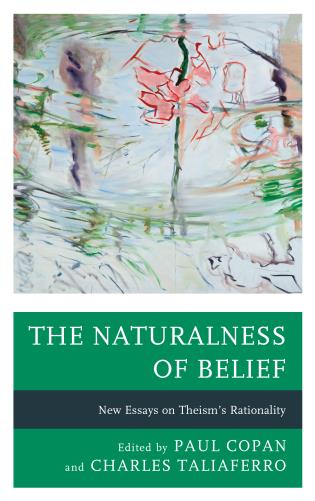
  • The Naturalness of Belief: New Essays in Theism’s Rationality.

    The book The Naturalness of Belief: New Essays on Theism’s Rationality recently arrived from the publishers and is available on Amazon. Matt contributed a chapter to this book entitled “Divine Commands and the Euthyphro Dilemma: Some Naturalistic Misperceptions” The Naturalness of Belief is edited by Paul Copan (Palm Beach Atlantic) and Charles Taliaferro (St Olaf College) and published by Lexington Books.

    The table of contents is as follows:

    Introduction
    Part I: The Unnaturalness of Naturalism?
    1. Naturalism and Naturalness: A Naturalist’s Perspective
    —Graham Oppy
    Part II: Foundational Considerations
    2. Is Naturalism Natural?
    —Charles Taliaferro
    3. The Contraction and Expansion of Naturalism and the Theistic Challenge
    —Charles Taliaferro
    4. Taking Philosophical Naturalism Seriously
    —R. Scott Smith
    Part III: Theistic Belief, Science, and Naturalism
    5. In What Sense Might Religion Be Natural?
    —Justin Barrett and Aku Visala
    6. Science, Methodological Naturalism, and Question-Begging
    —Robert Larmer
    Part IV: Axiology and Naturalism
    7. Alienating Humanity: How Evolutionary Ethics Undermines Human Rights
    —Angus Menuge
    8. Divine Commands, Duties, and Euthyphro: Theism and Naturalist Misunderstandings
    —Matthew Flannagan
    9. Beauty: A Troubling Reality for the Scientific Naturalist
    —R. Douglas Geivett and James Spiegel
    Part V: Naturalism and Existential Considerations
    10. Existential Arguments for Theistic Belief
    —Clifford Williams
    11. Psychological Factors Contributing to Atheism: Bad Father Relationships and Just Bad Relationships as in Autistic Spectrum Disorders
    —Paul C. Vitz
    12. The Cultural Implications of Theism versus Naturalism
    —Paul Copan and Jeremiah J. Johnston
    Part VI: Naturalism, Freedom, and Immortality
    13. Theism, Robust Naturalism, and Robust Libertarian Free Will
    —J.P. Moreland
    14. Naturalism, Theism, and Afterlife Beliefs
    —Jonathan Loose

    The blurb from Amazon is as follows.

    Despite its name, “naturalism” as a world-view turns out to be rather unnatural in its strict and more consistent form of materialism and determinism. This is why a number of naturalists opt for a broadened version that includes objective moral values, intrinsic human dignity, consciousness, beauty, personal agency, and the like. But in doing so, broad naturalism begins to look more like theism. As many strict naturalists recognize, broad naturalism must borrow from the metaphysical resources of a theistic world-view, in which such features are very natural, commonsensical, and quite “at home” in a theistic framework.

    The Naturalness of Belief begins with a naturalistic philosopher’s own perspective of naturalism and naturalness. The remaining chapters take a multifaceted approach in showing theism’s naturalness and greater explanatory power. They examine not only rational reasons for theism’s ability to account for consciousness, intentionality, beauty, human dignity, free will, rationality, and knowledge; they also look at commonsensical, existential, psychological, and cultural reasons—in addition to the insights of the cognitive science of religion.

    Get your copy now, read it, and let us know what you think both here and on Amazon.

  • Brad Hooker and Philip Quinn

    Most versions of Divine command meta-ethics  (DCM) contend that the property of being morally required is informatively identical with the property of being commanded by God.[1] A common objection to divine command meta-ethics is the horrendous deeds objection.  We can formalise this objection as follows:

    [P1] If DCM is true, then if God commands unjust actions unjust actions are morally required

    [P2] It is possible for God to command unjust actions

    [P3] It is not possible for unjust actions to be morally required.

    These three premises, entail a contradiction. [P1] conjoined with [P2] entails that it is possible for unjust actions to be morally required. However, this conclusion explicitly contradicts [P3]. Moreover, [P1] is clearly true. If I contend that  A and B are really the same property, then if any action that has A will also have B. So it follows that if an unjust action has the property of being commanded by God. It will also have the property of being morally required.

    Philip Quinn responds to the abhorrent commands objection, by rejecting [P2].[2] Quinn notes that on standard conceptions of God has certain character traits essentially. God is omniscient, omnipotent, but he is also loving and just. It is impossible however for a loving and just person to knowingly and deliberately command something incompatible with love and justice. If someone did this, they couldn’t coherently be called just or loving. The upshot is that [P2] is false. Affirming that a loving and just being commands injustice is to affirm something logically impossible.

    Hooker’s Critique

    Brad Hooker offers a response to Quinn.[3]  Hooker notes that DCM has the implication that “Before God made any commands, there were no moral requirements.”  However, Quinn suggests that God has the property of being just essentially, this means that requirements of justice must exist antecedent to any commands God issues.  But that means there are requirements of justice antecedent to requirements of morality.

    Hooker then offers the following argument:

    [P1]    If DCM is correct all moral requirements depend on Gods commands.

    [P2]:  If all moral requirements derive from God’s commands, then the require­ments cannot exist until the commands exist.

    [P3]: Even before God made any commands, there were requirements of justice constraining His commands.

    [C1]     Before God made any commands, there were no moral requirements (from premises 1 and 2)

    [C2] Requirements of justice were not moral requirements. (from P3 an C1)

    However, Hooker argues that [C2] is false.  He concludes:

    Since the logic of the above argument is valid, then if the argument’s conclusion is false, at least one of the argument’s premisses must be false. Premiss 2 cannot plausibly be denied. To reject Premiss 1 is to abandon the Divine Command Theory. So is Premiss 3 the one to reject? According to Quinn, even before God makes His first command, His inherent justice would keep Him from making unjust commands. To reject Premiss 3 is to abandon Quinn’s defence of the Divine Command Theory … [4]


    Response to Hooker

    I agree with Hooker that, if the conclusion of the argument is false, then at least one of its premises must be false. I also agree that a divine command theorist cannot abandon P1 or P2 and abandoning P3 commits him to abandoning Quinn’s defence of DCM.  The critical question is whether [C2] is false. Why is [C2] implausible? Hooker’s argument against [C2] is brief. He writes:

    However, requirements of justice are moral requirements. If they are moral requirements, then presumably they also were moral requirements (and will continue to be). Conclusion 2, therefore, seems false… the Divine Command Theory commits us to the implausible view that requirements of justice are not moral requirements.

    Noticing a subtle shift in this argument is important. In Hooker’s argument, C2 is the claim that “moral requirements of justice were not moral requirements. (emphasis mine). The “were” refers to the time before God issued any commands. P1 P2 and P3 do not entail that moral requirements are not moral requirements posterior to such commands. The divine command theorist could affirm, and I suspect probably will affirm, that antecedent to any commands by God, there were requirements of justice. But no one was under any moral requirement to act justly. Posterior to Gods commands, however, there is such a requirement. Hence while the requirements of justice are moral requirements now, they were not prior to God issuing any commands.

    A distinction made by John Mackie is illustrative here. Mackie famously argued for moral nihilism. According to Mackie, our moral discourse presupposes that objective moral requirements exist. He then argued that no such requirements do exist and so our moral discourse is systematically mistaken. Claims such as “Bill is morally required to act justly are false.

    Mackie’s thesis is jarring, to soften the blow he but that in denying moral requirements exist he points out he is “not denying that there can be objective evaluations relative to standards,” taking, as an example, the standard of justice:

    In one important sense of the word, it is a paradigm case of injustice if a court declares someone to be guilty of an offence of which it knows him to be innocent. More generally, a finding is unjust if it is at variance with what the relevant law and the facts together require, and particularly if it is known by the court to be so. More generally still, any award of marks, prizes, or the like is unjust if it is at variance with the agreed standards for the contest in question: if one diver’s performance, in fact, measures up better to the accepted standards for diving than another’s, it will be unjust if the latter is awarded higher marks or the prize …”[5]

    What follows from nihilism is instead that:

    The statement that a certain decision is thus just or unjust will not be objectively prescriptive: in so far as it can be simply true it leaves open the question whether there is any objective requirement to do what is just and to refrain from what is unjust, and equally leaves open the practical decision to act in either way.[6]

    On this Mackie is surely correct, a person who embraces nihilism and thinks nothing is really right or wrong can still understand the concept of what is loving and just. Such a person could know that this idea of justice entailed certain standards and paradigmatic examples and he or she could in many cases tell whether certain behaviour was loving or was in accord with the standards of justice. She or he also could choose to live in accord with these standards if he or she wanted to and she or he could choose not to live in accord with them. He or she could simply reject that there was any objective moral obligation to behave in accord with such standards.   The question of whether an action is just and loving and whether it is obligatory are, in principle, separate questions.

    This distinction is subtle but important, and it has application here. DCM entails that, prior to God’s commands, no action is morally wrong. This, however, does not mean that actions cannot be loving and just prior to God’s commands. Prior to God’s act of commanding, certain actions will be loving and just without it being the case that they are obligatory. Because God is loving and just he commands people to behave in loving and just ways so that actions which are just antecedent to his commands become morally required or obligatory posterior to such commands.

    It seems then that Hooker then is mistaken when he states “Divine Command Theory commits us to the implausible view that requirements of justice are not moral requirements.” Hooker here has moved from C1 which claims moral requirements were not moral requirements antecedent to God’s commands to the claim they are not moral requirements posterior to God’s commands.

    The only reason Hooker gives for this leap is to assert “If they [requirements of justice] are moral requirements, then presumably they also were moral requirements (and will continue to be).”  But apart from Hooker’s presumption, there is no reason to think that, and certainly no reason for a divine command theorist to believe this. As far as I can tell its coherent to claim that actions could be unjust but not obligatory prior to God’s commands.


    [1] I say most here, William Lane Craig, Robert Adams, C Stephen Evans, William Alston, and Peter Forrest all contend the property of being commanded by God and the property of being morally required are informatively identical. By contrast, Philip Quinn holds that Gods commands directly and immediately cause the existence of moral requirements. This difference though important will not affect the subsequent discussion of Philip Quinn.

    [2] Philip Quinn, “Divine Command Theory” In The Blackwell Guide to Ethical Theory, ed. H. LaFollette, (Cambridge, Mass.: Blackwell Publishers, 2000) 70-71

    [3] Brad Hooker “Cudworth and Quinn” Analysis 61: 4 (2001); 333-335

    [4] Brad Hooker “Cudworth and Quinn” Analysis 61: 4 (2001); 335

    [5] John Mackie “The Subjectivity of Values” in Ethics: Essential Readings in Moral Theory ed George Sher (Routledge, 2012) 184.

    [6] Ibid.

  • God and Moral Grounding Power

    A common objection to divine command theories of ethics (DCT) is that they make morality arbitrary. There are several ways this objection can be cashed out. The most common is what is called the ‘Horrendous deeds objection’. The Horrendous deeds objection can be formalised as follows:

    (1) If the DCT is true, then if God commanded us to rape people we would be required to rape people.

    (2) It is absurd that we could be required to rape people.

    (3) God could command us to rape.

     (4) Therefore, DCT is absurd.

    The key premise is (3), the assumption that it is possible that God could command horrendous actions like rape. Divine command theorists have responded by suggesting that (3) is dubious.  They assume a conception of God Whereby God is understood to be an immaterial person who is all powerful, all knowing, loving and just. So, as terms are defined, the claim that it is possible for God to command people to rape others would only hold if it is possible for an all-knowing, loving, and just person to command rape. This is unlikely. The very reason critics use the example of rape is that they view it as a paradigm action that no virtuous person could ever knowingly entertain.Jason Thibodeau

    Suppose, however, it is possible for a just and loving, omniscient person to command rape. Divine command theorists point out, this would mean rape would be commanded in situations where a just and loving person, aware of all the relevant facts, could endorse it– and under these hypothetical circumstances, it’ s hard to see how (2) could be maintained.

    1. Jason Thibodeau’s Argument

    In a recent article, published in Sophia, Jason Thibodeau updates the ‘Horrendous deeds objection’ to avoid this problem.[1] Jason starts by defining a concept which he refers to as moral grounding power. “Let us say that a being b has moral grounding power just in case the commands of b constitute moral obligations.” He continues “unless it is able to deny that other possible divine beings have this power, it implies that there are possible worlds in which horrendous acts are obligatory”.

    His argument for this conclusion is as follows:

    (P1) If DCT is true, then God has moral grounding power. (Premise)

    (P2) Any omnipotent being has the same powers that God has. (Premise)

    (P3) In some possible world, there exists a being that is like God except that he is not omnibenevolent [henceforth this being will be called Yod]. (Premise)

    (P4) If DCT is true, then Yod has moral grounding power. (From P1, P2, and P3)

    (P5) In some possible world, Yod commands the gratuitous torture of children. (Premise)

    (P6) If DCT is true, then there is a possible world in which the gratuitous torture of children is morally obligatory. (From P4 and P5)

    (P7) There is no possible world in which the gratuitous torture of children is obligatory. (Premise)

    (P8) DCT is false. (From P6 and P7) [2]

    Recently Jason and I discussed this argument on Capturing Christianity, here I want to lay out in writing my main objection to it. Let me stress that Jason and I are discussing this back and forth and my thoughts may alter as the discussion continues.

    A. Premise (P1): Does a Divine Command Theory entail that God has Moral Grounding Power?

    Let me begin with (P1) the claim that “ Given Jason’s definition of moral grounding power; this premise affirms that: “if God a divine command theory is true, then Gods commands constitute moral obligations”. Is this correct? The answer is it depends on the kind of divine command theory proposed. Divine command theorists contend actions are morally required if and only if and because those actions are commanded by God. However, the word “because” here can be used to describe different kinds of explanatory relationships.

    In an important article on this issue Stephen Sullivan[3] distinguishes between a causal explanation and an identity explanation. In a casual explanation, one explains the existence of A by citing some distinct thing B, which causes B to exist B. By contrast an identity explanation explains the existence of A by noting the existence of B and then saying that A just is (is identical with) B.

    There are important differences between saying B caused A and saying B is identical to A.  In a causal relationship, the explanandum (the thing being explained) and explanans (the explainer) are distinct things; the former is an effect the latter a cause. As a cause, the explanans exists prior to the explandum, and there is an asymmetric dependence relationship between them: If B causes A to exist then B does not cause A to exist.  The effect depends on the cause for its existence but not vice versa.

    In an identity relationship, the explandum (the thing explained) and explanans (explainer) are not distinct things at all; they are the same thing described in different terms. Because the explanans and explandum are identical, the explanans does not exist prior to the explandum, that would entail something existed prior to itself. Moreover, identity relationships are symmetrical: if A is identical to B then B is also identical to A. Sullivan subsumes identity relationships under a broader category of “constitutive” explanations which includes not just explanations in terms of identity relations but also relationships of non-reductive supervenience.

    Now if we turn to (P1), Jason states “If DCT is true, then God has moral grounding power” where “a being b has moral grounding power just in case the commands of b constitute moral obligations”. This assumes that divine command theorists are offering a constitutive explanation of moral requirements. But unless qualified,this assumption is dubious. It is true that some divine command theorists do this. Edward Wierenga (who Jason cites as an example) seems to have in mind a non-reductive supervenience relationship between moral requirements and Gods commands. Similarly, the divine command theories of Adam’s, Craig, Evans, Forrest, and Alston all contend that the property of being morally required is identical with the property of being commanded by God, and so they also offer a constitutive explanation of moral requirements in terms of Gods commands.

    However, other divine command theorists, do not offer a constitutive explanation of moral requirements. One important proponent of a divine command theory was Philip Quinn. Quinn explicitly offered a causal explanation of moral requirements in terms of Gods commands. Quinn argued that the property of being willed by God and the property of being morally required are not identical properties but distinct properties. God’s act of willing that a person performed an immediately caused it to be the case that a moral obligation to do this action existed.

    Strictly speaking then (P1) is false. Divine command theories per se do not entail that Gods commands constitute moral obligations. Some divine command theories do, and some do not. Of course, the most significant divine command theories defended today involve identity explanations, and so these theories do have the entailment Jason refers to. For this reasons one might think my qualifications are a tad pedantic. However, the difference between causal and constitutive divine command theories will become important when we examine further premises.

    B.Premise (P4): Is the Inference Valid?

    Before, examining premise (P2), let me first say something about the Jason makes in (P4).

     (P4) If DCT is true, then Yod has moral grounding power. (From P1, P2, and P3)

    Notice that (P4) draws an inference from (P1) (P2) and (P3). It takes the fact that a divine command theory entails that God has “moral grounding power” and, the fact that omnipotent beings have the same powers, and infers from this that any omnipotent being will have moral grounding power. If this inference is valid, the word “power” must have the same meaning in (P1) as it does in (P2). When Jason states in (P2) that Any omnipotent being has the same powers that God has, the word “powers” must include the kind of moral grounding power he refers to in (P1). If  this isnt the case the inference commits the fallacy of equivocation.

    C. What does the word “power” mean in (P1) and (P2)?

    It’s precisely on this last point however that I think Jason’s argument falls down.  Jason supports (P2)   by asking us to imagine a being like God, who is omnipotent but lacks the property of benevolence: He then asks whether such a being would “in virtue of his malevolence, lack the power to flood the earth, destroy a planet or create the universe? “. He concludes “If the being is omnipotent, this seems unlikely, it’s hard to see how the mere absence of benevolence would limit Gods power in this way. “

    I find this claim intuitively plausible, but note carefully the examples Jason uses here. He gives the examples of “lacking the power to flood the earth” “destroy a planet” “create a universe” these are all acts of causal power, where God by his actions causes something distinct from himself to come into existence or go out of existence.

    However, in his first premise (P1), Jason uses the word power in a different sense. He refers to “moral grounding power” which a being has  “just in case the commands of b constitute moral obligations”. Moral grounding power then isn’t the power God has to cause moral obligations to come into existence its rather the God’s ability or power to constitute moral requirements with his commands. We saw above that, in the context of divine command theories, constitutive explanations can involve the postulation a non-reductive supervenience relationship between Gods commands and moral requirements. However, in most cases, divine command theorists who offer a constitutive explanation of moral requirements are offering an “identity” explanation.  Divine command theorists like Craig, Evans, Adams, Forrest, all contend that the property of being morally required is identical with the property of being commanded by God.

    This means that the phrase “moral grounding power” is often just a technical way of saying that, the property of being commanded by God is identical with the property of being morally required.  The property of being obligatory isn’t something that is caused to come into existence by Gods commands; it just is the property of being commanded by God by a different name. Just as the morning star and evening star are the same thing under different descriptions. The property of being morally required and being commanded by God are the same property under different descriptions.

    The problem is that while (P2) is intuitively plausible if you are referring to causal powers. It is not so obvious when one is talking of something like a moral grounding power.  To say God has moral grounding power could just mean that God has the power to perform actions which are identical with God’s actions under a different description. However, it is impossible for any person who is not God to have this kind of power. This is because the relationship of identity can only hold between a thing and itself. It is impossible for any being, no matter how powerful, who is not God to perform actions which are identical with God’s actions. This is an incoherent idea.

    Let me illustrate this: By waving my hand I can make it the case that Matthew Flannagan Has waved his hand. However, it is not possible for anyone else, even an omnipotent being to do this. An omnipotent being has the causal power to make me wave my hand. If he becomes incarnate in human form, he could himself wave his hand. However, he could not make it the case that his standing up is identical with me standing up. That is because his actions are not identical to my actions.  Nor is it possible for him a distinct person from me to perform actions which are identical with actions I perform. If you want to refer to this ability as a power, then it is a power that it is metaphysically impossible for anyone but me to have. The only person who can perform actions numerically identical to my actions is me.

    Conclusions:

    Above I noted that the inference he draws in P4 is valid. Only if the word “power” is used the same way in both premises P1 and P2. The kind of power, God, is said to have when Jason states “Any omnipotent being has the same powers that God has” must include the kind of power he has in mind when he states “If DCT is true, then God has moral grounding power”.

    We have seen that this is not the case. In our discussion of P1, we noted that the claim “If the DCT is true, then if God commanded us to rape we would be required to rape” is true only of divine command theories which do not postulate a causal explanation of moral requirements. In other words (P1) is true only in cases where the word “power” excludes causal relationships. (P2) however is defensible only if the word power refers to causal powers. If it is understood more broadly to refer to constitutive explanations of Gods commands (P2) is false. It isn’t true that any omnipotent being can perform an action which is identical with the action of another being. The crucial premise (P4) then commits the fallacy of equivocation.


    [1] Jason Thibodeau, “God’s Love is Irrelevant to the Euthyphro Problem” Sophia:1-17 (forthcoming)

    [2] Jason Thibodeau, “God’s Love is Irrelevant to the Euthyphro Problem” 9,

    [3] Stephen Sullivan, “Arbitrariness, divine commands, and morality” International Journal of Philosophy of Religion 33 (1) (1993) 33-45

  • Matthew Flannagan (MandM) and Jason Thibodeau (Secular Outpost) Debate God and Morality

    Yesterday, I had a long and enjoyable public discussion with Jason Thibodeau on the topic of The Euthyphro dilemma.

    Jason is a writer for the Secular Outpost and teaches philosophy at Cypress college in California. He also is the author of a recent article entitled “God’s Love is Irrelevant to the Euthyphro Problem” published in Sophia  The team at Real Atheology recently interviewed Jason about his paper a couple of weeks prompting  Cameron Bertuzzi from Capturing Christianity to have both of us discuss the matter further on his youtube channel.

    Those who follow MandM regularly will know, Jason and I have been engaging in written exchanges on this issue for several years and he has always been a thoughtful and intelligent dialogue partner. Jason has raised some challenging responses to my arguments and yesterday’s two-hour discussion/ debate was no different. It was one of the better dialogues I have had on religion and morality in a long time. Hopefully, the dialogue generates more light than heat.

    The whole dialogue is available on YouTube here:


  • “Robust Ethics and the Autonomy Thesis” Now Online

    Recently, Philosophia Christi published Matt’s article “Robust Ethics and the Autonomy Thesis: A reply to Erik Wielenberg”. This article consisted of some critical commentary and responses to Erik Wielenberg’s bookdefaul1 Robust Ethics: The Metaphysics and Epistemology of Godless Normative Realism.

    Since then Matt’s article has received a little bit of unexpected attention. One of my arguments was discussed in a dialogue between William Lane Craig and Erik Wielenberg that took place at North Carolina State University earlier this year, and on the back of this, we have received several received requests to read the paper. It is now available here: Flannagan Robust Ethics PC 19 2 (1)

    Permission has been granted from the Editor of Philosophia Christi to upload this contribution. Learn more about the Journal by going to www.epsociety.org/philchristi.