In, my article “Tooley Plantinga and the Deontological Argument from Evil”, I argued that Tooley’s specifically deontological version of the argument from evil fails. To summarise very briefly, Tooley’s version of the argument assumes that God has moral obligations. However, according to a fairly mainstream theistic position on the relationship between God and morality, the wrongness of an action consists in its being forbidden by God. Given that God does not issue commands to himself, it follows that he has no obligations. Tooley’s argument, therefore, contrary to his own protestation, relies on controversial substantive moral assumptions, which many theists reject.
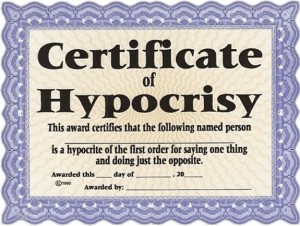 In this post I want to respond to two objections to this line of argument. The first contends my position is contradictory or incoherent; one cannot coherently deny that God is subject to the commands he issues to human beings. The second contends my argument makes God a cosmic hypocrite. Human morality consists of God saying to us, “do as I say not as I do”.
Let us look first at the accusation of incoherence. Central to theism is the notion that God is essentially good. In my paper I set this out in terms of God possessing certain character traits: God is loving, just, impartial, omniscient, and so on. God’s possession of these traits, however, limits the kind of commands one can coherently attribute to God. Specifically, his commands must express these traits in some sense, or in the very least not contradict them. To say God is just, for example, and impartial and loving but then attribute to him commands that are unjust, hateful and partial would be incoherent.
So far so good, here is the alleged problem. If God’s commands express (or are consistent with) his essential character, then how can it be consistent with his character to not act in accord with those same commands? If God commands us to refrain from performing some action then it would be a contradiction of his character if he himself does not refrain from that action.
This objection contains a false premise. It assumes that if one person’s commands to another person reflects certain character traits then consistency with those character traits means the first person must, themselves, follow that command. This is false. Consider an example. A loving parent sets their 9 year old daughter a bedtime of 8:30 pm. This parent’s command reflects their loving character, it does not follow, however, that being loving requires that the parent herself must go to bed at 8:30 pm. Or consider an experienced surgeon. Out of concern for his patients he prohibits inexperienced junior surgeons from performing certain operations without supervision. This does not mean his concern leads him to refrain from doing this surgery himself.
This also provides an answer to the second objection that human morality consists of God saying “do as I say, not as I do”. While the sarcastic slogan may have an effective use in certain contexts to show up a person’s hypocrisy, the idea that you cannot legitimately counsel or command another to not do something that you, yourself, do is false. Parents tell children to go to bed at 9:00 pm without themselves being morally required to go to bed at 9:00 pm. Governments prohibit private citizens from punishing people for crimes yet that does not entail governments cannot punish crime. Stunt-men warn those who watch their stunts to “not try this at home”. Husbands object to other men attempting to make love to their wives, it does not follow they themselves do not make love to their wives, and so on. The point is that in many contexts the difference between people’s knowledge, character, abilities, relationship, and authority mean it is perfectly appropriate for one to tell the other to do something that she herself would not do.
It does not follow, therefore, from the fact that a God commands us to refrain from a certain action, that that God himself could never do that action.
 The paperback version of the Kindle book,
 I was recently on a panel at Auckland University where an audience member raised the issue during the Q&A of religious pluralism. The issue is commonly raised as a rhetorical challenge, “isn’t it arrogant to believe Jesus is the only way?” In a world where there exists widespread religious pluralism, where there are people who are just as intelligent, educated, and ostensibly as sincere as we are who hold to and pratice a different religion to Christianity or no religion at all, how can a Christain maintain that she is right and everyone else is wrong. Isn’t believing that Jesus is the only way simply arrogant?
 Loftus’ first argument in
 Come Let Us Reason is the third book in a series on modern Christian apologetics that began with the popular Passionate Conviction and Contending with Christianity’s Critics. The nineteen essays here raise classical philosophical questions in fresh ways, address contemporary challenges for the church, and will deepen the thinking of the next generation of apologists. Packed with dynamic topical discussions and informed by the latest scholarship, the book’s major sections are:

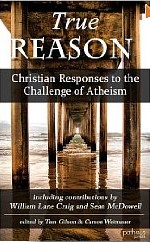 “While New Atheists like Richard Dawkins, Sam Harris, and others proclaim loudly their rationality, clear thinking, and incontrovertible scientific arguments, others are beginning to wonder how genuinely rational they are. Have they proved anything? Have they argued convincingly? Have they pinpointed any real challenges to the credibility of Christian faith?
 Before I begin, I should point out that I have been on the Kapiti coast for the last week at a TSCF (Tertiary Student Christian Fellowship, a cousin of Inter-Varsity) retreat where I was without internet. Hence it’s only in the last day that I’ve learned that Professor Rauser has kindly taken the time to respond to my initial article. So I apologize for my delayed response.
 But now to specifics: How does Rauser respond to my claim that the arbitrariness objection (at least if it is to be an objection) begs the question against Calvin’s doctrine of election? On the face of it, he doesn’t seem to challenge my point that God may not be acting unjustly if we are undeserving of salvation. To the contrary, Rauser seems to admit for the possibility that the tortures may be justly deserved. But if that’s the case, then, as I tried to point out in my first post, there’s no real injustice or immoral state of affairs that obtains if God so desires to instantiate those punishments. Paradoxically though, Rauser refers to my theology as “brutal” and “morally incoherent”. Both of these terms, emotionally provocative as they are, seem to suggest that there is something nasty, horrible, evil (whatever negative adjective your heart desires) about a God that selects some for salvation while selecting others for damnation. But if, as Rauser seems to allow, the tortures are justly deserved, then none of those adjectives can rightly be said to stick. After all, if the tortures are justly deserved, and God decides to carry out those tortures, then God can only be said to be doing what the demands of morality and/or justice require. So wherein does the moral incoherence obtain?