The “New Teleological Argument” is a theistic argument which attempts to show that theism is more probable than the postulate of an “atheistic single universe”[i]. There are number of reasons why this argument is termed the “New” teleological argument. Chief among these reasons is that its explanandum i.e. the incredible fine tuning of the laws […]
Entries Tagged as 'Faith and Reason'
Comparing the Old & New Teleological Arguments
October 20th, 2011 78 Comments
Tags: Apologetics · Design Arguments · Evolution · Fine-Tuning · Natural Theology · Philosophy of Religion · Robin Collins · Teleological Arguments · The Likelihood Principle · William Paley
In Defense of Reasonable Disagreement
May 30th, 2011 39 Comments
At the close of his 1967 book “God and Other Minds”, Alvin Plantinga argues that if theistic belief is to be dismissed as “irrational”, or in some sense “epistemically sub-par” on the basis that it lacks a rationally compelling argument, then likewise we should also reject belief in other minds, since the best argument for […]
Tags: Alvin Plantinga · Analogical argument · Disagreement · God and Other Minds · Rationality · Reformed Epistemology · Religious Epistemology · Richard Feldman · Theism · Theists
I’m so Objective about how You’re so Subjective
May 25th, 2011 19 Comments
One general objection to theistic arguments for God is that no such argument could be based on the subjective experience of one’s own cognitive processes, and that therefore it suggests delusions of grandeur to think that one can get from such a basis to God necessarily existing. But to deny that a sound argument could […]
Tags: Atheism · Faith and Reason · Objectivism · Subjectivism · Theism
Guest Post: One Less God
May 18th, 2011 92 Comments
Bethyada from True Paradigm writes: I have read a few posts on the ‘one less god’ proposition. Stephen F Roberts originally put it, “I contend we are both atheists, I just believe in one fewer god than you do. When you understand why you dismiss all the other possible gods, you will understand why I […]
Tags: Bethyada · Douglas Wilson · Guest Post · One Less God · Pluralism · Sam Harris · Stephen Roberts
Undesigned Coincidences in the Gospels – Tim McGrew
April 14th, 2011 28 Comments
If we have a question on the historicity of the resurrection, Timothy McGrew is our first port of call; there is no one we would turn to before him on the subject. Tim is also highly regarded for his work on probability theory and on miracles – he is the author of “Miracles” for the […]
Tags: Faith and Reason · Historical Apologetics · Lydia McGrew · MP3 · Timothy McGrew
The Presumption of Theism
February 23rd, 2011 87 Comments
Modern analytic philosophy of religion, so it seems, is largely dominated by purely theoretical and evidential considerations. That is, the question of whether or not theistic belief is rational is decided purely on the balance of total available public evidence as opposed to existential and pragmatic considerations. The addition of the term “public” to the […]
Tags: Atheism · Happiness · The Presumption of Theism · Theism · Worldview analysis
Abraham, Isaac, Virginity, Rape and Child Killing (Another Old Testament Ethics Post)
January 23rd, 2011 89 Comments
Randal Rauser has published a blog post touching on Old Testament ethics called “An update in the wake of Atlanta (plus a bit on rape and child killing)“. His post gives an update on his thoughts following his interaction with Paul Copan, Richard Hess and myself in the Evangelical Philosophical Society’s break-out panel discussion “Is Yahweh […]
Tags: Abraham and Isaac · David Boonin · Don Marquis · Evangelical Philosophical Society · Homicide · John Hare · Michael Tooley · Old Testament Ethics · Paul Copan · Peter Singer · Randal Rauser · Richard Hess · Society of Biblical Literature

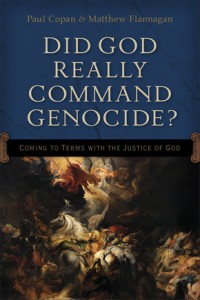 A common objection to belief in the God of the Bible is that a good, kind, and loving deity would never command the wholesale slaughter of nations. In the tradition of his popular Is God a Moral Monster?, Paul Copan teams up with Matthew Flannagan to tackle some of the most confusing and uncomfortable passages of Scripture. Together they help the Christian and nonbeliever alike understand the biblical, theological, philosophical, and ethical implications of Old Testament warfare passages.