Category: Political Philosophy

  • Some subversive thoughts on immigration

    I’ve been thinking recently about the moral issues surrounding immigration. This is partly because it’s an issue I’ve never really studied in depth, and partly because it’s become a massive political football.

    Here’s a thought that came to me. As I understand it, the right of a refugee to seek asylum in international law has Christian roots, which in turn draw on certain passages in the Torah, such as this one:

    You shall not hand over to his master a slave who has escaped from his master to you. He shall live with you in your midst, in the place that he chooses in one of your towns where it pleases him; you shall not mistreat him.(Deut 23:15-16)

    This law contrasts with common legal practice in the ancient Near East, where people were legally required to return any runaway slaves. Consider, for example, the Laws of Hammurabi (c. 1750 BCE):

    LH §16: If a man should harbor a fugitive slave or slave woman of either the palace or of a commoner in his house and not bring him out at the herald’s public proclamation, that householder shall be killed.

    Or a fifteenth-century BCE treaty between two Syrian kings:

    If a fugitive slave, male or female, of my land flees to your land, you must seize and return him to me; (or), if someone else seizes him and takes him to you, [you must keep him] in your prison, and whenever his owner comes forward, you must hand him over to [him].[1]

    Jefferey Tigay explains:

    The only thing remotely close to this biblical law in the ancient world is the practice at certain temples of granting asylum to slaves fleeing harsh treatment by their masters. Generally, such asylum was not permanent; it protected the slave until he could come to terms with his master or, as a last resort, was sold to another master. By contrast, the biblical law is absolute and treats the whole land of Israel as a sanctuary offering permanent asylum.[2]

    Notice what the Torah passage states: it forbids Israel from deporting someone who has escaped into their nation to escape slavery, and it prohibits restricting their freedom of movement within Israel or limiting their choice of where to live. (Here the “you” is a collective reference to Israel, not simply “your” towns.)

    I was familiar with this passage, but I was struck by its possible application to modern immigration.

    Let’s begin with some historical examples.

    Example 1 (1850). The Fugitive Slave Act required citizens of states where slavery had been criminalized to assist in the capture and return of escaped slaves who had made their way into those states. Abolitionists at the time quoted Deuteronomy 23:15–16 to justify refusing to comply with this law.

    So: you live in a free state in 1850. You discover the whereabouts of a runaway slave who is fleeing an abusive master. Do you (a) comply with the Fugitive Slave Act and hand him over to the authorities, or (b) conceal his whereabouts to prevent his capture? I think most of us would agree that (b) is the right thing to do.

    Example 2 (1930s). The Nazis persecute Jewish people across Europe. Thousands of Jews flee and seek to emigrate, but protectionist U.S. immigration policies mean many are refused entry. You discover a German Jewish overstayer. Do you (a) inform the authorities so he is deported back to Germany, or (b) help conceal his whereabouts? Intuitively, (b) again seems the morally right course; (a) would be immoral.

    Example 3 (contemporary). It is 2025. The Taliban rule Afghanistan. You discover an Afghan overstayer who fled the Taliban; if reported, he will be deported. Do you (a) report him, or (b) conceal him? Or you discover an undocumented Mexican restaurant owner in California who fled cartels, or a Nigerian Christian overstayer who fled persecution? Do you disclose their legal status or do you conceal it? From what I read, many American evangelicals appeal to Romans 13—“obey the government”—to argue that Christians must support the deportation of illegal aliens because the law has been broken in these cases.

    So here is my question: how do these 2025 cases differ in principle from examples 1 and 2? In all cases, the person is illegally in the country while fleeing life-threatening danger—slavery, genocide, Taliban rule, cartels. Is there a principled difference between returning a slave to his master and sending someone back to the Taliban or cartels? If those who defied the Fugitive Slave Act were doing the right thing, why must we follow the law here?


    [1] Jeffrey H. Tigay, Deuteronomy, JPS Torah Commentary (Philadelphia: The Jewish Publication Society, 1996), 387.

    [2] Tigay, Deuteronomy, 215

  • Yet Another Lawyer Agrees: Marriage Amendment Act Bill is an Affront to Freedom of Religion and Belief

    Barrister Ian Bassett has given another opinion describing the risks to freedom of religion and belief of Louisa Wall’s Marriage Amendment Act Bill if it is enacted in its presently proposed form, which would include this amendment:

    “Without limiting the generality of subsection (1), no celebrant who is a minister of religion recognised by a religious body enumerated in Schedule 1, and no celebrant who is a person nominated to solemnize marriages by an approved organisation, is obliged to solemnize a marriage if solemnizing that marriage would contravene the religious beliefs of the religious body or the religious beliefs or philosophical or humanitarian convictions of the approved organisation.”

    It is clear that any marriage celebrant exercising their public function who is not covered by the amendment risks being in breach of the New Zealand Bill of Rights Act 1990 and the Human Rights Act 1993 if they refuse to perform their public function as marriage celebrants because it is a same sex couple seeking to be married.

    Injustice

    Church ministers, marriage celebrants, court registrars, church elders, leaders, photographers and caterers and any other person or entity supplying services to the public risks being in breach of the Human Rights Act 1993 if they refuse to supply services to a couple seeking to be married because the couple are same sex. For some this could also mean risking their employment.

    Service providers to the public risk being in breach of the Human Rights Act 1993 if they refuse to supply services to a married couple because the couple are same sex.

    The New Zealand Law Society’s Law Reform Committee headed by Professor Paul Rishworth LLB (Hons) M Jur highlighted the risk to freedom of religion and belief in the Bill in its submission to Parliament:

    “The proposer of the Bill said that the Bill was not intended to compel marriage celebrants to perform marriages contrary to their religious beliefs. However, in the Law Society’s view, Professor Rishworth says it is arguable that marriage celebrants who refuse to perform same-sex marriages will be acting unlawfully under the Human Rights Act 1993, the New Zealand Bill of Rights Act 1990, or both.

    “We want to highlight arguable conclusions which seem to be at odds with the settled intentions of the Bill’s drafters. Whatever the position, the Law Society believes it makes sense to put the matter beyond doubt,” Professor Rishworth says.

    The only thing that the amended Bill puts beyond doubt is that the critics of those raising fears about the Bill’s threat to freedom of religion and belief were wrong. By recommending an amendment the Select Committee are agreeing that a risk existed, as the likes of Ian Bassett, Grant Illingworth have argued, contra to The Human Rights Commission’s claim that all “…religious officials and leaders are free to refuse to perform marriages that are not in accordance with their religious beliefs.”

    Bassett, Illingworth and Rishworth are not alone with their concerns among the legal fraternity.

    Graeme Edgeler, a Wellington Barrister has been quoted in the Herald saying:

    … if an independent celebrant declined to marry a same-sex couple, the couple could then complain to the Human Rights Commission.

    “It’s not about [celebrants] being forced, it’s about people getting in trouble afterwards if they didn’t,” he told APNZ.

    “They’re not breaking any rule in the Marriage Act, but rules in other acts. The main one would be the Human Rights Act, which says you can’t discriminate on the basis on sexual orientation or gender.”

    Auckland Barrister Rachel Wong has raised issues against the Bill.

    This blog’s Madeleine Flannagan LLB, Associate Barrister and Solicitor at Coast Legal, adds her voice:

    “The Bill, in its present form, fails to protect individual freedom of religion and belief (belief being a comprehensive viewpoint not based on religion). The proposed amendment only protects group religious rights, which is little protection at all for most religious celebrants as few denominations hold formal views on marriage, many practitioners of religion do not belong to a group and for those that do they might hold a different personal view on this topic to the group view. The amendment then fails to protect the religious freedom of most religious celebrants just as it utterly fails to protect the freedom of belief of non-religious celebrants who have no group to appeal to to protect their freedom.”

    Ian Bassett’s latest opinion thoroughly analyses the legal effects of the amended Bill, a summary as to whose freedom of religion and belief it protects and whose it does not follows: (more…)

  • “Jesus – Left or Right or Neither?” Hear Matthew Flannagan Interviewed on Radio

    Radio RhemaPat Brittenden interviewed this blog’s Matthew Flannagan on whether Jesus was a political figure or not on Wednesday 1 August 2012 on his morning show on Radio Rhema.

    Click here to hear Matt on “Jesus – left or right or neither?”

  • Contra Mundum: Consenting Adults and Harm

    In debates over abortion, homosexual conduct, euthanasia, prostitution, drugs, those who call themselves liberals often mount the same basic argument; a socially or morally permissive stance is necessitated towards such practices because people have a right to choose do what ever they like with their own bodies. As John Stuart Mill put it in his book On Liberty:

    “The only part of the conduct of anyone, for which he is amenable to society, is that which concerns others. In the part which merely concerns himself, his independence is, of right, absolute. Over himself, over his own body and mind, the individual is sovereign.” [Emphasis added]

    John Stuart Mill

    Here Mill articulates the harm principle. He makes a distinction between other-regarding actions, actions that harm other people, and self-regarding actions, those that harm oneself. He argues that society, either by law or by social pressure, cannot justly regulate any action a person performs unless it is other-regarding; that is, it harms people other than the agent him/herself.

    As Mill’s position is typically interpreted, harm is understood to be governed by the principle volenti non fit injuria (where there is consent there is no injury); it refers to things done to other people without their consent. Mill states that a self-regarding action is one “which affects only himself, or affects others with their free and voluntary, and undeceived consent”.

    Mill intended his principle to be criteria as to what should and should not be made a criminal offence; he did not consider it criteria for determining what is right and wrong. Yet many contemporary liberals appear to use it in this latter way. They contend that as long as the action involves only consenting adults it is morally permissible. It is often asserted in our society, as though it were self-evident, that people have a moral right to do whatever they like with their own bodies.

    I think this claim is far from self-evident. Irving Kristol famously proposed this counter-example in a 1971 article in New York Times Magazine:

    “[T]he plain fact is that none of us is a complete civil libertarian. We all believe that there is some point at which the public authorities ought to step in to limit the “self-expression” of an individual or group even where this might be seriously intended as a form of artistic expression, and even where the artistic transaction is between consenting adults. A playwright or theatrical director might, in this crazy world of ours, find someone willing to commit suicide on stage, as called for by the script. We would not allow that-any more than we would permit scenes of real physical torture on the stage, even if the victim were a willing masochist. And I know of no one, no matter how free in spirit, who argues that we ought to permit gladiatorial contests in Yankee stadium, similar to those once performed in the Coliseum of Rome-even if only consenting adults were involved.”

    The examples Kristol gives are all cases where any person of common sense would condemn the act but where all the victims consent to be harmed.

    In his book Harmless Wrong Doing: Moral Limits of the Criminal Law, Liberal Political Philosopher Joel Feinberg considers Kristol’s objection as the most important and potentially-devastating counter-example to the harm principle and he spends considerable energy attempting to circumvent it. He offers four responses. Here I will argue that these responses fail.

    First, Feinberg questions whether such cases are really cases of consensual homicide. He suggests (more…)

  • The Pretensions of Democracy and the Egypt Riots

    The secular west has a secular gospel. It is the good news of democracy. When problems assail a nation, all would be assuaged if not solved if it had more democracy. And so it has come to pass with respect to Egypt.

    The West is not unique in that it has its own version of gospel. All human cultures, religions, and peoples have a gospel of some kind. The word “gospel” of course means good news. The gospel of any society is the proclamation of what that society believes will make things right. Whatever a culture looks to as the “super problem solver” is its saviour. Proclaiming and touting that “saviour” is its gospel. That gospel reaches the status of being established in a society when its promises and claims are seen as self-evident and beyond question. Whenever a culture fails to achieve a consensus view of what its saviour is, it has no gospel: fracturing is inevitable.

    In the West, under the aegis of its established religion of secular humanism, democracy is it. It is easy to understand why democracy has become the West’s established gospel of choice. The West is primarily about the glorification and celebration of man. Democracy is that form of government which does respectful obeisance to man–it is the system of government which seems to accord most closely with the idea that man is his own self-saviour. If man is his own self-saviour, then democracy is the form of government which brings man into a position of institutional supremacy in society. The will of the people is the voice of our god.

    So, if any society has problems (and all do), a system of government which institionalises and reifies the will and wisdom of man must be better, if not best. Democracy facilitates man taking control of his own destiny and this will result in the solving and resolution of all problems.

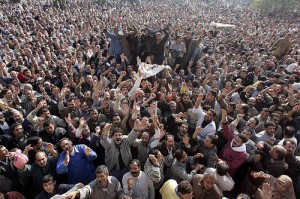
    Egypt RiotsAs the West opines and pontificates over Egypt it cannot help but project its gospel upon that country. The future for Egypt would be much more assured and all problems would be mitigated if the government were to become less authoritarian. If free and fair elections were held and the people had a voice all would be well, or at least better. How beautiful upon the mountains are the feet of those who come proclaiming the gospel of democracy. What a tingle goes up the spine when our high priests in the West proclaim our secular liturgical chants.

    Problem number one. (more…)

  • The New Zealand Association of Rationalist Humanists and the Privileging of Secularism

    The New Zealand Association of Rationalist Humanists (“NZARH”) has a statement of aspirational ideals for the New Zealand state on their website. Entitled “The Tolerant Secular State” it is anything but.

    The first two sentences of the document exhibit a confusion which is inherent throughout (and commonly found in discussions of church and state):

    Lord Voldemort

    “The NZARH strongly believes that government should be secular; that is dealing with the issues of this world rather than following a religious agenda. Our law should not give one set of beliefs privilege over another and the state should treat religious organisations the same as any other organisation.”

    An equivocation on the meaning of the word “secular” in the very first sentence is immediately apparent.

    Stephen Smith notes that the word secular has two distinct meanings. Etymologically, “secular” refers to things pertaining to this world and life as opposed to the next. In this sense of the word “secular” is not opposed to religion; many religious beliefs and values pertain to life in this world, beliefs about: marriage, sex, human life, killing,  justice for the poor, what one’s duties are in this life, what God’s purposes are in this life and so on are all secular beliefs in this sense. The second and more common meaning of “secular” is to say it excludes, is in opposition to beliefs and values that are religious in nature; this is usually the first definition one will find in a dictionary.

    The NZARH use both meanings in the first sentence of their “Tolerant Secular State” document (more…)

  • The Separation of Church and Self: Rethinking Separationism

    Is it just for a pluralistic society to ground its public policy on religious premises? What role should religion play in such a society? Debate over questions like these has figured in theology, philosophy, political science, jurisprudence and popular culture for centuries. In contemporary Western pluralistic society the debate continues. Even for those unfamiliar with its nuances at the higher levels the effect of the standard view, as described by Stephen Carter, is immediately familiar:

    “One good way to end a conversation – or start an argument – is to tell a group of well educated professionals that you hold a political position (preferably a controversial one such as being against abortion or pornography) because it is required by your understanding of God’s will. In the unlikely event that anyone hangs around to talk with you about it, chances are that you will be challenged on the ground that you are intent on imposing your religious beliefs on other people. And in contemporary political and legal culture, nothing is worse.”[1]

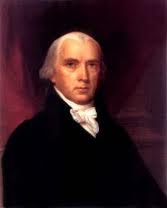
    James Madison

    Carter is referring to the separationist understanding of religion and public life, the idea that in a contemporary pluralistic society significant restraint must be put on the political role of religious reasons. This restraint is negative; when a functionary deliberates over a proposed policy it is not justified for that functionary to decide to support or oppose that policy on grounds derived from religion. A corollary of this is that citizens should not try to influence public policy by appealing to religious reasons. Separationists argue that the public policy of a pluralistic society must be able to be justified by a plausible secular justification in order for it to be just to all. Religious beliefs, while utilised and followed in private, should be kept separate from public policy debates, the administration of public institutions and the deliberation of public functionaries. (more…)