Category: Apologetics

  • Back from the USA

    The CrowdMadeleine and I flew back to New Zealand from Milwaukee on Tuesday having both attended the Evangelical Philosophical Society Annual Meeting, the Annual Meeting of the Evangelical Theological Society, and the Evangelical Philosophical Society’s Apologetics Conference. Prior to that I had spent three weeks based in Charlotte, North Carolina. I will speak about the  conferences later in this post but first I will summarise what I did in Charlotte.

    Charlotte
    My work in North Carolina can be divided into several categories.

    First, and this was the bulk of what I did, I did a bit of speaking on a lecture circuit at various campuses in North Carolina on issues relating to God and Morality for Ratio Christi. Formally, this involved, driving to a campus, delivering a lecture and then taking a Q&A.

    Speaking at UNC CharlotteI learned very quickly that there was a lot more to what I was doing than the formal activity of giving lectures; in fact, most of the more important work was the informal stuff that went on behind the scenes.  In addition to presenting lectures, there was often an equally important informal component. Often I would meet with students before the lecture  and discuss the challenges they were facing as Christian students in a secular campus. I would offer advice, counsel, support, etc. On other occasions I would, in addition to giving the lectures, meet with the supporters and financiers of the people running student ministries and discuss with them the importance of Apologetics and of developing an intellectually robust faith among students.  I found that the most important and constructive engagement and interaction with people typically occurred in these informal contexts.

    Speaking at Appalachian State UniversitySecond, in addition to my major task of giving lectures, on the weekends I gave instruction in churches. After my first week I was part of a missions team that spent a weekend teaching at a church in a nearby Cherokee Reservation.  The weekend after that I taught an adult education class in a Community Fellowship Church of North Carolina. The  following weekend I preached from the pulpit.  One Sunday evening I attended a service at a Slavic Baptist church where almost the entire service was in Russian and we needed a translator to follow what was being said. After the service I was one of a team of people who spoke to the youth group; I spent several hours fielding their very astute and intelligent questions about the Christian faith.

    This work was very challenging. It is one thing to give lectures at a university when one has, as I have, spent years studying and working in universities. It is quite another speaking to Cherokee Native American Indians one week, Southern Americans the next and youth from Slavic Immigrant Families the next – especially when my own culture is Kiwi!

    Third, and finally, I worked with the students at Southern Evangelical Seminary. One night when I was not lecturing, I presented an academic paper to students and graduates from the seminary, which was followed by a discussion. Another night I travelled to Belmont Abbey, a Catholic Liberal Arts College to dialogue with a Catholic theologian about the relative strengths of Natural Law Theory verses Divine Command Meta- Ethics.

    Both events were focused on seminary students, to get them to be presented with new or different material to what they were familiar with so they could ask questions and be stretched in their intellectual development.  I found the work over those three weeks very taxing physically, yet I enjoyed it immensely. I was giving lectures at universities, back to back, almost every day; I was often travelling for hours to and from the university in question and sometimes I would have to stay overnight with billets. As noted above the diversity of what I did stretched me.

    Lecturing on campuses to potentially hostile audiences is challenging enough, particularly when one throws in a Q&A. It becomes more so when there are obvious cultural barriers such as my indecipherable New Zealand accident and tendency to speaK too quickly because of the speed of my thoughts!  But, in addition to this, I was required to  give a talk to theology students, to Slavic youth, adult congregants, North American Indians on Reservations, and people from a country not my own in general – these contexts forced me to adapt my material fairly quickly to these new contexts with very little prep time.

    Milwaukee
    Madeleine, Bill Craig and IThe business end of my trip however was the conference in Milwaukee. On Wednesday 16 November 2012. Both Madeleine and I presented papers at the Evangelical Philosophical Society’s Annual Meeting. In the morning I presented my paper “Peter Singer, Human Dignity and Infanticide”; this was a critical look at Peter Singer’s account of the wrongness of killing and some of his attempts to revise his position in light of criticisms by Don Marquis.

    EPS Panel DiscussionIn the afternoon, Madeleine and I were on a panel discussing the  book Being Good: Christian Virtues for Everyday Life along with Mary Jo Sharp, Cristian Mihut and the book’s Editors, Michael W Austin and Doug Geivett. Madeleine offered a response and critique of the chapter on “Courage” by Rebecca Konyndyk DeYoung and I offered a criticism of Charles Taliaferro’s chapter on “Love”.

    Madeleine did extremely well, you would never have guessed, unless you knew to look for things like how she gripped the podium, that she had flown into Milwaukee at 12.05 am the night before, had been living with a pain disability aggravated by sitting for the past 4 years which was on high alert due to almost 24 hours travelling, and that she was completely shattered from working insane hours to be able to leave her litigation schedule and our children, whilst functioning on NZ time. In her typical style she spoke in a clear, articulate and forthright manner, her content was good, and I doubt anyone present could have been aware of the fact that she alone was the only speaker on the panel with no formal philosophy qualifications without reading her bio.

    Panel on Protestant PurgatoryIn addition to our own presentations, we attended a number of sessions such as Mike Austin’s talk on “Analytic Moral Theology”, Frank Beckwith’s response to the recent  “After Birth Abortion” paper published in the Journal of Medicine and Ethics, Paul Copan’s discussion on Acts 17, Charles Taliaferro’s Lecture on Environmentalism, a very stimulating panel discussion on Jerry Wall’s new book which offers a Protestant Defense of Purgatory, among various other presentations including sessions on religious pluralism and the Evangelical Theological Society’s panel discussion on environmentalism.

    Me, Frank Beckwith, MadeleineBy the time the EPS Apologetics conference started both Madeleine and I were knackered. Despite this we attended sessions on God and Morality by Frank Beckwith, Jeremy Evans’ session on Theism and the Meaning and Purpose of Life, David Baggett’s discussion of Moral Scepticism, Mike Austin’s talk on “Evangelical Blogging”, Angus Menuge, the new Evangelical Philosophical Society President’s talk on Religious Language, Gary Habermas’ talk on the Resurrection, and Mary Jo Sharp’s very useful session on effective public speaking.

    Paul Copan, Madeleine and IIn addition to the papers and sessions there was a lot of general networking going on. Paul Copan, Madeleine and I and met with a prospective publisher about co-writing a book on the moral issues surrounding the conquest narrative; it looks likely that Baker Books will accept our proposal, I will keep readers posted. I signed my publishing contract with Baker for an earlier publication. Madeleine had an interesting experience with Lee Strobel, Mary Jo Sharp, Mark Mittelberg and Chad Meister dialoguing with a prospective seeker. Mary Jo Sharp and Madeleine plotted prospective joint debate projects. Frank Beckwith and Madeleine discussed their shared religion in public life/philosophy meets law interests; Frank and I discussed possible joint projects on the abortion issue. Discussions were had with Craig Hazen about the Biola Faculty, Mark Mittelberg, Mary Jo Sharp and William Lane Craig about the possibility of their visiting New Zealand. We also met with Ratio Christi regarding the possibility of  a New Zealand chapter being formed.

    Mary Jo Sharp and Madeleine

    Since we got back, I have been following up on several potential employment opportunities that have arisen from the trip, a couple in New Zealand, a couple overseas, as well as possibility of 3 further books, one co-written with Madeleine, and various other potential projects involving ministry writing and speaking.

    In addition to the scholarly stuff, I got to see the Atlantic Ocean for the first time,  I saw the New York sky line, the Statue of Liberty and the New World Trade Centre. I visited a Nascar Centre, was present in the US during the re-election of Barack Obama and Cyclone Sandy. We discovered Wisconsin Cheese, Wisconsin Frozen Custard and Madeleine got to indulge in her favourite lollie flavours (candy to the US readers): cinnamon and root beer (she is happy to receive donations of either or both via post).

    Needless to say we arrived home on Tuesday extremely tired but extremely grateful to everyone who supported us in making this trip from those who donated – we love you all – through to people like Simon Brace who organised the Charlotte leg, Paul Copan who shared his hotel room with us, Ratio Christi who shouted us meals, our eldest daughter Sheridan who took on the task of primary caregiver to her younger siblings – no mean task given the severe Autistic Spectrum Disorder and Anxiety issues of our youngest child – Mike Austin and Doug Geivett who invited Madeleine and I to speak on their Book Panel, among others (this is by no means an exhaustive list!).

  • My First Week in Charlotte

    Last week I flew from Auckland to Los Angeles, then to Atlanta and from Atlanta to Charlotte, North Carolina on Wednesday last week. I got in shortly after 12 am on Thursday.

    A few hours later on Thursday morning I was introduced to much of the staff at Southern Evangelical Seminary and then began attending a conference for the new campus based group Ratio Christi. This saw me attend various lectures at the seminary, have dinner with Mark Forman of Liberty University and Paul Gould, get into discussions on theological and moral problems with various students at the conference,  and hear a key note address by John Lennox.

    All day Friday to Saturday I attended the Southern Evangelical Apologetics Conference.

    Monday saw me travelling to a leading Nascar racing team headquarters with John Lennox for a talk Lennox was delivering for engineers at the centre I also attended a lecture that Lennox delivered at Davidson University.  During the trip I also travelled with and discussed God and  Morality and Islam with Keith Small  from the London School of Theology.

    The next day saw me travelling to one of North Carolina’s most prestigious universities, the University of Chapel Hill, to hear Lennox’s final talk.

    Wednesday kicked off my speaking tour; I gave a 60 minute talk on “God and the Canaanite Massacre” on at Queens University. The following night I gave a talk entitled “Defending Divine Commands” at UNC Charlotte on Thursday (last) night. Both events were followed by a good Q&A sessions.

    Cherokee Christian Apologetics Conference

    Today I travel out to the border between North Carolina and Georgia to present at a the Cherokee Christian Apologetics Conference.  I am presenting on the topic of “Morality and Tolerance.”

    I will keep you posted as I can.

  • “Ask Dr Matt” this Sunday Night at Massey Presbyterian Church

    If you are in Auckland this Sunday evening come along to Massey Presbyterian Church and ask Matt your burning theological questions. From the Facebook Page for the event:

    Ask your questionSometimes we have unanswered questions about God, the bible and religion. Dr. Matthew Flannagan will host a questions night. He is a philosopher, theologian and apologist for the Christian faith. So dust off those questions! No questions are too silly, heretical or unworthy of attention (well almost none;p). You can either write them on the thread in the MPC fb page, or put them in the specially marked box at Church on the reception desk, or message me if you want to be anonymous. You can even ask them on the night. Dr. Matt will tackle your questions on the night (it will be recorded too if you can’t make it).

    Massey Presbyterian Church
    510 Don Buck Road, Auckland, New Zealand
    Sunday 8 July 2010 @ 7pm
    (Church cafe open from 6.15pm)

  • Come Let Us Reason: New Essays in Christian Apologetics – Available on Kindle or Pre-Order the Book, Feat. William Lane Craig, Paul Copan, JP Moreland, Gary Habermas, Matthew Flannagan et al.

    The kindle edition of Come Let Us Reason: New Essays in Christian Apologetics, published by B&H Academic, edited by William Lane Craig and Paul Copan and featuring Craig, Copan, JP Moreland, Gary Habermas, Craig Keener, Mary Jo Sharp, this blog’s Matthew Flannagan, and others, with the foreword written by Rick Warren, is now available at the link above on Amazon.

    The book version of Come Let Us Reason: New Essays in Christian Apologetics can be pre-ordered at this link on Amazon.

    Matt’s chapter is “Did God Command Canaanite Genocide?” Here is the editorial review from Amazon:

    Come Let Us Reason: New Essays in Christian ApologeticsCome Let Us Reason is the third book in a series on modern Christian apologetics that began with the popular Passionate Conviction and Contending with Christianity’s Critics. The nineteen essays here raise classical philosophical questions in fresh ways, address contemporary challenges for the church, and will deepen the thinking of the next generation of apologists. Packed with dynamic topical discussions and informed by the latest scholarship, the book’s major sections are:

    • Apologetics, Culture, and the Kingdom of God
    • The God Question
    • The Gospels and the Historical Jesus
    • Ancient Israel and Other Religions
    • Christian Uniqueness and the World’s Religions

    Click to View the Table of Contents of Come Let us Reason

    Contributors include J. P. Moreland (“Four Degrees of Postmodernism”), William Lane Craig (“Objections So Bad That I Couldn’t Have Made Them Up”), Gary R. Habermas (“How to Respond When God Gives You the Silent Treatment”), Craig Keener (“Gospel Truth: The Historical Reliability of the Gospels”), and Paul Copan (“Does the Old Testament Endorse Slavery?”).

    Paul Copan is a professor and the Pledger Family Chair of Philosophy and Ethics at Palm Beach Atlantic University in West Palm Beach, Florida. He holds a Ph.D. in Philosophy from Marquette University.

    William Lane Craig is research professor of Philosophy at Talbot School of Theology in La Mirada, California. His Ph.D. in Philosophy is from the University of Birmingham in the United Kingdom.

    The Come let us Reason series is designed to bring scholarly work to the lay person so, depending on whether you prefer Kindle or book form, order or pre-order your copy now and let us know what you think.

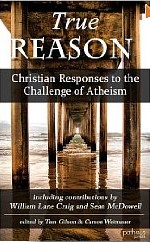
  • True Reason: Christian Responses to the Challenges of Atheism – on Kindle

    The kindle edition of new book featuring responses to the New Atheists, aimed to be readable at the popular level entitled True Reason: Christian Responses to the Challenges of Atheism is now available on Amazon. This blog’s Matthew Flannagan contributed to a chapter in it alongside William Lane Craig, Sean McDowell and others.

    Matt’s chapter is a reprint of his chapter “Did God Command Canaanite Genocide?” in the forthcoming in April B&H Academic book: Come Let Us Reason: New Essays in Christian Apologetics edited by Paul Copan and William Lane Craig.

    Here is the editorial review from Amazon:

    True Reason: Christian Responses to the Challenge of Atheism“While New Atheists like Richard Dawkins, Sam Harris, and others proclaim loudly their rationality, clear thinking, and incontrovertible scientific arguments, others are beginning to wonder how genuinely rational they are. Have they proved anything? Have they argued convincingly? Have they pinpointed any real challenges to the credibility of Christian faith?
    “True Reason,” edited by Tom Gilson and Carson Weitnauer, brings together a compendium of writers–philosophers, apologists, ethicists, theologians, historians–who look carefully at the best arguments atheism has and evaluate their validity, logic, assumptions, and naturalist conclusions.Authors include noted philosopher William Lane Craig and popular apologist Sean McDowell, along with Gilson, Weitnauer, John DePoe, Chuck Edwards, Matthew Flannagan, Peter Grice, Randy Hardman, David Marshall, Glenn Sunshine, David Wood, and Samuel Youngs. Each chapter tackles a different atheist argument and brings reason fully into the discussion.

    Which is more reasonable: atheism or Christianity? Read “True Reason” and think for yourself.”

    Get your copy now, read it, and let us know what you think both here and on Amazon 🙂

  • Jerry Coyne on God and Morality Revisited

    Late last year I, wrote a criticism of Jerry Coyne’s piece in USA today. Entitled, As  atheists know, you can be good without God.  My critique attracted some attention. Getting commentary from Mary Ann Spikes, Jason Thibodeau,  Jeffery Lay Lowder, and Brian Zamulinski.  Since the USA today article Coyne has written a follow up article where he purports to address the kinds of criticisms I made in this post. This article is entitled Maybe my Philosophy isn’t so Unsophisticated After All.  However, far from exonerating his poor reasoning, Coyne’s response simply further demonstrates my point.

    In this article Coyne focuses almost exclusively on criticisms I and others have made to his use of the arbitrariness objection. This is significant, for this criticism was just one of several criticisms of Coyne’s article that I raised .  Consequently, even if Coyne’s rejoinder is sound it addresses only one of my objections.  The rest remain untouched.

    As it is, his response is poor.  He begins by noting the response to the arbitrariness objection proposed by William Lane Craig. According to Coyne, Craig’s response is “whatever God orders is good and morally obligatory simply by virtue of the fact that He is God.” He cites this as a quotation but fails to provide a source. His response to this is to refer to alleged atrocities taught in the Old Testament and claim Craig’s response is “too stupid to address”

    Three things are evident, First, this is not Craig’s response to the arbitrariness objection; in his book Philosophical Foundations of  a Christian Worldview, Craig argues that Our moral duties are constituted by the commands of a just and loving God” (emphasis original)   and that

     this fact also supplies the key to the arbitrariness objection.  For our duties are determined by the commands, not merely of a supreme potentate, but of a just and loving God.  God is essentially compassionate, fair, kind, impartial, and so forth, and His commandments are reflections of His own character.  Thus, they are not arbitrary, and we need not trouble ourselves about counterfactuals with impossible antecedents like “If God were to command child abuse . . . .[1]

    So, Craig, in fact, maintains it’s impossible for God to command actions which are cruel, unjust and so on.   He does not, claim such actions can become good merely by God commanding them and Coyne appears to insinuate.

    Second, I actually addressed the Old Testament atrocity argument in my original article . However, Coyne simply repeats his argument.

    Third, calling someone “stupid” is not a rational rebuttal of their position; it commits a fallacy that logicians call the ad hominem fallacy, where one attacks the arguer instead of rebutting his argument. The distinction between attacking a person and refuting their argument is an elementary one in logic; it’s hard to believe Coyne is unaware of it.

    If Coyne thinks misrepresenting people, insulting them and then repeating an argument which has been addressed counts as competent philosophical or theological analysis he is gravely mistaken.

    After setting this tone, Coyne turns specifically to my criticisms. After suggesting that responding to on MandM is “a mugs game” he directs the reader to an article by Jason Thibodeau who Coyne calls a “real” philosopher” and cites two paragraphs which he claims “decisively” refute me.

    Now it doesn’t need saying that simply finding an article that agrees with you and maintaining the author of that article is a “real scholar” is not really a response to anything. Neither is simply asserting that someone has offered a refutation itself a refutation.

    But what’s interesting is Coyne’s selective citation. After noting my point, that a loving and just person would not command the kinds of actions he mentions, Thibodeau states

    There are a few problems with this response. The most important (and the one that I think that Coyne had in mind) is that if we are to understand the reply to mean that a moral God would not issue immoral commands… the response implies that there is a standard of morality that is independent of God against which he and his commands can be judged. But if morality is independent of God, then the DCT [divine command theory] is false.

    Coyne suggests this response “shows pretty definitively that” my argument fails and it “sets the record straight” for all thinking Christian’s

    In fact this response is mistaken. The fact that a loving and just being does not command certain actions does not entail that there is a moral standard independent of that being requiring them to not command those things. This is because it is possible for a person to be loving and just with being obligated to be loving and just. Suppose, for the sake of argument, morality was an illusion and in reality no one really was required to love their children.  Would it follow that all parents would cease to love them, or that they could not exercise love?  Not at all, I can be loving without being under an obligation to be loving. So this objection fails.

    Interestingly however, Thibodeau actually points this out in the very next line of the article which Coyne snips from his quotation. Thibodeau writes:

    In any event, as Flannagan indicated, the debate does not end here because the divine command theorist may concede the point but still insist that all he needs is that God is all-loving, and he will get the same consequence (or at least one that is close enough); namely that God will not issue commands that require us to cause horrible pain and suffering (or do anything that we all agree would be horrendous). If developed in the appropriate direction, this reply can lead to a fully developed response to the arbitrariness objection.

    So, the “real philosopher” Coyne cites actually says this argument is unsuccessful, for reasons I had already indicated in my criticisms.  Coyne’s response therefore appears to be as follows (a) find an article that agrees with his conclusions (b) assert the author (apparently unlike me) is a real philosopher (c)  quote an argument  the author actually says fails to address my point (d) Snip the context so your readers don’t know this (e) assert boldly that his comment refutes me.  Far from showing that my criticisms of Coyne are mistaken these kinds of tactics suggest I was on the mark.  Of course readers of Coyne’s work online or in USA today won’t have the original articles Coyne cites from and so will take his assertions on faith. This is effective propaganda but little else.

    After these dubious manoeuvres, Coyne then asserts that the rest of Thibodeau’s article makes devastating points against me but does not cite or summarise these arguments.

    In fact Thibodeau’s makes two arguments both of which fail.

    Thibodeau’s, first argument appeals to God’s omnipotence, which he defines as the ability to do whatever is logically possible.  If omnipotence is defined this way, then God could command the torture of children.

    Now whether omnipotence should be defined in this way is in fact a matter of dispute. However, suppose we grant Thibodeau’s definition; the argument still fails. Adams’ position is that that moral obligations are constituted by the commands of a loving and just God.  Even if God, being omnipotent could command the torture of children, he could not do so and continue to be loving and just. This is because it’s not logically possible for a loving and just being to command things like this. So this argument does nothing to show that a loving and just God could command torturing children and hence does not refute Adams’ position.

    Thibodeau’s second argument is similarly mistaken. Thibodeau argues that it’s possible that there exists an all-powerful creator that enjoys watching sentient beings suffer, he labels this being Azura. He then notes that Azura could command the torture of children.

    Now assuming that it is possible that Azura exists (which I doubt), this argument is beside the point. The fact that an evil being who is all powerful could command the torture of children, does not entail that a loving and just God could. So Adam’s contention that moral obligations are best accounted for by the commands of a loving and just God remains un-refuted.

    Both arguments fail because they misconstrue the position that Adams and those who follow him defend. These people contend that the nature of moral obligations is best explained by the commands of a loving and just God. Pointing out that they are not explained by a God who lacks these attributes does not address this contention. It ignores it.

    Interestingly,  in  some commentary on Coyne’s exchange with myself arguments philosopher and ethicist  Brian Zamulinski notes that he had pointed this out to Coyne months before he wrote the USA today article. Zamulinski  writes

    Robert Merrihew Adams contended that morality is constituted by the commands of an essentially loving God.  The Euthyphro dilemma collapses because an essentially loving God could not command just anything.  In his USA Today article, Coyne rehearses the Euthyphro dilemma but does not mention the Adams reformulation.  This is odd.  I had an e-mail correspondence with Coyne some months earlier in which I pointed out the Adams reformulation.  Coyne should have taken time to rebut the reformulation.  He did not.

    Coyne’s final riposte is to ask a question, how do you know a loving God exists? And this whole issue is “moot unless you can show that there’s a God to issue moral commands”. This however is to reason in a circle, in his USA today article Coyne was criticising the argument that morality was “strong evidence for [God’s] existence.” People like Adams argue it is because the best account of the nature of moral obligations is that moral obligations are commands issued by a loving and just God.  To contend Adams is wrong because no one has offered an argument for a loving God’s existence is to assume the very issue under dispute. One could just as easily argue Coyne’s argument is flawed on the grounds that his arguments are flawed.

    Nothing in Coyne’s follow up leads me to revisit my initial conclusion. Misrepresenting people’s views, calling people names, quoting from articles out of context, denigrating others’ scholarly qualifications and confidently asserting a position whilst reasoning in a circle, and ignoring objections, are not the same as actually addressing them.  I doubt such sophistry would pass muster in the scientific community when people write on scientific topics, and it does not pass muster when scientists comment on theology or philosophy.

    [1]William Lane Craig and J P Moreland Philosophical Foundations of a Christian WorldView (Downers Grove Il:Intervarsity Press academic), 531,

  • Thinking Matters Youth Conference

    This Saturday is the first, of hopefully many, Thinking Matters Youth Conference, the schedule is  below.  I am leading a breakout session on Moral Relativism

    WHEN: Saturday, February 18
    WHERE: Greenlane Christian Centre, 17 Marewa Rd, Greenlane, Auckland
    COST: $10


    Schedule:
    10am Registration
    10.30am Jeff Tallon – Is Science a Threat to Faith?
    11.30am Sean McDowell – Is Faith Blind? (via Skype)
    12.15pm Lunch
    1pm Breakout Sessions 1

    • Stream 1: Is morality relative and does it matter? – Matt Flannagan
    • Stream 2: How can one religion be “right” and the others “wrong”? – Trevor Mander
    • Stream 3: Why doesn’t God do something about the evil in the world? – Ben Carswell
    • Stream 4: Does God get mad when we doubt? – Jason Kumar and Dominic Bnonn Tennant
    1.45pm Breakout Sessions 2 (repeated)
    2.30pm Tim McGrew – Is the Bible Reliable? (via Skype)
    3.30pm Q&A Panel – Jeff Tallon, Ben Carswell, Matt Flannagan, and Trevor Mander
    4.15pm Conference closes