I have been considering the hypothesis that the star referred to in Matthew’s Gospel was a comet recorded by Han-dynasty astronomers in 5 BC. In a previous post, I examined an objection to this view that rested on two claims: First, that in the late first century BC comets were universally interpreted as negative omens. […]
Entries Tagged as 'Apologetics'
Star of Wonder: Matthew’s Nativity Narrative and it’s Critics, Part three
February 5th, 2026 Comments Off on Star of Wonder: Matthew’s Nativity Narrative and it’s Critics, Part three
Tags: Christian History · Star of Bethlehem
Star of Wonder: Matthew’s Nativity Narrative and its Critics, part two
January 2nd, 2026 Comments Off on Star of Wonder: Matthew’s Nativity Narrative and its Critics, part two
In a previous post, I addressed the claim that no star could exist that moves or behaves in the way described in Matthew’s Gospel. I argued that Matthew’s Gospel uses language found in Greco-Roman writings to describe comets, and that a comet could act in the way Matthew described. I also argued that we have good […]
Tags: Christian History · Christmas · Matthew's Gospel · Nativity · Star of Bethlehem
Thinking Matters Talk: Does Morality Need God? Part Three:
September 8th, 2022 3 Comments
This year the New Zealand apologetics organization Thinking Matters ran a “Confident Christianity Conference” in Auckland. I was asked to speak at this conference on the topic. Does Morality Need God? Below is a slightly streamlined version of the talk I gave. This brings me to my second contention: If God exists, a divine command theory […]
Tags: Anything goes Objection · Arbitrariness Objection · Divine Command Theory · Euthyphro Dilemma · God and Morality · Graham Oppy · Nathan L King · Plato
Divine Command Theory and the Euthyphro Dilemma: Part II
May 12th, 2021 Comments Off on Divine Command Theory and the Euthyphro Dilemma: Part II
This is a talk I gave to the Philosophy Club at Glendale Community College in Phoenix, Arizona, this weekend. The talk was followed by a long discussion with some faculty, students at the college, and others who zoomed in. In this talk, I introduced and defended a divine command theory of ethics. The talk was divided into […]
Tags: Divine Command Theory · Euthyphro Dilemma · Nathan L King · Plato
Divine Command Theory and the Euthyphro Dilemma: Part I
May 9th, 2021 Comments Off on Divine Command Theory and the Euthyphro Dilemma: Part I
This is a talk I gave to the Philosophy Club at Glendale Community College in Phoenix, Arizona, this weekend. The talk was followed by a long discussion with some faculty, students at the college, and others who zoomed in. In this talk, I introduced and defended a divine command theory of ethics. The talk was […]
Tags: Divine Command Theory · Euthyphro Dilemma · God and Morality · Harry Gensler · Paul Kurtz
Published in Sophia “Why the Horrendous deeds objection is still a bad argument”
February 12th, 2021 3 Comments
My paper, “Why the Horrendous deeds objection is still a bad argument” has now been published by Sophia here. The abstract is as follows: A common objection to divine command meta-ethics (‘DCM’) is the horrendous deeds objection. Critics object that if DCM is true, anything at all could be right, no matter how abhorrent or […]
Tags: Brad Hooker · Divine Command Theory · Erik Wielenberg · Euthyphro Dilemma · God and Morality · Jason Thibodeau · Louise Anthony · Walter Sinnott-Armstrong · Wes Morriston
Dawkin’s dilemma: How not to answer the question “Why Be Moral?”
January 21st, 2021 Comments Off on Dawkin’s dilemma: How not to answer the question “Why Be Moral?”
In his bestselling book, the God Delusion, Richard Dawkin’s responds to the question: “If there is no God, Why be good?” Posed like that, the question sounds positively ignoble. When a religious person puts it to me in this way (and many of them do), my immediate temptation is to issue the following challenge: ‘Do you really mean […]
Tags: God and Morality · Henry Sidgwick · Richard Dawkins · The God Delusion · Thomas Reid · Why be Moral?

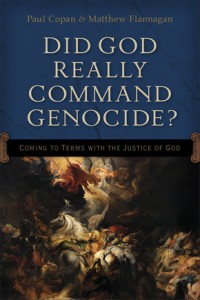 A common objection to belief in the God of the Bible is that a good, kind, and loving deity would never command the wholesale slaughter of nations. In the tradition of his popular Is God a Moral Monster?, Paul Copan teams up with Matthew Flannagan to tackle some of the most confusing and uncomfortable passages of Scripture. Together they help the Christian and nonbeliever alike understand the biblical, theological, philosophical, and ethical implications of Old Testament warfare passages.