Category: Christian History

  • Did Hannibal of Carthage Exist?

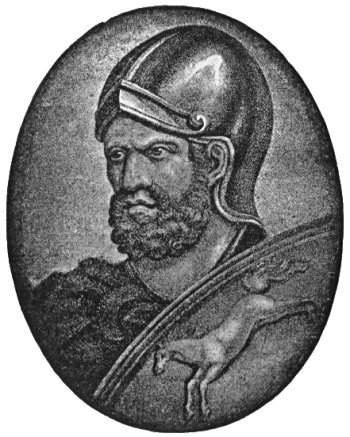
    HannibalHistorian James Hannam has written an entertaining article called “Satirising the Christ Myth.” The piece uses similar methods employed by those seeking to make the case for the claim that Jesus never existed to show that Hannibal of Carthage did not exist either. It is written in Hannam’s classicly witty yet accurate style;

    Did Hannibal Really Exist?

    To ask whether or not the great Carthaginian general Hannibal ever actually existed might seem rather pointless. It might be an exercise for a student learning about the nature of historical evidence, but not something any serious scholar would waste time on. But maybe we should not be too hasty in acquiescing with the opinion of establishment historians (in other words, there’s a plot by academics stifling debate).

    In fact, although there is plenty of writing about Hannibal, none of it is contemporary and there is no archaeological evidence for him at all (not surprising given the Romans razed the city from whence he came). Furthermore he is not mentioned in any Carthaginian sources, which is incredible, given he was supposed to be their greatest leader (there are no Carthaginian sources as the Romans burnt their city down)! We find when we actually try to pin him down he tends to recede further into the mists of time. His exploits, such as leading elephants over the Alps, are clearly legendary (the skeptic pretends to be incredulous but seems happy to buy his own amazing theory) and it is not hard to find a motive for the creation of this colorful character by Roman writers (as long we can invent a motive for fabrication we can assume that fabrication exists).

    Rome and Carthage were great trading rivals in the Western Mediterranean and it did not take them long to come to blows. Rome signed a peace treaty but, under the leadership of the elder Cato, desperately wanted to rid itself permanently of the competition (this is actually true and so helps to conceal the moment when we slip into fantasy). The Romans needed an excuse and the idea they developed was brilliant. Like many ancient civilizations, the Romans rewrote history as it suited them to exhibit their own prowess (a useful and exaggerated generalization). Consequently we should not be surprised to find that they invented a great enemy from Carthage to demonstrate the threat still existed and justify a further war to wipe them out.

    The author of the fiction was Cato himself (we need someone to point the finger at; note also how there is no distinction made between the background material above and theorizing here), as Cato wrote the earliest Roman History (true as well, as it happens). But it was intended simply as a justification for a further war with Carthage. It contained the details of Hannibal’s alleged campaigns against the Romans, including his victories on Italian soil (Cato’s history has conveniently not survived so we can speculate freely about what it contained). Cato brilliantly combined the truth with his own anti-Carthaginian propaganda with the intention of goading Rome into another wholly unjustified war with the old enemy (give the fabricator lots of credit for his invention). Once the war was over and Carthage was razed to the ground, the Romans were able to ensure that only their version of history survived (this is important as it enables all other sources to be declared forgeries).

    Therefore the myth of the great Carthaginian war leader became an accepted fact. Later Roman historians like the notoriously unreliable Livy (we have to denigrate counter sources) simply assumed Cato’s fabrications were true (because the ancients were stupid and simply could not do any research themselves).

    Conclusion

    The earlier parts set out in “The Christ Myth won’t die“ are also worth reading.

    RELATED POSTS:
    Guest Post: James Hannam on Dan Brown’s History of Science
    The “Dark Ages” and Other Propaganda
    More on the “Dark Ages” and Other Propaganda

  • Moving Beyond CS Lewis?

    CS Lewis still provides a great read and he has been an important figure in my own journey of working out my faith. But I cringe a little when, as repeatedly happens, Christian people hear I’m into philosophy and science and such and they recommend I read the author of the Narnia books.

    CS Lewis left a legacy - not all the answers

    I’ve been reading some of his works for quite a while and they’re great, with plenty of insights into the poverty of a purely secular life – but they’re not the only thing out there if you’re looking for a critically engaged faith. (There’s perhaps a similar deal with Francis Schaeffer, but I struggle to think of other Christian thinkers who people in the pews would tend to know. For the rest of the post, I’ll refer to Lewis, as representative and chief of a possibly larger tribe; I’m open to being convinced anyway.)

    I’m curious about what causes the phenomenon which I clumsily christen “you’re a Christian into thinking? Oh well (it’s a pity you can’t play the guitar); but quick, you better read CS Lewis!” The Church is not noted for being fast and trendy and up to date, but that’s not the whole story. I don’t have any evidence for the claim, but I suspect CS Lewis has been popular for a long time i.e. the Church hasn’t only just discovered him; and more fundamentally, that previous generations, who were more likely to read books and keep up to date with the world of literature, were better acquainted with a few defenders of the faith who were not long-dead at the time.

    I’m not advocating the sin of chronological snobbery and I know that new and shiny stuff often soon enough hits the trash pile, but in my opinion, people really need to know that God is alive in the academy today and He’s worth taking as seriously as He ever was. That’s good news, but news which may be hard to hear above the dance/trance/pop/punk/thrashmetal-indie sounds of popular Christian culture and Christianity-lite ®. I have suggested the Church is slow in some respects, but it’s fast in others – making bad copies of non-religious pop culture arguably being one of our special skills (more…)

  • A Refutation of Zeitgeist – The Movie

    Zeitgeist the MovementZeitgeist – The Movie is an internet phenomenon that has taken a lot of people in. I know several people who have seen it and have either been convinced by it or it has heavily rocked them. We’ve had commenters on this blog raising issues and asking questions which clearly have their roots in Zeitgeist. There is a global movement complete with a New Zealand chapter.

    For me the claims in Zeitgeist are patently absurd, funny almost and I totally got what Glenn Peoples was on about when he said on Facebook “I swear, watching Zeitgeist is draining my IQ” but it is important to not dismiss the opportunity to take such a clearly influential phenomenon apart, examine the claims it makes and clearly demonstrate the flaws in it so that those who are rocked by it have a good resource to get their feet back on solid ground with. It also won’t hurt those of us immune to Zeitgeist’s charms to take the time to see how best to respond to it for the next time we encounter someone who has been swayed by its content.

    For these reasons when Glenn asked for suggestions for his next podcast topic I suggested an analysis of Zeitgeist and for much the same reasons he leaped on it. Glenn has a PhD in Philosophy and a Masters and Bachelors in Theology. He is also a very lucid and clear thinker who makes the best podcasts which often have cool sound effects and original music. So grab a cuppa and sit back and listen to his podcast Episode 038: Zeitgeist (you’ll need a spare 55 minutes).

    One of the accompanying links Glenn has with his podcast is a must-view. It is written by a non-Christian and it thoroughly examines the astrological claims made by Zeitgeist complete with astrological charts and diagrams. The author states:

    “I prefer honesty in polemics. Some of the astronomical and astrological claims of Zeitgeist are simply wrong, and lead to a wrong impression of the origins of Jesus’ birth narrative. I hope to demonstrate scientifically why they’re wrong”.

    The link to this is here: Zeitgeist Astronomy.

  • Contra Mundum: In Defence of Santa

    I grasped the sponge, water dripped down my wrist as I took aim. The man from the McGillicuddy Serious Party raised his voice and said “now throw!” The sponge flew through the air from my hand and struck Santa solidly on the chest soaking his red costume. Santa laughed and said “throw another one!”

    It was my second year at university and the McGillicuddies were running their annual “throw a sponge at Santa” event. This was done ostensibly to protest materialistic consumerism of which they saw Santa as a modern icon. I was simply sick of the whole hypocritical façade that was Christmas. An event that for many, myself included, has deeply religious significance was being trivialised by a fat man in a red suit from the north-pole. It really irked me.

    Years have passed since this event and with age comes (I hope) more reserve and wisdom. I have learned more about the cultural icon known as Santa and I have come to appreciate, at least from an historical perspective, why this icon exists. I agree that today the historical meaning of this icon has been forgotten. However I think that the solution to this forgetfulness is to re-awaken our cultural memory by addressing the theological and historical ignorance prevalent in our culture; attempts to cut ourselves off from the past even further are not the right approach.

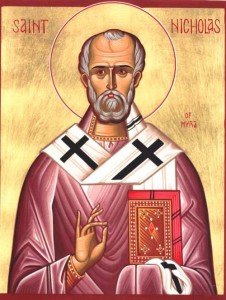
    Nicholas of Myra

    The reference to Santa as an icon is apt because the original Santa, Nicholas of Myra, became an icon in religious art. In earlier times there was no printing press and illiteracy was widespread so vivid art became an important way of communicating a message. Characters had to be readily recognisable, in religious art Nicholas was represented by the figure of a man with a large white beard. Given that he was a Catholic bishop, he was portrayed in red robes. The figure of a white-bearded man in red robes became a symbol for an historical person, and the story of Nicholas was kept alive because of its immediate relevance for the present.

    Nicholas of Myra was probably (more…)

  • Tim McGrew’s Library of Historical Apologetics: Rediscovering Forgotten Defenders of the Faith

    Last year Timothy McGrew, Professor of Philosophy at Western Michigan University (and reader of and occasional commenter on this blog) was kind enough to ship us a hard-drive from the US filled with thousands of old theological works on the historical argument for the truth of Christianity. It is truly a gold-mine of information, which Matt gets himself routinely lost in and for which visitors to our home have been known to arrive carrying their own portable hard drives so as take away a copy.

    Library of Historical Apologetics

    At the time Tim told us he was aiming to get this material online so that everyone could access it. Along with his advisory board of William Lane Craig, Gary Habermas, Craig Hazen, Robert Stewart, it seems he has made some progress as the Library of Historical Apologetics is now live and open for browsing and is really worth checking out.

    Paraphrasing and splicing bits together from the Collection page:

    The collection contains both one of the world’s largest catalogs of works in historical apologetics, the branch of apologetics dealing with the authenticity and credibility of the scriptures and particularly of the New Testament. The authors come from various denominational and educational backgrounds and would not agree with each other on all points of theology. Some are profound works of research and scholarship; others are brief works addressed to a non-specialist audience. But each makes a distinctive contribution to the literature of historical apologetics.

    In addition to the library, the site features:

    • Annotated Bibliography: Short descriptions of selected works.
    • Spotlight Articles: Published monthly, these two page articles describe an author, book or apologetic theme [Very cool!]
    • Quotation of the Week: Significant and pithy excerpts that make a poignant point and illustrate the subject matter of a particular author.

    All works available at the library are in English and are part of the public domain.

    HT Tim McGrew

  • The Theology of the Declaration of Independence

    As I write this it is just beginning to be the 4th of July in the United States now, though its been 4th July for some time here in New Zealand.

    The 4th of July is, of course, Independence Day. Typically in New Zealand, those members of the secular blogosphere, who consider themselves to be classical liberals, have an annual rant on the 4th of July about the Declaration of Independence, praising the philosophy expounded in this document.
    Declaration of IndependenceNot PC’s Peter Cresswell, for example, states in Happy July 4th! that “with the exception of just a few words, the words could hardly be bettered today;” the declaration is, “A wonderful, wonderful anthem to freedom that rings down through the years.”  He bemoans, “if only the real meaning of those words could be heard and understood.”

    A few years ago Kiwiblog’s David Farrar made similar claims, he stated he would often “marvel at those marvelous words, written in the heat of oppression…Marvelous, absolutely marvelous.”

    I agree. I would simply point out to my secular, liberal, country-men what the words in this document actually say, and some of the philosophical ideas they expound.

    First, the declaration refers to God; it does so four times. Maverick Philosopher has an excellent analysis of the theological content;

    In the initial paragraph, we find the phrase “…Laws of Nature and of Nature’s God….” This phrase rules out pantheism: God is distinct from Nature. In the second paragraph, there is the phrase, “…endowed by their Creator with certain unalienable rights….” Putting these two references together, we may infer that the God being referred to is not merely a deistic initiator of the temporally first segment of the physical universe, but a being involved in the creation of the human race. For if God endowed human beings with rights, this endowment had to occur at the time of the creation of human beings, which of course occurred later than the beginning of the physical universe. In traditional jargon, God is a creator continuans rather than a mere creator originans. He is not a mere cosmic starter-upper, but a being who is continuously involved in maintaining the universe in existence.

    …

    The other two references are in the final paragraph. There we find the phrase, “…Supreme Judge of the World for the Rectitude of our Intentions….” near the beginning of the paragraph, and near the end, “…a firm Reliance on the Protection of divine Providence….” Now if God is the Supreme Judge, then he is more than a mere metaphysical cause responsible for the universe’s beginning to exist; he is also the supreme moral arbiter. And since he endows human beings with rights, as opposed to being merely a judge of rights antecedently possessed, then it seems we may infer that God is the source of moral distinctions (as opposed to a mere judge of them).

    The reference to divine providence is further evidence that the conception of God in the Declaration is non-deistic. For if God provides and protects, then God has an ongoing involvement with the world and its inhabitants such as would be ruled out by a deistic view. It should also be obvious that talk of providence (from the Latin, pro-videre) implies divine foreknowledge which implies intelligence and perhaps omniscience on the part of the deity. The God of the Declaration is not a blind metaphysical cause posited to explain why the universe began to exist, but a being with such attributes as moral goodness and intelligence…. So if by ‘deism’ is meant the doctrine that God is a mere metaphysical cause of the universe’s beginning to exist who is thereafter uninvolved in its continuing to exist, then the God of the Declaration is non-deistic.

    Second, the declaration claims that belief in a creator is self-evident; that is, it is a properly basic belief, which is rationally acceptable to hold in the absence of any proof.

    We hold these truths to be self-evident, that all men are created equal, that they are endowed by their Creator with certain unalienable Rights, that among these are Life, Liberty, and the pursuit of Happiness.

    Third, the declaration makes political pronouncements about public policy on the basis of these theological claims and expects these pronouncements to be taken seriously.

    Fourth, the declaration says that various rights, such as the right to life and liberty, are unalienable. That is, a person cannot alienate one’s life or freedom as they can legally alienate a piece of property. You can’t take my property if I do not consent to you having it but if I do consent, you can take it; property is alienable, life and liberty are not. The argument of the declaration reflects John Locke’s argument in the Second Treatise of Civil Government;

    To understand political power right, and derive it from its original, we must consider, what state all men are naturally in, and that is, a state of perfect freedom to order their actions, and dispose of their possessions and persons, as they think fit, within the bounds of the law of nature, without asking leave, or depending upon the will of any other man.[1]

    …

    But though this be a state of liberty, yet it is not a state of licence: though man in that state have an uncontroulable liberty to dispose of his person or possessions, yet he has not liberty to destroy himself, or so much as any creature in his possession, but where some nobler use than its bare preservation calls for it. The state of nature has a law of nature to govern it, which obliges every one: and reason, which is that law, teaches all mankind, who will but consult it, that being all equal and independent, no one ought to harm another in his life, health, liberty, or possessions: for men being all the workmanship of one omnipotent, and infinitely wise maker; all the servants of one sovereign master, sent into the world by his order, and about his business; they are his property, whose workmanship they are, made to last during his, not one another’s pleasure[2]

    …

    This freedom from absolute, arbitrary power, is so necessary to, and closely joined with a man’s preservation, that he cannot part with it, but by what forfeits his preservation and life together: for a man, not having the power of his own life, cannot, by compact, or his own consent, enslave himself to any one, nor put himself under the absolute, arbitrary power of another, to take away his life, when he pleases. No body can give more power than he has himself; and he that cannot take away his own life, cannot give another power over it.[3]

    The point here is that because your right to life and liberty are from God, no one can legitimately enslave or kill you, even if you consent to it. This was not a mere incidental addendum idea, it was central to Lockean political philosophy, which maintained (as the declaration does) that the government derives its powers from the consent of the governed. If a person can consent to be killed or enslaved then they can consent to the government enslaving them also to having the arbitrary power to kill them and hence tyranny can be legitimate. The reason tyranny is illegitimate is because, “No body can give more power than he has himself; and he that cannot take away his own life, cannot give another power over it.”

    The declaration then makes a metaphysical claim: God exists. It makes an epistemological claim about faith and reason: that belief in God is rational independent of proof. It makes an implicit claim of political philosophy: religion is not a private thing that should not influence public life but rather, theological claims should influence public life. Finally it makes a moral claim; that consenting adults do not have a right to do whatever they like with their own bodies, rather there are “Laws of Nature and of Nature’s God” that bind all human beings, that they are compelled to follow even if all parties consent otherwise. Governments are legitimate to the extent in which they respect these laws.

    I agree with PC, it is hard to improve on this philosophy; I have defended it in several places on this blog.

    Ironically, however, the militant secular liberals in NZ who parrot the declaration seem committed to attacking these ideas and rejecting them on every point. They argue that belief in God is irrational because it cannot be empirically proven, they claim that the public square should be secular, that religion should be private and not influence public policy and they argue that liberty means consenting adults can do whatever they like with their own bodies and lives. Far from being unalienable, a person’s life and freedom is his property to alienate as that person sees fit.

    It is also hard to disagree with PC’s sentiments that the declaration is “A wonderful, wonderful anthem to freedom that rings down through the years. If only the real meaning of those words could be heard and understood.” “Indeed, if only.”

    [1] John Locke Second Treatise of Civil Government Section II 4.
    [2] Ibid II6.
    [3] Ibid IV 23.
  • Ronald Hendel on Pascal, Evangelicals and The Society of Biblical Literature

    Ronald Hendel, of the Biblical Archeology review, has written a critical piece entitled “Biblical Views: Farewell to SBL“. His beef appears to be that the Society of Biblical Literature (SBL) is allowing into its membership, heaven forbid, various “evangelical and fundamentalist groups.” This, he suggests, compromises the group’s scholarly integrity.

    Much could be said about his comments, here I will only parse some of them. First, Hendel begins by citing from Pascal’s Pensées, “The heart has its reasons, which reason does not know.” Hendel clearly approves of Pascal’s contention and goes so far as to appropriate the sentiment, he elaborates Pascal’s position as follows,

    This famous line from Pascal’s Pensées draws a wise distinction between religious faith and intellectual inquiry. The two have different motivations and pertain to different domains of experience. They are like oil and water, things that do not mix and should not be confused. Pascal was a brilliant mathematician, and he did not allow his Catholic beliefs to interfere with his scholarly investigations. He regarded the authority of the church to be meaningless in such matters.

    While I am not a Pascal scholar this appears to be a caricature of Pascal’s position. Hendel  suggests that Pascal’s distinction between “reason” and the “heart” is a distinction between faith and reason. He goes on to state that Pascal believed the two did not mix and had different domains, and that the latter (the heart) had no bearing on mathematics or other scholarly investigations.

    Now the former seems plausible, just after the citation Hendel refers to Pascal states “It is the heart which experiences God, and not the reason. This, then, is faith: God felt by the heart, not by the reason.” However with regards to the latter points Hendel made, Pascal goes on to state,

    We know truth, not only by the reason, but also by the heart, and it is in this last way that we know first principles; and reason, which has no part in it, tries in vain to impugn them. The sceptics, who have only this for their object, labour to no purpose. We know that we do not dream, and, however impossible it is for us to prove it by reason, this inability demonstrates only the weakness of our reason, but not, as they affirm, the uncertainty of all our knowledge. For the knowledge of first principles, as space, time, motion, number, is as sure as any of those which we get from reasoning. And reason must trust these intuitions of the heart, and must base them on every argument. (We have intuitive knowledge of the tri-dimensional nature of space and of the infinity of number, and reason then shows that there are no two square numbers one of which is double of the other. Principles are intuited, propositions are inferred, all with certainty, though in different ways.) And it is as useless and absurd for reason to demand from the heart proofs of her first principles, before admitting them, as it would be for the heart to demand from reason an intuition of all demonstrated propositions before accepting them.

    Pascal is quite clear, far from being “oil and water” and having nothing to do with maths or any other scholarly discipline Pascal believed that the very foundations of all knowledge, whether mathematical or another form, are based on faith; reason reasons from these premises but cannot prove them (not that it needs to). When Pascal goes on to state that “those to whom God has imparted religion by intuition are very fortunate and justly convinced” the implication is that certain religious beliefs, known by faith, function as properly-basic beliefs’ at the foundation of ones knowledge and, as such, are the premises one can legitimately reason from to other conclusions without first needing to prove them.

    Second, Hendel’s objection to allowing evangelical groups into the SBL is wanting. His basic objection is that,

    The SBL online book review journal (Review of Biblical Literature) has featured explicit condemnations of the ordinary methods of critical scholarly inquiry, extolling instead the religious authority of orthodox Christian faith.

    Hendel’s concern here seems to be that some evangelical groups are opposed to critical and scholarly inquiry. He substantiates this further,

    Listen to this, from Bruce Waltke, widely regarded as the dean of evangelical Biblical studies: By their faith in the God of Abraham, Isaac, and Jacob, [evangelical scholars] … hear the voice of higher biblical criticism, which replaces faith in God’s revelation with faith in the sufficiency of human reason, as the grating of an old scratched record.

    This, however, is a non-sequitur. Waltke in this citation criticises “higher criticism,” Hendel concludes from this that he opposes critical and scholarly inquiry. But this is not the same thing, why can’t a person, for example, engage in critical and scholarly inquiry, engage in careful research, follow the rules of logic, and so on, and yet reject some of the methodological principles of higher criticism. Alvin Plantinga has offered a carefully argued epistemology of religious belief that provides the basis for a critique of higher criticism. He might be mistaken but surely one needs to actually engage his argument instead of simply assuming it is wrong. Hendel’s assumption, that it is impossible to do this, surely needs more than mere assumption and assertion.

    Hendel’s objections to Waltke are similarly mistaken. In response to the above citation he says,

    This is a quaintly stated position, which directly attacks the applicability of human reason to the study of the Bible. Instead of reason, “faith in the God of Abraham, Isaac, and Jacob”—as interpreted by evangelical scholars—should be the rule in Biblical scholarship. Waltke dismisses critical inquiry as an annoying nuisance, like the scratchy sound of an old LP.

    Here Hendel contends Waltke denies “the applicability of human reason” to the study of the bible. This again does not follow. In the above statement Waltke denies that reason, by itself without faith, is insufficient but to say reason is by itself insufficient does not entail it has no application at all; it simply states that it has to be supplemented by faith to get a true or accurate answer.

    In summary Hendel confuses the claim that reason, unimplemented by faith, is insufficient with the rejection of reason altogether. Moreover, he seems to think that reason and higher criticism are the same thing. This, however, simply appears to, at best, misunderstand and, at worse, caricature the views of faith and reason many evangelicals hold. Had Hendel reflected on what Pascal actually said, he might have understood this a bit more.