Category: Christian History

  • Star of Wonder: Matthew’s Nativity Narrative and it’s Critics, Part three

    I have been considering the hypothesis that the star referred to in Matthew’s Gospel was a comet recorded by Han-dynasty astronomers in 5 BC. In a previous post, I examined an objection to this view that rested on two claims:

    • First, that in the late first century BC comets were universally interpreted as negative omens.
    • Second, that such a reading is inconsistent with the way the star functions in Matthew’s birth narrative.

    In that earlier discussion I challenged the first claim. I argued that ancient interpretations of comets were more nuanced than is often assumed. Comets were widely understood as portents of social and political upheaval, particularly the replacement of kings or dynasties. While this was indeed a negative omen for the ruler or dynasty about to be displaced, it could simultaneously be—and often was—understood as an endorsement of the incoming ruler.

    In what follows, I turn to the second claim: is this pattern of interpretation inconsistent with Matthew’s birth narrative? I suggest that it is not.

    1. The Star is a sign of Dynastic Change in Matthew

    In Matthew’s Gospel, the star is explicitly associated with a change of kings and dynasties. The second chapter opens as follows:

    Now after Jesus was born in Bethlehem of Judea in the days of Herod the king, behold, magi from the east arrived in Jerusalem, saying, “Where is he who has been born King of the Jews? For we saw his star in the east and have come to pay him homage.”

    At the time of the star’s appearance, the Hasmonaean dynasty—ruling since the Maccabean period—had already been displaced by Herod the Great. Herod’s designated heir in early 5 BC was Herod Antipater, then about forty years old, though this was changed later that year to Herod Antipas, who was only fourteen. Against this backdrop, the Magi’s claim that a star signified the birth of a new “King of the Jews” clearly implies dynastic upheaval: not merely the replacement of Herod himself, but the displacement of his entire line of succession.

    This is entirely consistent with the comet of 5 BC functioning as the star in Matthew’s narrative. A generation earlier, during the reign of Mithradates VI (120–63 BC), a comet was interpreted as heralding the birth of a king who would overturn Roman domination. Roughly sixty five years later, during Nero’s reign, Tacitus reports that a comet was widely taken as “an apparition boding change to monarchies,” prompting speculation about Nero’s successor and leading him to eliminate suspected rivals violently. Earlier still, Julius Caesar’s sidus—whatever its precise astronomical nature—was read both as marking the end of one regime and as legitimating Augustus as its heir. There is nothing unusual, then, about astrologers interpreting a comet as signalling the end of one dynasty and the rise of another.

    Why Judea?

    It might be objected that the Magi infer not merely the birth of a king, but the birth of a king connected specifically with Israel. Yet this inference is compatible with ancient astrological practice. The comet recorded by Chinese astronomers in 5 BC was said to appear in Qiān Niú, corresponding broadly to the Capricorn–Aquila region of the sky. Ancient astrology included a doctrine of astrological geography, according to which zodiacal regions were associated with particular lands, so that celestial phenomena occurring in a given constellation were taken to signify events affecting the corresponding territory.

    The most familiar version of this doctrine appears in Claudius Ptolemy’s Tetrabiblos (second century CE), which associates Judea with Aries. However, this reflects a later, highly systematised phase of Hellenistic astrology. As Stephan Heilen[i] and others have shown, earlier traditions—preserved in authors such as Teukros of Babylon (first century CE), Vettius Valens (second century CE, drawing on earlier sources), and Paul of Alexandria (fourth century CE, preserving older material)—tend to associate Capricorn not with Judea narrowly, but with Syria more broadly.

    This is historically significant because, in the late first century BC, Judea was commonly understood as part of the wider Syrian region, a usage reflected in contemporary geographical writers and later Roman provincial administration. Moreover, Syria proper no longer possessed a native royal dynasty in 5 BC. Other regions within the Syrian sphere were ruled by tetrarchs; however, none was experiencing dynastic instability of comparable scale or symbolic importance to that of Judea. On this basis, there is nothing surprising about astrologers interpreting a comet appearing in the Capricorn–Aquila region as signifying royal or dynastic upheaval in Syrian lands, with Judea as the most plausible concrete referent. [ii]

    Messiah, Divinity, and the Role of Jewish Interpretation

    Another objection is that the Magi interpret the star as signifying the birth of the Messiah or a divine figure. Yet Matthew’s text does not support this claim. The Magi announce only that a king has been born and that they know the general region from which he comes. They do not identify the child as the Messiah, nor do they know where in Judea he is to be found. This is why they ask, “Where is he who has been born King of the Jews?”

    It is Herod, together with the chief priests and scribes, who introduces the explicitly messianic interpretation. Upon hearing the Magi’s report, Herod gathers the religious authorities and inquires “where the Messiah was to be born.” The identification of the child as the Messiah thus emerges when the Magi’s message is mediated through Jewish expectations and scriptural interpretation.

    This pattern accords well with what we know of comet interpretation in the ancient world. When Halley’s comet appeared over Jerusalem approximately seventy- years later, both Josephus and the Zealots interpreted it as signalling the fulfilment of messianic prophecy—though they sharply disagreed about who the Messiah was. As I will argue in a later post, the period around 5 BC also coincides with heightened messianic expectation and intense paranoia on Herod’s part concerning prophetic threats to his rule.

    “Worship” and Royal Homage

    It is might be claimed that the Magi’s desire to “worship” the child implies divinity. However, the Greek verb προσκυνέω (proskyneō) denotes bodily homage and is commonly used of honour shown to human kings and superiors. In the Septuagint, David proskyneō Saul (1 Sam 24:8), Nathan proskyneō King David (1 Kgs 1:23), and the woman of Tekoa proskyneō David (2 Sam 14:4). In none of these cases is divinity implied. Matthew himself uses the term for a slave paying homage to a king in a parable (Matt 18:26), and Revelation 3:9 explicitly uses it in a non-divine sense.

    The Magi, then, say only that a new king has been born in Judea and that they wish to render him royal homage.

    1. The Star as a Threat to the Status Quo

    In Matthew’s narrative, the star is unmistakably perceived as a threat by the reigning king. Matthew writes: “When King Herod heard this, he was disturbed, and all Jerusalem with him.” The verb ταράσσω denotes agitation, alarm, or terror. Herod responds by ordering the killing of all male children in Bethlehem aged two years and under, based on the timeframe he had learned from the Magi.

    It is therefore puzzling to object that comets were interpreted negatively, since in Matthew’s narrative the star is explicitly treated as a negative omen. Herod’s reaction mirrors that of Nero, who, according to Tacitus, was “perturbed” (terreo) by a comet interpreted as signalling dynastic change and responded by eliminating the suspected rival Rubellius Plautus.

    In both cases, a tyrant hears of a “star” appearing in the sky, interprets it as a sign that a new king will replace him, and responds with violence. It seems ad hoc to regard such a scenario as implausible in the case of Herod while readily accepting it in the case of Nero.

    A Dual Meaning: Threat and Endorsement

    Finally,  comets could simultaneously be understood as condemning the existing ruler and endorsing the incoming one. While Herod interprets the star as a threat, the Magi take it as a sign that they should render homage to the new king. Matthew, writing for a Christian audience, invokes the star to support the claim that Jesus is the Messiah.

    As I explained in my last post, this dual interpretation is well attested. The comet of 60 CE was taken to signify both Nero’s impending downfall and Plautus’s divine selection as his successor, prompting public support for Plautus. Mithradates VI interpreted comets at his birth and coronation as evidence that he was destined to overthrow Roman power. Augustus appealed to Caesar’s sidus to legitimise his own rule as the divinely favoured outcome of dynastic upheaval. Chaeremon of Alexandria similarly understood comets as signifying both the “removal of dynasties” and the “commencement of new ones.”

    As for comets and messianic expectation, both Josephus and the Zealots interpreted Halley’s comet in 66 CE as signalling the arrival of the Messiah, even while disagreeing about who fulfilled that role. Moreover, the oracle of Balaam—“a star shall come out of Jacob, and a sceptre shall rise out of Israel” (Num 24:17)—was widely employed in Second Temple literature to predict the coming of a ruler.

    Taken together, these considerations suggest that interpreting Matthew’s star as a comet of 5 BC is not only plausible but fits comfortably within well-attested ancient patterns of astronomical interpretation.


    [i] Heilen S., Barthel P. and van Kooten G. (eds.), ‘The Star of Bethlehem and Greco-Roman Astrology, Especially Astrological Geography’, The Star of  Bethlehem and the Magi, Brill, Leiden, The Netherlands, 2015, pp. 345–346 https://doi.org/10.1163/9789004308473_015

    [ii] See Mark Matney, ‘The star that stopped: The Star of Bethlehem & the comet of 5 BCE’ Journal of the British Astronomical Association, Volume 135, Issue 6, 401 (2025); DOI: https://doi.org/10.64150/193njt
     

  • Star of Wonder: Matthew’s Nativity Narrative and its Critics, part two


    In a previous post, I addressed the claim that no star could exist that moves or behaves in the way described in Matthew’s Gospel. I argued that Matthew’s Gospel uses language found in Greco-Roman writings to describe comets, and that a comet could act in the way Matthew described. I also argued that we have good evidence for the existence of a comet in 5 BC, the time Jesus was born.

    However, the idea that the star in Matthew’s Gospel was a comet faces an important challenge:

    At this time in history (and all the way into the Middle Ages), comets were regarded as omens of doom and destruction—the very opposite of good tidings. This was in part because of comet behavior. They were perceived in ancient times as breaking into the sky, ignoring the highly ordered and repetitive clockwork movement of the heavens. The Almighty could have chosen to use an ominous sign for the birth of Christ. Presumably, He can do whatever He likes. But if the purpose of the Star was to communicate something joyful to humankind, a comet seems an unlikely choice.

    There are two claims encapsulated in this objection:

    • First, that at this time in history (the 1st century BC) comets were universally interpreted as negative omens.
    • Second, that this is contrary to how the star is presented in Matthew’s Gospel.

     This post will address the first of these claims. The second will be addressed in a later post.

    Were Comets Universally Interpreted as Negative Omens?

    First, the claim that comets were universally interpreted as negative omens is misleading. In the first century BC, comets were almost universally seen as threats to the established political order. According to the 1st-century astrological poem Astronomica, they were harbingers of significant political upheaval affecting entire nations, and particularly kings—such things as the collapse of social order, civil wars, rebellion, death of kings, the arising of rivals to the throne, and the overthrow or replacement of kings.[1]

    The fact that comets signify political upheavals that threaten the current political order means they are a bad omen for the current political order and particularly for incumbent rulers. However, it does not mean they signify something that is bad for everyone. On some occasions, the downfall of one ruler could be construed as beneficial to another. When this happened, the beneficiary could interpret comets as a positive omen.

    Several examples will illustrate this:

    Example 1: Mithridates VI
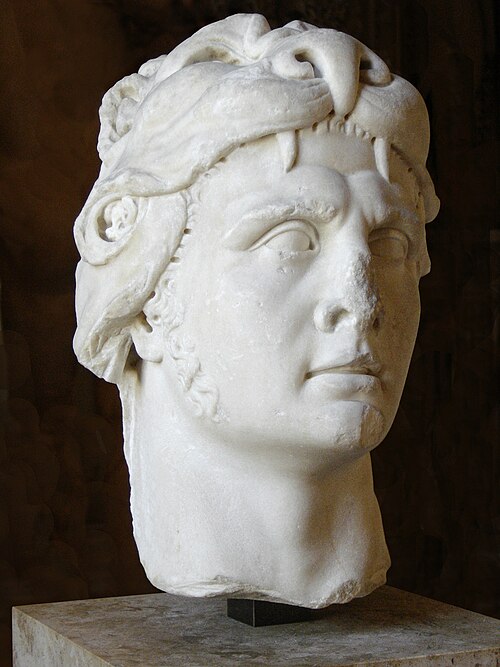
    First, consider  these coins minted by Mithridates VI (134–63 BCE). Mithridates fought a series of wars against the Romans. In his day, Persian and Zoroastrian traditions were being interpreted to predict a king who would overthrow Rome (this is interesting because the Magi were Zoroastrian priests). Mithridates promoted himself as the fulfillment of these prophecies. You’ll notice the coins have stars on them. As part of this promotion, Mithridates minted comets on these coins.

    The context is provided by the Roman historian Justin:

    The future greatness of this prince even signs from heaven had foretold; for in the year in which he was born, as well as in that in which he began to reign, a comet blazed forth with such splendour, for seventy successive days on each occasion, that the whole sky seemed to be on fire. It covered a fourth part of the firmament with its train, and obscured the light of the sun with its effulgence; and in rising and setting it took up the space of four hours.[2]

    Justin writes around AD 160–230. However, he is paraphrasing from Pompeius Trogus’ work The Philippic Histories, written in the first century BC. Justin refers to two comets, one at Mithridates’ birth and another at his ascension. The existence of such comets used to be dismissed as legendary. However, subsequent studies of Chinese astrological records have confirmed that two such comets did appear at the time of his birth and ascension.[3] So, Mithridates and Trogus are referencing a real celestial event.

    What is important for us is how this event was interpreted. Justin cites a first-century author stating that a comet which appears for 70 days was a sign from heaven foretelling the rise of a great prince. For Rome, this was an ominous sign. Justin said Mithridates had an exceptional destiny. This destiny resulted in the attempted overthrow of Roman power in the eastern Mediterranean. Mithridates successfully overthrew and conquered several neighboring kingdoms and Roman-controlled territories, expanding his realm into a major empire around the Black Sea and Asia Minor. He also massacred tens of thousands of Roman citizens. This was bad news for the established Roman status quo. Mithridates was an obvious threat to the political order.

    Mithridates obviously viewed his mission differently. He did not view the comets as a negative omen. The idea that he was a serious threat to Roman power in the eastern Mediterranean was something he embraced. In effect, he is saying: “The cosmic sign that terrified the world was about me—I am the terror to your Roman oppressors.” This was a bad omen for the Romans but a positive one for their enemies. By minting coins bearing these comets, Mithridates shows he expected his subjects to interpret them in the same way he did.

    The takeaway is this: In the first century BC, a comet could be interpreted by people in the East as signifying the birth of a new ruler who would rise to overthrow and replace the existing rulers. This would be a negative omen for the existing social order and the incumbent rulers. However, it could also simultaneously be embraced as a positive sign by partisans of the new king.

    Example 2: Augustus Caesar
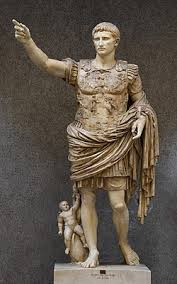
    Consider next these coins  from Augustus Caesar (63 BC–AD 14), who was the Roman Emperor at the time of Jesus’ birth. Augustus promoted himself as “son of God,” “saviour of the world,” “lord,” and described his reign as “the good news”[4] that Augustus had ushered in peace and stability. These coins are part of that promotion. Notice the coins have comets on them. Why? Pliny explains:

    The deified Augustus had deemed this comet very propitious to himself; as it had appeared at the beginning of his rule, at some games which, not long after the decease of his father Caesar, as a member of the college founded by him he was celebrating in honour of Venus Genetrix. In fact he made public the joy that it gave him in these words: “On the very days of my Games a comet was visible for seven days in the northern part of the sky. It was rising about an hour before sunset, and was a bright star, visible from all lands. The common people believed that this star signified the soul of Caesar received among the spirits of the immortal gods, and on this account the emblem of a star was added to the bust of Caesar that we shortly afterwards dedicated in the forum.” This was his public utterance, but privately he rejoiced because he interpreted the comet as having been born for his own sake and as containing his own birth within it; and, to confess the truth, it did have a health-giving influence over the world.[5]

    Pliny refers to a bright comet that appeared around 44 BC, commonly referred to as the Sidus Iulium (“Julian Star”) or Caesaris astrum (“Caesar’s star”) in ancient literature. The existence of this comet has been confirmed from Chinese records.[6] It appeared shortly after Julius Caesar’s assassination and was interpreted by the common people as evidence that Julius Caesar had been made a god. Augustus was Julius Caesar’s adopted son. So the inference can be made that he (Augustus) was declared the son of God. Pliny says that, in contrast to the common interpretation, Augustus himself took the comet as signifying him and as “containing his birth,” and Pliny accepts that the omen had foretold the positive influence his life and reign would have over the world.

    Here Caesaris astrum is viewed as a positive omen, signifying the benefits of Augustus’ reign. However, in the previous paragraph, Pliny has described comets as “a terrifying star and not easily expiated,” because “they overturn kingdoms, stir up wars, and change the condition of peoples.” As examples, he mentions comets that appeared during the civil war of 87 BC where Octavius was overthrown and replaced by Marius; the struggle between Caesar and Pompey, where Caesar gained control of Rome making himself emperor; and the poisoning of Claudius where Nero took control of the empire. These are all cases of significant political upheaval resulting in a change in regime.

    Is Pliny contradicting himself here? I don’t think so. Both these things can be true at the same time. Caesar’s death did herald political upheaval. It resulted in the War of Mutina, the Second Triumvirate, and the civil war between Antony and Octavian. These resulted in the end of the Roman Republic and the rise of the Roman Empire. Augustus rose victorious from these struggles and was the beneficiary of these upheavals.

    So, in Pliny we see both that comets were terrible signs predicting political upheaval involving an overthrow of the current kingdom and, at the same time, that they could be reinterpreted or reframed as positive signs of endorsement for the ruler who benefits from the change and also as signs of whatever benefits his reign brings about.

    Example 3: Tacitus and Nero — The Comet of AD 60
    Tacitus records a comet during the reign of Nero Caesar around AD 60:

    Meanwhile, a comet blazed into view—in the opinion of the crowd, an apparition boding change to monarchies. Hence, as though Nero were already dethroned, men began to inquire on whom the next choice should fall; and the name in all mouths was that of Rubellius Plautus, who, on the mother’s side, drew his nobility from the Julian house. … A belief spread that he was the candidate marked out by the will of deity; and he found numerous supporters in the class of men who nurse the eager and generally delusive ambition to be the earliest parasites of a new and precarious power. Nero, therefore, perturbed by the reports, drew up a letter to Plautus, advising him “to consult the peace of the capital and extricate himself from the scandal-mongers: he had family estates in Asia, where he could enjoy his youth in safety and quiet.” To Asia, accordingly, he retired with his wife Antistia and a few of his intimate friends.[7]

    Nero proceeds to have Plautus murdered while in exile.

    The same pattern is seen here. Tacitus tells us that a comet was widely understood as an “apparition boding change to monarchies.” This is clearly a negative omen for the current king, Nero. It signals to the people that he has been dethroned by the gods and will be replaced by a rival king. Nero is “perturbed” and attempts to eliminate rivals. However, the same omen is simultaneously interpreted by the same people as a divine endorsement of the new king and so gives their support to Plautus. The reason Nero exiles and murders Rubellius Plautus is because the people believe he is the candidate “marked out by the deity” and he wins “numerous supporters” as a result.

    So, in the first century AD, comets could and were interpreted as a sign that a king would be replaced by a new rival. This could be and was interpreted as a negative sign by the current king—so much so that he might murder potential rivals. At the same time, it could also, and did, signal divine endorsement of the rival, and hence motivate people to support him.

    Example 4: Josephus and the Zealots
    A fourth example is Josephus. In a previous post, I mentioned Josephus’ reference to Halley’s Comet as “a star resembling a sword, which stood over the city.” The full context is:

    Thus were the miserable people persuaded by these deceivers, and such as belied God himself; while they did not attend nor give credit to the signs that were so evident, and did so plainly foretell their future desolation, but, like men infatuated, without either eyes to see or minds to consider, did not regard the denunciations that God made to them. Thus there was a star resembling a sword, which stood over the city, and a comet, that continued a whole year.[8]

    He goes on to explain this:

    But now, what did the most elevate them in undertaking this war, was an ambiguous oracle that was also found in their sacred writings, how “about that time, one from their country should become governor of the habitable earth.” The Jews took this prediction to belong to themselves in particular, and many of the wise men were thereby deceived in their determination. Now this oracle certainly denoted the government of Vespasian, who was appointed emperor in Judea. However, it is not possible for men to avoid fate, although they see it beforehand.[9]

    Again, we see the same pattern. Both Josephus and the Zealots interpret the star (or comet) as a sign that a new king would rise up who would become governor of the earth. G. J. Goldberg explains that both Josephus and the Zealots’ interpretation is shaped by Jewish apocalyptic tradition.[10]⁸ The oracle of Balaam—“a star shall come out of Jacob, and a sceptre shall rise out of Israel” (Num. 24:17)—was widely used in Second Temple literature to predict the coming of a ruler. In this context, a star could naturally be understood as the sign preceding a messianic ruler.

    The difference between them is over who the relevant king is. The Zealots take the comet as an omen from God that Roman rule in Judea will be overthrown. This would be a negative omen for Rome. Consequently, they see it as a divine endorsement of their decision to rebel, and a positive omen for them. By contrast, Josephus sees the comet as an omen that the regime in Jerusalem will be overthrown—a negative sign sent from God against the Zealots. However, Josephus simultaneously understands the comet to be a sign of endorsement for Vespasian; it predicted his ascension to the throne.

    So, in first-century Judaism, a comet could be and was interpreted as a sign that a new king would arise and replace the current regime. This could be and was interpreted in light of messianic expectations. Such a comet was a negative sign for the current rulers who would be overthrown or replaced, but it would also be a sign of endorsement for the new regime.

    Example 5: Chaeremon of Alexandria
    My final example is Chaeremon of Alexandria, who was one of the leading Stoic philosophers of the first century AD—and significantly, a tutor to the young Nero prior to AD 47. One of Chaeremon’s works was a treatise On Comets. No surviving manuscripts of this work exist; however, fragments of it occur in the writings of Origen. Origen writes:

    It has been observed that, on the occurrence of great events, and of mighty changes in terrestrial things, such stars are wont to appear, indicating either the removal of dynasties or the breaking out of wars, or the happening of such circumstances as may cause commotions upon the earth. But we have read in the Treatise on Comets by Chæremon the Stoic, that on some occasions also, when good was to happen, comets made their appearance; and he gives an account of such instances. If, then, at the commencement of new dynasties, or on the occasion of other important events, there arises a comet so called, or any similar celestial body, why should it be matter of wonder that at the birth of Him who was to introduce a new doctrine to the human race…[11]

    Again, we have the same pattern: Origen tells us that, in his day, comets were understood to indicate significant upheavals in terrestrial affairs, such as “the removing of dynasties.” This causes “commotion” and hence indicates negative things are to occur. However, he tells us that Chaeremon had documented and taught that comets could also indicate that “good was about to happen,” such as at the “commencement of new dynasties.” This is the pattern we have seen above. In each case, a comet has been seen; in each case, it is taken as a negative omen for the dynasty being removed, but also as an endorsement of the replacement.


    [1] Manilius, Astronomica 1.809–814; 2.150–159, trans. G. P. Goold (Cambridge, MA: Harvard University Press, 1977), 67–69, 123–25.

    [2] Justin, Epitome of the Philippic History of Pompeius Trogus 37.2.1–3, trans. J. C. Yardley (Atlanta: Scholars Press, 1994), 197.

    [3] Ho Peng Yoke, “Ancient and Mediaeval Observations of Comets and Novae in Chinese Sources,” Vistas in Astronomy 5 (1962): 127–225.

    [4] Here I am not putting a Christian “spin” on Augustus’s claims. It is common place in New Testament studies to observe that the Messianic language used by early Christians to describe Christ is the same language used to describe the roman emperor and the imperial cult.

    [5] Pliny, Natural History 2.93–94, trans. H. Rackham (Cambridge, MA: Harvard University Press, 1938), 207–09.

    [6] Ho Peng Yoke, “Ancient and Mediaeval Observations,” 144–45.

    [7] Tacitus, Annals 14.22, trans. J. Jackson (Cambridge, MA: Harvard University Press, 1937), 283–85.

    [8] Josephus, Jewish War 6.288–300, trans. H. St. J. Thackeray (Cambridge, MA: Harvard University Press, 1928), 459–63.

    [9] Josephus, Jewish War 6.288–300, trans. H. St. J. Thackeray (Cambridge, MA: Harvard University Press, 1928), 459–63.

    [10] G. J. Goldberg, “The Star of Bethlehem and Josephus,” Journal for the Study of the Pseudepigrapha 13 (1995): 59–77

    [11] Origen, Contra Celsum 1.58, trans. Henry Chadwick (Cambridge: Cambridge University Press, 1953), 39.


  • Star of Wonder: Matthew’s Nativity Narrative and its Critics, part one.

    Recently, I have been thinking about Matthew’s birth narrative. In particular, I want to discuss three claims that are sometimes made by critics of the narrative’s historicity.

    First, it is claimed that no star could exist that moves or behaves in the way described in Matthew’s Gospel. According to this objection, Matthew depicts a star acting in ways that we now know real stars cannot and do not act.

    Second, it is claimed that stars of the sort described by Matthew would not have been interpreted as signs of kingship. Instead, such phenomena are said to have been universally regarded as negative omens.

    Finally, it is claimed that the account of the massacre of the children is incompatible with what we know of Herod’s reign.

    Let us begin with the first issue. Matney observes.  

    [I]t has long been recognised that Matthew 2:9 presents a particular challenge: the ‘going before’ and ‘stopping’ behaviour does not seem to conform to the motion of any known natural celestial object. Typical astronomical objects– stars, planets, comets – appear to rise in the east and set in the west, due to the diurnal rotation of the Earth. Such objects do not normally pause at a particular southerly azimuth for several hours, nor would they typically ‘stop’ overhead for any length of time.[1]

    Matney cites Adair who writes ” the key problem is that the description of the movements of the star is outside what is physically possible for any observable astronomical object”

    Matthew describes two features of the star’s behaviour. First, in verse 9, the star is said to have “stopped” over the place where Jesus was born. Second, the same verse says that the star “went ahead of them”.

    Let us examine each of these claims in turn.

    The NASB translates the relevant phrase as “until it stopped over the place where the child was”. The literal Greek, however, reads “until it stood over”.

    What does this phrase mean? When reading the Bible—or any ancient text produced in a culture very different from our own—it is important to ask how such language was actually used by contemporaries. When we do so, a striking pattern emerges.

    Ancient Usage of “Stood Over”
    In 12 BC the Roman statesman and general Marcus Agrippa died. The Roman historian Cassius Dio wrote the following about his death:

    The death of Agrippa, far from being merely a private loss to his own household, was at any rate such a public loss to all the Romans that portents occurred on this occasion in such numbers as are wont to happen to them before the greatest calamities. Owls kept flitting about the city, and lightning struck the house on the Alban Mount where the consuls lodge during the sacred rites. The star called the comet hung for several days over the city.[2]

    A very similar description appears in Josephus’s Jewish War, where he describes events preceding the Jewish–Roman war of AD 66:

    Thus there was a star resembling a sword, which stood over the city, and a comet.[3]

    Notice how closely this language parallels Matthew’s. Both Dio and Josephus refer to a comet, though they also use the term “star”. This is not contradictory.  Greek and Roman authors frequently used the word star refer to comets. Pliny for example states “There are also stars that suddenly come to birth in the heaven itself …The Greeks call them ‘comets,”[4] Seneca called them “hairy stairs”[5].  Numerous references to ceasers comet in 44 AD, refer to it with the unmodified term ἀστήρ (astēr) or various Latin synonyms (e.g., sidus, astrum).[6]

    What is important however is this: In both cases, the authors describe the star or comet as “standing” or “hanging” over a city—Rome or Jerusalem. The language Matthew uses to describe a star “standing over” a location is the same language used by contemporary and near-contemporary authors to describe comets. Moreover, this language appears to be uniquely associated with comets. As Colin Humphreys notes, “phrases such as ‘stood over’ and ‘hung over’ appear to be uniquely applied in ancient literature to describe a comet, and I can find no record of such phrases being used to describe any other astronomical object.”[7]

    Further details reinforce this interpretation. Josephus explains that the star “stood” over the city “like a sword”. Similar imagery appears in Marcellinus, who describes a comet “hanging like a column”. Comets have tails that point away from the sun, and although they are always moving, from certain vantage points they can appear to hang or stand over a particular location, pointing down towards it. To an observer on the ground, such a phenomenon would naturally be described as a star standing over a city.

    A modern illustration helps make this clear. In July 2020, a widely circulated photograph by Amr Abdulwahab showed Comet NEOWISE above the Pyramid of Khafre at Giza. The image was commonly captioned “Comet NEOWISE in the night sky above the Pyramid of Khafre”, and many reposts used language strikingly similar to that found in Marcellinus, describing the comet as “hanging” over the pyramid.

    Are these references to real celestial phenonena?

    Comet NEOWISE was, of course, a real astronomical object. But what about the comets described by Cassius Dio and Josephus? Are these merely legendary embellishments, or do they refer to genuine celestial events?

    It is widely accepted that both authors are describing real phenomena. In fact, they provide the only surviving Greco-Roman references to appearances of Halley’s Comet. Halley’s Comet was visible in the skies over Rome in 12 BC and over Judea in AD 66. These facts raise an obvious problem for critics who argue that Matthew’s gospel cannot be referring to any real celestial phenomena because it refers to a star that “stands over” a location. Outside of Matthew’s gospel this language is used to refer to a real phenomenon.

    How do we know Josephus and Cassius Dio referred to a real comet? Halley’s Comet does not follow a perfectly regular orbit. Gravitational and non-gravitational forces slightly alter its path and period over time. While astronomers can model these effects accurately for recent appearances, the accumulated uncertainties make it impossible to extrapolate its orbit reliably prior to about AD 800 using modern data alone. To go further back, astronomers require fixed anchor points—historical observations of known dates.

    These anchor points come from ancient records. Several ancient cultures recorded astronomical phenomena, but the most important records come from China, particularly during the Han Dynasty (206 BC–AD 220). The Han maintained state-sponsored observatories staffed by trained officials whose role was to monitor the heavens for omens and portents. As a result, they kept systematic records of celestial events, including comets. These records typically note the date of first appearance, position in the sky, direction of motion, tail shape, duration of visibility, and associated interpretations.

    These records have proven to be remarkably reliable. Earlier scholarship in the mid-twentieth century suggested that such records might have been politically manipulated, but modern reassessments have largely rejected this view. David Pankenier, for example, compared 127 solar eclipse records from Han sources with NASA’s Five Millennium Catalogue of Solar Eclipses and found them to be highly accurate, with only rare errors attributable to copying mistakes rather than fabrication[8]. When cross-checked against Babylonian and Greco-Roman sources, the Chinese records consistently prove to be the most reliable ancient astronomical data we possess. [9]Using these records, astronomers have been able to reconstruct the path of Halley’s Comet prior to the eighth century and identify its appearances in 12 BC and AD 66.

    At a common-sense level, this methodology is straightforward. Suppose I claim that it rained last Saturday. How would you check this? You would consult reliable meteorological records for that time and place. If those records confirm rainfall, you would reasonably conclude that my statement was true. The same logic applies here. If an ancient author reports a comet at a particular time, we consult reliable ancient records. In this case, the Chinese records confirm the appearance of such comets.

    Application: The 5 BC Comet

    What is less widely known is that these same Chinese records also report a significant comet around the time traditionally associated with the birth of Jesus. The Han Shu records the following:

    In the second year of Jianping of Emperor Ai, during the second lunar month, a broom-star appeared in Qiān Niú and remained visible for more than seventy days. It is said: “The broom star serves to eliminate the old and establish the new. Qiān Niú is the place whence the sun, moon, and five planets arise, the origin of calendrical reckoning, and the starting point of the three standards. The long duration of the comet’s appearance indicates the greatness of the event to come.[10]

    A “broom star” is the Chinese term for a comet—a star with a tail like a broom. The second lunar month of the second year of Jianping corresponds to approximately 4 March–6 April 5 BC in the Gregorian calendar. During this period, a comet was visible for over seventy days, even though the monsoon season.

    The Chinese astrologers interpreted this event as signalling the replacement of the old with the new—the beginning of a new epoch—and regarded the comet’s long duration as indicating an event of great significance.

    The date is noteworthy. Historians generally place Jesus’ birth within the final years of Herod the Great’s reign. Matthew and Luke both situate Jesus’ birth during Herod’s rule[11], and Luke states that Jesus was about thirty years old when he was baptised by John the Baptist in the fifteenth year of Tiberius Caesar.[12] This date corresponds to around AD 27–28[13]. Since Herod died in 4 BC, Jesus’ birth is usually dated to around 6–4 BC. The comet recorded in the Han Shu falls squarely within this period.

    How could the star “lead” the Magi to Bethlehem?

    What, then, of the claim that the star “led” the Magi to Bethlehem? This is often misunderstood. Many assume the text implies that the Magi followed the star like a kind of celestial GPS. That is not what Matthew says. In Matthew 2, the Magi arrive in Jerusalem after their journey and say that they had seen the star earlier—either “in the east” or “at its rising”. This implies a past observation, prior to their travel. They do not know where to go and must ask Herod where the king is to be born. The star does not guide them directly to Bethlehem.

    After they leave Jerusalem, Matthew writes: “And the star they had seen when it rose went ahead of them until it stood over the place where the child was.” This must be read carefully. The Greek tense indicates that, when they set off south towards Bethlehem, they noticed that the star—already in motion—was now ahead of them and standing over Bethlehem.

    The same verb translated “went ahead” appears elsewhere in Matthew with a similar sense. For example:

    • Matthew 14:22: “He compelled the disciples to get into the boat and to go ahead of him to the other side…”
    • Matthew 21:31: “The tax collectors and the prostitutes go ahead of you into the kingdom of God.”
    • Matthew 28:7: “He is going ahead of you into Galilee; there you will see him.”

    In each case, the phrase does not mean “guiding” in the sense of leading someone step by step to a destination. Rather, it means going ahead in the sense of getting to the destination first. In Matthew 2, the verb’s direct object is “them”; Matthew is describing the star’s position relative to the Magi, not some extraordinary behaviour against the fixed background of stars.

    This is entirely consistent with a comet. As Humphreys notes, visible comets typically move through the stellar background at about one to two degrees per day. If the Magi first saw a comet in the east and then undertook a journey of one to two months to Jerusalem, it would not be surprising for the comet to appear in the southern sky from their new location. Humphreys explains:

    It is suggested that the Magi originally saw the comet in the east in the morning sky. They travelled to Jerusalem, a journey of one to two months, during which time the comet moved through about 90 degrees from east to south, consistent with typical cometary motion. From Jerusalem, Herod’s advisers directed them to Bethlehem, six miles to the south. Setting off the next morning, they saw the comet ahead of them in the southern sky. Hence it appeared that the comet “went ahead of” them on the final stage of their journey.[14]

    In conclusion, I have defended three claims.

    First, the language Matthew uses to describe the star closely matches the language used by contemporaries and near-contemporaries to describe comets.

    Second, the same ancient records that allow us to confirm that writers such as Josephus and Cassius Dio were describing real comets also indicate that a prominent comet was visible around the time of Jesus’ birth.

    Third, if the star was a comet, its reported movements are entirely consistent with Matthew’s description.


    [1] Matney, Mark. “The Star That Stopped: The Star of Bethlehem & the Comet of 5 BCE.” Journal of the British Astronomical Association 135, no. 6 (December 3, 2025):390. https://doi.org/10.64150/193njt

    [2] Cassius Dio, Roman History 45.17.

    [3] Josephus, Jewish War 6.289.

    [4] Pliny the Elder, Natural History II.22.

    [5] Seneca, Natural Questions VII.17.

    [6] Ramsey J. T. & Licht A. L., The Comet of 44 B.C. and Caesar’s Funeral Games, Scholars Press, Atlanta, GA, 1997, pp. 155–177

    [7] Humphreys, Colin J. 1992. “The Star of Bethlehem, A Comet in 5 BC and the Date of Christ’s Birth.” Tyndale Bulletin 43, no. 1 (May): 36. https://doi.org/10.53751/001c.30475 [tyndalebulletin.org]

    [8] Pankenier, David W. “On the Reliability of Han Dynasty Solar Eclipse Records.” Journal of Astronomical History and Heritage 15, no. 3 (2012): 200–212.– Available as a PDF from Lehigh University: “On the Reliability of Han Dynasty Solar Eclipse Records”.

    [9] Xu, Z., Pankenier, D. W. & Jiang, Y. (2000): East-Asian Archaeoastronomy.

    [10] Ban Gu 班固. Han shu 漢書 (Book of Han), vol. 26, Tianwen zhi 天文志. In Hanshu zhudi, edited by Kang Xiangcheng 康祥成 and Xu Ke 徐克, 917–23. Beijing: Zhonghua Shuju, 1962.

    [11] Matt 2:1, Luke 1:5, 26

    [12] Luke 3:1,23

    [13] Luke uses inclusive counting, whereby part of a year counts as a whole year. The exact date depends on whether he counts from Augustus and Tiberius’s co regency in 11/12 AD or his ascension in 14 AD. The phrase “about 30 years old” means Luke is saying Jesus was approximately this age, it means he was in his early thirties or late twenties.

    [14]Humphreys, Colin J. 1992. “The Star of Bethlehem, A Comet in 5 BC and the Date of Christ’s Birth.” Tyndale Bulletin 43, no. 1 (May): 36. https://doi.org/10.53751/001c.30475 [tyndalebulletin.org]

    .

  • Some subversive thoughts about immigration part two: replies to objections

    Recently, I shared some reflections on the issue of immigration. Drawing on Deuteronomy 23:15–16 and the way this passage was interpreted and applied by 18th-century abolitionists, I argued that our present situation is analogous to that of illegal overstayers fleeing certain forms of degradation in their home countries. Below are some of the responses I received to this argument, followed by my replies.

    Is this a Noahide Command?

    One response points out that the passage I cited is in the Torah. But the Torah is a covenant between God and ancient Israel; there are lots of commands in the Torah — the command to circumcise male children, to refrain from eating pork, not to wear mixed cloth — which contemporary Gentile Christians are not required to follow.

    In reply: while not all commandments in the Torah apply to Gentiles, some do. As early as the Book of Jubilees, Jewish commentators argued that interpreters had come to recognise that, while the Torah as a whole was given only to Israel, certain commands in the Torah applied to both Jews and Gentiles alike. These were commandments that express moral requirements binding on all people — Jew and Gentile — antecedent to the Sinai covenant. Historically these were called the Noahide commandments[1]. Is the command in Exodus 23 (or Deuteronomy 23:15–16) a Noahide command?

    It is plausible to say it is. The reason is that on at least one occasion God is described as expecting Gentile nations, who were not parties to the Sinai covenant, to follow this law and to be held accountable for not doing so. When Jerusalem fell to Babylon in 587 BCE, refugees fled toward the border of Edom. The Edomites slaughtered some, rounded up others, and handed the fugitives over to the Babylonians. The prophet Obadiah condemns Edom for this action:

    Do not stand at the crossroads
    To eliminate their survivors;
    And do not hand over their refugees
    On the day of their distress. (Obadiah 14)

    Obadiah’s message is that God will hold Edom accountable for this action. Consequently, Deuteronomy 23:15–16 can be read as expressing a Noahide command — a moral requirement binding on Jew and Gentile alike.

    A second reply turns the reader back to case 1: do you believe the abolitionists did the right thing in breaking the Fugitive Slave Act? Would it have been right to hand runaway slaves over to the authorities? If you answer yes to the first question and no to the second, then you are implicitly endorsing the abolitionists’ interpretation of Deuteronomy 23:15–16 as a command applicable to Gentile Christians living in later ages.

    Limited Application
    A further response is that my argument has limited application: it applies only to asylum seekers and not to other forms of immigrants. In reply, Deuteronomy 23:15–16 applies to a person fleeing slavery; by analogy it applies to a person who has fled their country to escape any condition analogous to slavery. This is significant. The 1951 Convention Relating to the Status of Refugees defines a refugee as a person who, “owing to a well-founded fear of being persecuted for reasons of race, religion, nationality, membership of a particular social group, or political opinion, is outside the country of his nationality and is unable to or, owing to such fear, is unwilling to avail himself of the protection of that country.”

     That definition is narrower than what Deuteronomy 23:15–16 seems to command. A person can be in severe bondage or servitude to another without fitting that 1951 Convention definition — for example in forms of debt bondage or extreme economic servitude, or cases where the person is persecuted or mistreated for reasons other than the ones specified.

    What about illegal or undocumented aliens?

    A third response distinguishes between legal and illegal aliens. The claim is that we should not aid and abet the deportation of someone who has gone through the correct channels and applied for refugee status, but someone who has illegally entered the country is in a different situation: they have “jumped the queue” and failed to respect the law.

    In reply, I deny their situation is different in any morally relevant way. The slave in 1850 the would have clearly crossed a border into a free state illegally, and the Jewish overstayer in the 1930s example may well have been an overstayer despite attempts to apply for asylum. These are people who are illegally in the country, and yet deporting them can still be wrong. Let us reflect on why.

    Imagine I am being pursued by someone who wishes to do me harm — to enslave or kill me. I manage to escape to somewhere my pursuer cannot reach. You yell to my pursuer, “He is over there,” grab me, pull me out, and hand me over. Why would this be wrong? It is wrong because, in doing this, you are actively assisting my pursuers in enslaving or killing me. This is not merely a failure to help; it is active complicity in the attacker’s wrong.

    Notice that this is true whether or not I am a documented or undocumented alien. Suppose I have entered the country illegally — I “jumped the queue.” Suppose there was a legal path I could have followed and I did not. That fact does not change that I am being pursued; it does not change that exposing my whereabouts and handing me over will result in my death or enslavement; and it does not change that, by doing so, you are complicit in that killing or enslavement. The features of the action that make turning me over wrong hold regardless of whether I followed legal channels to enter.

    One way to see this is to ask the following question: was there a realistic possibility that, had the person followed the correct legal procedure, they would have been denied asylum? If the answer is yes, then this case doesn’t differ in any relevant respect from cases 1 and 2 above. The fugitive slave fleeing to a free state fled there illegally. He could have attempted to follow whatever legal procedures were available to leave his master and emigrate to a free state, but we know that under federal law in the US in 1850 this was prohibited. Making his existence known to the authorities would have resulted in his being returned to slavery.

    In the 1930s, thousands of Jewish asylum seekers who legally applied to emigrate to the US were turned down. In 1939, the St. Louis, a ship carrying 900 Jews fleeing Nazi Germany, sailed to the US. The US, along with various other nations, refused the Jews entry, and the ship was forced to return to Germany. In light of these facts, it is very plausible that a Jewish overstayer who revealed themselves to the authorities would have been deported.

    Suppose, then, that the person seeking asylum would have had it granted if they had followed the correct procedure. In this case, critics point out, the overstayer has “jumped the queue”; they have unfairly entered the US without following the procedures others have duly followed. Would we be justified in turning the undocumented alien in to the authorities, knowing they would be deported back to a country where they would likely be enslaved, killed, or persecuted?

    I think the answer is no. Let us grant that “jumping the queue” is wrong, that laws prohibiting it are in principle justified, and that some legal penalty is warranted. Even so, it seems implausible that you would be obliged to hand me over if the penalty inflicted by the authorities is disproportionate. Suppose I knew that stealing a loaf of bread carried a sentence of death. Or that using a false passport meant being handed over to a mafia gang to be tortured and killed. In such cases, I think it would be wrong to turn in someone I knew had stolen a loaf of bread or faked a passport. The fact that it is wrong to commit fraud and theft, and that laws against them are justified, does not mean I would be justified in handing you over under such circumstances.

    The case where the penalty for “jumping the queue” is deportation back to the country the asylum seeker fled from is also a case of disproportionate punishment. Remember, as we have stipulated, this is a case where asylum would have been granted had he not jumped the queue. The benefit he unfairly received, therefore, was not asylum itself—he would have gained that regardless—but merely one of convenience: less hassle, a shorter waiting period, and avoidance of some stressful processes. Do we really think that gaining this kind of advantage unfairly over another justifies execution, permanent enslavement, or permanent exile into destitution? Obviously not. Yet handing people over to authorities who will impose such disproportionate consequences makes you complicit in those outcomes.

    To make this vivid: suppose someone, fearing for their life, illegally fakes identification to stow away on a boat. The captain of the boat has the following policy: if someone tells him they are fleeing for safety, he will allow them on board. However, the captain has no tolerance for stowaways. Anyone discovered stowing away will—as punishment—be thrown into the Atlantic to drown. Or suppose a pilot discovers a passenger with a fake passport and, deciding the passenger is an illegal entrant, opens the plane door mid-flight and throws them out. Both acts would be monstrous. Arresting the person and issuing a proportionate punishment at their destination might be defensible; expelling them when such expulsion will result in death is not.

    Now suppose I know about the stowaway and also know that disclosure will lead to a disproportionate death sentence (being thrown from a plane or cast into the sea). Do I have a duty to disclose? I do not think so. I would be morally justified in concealing the person. I would not be obligated to hand them over.


    [1] Noahide command is the term used by Rabbi’s in the Talmudic literature, Christians have expressed a similar idea using the terms “moral law” or “natural law”. Consider for example Aquinas “The Old Law showed forth the precepts of the natural law, and added certain precepts of its own. Accordingly, as to those precepts of the natural law contained in the Old Law, all were bound to observe the Old Law; not because they belonged to the Old Law, but because they belonged to the natural law. But as to those precepts which were added by the Old Law, they were not binding on save the Jewish people alone” https://www.newadvent.org/summa/2098.htm#article5

  • Does the Incommensurability of Prudential and Impartial rationality avoid the dualism of Practical Reason?

    I have been discussing the dualism of practical reason. As I understand it, this is an inference from three premises:

    [1] We always have most reason to do what is morally required

    [2] An act is morally required if and only if it is impartially demanded: demanded by rules justified from a perspective of impartial benevolence.

     [3] If there are cases where, what is impartially demanded of a person, is an action contrary to their long-term self-interest, then the strongest reasons do not always favour what is impartially demanded.

    The conclusion: unless we assume that requirements of self-interest never substantially conflict with impartial demands, we can only coherently affirm [1] and [2]. Seeing [1] is a plausible thesis about the authority of requirements, and [2] is a plausible thesis about their content.  Our fundamental moral intuitions about morality cannot be reconciled.

    One response to this argument is to deny [3]. This involves contending that impartial requirements are overriding: If impartial and prudential requirements clash, the former always take precedence. In my last post, I mentioned an argument made by Stephen Layman against this contention.   Layman asks us to consider the case of Ms Poore;

    Ms. Poore has lived many years in grinding poverty. She is not starving, but has only the bare necessities. She has tried very hard to get ahead by hard work, but nothing has come of her efforts. An opportunity to steal a large sum of money arises. If Ms. Poore steals the money and invests it wisely, she can obtain many desirable things her poverty has denied her: cure for a painful (but nonfatal) medical condition, a well-balanced diet, decent housing, adequate heat in the winter, health insurance, new career opportunities through education, etc. Moreover, if she steals the money, her chances of being caught are very low, and she knows this. She is also aware that the person who owns the money is very wealthy and will not be greatly harmed by the theft. Let us add that Ms. Poore rationally believes that if she fails to steal the money, she will likely live in poverty for the remainder of her life. In short, Ms. Poore faces the choice of stealing the money or living in grinding poverty the rest of her life. In such a case, I think it would be morally wrong for Ms. Poore to steal the money; and yet, assuming there is no God and no life after death, failing to steal the money will likely deny her a large measure of personal fulfillment, i.e., a large measure of what is in her long-term best interests[1].

    Layman takes this case to illustrate that impartial requirements are not overriding.  If there are cases where impartial demands require us to make a great sacrifice that confers relatively modest benefits on others, the strongest reasons do not support complying with impartial demands.[2] 

    Peter Bryne has criticised Layman’s example. He writes:

    Layman’s way of approaching his moral argument suggests the following picture: rational agents are aware of a variety of reasons for action. They see prudential reasons vying with moral reasons. They measure whether moral reasons for doing something outweigh prudential reasons for not doing it, and they follow that set of reasons which is stronger overall. Now it is time to ask the question “From what standpoint does Layman’s rational agent weigh or measure reasons for action?[3] 

    Bryne thinks this is question raises an important challenge:

    The unclarity in the language of weighing reasons for action, and of judging which reasons are stronger than others, lies in the fact that such language implies a common, neutral means of measuring the reasons. The very contrast, however, between morality and self-interest suggests that there can be no such means. The agent is faced with a choice between points of view and perspectives. From within a point of view or perspective, there can be weighing. What remains a mystery is how any agent could measure the relative strengths of the two kinds of consideration from neither the moral or prudential point of view but from a neutral standpoint.[4]

    Bryne’s criticism seems to be this. Layman example imagines an agent “weighing” impartial reasons against prudential reasons against each other and attempting to answer the question as to which reasons are stronger or take precedence. This implies there is some rational perspective, which is neutral between prudence and impartial demands, which can weigh and adjudicate them in a conflict. 

    Bryne thinks this is misleading. The clash between prudential and impartial reasons involves a clash between requirements justified by incommensurable points of “points of view” or “perspectives”. These points of view are perspectives on what interests to take into account and how much weight to give them. The impartial point of view is a perspective that takes into account everyone’s interests and forms a conclusion based on giving these interests equal weight and consideration. From this point of view, you always have decisive reasons to do what is impartially required. By contrast, the prudential point of view is a view that only gives takes into account the interest of the individual agent and gives equal weight to the future and past interests of this individual agent. From this perspective, you should always act in your long-term self-interest. 

    Because these are differing perspectives on what interests to take into account and how much weight to give conflicting interests, there can be no question-begging way of weighing the conclusions of each procedure against each other. You can weigh reasons for and against actions in accord with one or more of these perspectives. You can have allegiance to one or both perspectives, and weigh from that perspective. One can also give up allegiance to one perspective in favour of another. But, when they clash, you cannot accept both perspectives simultaneously and weigh them against each other. 

    I am inclined to think Byrne’s response here misses the point. Consider how Ms Poore’s case appears on Bryne’s analysis. Ms. Poore “faces the choice of stealing the money or living in grinding poverty the rest of her life”. However, you analyse this; she still has to choose what to do in this situation; she must act one way or the other. In Bryne’s terms, we can ask Which perspective should she use in making the decision and weighing the relevant factors. Which point of view should she give allegiance to? Which should she give up allegiance to? Bryne’s analysis seems to imply there is no reason one can give for or against either answer. There is no “rational” or “neutral point of view” by which she can make this choice. The implication is that Ms Poore does not have stronger or weightier reasons to do what is impartially required. This isn’t because prudential reasons sometimes outweigh or trump impartial reasons, but because one cannot coherently claim one is weightier than the other without begging the very question at issue. 

    Concerns about the dualism of practical reason are concerns about a specific sort of practical dilemma. Suppose it is not always in one’s long-term self-interest to act according to impartial demands. This will mean impartial demands sometimes come into conflict with prudential requirements. When they do, we face the question: What reason is there to act impartially, rather than in one’s self-interest. What reason do we have for assuming that impartial demands are always stronger or weightier than prudential requirements when the two clash? The concern is that no answer to this question is forthcoming. If impartial and prudential requirements cannot be weighed against each other, then its hard to see how the former can always be weightier or take precedence in a clash. If they are incommensurable, we cannot have reasons for preferring one to the other.

    Several commentators argue that this is precisely Sidgwick’s point when he agonised over the dualism of practical reason[5]. Note the argument Sidgwick gives for [3]

    [U]nless the egoist affirms, implicitly or explicitly, that his own greatest happiness is not merely •the rational ultimate end for himself but •a part of universal good; and he can avoid the ‘proof’ of utilitarianism by declining to affirm this. Common sense won’t let him deny that the distinction between himself and any other person is real and fundamental; so it puts him in a position to think: ‘I am concerned with the quality of my existence as an individual in a fundamentally important sense in which I am not concerned with the quality of the existence of anyone else’; and I don’t see how it can be proved that this distinction ought not to be taken as fundamental in fixing the ultimate goal of an individual’s rational action… If an egoist isn’t moved by what I have called proof, the only way of arguing him into aiming at everyone’s happiness is to show that this gives him his best chance of greatest happiness for himself. And even if he admits that the principle of rational benevolence is self-evident, he may still hold •that it is irrational for him to sacrifice his own happiness to any other end;[6] 

    Here, Sidgwick imagines an “egoist”: someone who has “given allegiance” to the prudential point of view and weighs reasons in accord with this perspective. This egoist discovers that an impartial point of view would prohibit some action. Does the egoist have any reason to heed this prohibition? Sidgwick argues that, unless it can be shown that doing so is in his interest, the answer is no. From the egoist’s “perspective” or “point of view,” the effects of the action on his long-term interests is the only factor that carries weight in the decision. Providing does not implicitly give allegiance to an impartial point of view, or he is willing to give up any allegiance he does have to it; he will have no reason to do what is impartially required. Nor does he have any question-begging reason why he should switch allegiance to this point of view. 

    On this interpretation: the dualism of practical reason is the problem that impartial and prudential requirements are requirements justified from incommensurable points of view. Because human beings recognise both prudential and impartial reasons for acting in their practical reasoning, they implicitly give allegiance to both. This is not a problem if their requirements are consistent. But if they contradict each other, we will be rationally committed both to both doing and not doing the same action. The incommensurability of these perspectives means there is no rational basis for resolving the contradiction in favour of impartiality. Sidgwick writes:

    [W]here we find a conflict between self-interest and duty, practical reason, being divided against itself, would cease to be a motive on either side. The conflict would have to be decided by which of two groups of non-rational impulses had more force. So we have this: •The harmony of duty and self-interest is a hypothesis that is required if we are to avoid a basic contradiction in one chief part of our thought.[7]

    We can put it this way: Either prudential and impartial reasons are commensurable, or they are incommensurable. If they are commensurable, then when these requirements clash, we will need some reason for thinking that impartial reasons are always weightier. The Ms Poore case suggests this is not the case. By contrast, suppose that prudential and impartial requirements are incommensurable perspectives, and we cannot weigh them against each other. If they clash, we will have to choose which perspective to follow, and we will have no reason to follow one or the other. It will simply be an arbitrary act of allegiance. Either way, we will lack decisive reasons always to do what is impartiality required.


    [1] C. Stephen Layman “God and the Moral Order” Faith and Philosophy, 23 (2006): 307

    [2] Layman, “God and the Moral Order” 308

    [3] Peter Bryne “God and the Moral Order: A Reply to Layman” Faith and Philosophy, 23:2 (2006): 201

    [4] Bryne, “God and the Moral Order: A Reply to Layman” 206-207:

    [5] See for example, Derek Parfit On What Matters (Volume 1) (Oxford: Oxford University Press : 2011) 130-134. See also Francesco Orsi, “The Dualism of the Practical Reason: Some Interpretations and Responses” Etica & Politica / Ethics & Politics, 10:2 (2008): 25-26

    [6] Henry Sidgwick, The Method of Ethics, 242 available at https://www.earlymoderntexts.com/assets/pdfs/sidgwick1874.pdf accessed 20/3/21

    [7] Henry Sidgwick, The Method of Ethics, 284 available at https://www.earlymoderntexts.com/assets/pdfs/sidgwick1874.pdf accessed 20/3/21


  • What is the Question?: John Gay’s “Dissertation Concerning the Fundamental Principle of Virtue or Morality”

    In recent posts I have been looking at the rhetorical question: “if there is no God, why be good?” In my last post, I suggested one way to understand this question was in terms of Henry Sidgwick’s famous argument regarding the “dualism of practical reason. As I interpreted Sidgwick, his argument had three steps.

    • First, unless we assume that it is always in our long term self-interest to follow the demands of impartial benevolence, we will not always have decisive reasons to do our duty.
    • Second, secular accounts of sanctions and moral and accountability would, if true, undermine this assumption. They imply that it is not always in our long-term self-interest to follow impartial demands.
    • By contrast, a divine command theory, would if true, vindicate this assumption and provide a coherent account of our fundamental intuitions about the authority and content of moral requirements.

    In my view, Sidgwick’s discussion of these issues is not idiosyncratic. While Sidgwick gives brings a particular level of rigour to the question. My reading of the utilitarian tradition, particularly early religious versions of utilitarianism, suggests that the challenge of a “dualism of practical reason” was a well-known problem when Sidgwick wrote. It had been a standard way 18th-century divine command theorists critiqued secular versions of utilitarianism. In, this post I will explore a different thinker who anticipates many of Sidgwick’s arguments by almost a hundred and fifty years: the philosopher/theologian John Gay.

    Who is John Gay?

    John Gay was a lecturer in Greek and ecclesiastical history at Cambridge from 1724-1732. Gay is not a figure you often hear about in textbooks on the history of philosophy. We know very little about his life or academic career. Today he is known only by a short essay he published in 1731 entitled “The Dissertation Concerning the Fundamental Principle of Virtue or Morality” (Dissertation).  The Dissertation was, within England,[1]  the first systematic presentation and defence of a utilitarian moral theory. Gay’s work marks the beginning of English utilitarianism. 

    Today utilitarianism is assumed to be a paradigmatically secular ethical theory. Gay’s Dissertation proposed an earlier version of the theory known as Theological utilitarianism. Theological utilitarianism is “a doctrine according to which we have a duty to promote the good of humanity because God, our universally benevolent creator, wants us to do so.”[2] As Gay articulated it, moral requirements are divine commands; hence, “the will of God is the immediate criterion of Virtue.”[3] Because God is impartial and benevolent, his purpose, in commanding, is to promote the happiness of his creatures;” Thus the will of God is the immediate criterion of Virtue, and the happiness of mankind the criterion of the wilt of God; and therefore the happiness of mankind may be said to be the criterion of virtue, but once removed.”[4]

    Gay’s theological Utilitarianism became the common position of Cambridge Theologians for the next century.  Cambridge scholars such as  Thomas Rutherford (1744), John Brown(1751),  Some Jeynes (1757), and Edmund Law (1758) repeated  Gay’s essential theory and arguments. Gay’s work also had an evident influence on William Paley. Paley’s “On the Principles of Moral and Political Philosophy” (1785) became one of the most widely read defences of utilitarianism in the nineteenth century. Paley based The Principles on the lectures he delivered while teaching at Cambridge. The Principles was required text in moral philosophy at Cambridge till the 1830s and they were heavily indebted to Gay.  The Cambridge connection is interesting because Sidgwick was a moral philosophy professor at Cambridge from 1883 until his death in 1900. Sidgwick’s book “Method of Ethics” marked the high point in the tradition of English utilitarianism. Gay’s Dissertation marked the beginning of this tradition. Both were authored at the same institution within 143 years of each other.

    What is noteworthy for our purposes is that all elements and basic argument found in Sidgwick’s “dualism of practical reason” can be found in the Dissertation. 

    Why we have to assume harmony between impartial and prudential requirements?

    Let’s look at the first step in Sidgwick’s argument; the claim that unless we assume that it is always in our long-term self-interest to follow the demands of impartial benevolence, we will not always have decisive reasons to do our duty. In my previous post, I suggested Sidgwick’s reasoning could be seen as an inference from three premises:

    [1] We always have decisive reasons to do what is morally required.

    [2] An action is morally required if it is required by rules justified from a perspective of impartial benevolence.[5]

    [3] If there are cases where what is demanded by impartially justified rules conflicts with our long-term self-interest, we do not always have decisive reasons to do what is required by impartially justified rules.

    Each of these premises was in Gay’s  Dissertation. Gay articulated virtue as follows:

    Virtue is the conformity to a rule of life, directing the actions to all rational creatures with respect to each other’s happiness; to which conformity everyone in all cases is obliged: and every one that does so conform, is or ought to be approved of, esteemed and loved for so doing. What is here expressed, I believe most men put into their idea of virtue. For virtue generally does imply some relation to others: where self is only concerned, a man is called prudent, (not virtuous)[6]

    Here Gay articulated [1]. Gay contended that it is part of the “common conception” that virtue is a rule of life “to which conformity everyone in all cases is obliged”. In the Dissertation, Gay used the word “obliged” and “obligatory”  term synonymously with the idea of decisive reason to act. Gay is saying that we always have decisive reasons to do what is morally required.

    We also clearly see [2]. Gay understood virtue as conformity to certain rules, rules which direct our conduct, and which we use to evaluate and praise or blame people’s actions. These rules have a particular kind of content. They direct us to promote the good, not just of ourselves, but also the good of others. They promote the happiness of all impartially. Gay, therefore, agreed with Sidgwick that our fundamental moral intuitions have a utilitarian basis. Moral requirements are demands justified from a perspective of impartial benevolence. He differs from Sidgwick only in developing this in a rule utilitarian instead of an act utilitarian way.

    Gay, also like Sidgwick, thought this was implicit in our common-sense moral beliefs. That morality consists of rules justified from a perspective of impartial benevolence is “what most men put into their idea of Virtue”. Gay argued that the intuitive deontological rules, defended by other ethicists, such as Samuel Clarke, could be derived from the criteria of happiness to mankind as a more fundamental principle.

    Gay also affirms [3], he writes

    Thus those who either or don’t mention the will of God, making the immediate criterion of virtue to be the good of mankind; must either allow that virtue is not in all cases obligatory (contrary to the idea which all or most men have of it) or they must say that the good of mankind is a sufficient obligation. But how can the good of mankind by any obligation to me, when perhaps in particular cases, such as laying down my life, or the like, it is contrary to my happiness?[7]

    Like Sidgwick, Gay here was concerned with a certain kind of dilemma. The possibility of “particular cases” where rules that enjoin “the good of mankind” are “contrary to my happiness”. For example, cases where I am required to  “lay down my life”. If such cases do occur, then the “good of mankind” can’t be a “sufficient obligation”; we must allow that virtue is “not in all cases obligatory”.  If such cases exist,  we do not always have decisive reasons to do what is required by those rules.

    So, Gay agreed with the first step of Sidgwick’s argument. Unless one assumes that impartial and prudential requirements never clash, there will be a dualism of practical reason. This dualism means we cannot coherently claim we always have decisive reasons to do our duty.

    Why Secular accounts undermine this assumption?

    Gay also argued that secular accounts of sanctions and moral and accountability would, if true, undermine this assumption. The dilemma Gay was concerned about arises when people make “the happiness of mankind” the immediate criteria of virtue, without “mentioning the will of God”. Earlier, Gay discussed four “four different manners in which” an obligation [is induced” These are;

    First, that obligation which ariseth from perceiving the natural consequences of things, i. e. the consequences of things acting according to the fix’d laws of nature, maybe call’d natural. Secondly, that arising from merit or demerit, as producing the esteem and favour of our fellow creatures, or the contrary, is usually styled virtuous. Thirdly, that arising from the authority of the civil magistrate, civil. Fourthly, that from the authority of God, religious.[8]

    I noted that Gay used the word “obligation” to mean something like a practical reason or reason for acting. When we see this, it is evident that Gay was discussing what Sidgwick referred to as sanctions.  He was referring to negative or positive consequences annexed impartially justified rules, which provide us with prudential reasons to comply with them.

    Many of these sanctions overlapped those discussed by Sidgwick. When Gay referred to consequences: “arising from merit or demerit, as producing the esteem and favour of our fellow creatures, ” he referred to what Sidgwick called social sanctions. Consequences “arising from the authority of the civil magistrate” was a reference to Sidgwick’s category of legal sanctions.  The reference to religious sanctions was a reference to what Sidgwick meant by the term. Like Sidgwick, Gay thought that when one brackets religious sanctions and relied on secular sanctions alone. These sanctions are insufficient to ensure a “full and complete obligation” that “will extend to all cases”. If secular sanctions are the only sanctions that exist, then the assumption: that it is always in our interests to follow impartial rules is probably false.

    Why a divine command theory vindicates this assumption?

    Gay also argued that a divine command theory would, if true, vindicate the assumption. We noted above what Gay takes to be our conception of “virtue”.

    Virtue is the conformity to a rule of life, directing the actions of all rational creatures with respect to each other’s happiness; to which conformity every one in all cases is obliged: and every one that does so conform, is or ought to be approved of, esteemed and loved for so doing. What is here expressed, I believe most men put into their idea of virtue. For virtue generally does imply some relation to others: where self is only concerned.[9]

    Here Gay, highlighted three features which he thinks are implicit in our intuitive common-sense understanding of morality.  First, moral requirements are requirements imposed by rules, norms or standards. Second, these requirements have a particular content; they direct us to seek the good of others impartially. Third, we always have decisive reasons to comply with them. Fourth, they have sanctions attached to them; people are subject to praise and blame for how well they conform to such rules.  A divine command theory, if true, accounts for all these features.

    Notably, a divine command theory is true, accounts for [1]

    Now it is evident from the nature of God, viz. his being infinitely happy in himself from all eternity, and from his goodness manifested in his works, that he could have no other design in creating mankind than their happiness; and therefore he wills their happiness; therefore the means of their happiness: therefore that my behaviour, as far as it may be a means of the happiness of mankind, should be such. Here then we are got one step farther, or to a new criterion: not to a new criterion of virtue immediately, but to a criterion of the will of God. For it is an answer to the enquiry, How shall I know what the Will of God in this particular is? Thus the will of God is the immediate criterion of virtue, and the happiness of mankind the criterion of the wilt of God; and therefore the happiness of mankind may be said to be the criterion of virtue, but once removed.[10]

    Gay here cites an argument first proposed by Berkeley.  Because God is impartial, benevolent, and rational, his commands would lay down rules that are justified from an impartial benevolent perspective. Consequently, if moral requirements are divine commands, would expect them to express rules which promoted the happiness of all impartially.  Morality has the content one would expect it to have if a divine command theory is true.

    A divine command theory also accounts for [1],

    [I]t is evident that a full and complete obligation which will extend to all cases, can only be that arising from the authority of God; because God only can in all cases make a man happy or miserable: and therefore, since we are always obliged to that conformity called virtue, it is evident that the immediate rule or criterion of it, is the will of God.[11]

    Suppose moral requirements are divine commands, and commands are demands backed by sanctions. In that case, it is always in one’s long-term self-interest to do what we are morally required to do. Hence, a divine command theory entails [1].  The same line of argument also vindicates the assumption that it is always in our interests to do what is impartially required. If a divine command theory is true, the kind of dilemmas that Gay believed undermine [1] cannot occur.

    When we examine John Gay, we find him offering an argument for a theological version of utilitarianism that anticipates Sidgwick’s argument in almost every respect.

    There is an interesting historical narrative here.  Gay taught at Cambridge from 1724 to 1732. He developed a religious version of utilitarianism; whereby moral requirements are divine commands. Gay argued his theory would if, true, coherently explain why we always have decisive reasons to do our duty. He warned that if the theological component of the theory were removed, there would be a problem: a dualism of practical reason. This problem would mean we cannot coherently explain why we always have reasons to do our duty. Gay’s position was adopted and defended by Cambridge theologians, eventually being part of Cambridge’s standard textbooks till 1830.

    Forty years later, Sidgwick, writing in Cambridge, inherits this tradition. However, it is a secular version of utilitarianism mediated through Jeremy Bentham and John Stuart Mill. Sidgwick ends The Method of Ethics, concluding there is a problematic dualism of practical reason that makes us unable to coherently explain why we always have reasons to do our duty. Sidgwick ended by suggesting that one way to solve this problem coherently is to return to the theological utilitarianism of John Gay.[12]

    Sidgwick then was not formulating a new problem in the Method of Ethics. Instead, he was drawing attention to a problem that divine command theorists had raised for secular utilitarianism from the beginning and highlighted that Bentham and Mill had failed to solve it.


    [1] The first  written exposition of  Utilitarianism is arguably George Berkeley’s  “Passive Obedience”, which was presented in Ireland in 1712

    [2] Matti Häyry “Passive Obedience and Berkeley’s Moral Philosophy” Berkeley Studies 23 (2012) 3

    [3] John Gay, “Dissertation Concerning the Fundamental Principle of Virtue or Morality”, available at https://oll.libertyfund.org/title/wollaston-british-moralists-vol-2#lf1368-02_head_022 accessed 2/4/21

    [4] John Gay, “Dissertation Concerning the Fundamental Principle of Virtue or Morality”, available at https://oll.libertyfund.org/title/wollaston-british-moralists-vol-2#lf1368-02_head_022 accessed 2/4/21

    [5] I have altered premise [2] slightly to reflect Gay’s rule utilitarianism.

    [6] John Gay, “Dissertation Concerning the Fundamental Principle of Virtue or Morality”, available at https://oll.libertyfund.org/title/wollaston-british-moralists-vol-2#lf1368-02_head_022 accessed 2/4/21

    [7] John Gay, “Dissertation Concerning the Fundamental Principle of Virtue or Morality”, available at https://oll.libertyfund.org/title/wollaston-british-moralists-vol-2#lf1368-02_head_022 accessed 2/4/21

    [8] John Gay, “Dissertation Concerning the Fundamental Principle of Virtue or Morality”, available at https://oll.libertyfund.org/title/wollaston-british-moralists-vol-2#lf1368-02_head_022 accessed 2/4/21

    [9] Ibid

    [10] Ibid

    [11] Ibid

    [12] In “Outline of The History of Ethics”, Sidgwick writes:

    “But in fact a simple outline of Paley’s utilitarianism may be found more than a generation earlier in the following passages from Gay’s Dissertation…[Bentham] does not himself use the will of an omnipotent and benevolent being as a means of logically connecting individual and general happiness. He thus undoubtedly simplifies his system, and avoids the disputable inferences from nature and Scripture in which Paley’s position is involved, but this gain is dearly purchased. For the question immediately arises, How then are the sanctions of the moral rules which it will most conduce to the general happiness for men to observe shown to be always adequate in the case of all the individuals whose observance is required?”


  • IS A FETUS A HUMAN BEING? Part one: Viability

    This is one of a series of posts based on a class I teach for level 3 NCEA Religious Studies.

    In the last few posts we saw that most of the Christian religious tradition sketched the following argument against feticide;

    Premise [1] Killing a human being without justification violates the law of God.

    Premise [2] A formed conceptus (i.e. a fetus) is a human being.

    Premise [3] In the case of feticide (at least in the majority of cases) insufficient or no justification is forthcoming.

    In this next series of posts, we will look at [2], the claim that a fetus, is a human being.

    Viability

    A very common position put forward today is that a foetus doesn’t become a human being until the point of viability. Viability refers to the point in pre-natal development where a foetus can live outside the mother’s womb. The idea is that fetus is not a human being until it is capable of surviving independently of another individual, before this period, it does not have an independent existence from its mother.

    Philosopher Susan Sherwin expresses this idea when she states that a fetus “is wholly dependent on her [the mother’s] unique contribution to its maintenance, while a newborn is physically separate, though still in need of a lot of care”[1]. Current medical technology means that viability occurs around 22-24 weeks after conception. At this point in time an infant that is born prematurely survive and be placed in an incubator.

    Objections to viability

    Obviously, the claim that a fetus is not a human being until viability is controversial. Several important objections have been raised to this position. We will look at the main ones below.

    A. The problem of differing technology

    The Philosopher Peter Singer contends that just because a fetus cannot survive independently of its mother that does not mean it is not a human being. This is because whether a fetus is viable or not depends more on the medical technology of a particular culture than any feature of the fetus itself. A fetus that is not viable in a more impoverished country like Chad is viable in a city like Los Angeles. If viability is necessary for something to be a human, then a woman pregnant with a viable fetus in Los Angeles who flies from Los Angeles to Chad carries a human being when she leaves, but this human being ceases to exist when she arrives in India and yet becomes human again when she returns.

    2. The problem of conjoined twins

    The Philosopher Michael Tooley offers a different criticism of people who claim that viability is the point where a human comes into existence. Tooley argues this claim has the strange implications that conjoined (Siamese) twins are not humans either[2]. Consider conjoined twins Bob and Scott. If Bob is a human being, then since Scott cannot live independently of Bob, Scott must not be a human person. However, it is difficult to see what property Bob has that Scott lacks which would justify considering one a human and the other not. It appears then that one would be forced to conclude that they both are, and are not, human. However, both Bob and Scott are humans and killing one or both of them would be homicide despite this entailing that they are both human beings even though one cannot live independently of the other.

     C. Does Dependence end at Birth

    Above we quoted the philosopher Susan Sherwin, Sherwin argued that the difference between a fetus and a newborn infant is that a fetus is dependent on the mothers care and cannot live independently of her. Some Philosophers have argued this is false, they claim that when you reflect on the facts carefully, it is clear that dependence doesn’t end at birth. Philosopher David Oderberg is an example:

    A born baby is also totally dependent on its mother, only instead of being fed and sheltered by the mother’s automatic internal processes, it is fed and sheltered by the mother’s consciously controlled external, behaviour. How can that make a difference to whether or not a foetus is a human being?[3]

    Peter Singer points out that a new-born is entirely dependent on its mother if it happens to be born in an isolated area where there are no other lactating women or the means of bottle-feeding. An elderly woman may be entirely dependent on her children looking after her. A hiker who breaks her leg a week’s walk from a road will die if her companions do not bring help. Yet in these situations. Yet the hiker, the elderly women or the baby are still t human beings.  He concludes it is not plausible to suggest that the dependence of the non-viable fetus upon its mother makes it non-human.


    [1] Susan Sherwin, “Abortion a Feminist Perspective,” in Ethical Issues in Modern Medicine, 5th ed., ed.

    Bonnie Steinbock & John D. Arras (Mountain View CA: Mayfield Publishing Co, 1999), 364.

    [2] Michael Tooley, “Abortion and Infanticide” Philosophy and Public Affairs, Vol. 2, No. 1 (Autumn, 1972), 51

    [3] David Oderberg, Applied Ethics: A Non-Consequentialist Approach (Oxford: Blackwell Publishers Co, 2000), 5.