In our last post we saw how Medieval Christian’s adopted the same position on abortion we saw developed in Alexandrian Judaism and by Patristic theologians. We also saw how this position found its way into European and English law. Of course during the medieval period, Christian’s in Europe were Catholic. However, during the sixteenth and […]
Entries Tagged as 'Christian History'
FETICIDE IN CHRISTIAN MORAL THOUGHT (Part Four) : Feticide in the Reformed Protestant Tradition
May 28th, 2019 Comments Off on FETICIDE IN CHRISTIAN MORAL THOUGHT (Part Four) : Feticide in the Reformed Protestant Tradition
Tags: Abortion · Feticide · John Calvin · Martin Luther · Melanchthon · Puritans · William Gouge
FETICIDE IN CHRISTIAN MORAL THOUGHT Part two : Feticide in Patristic Thought
February 16th, 2019 Comments Off on FETICIDE IN CHRISTIAN MORAL THOUGHT Part two : Feticide in Patristic Thought
I teach NCEA Religious Studies, at level three, one standard is to “Analyse the response of a religious tradition to a contemporary ethical issue”. Officially students have to describe the response a religious tradition has made to a moral issue. Our school like a lot of schools looks at Christian responses to abortion. Because I […]
Tags: Abortion · Christian History · NCEA · Tertullian
On alleged Victim’s of Church abuse… “Can you blame them?”…. “Yes I can”
April 18th, 2018 Comments Off on On alleged Victim’s of Church abuse… “Can you blame them?”…. “Yes I can”
Can you blame them? This was the rhetorical question I heard recently, posed by a speaker at a Conference of religious studies teachers that I attended. The answer to the question was supposed to be No, and most of the audience seemed to take this to be the correct answer. Nor is this atypical It’s […]
Divine Command Theory and Utilitarianism forgotten bedfellows? Paley’s Principles of Moral and Political Philosophy (part two)
January 18th, 2018 1 Comment
In my last post, I explained the position of Theological Utilitarianism as expounded in William Paley’s The Principles of Moral and Political Philosophy. I pointed out The Principles was first published in 1785, four years before Jeremy Bentham published An Introduction to the Principles of Morals and Legislation. In this post, I want to look at the influence Theological Utilitarianism had […]
Tags: Abraham Tucker · Christian History · Divine Command Theory · God and Morality · Jeremy Bentham · John Brown · John Gay · John Locke · John Stuart Mill · Utilitarianism · William Paley
Contemporary Philosophy of Religion and NCEA Religious Studies: Part one
October 17th, 2017 Comments Off on Contemporary Philosophy of Religion and NCEA Religious Studies: Part one
This is a talk I gave to the New Zealand Association of Philosophy Teachers annual conference at St Cutherberts College in September this year. Several people have asked me to make this talk available. I have broken my talk up into four parts. Part One introduces what philosophy of religion. In part two I will […]
Tags: Anselm · Augustine · Bentham · David Hume · James Rachels · Jeremy Bentham · John Locke · Philosophy of Religion · Utilitarianism · William Paley
God or Natural Law: A False Dichotomy
May 30th, 2015 Comments Off on God or Natural Law: A False Dichotomy
A few weeks ago someone showed me a newspaper article entitled “New theory could prove how life began and disprove God”, which was published in the UK newspaper The Independent. Now I have, of course, heard media pronouncements of the nature published in this article frequently, reporters often seem to have a knack for making provocative pronouncements about […]
Tags: Atheism · Richard Dawkins · Science and Religion

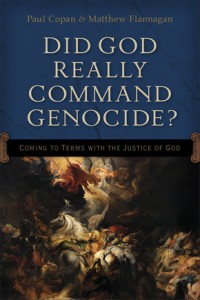 A common objection to belief in the God of the Bible is that a good, kind, and loving deity would never command the wholesale slaughter of nations. In the tradition of his popular Is God a Moral Monster?, Paul Copan teams up with Matthew Flannagan to tackle some of the most confusing and uncomfortable passages of Scripture. Together they help the Christian and nonbeliever alike understand the biblical, theological, philosophical, and ethical implications of Old Testament warfare passages.