Category: Christian History

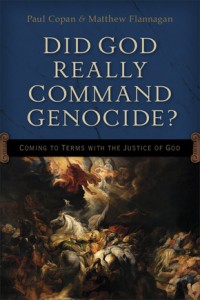
  • Out Now: Did God Really Command Genocide? Coming to Terms with the Justice of God by Paul Copan and Matthew Flannagan

    Did God Really Command Genocide?Well done Matt and Paul. 🙂

    Out now!

    Get your copy today of Did God Really Command Genocide? Coming to Terms with the Justice of God, by Paul Copan and Matthew Flannagan, published by Baker Books.

    More here.

    Buy from Baker Books
    Buy on Amazon in paperback
    Buy for your Kindle
    Buy from Book Depository

    (The New Zealand store launch is not until 31 January 2015 but Book Depository do free international posting.)

  • Did God Really Command Genocide? A new book by Copan and Flannagan

    Did God Really Command Genocide?Coming to a bookstore near you in November 2014: Did God Really Command Genocide? Coming to Terms with the Justice of God by: Paul Copan and Matthew Flannagan

    From Baker Publishing Group’s page:

    “Reconciling a violent Old Testament God with a loving Jesus
    Would a good, kind, and loving deity ever command the wholesale slaughter of nations? We often avoid reading difficult Old Testament passages that make us squeamish and quickly jump to the enemy-loving, forgiving Jesus of the New Testament. And yet, the question remains.

    In the tradition of his popular Is God a Moral Monster?, Paul Copan teams up with Matthew Flannagan to tackle some of the most confusing and uncomfortable passages of Scripture. Together they help the Christian and nonbeliever alike understand the biblical, theological, philosophical, and ethical implications of Old Testament warfare passages.”

    Some of the endorsements are below, you can read more here:

    “The Old Testament describes God as a warrior who directs his people to fight the Canaanites. Divine violence in the Bible is a theme that has aroused the ire of atheists and the discomfort and confusion of many Christians. Copan and Flannagan address the arguments of the atheists who use these texts to undermine belief and confidence in God. Not only are they adept at biblical interpretation and philosophy as they effectively counter this challenge, but they also write in a deeply compelling way that will appeal to both students and laypeople.”

    Tremper Longman III, Robert H. Gundry Professor of Biblical Studies, Westmont College, Santa Barbara, California

    “In their wide-ranging book, Copan and Flannagan go beyond standard treatments of Old Testament warfare; they incorporate biblical, theological, philosophical, ethical, legal, and historical perspectives on a much-debated but often misunderstood topic. This volume makes important strides forward in laying out a case for the coherence of divine command theory in connection with these Yahweh-war texts.”

    William Lane Craig, research professor of philosophy, Talbot School of Theology, La Mirada, California

    “As a full-scale follow-up to the excellent popular treatment of the topic in Is God a Moral Monster?,this book provides the most thorough and comprehensive treatment of the problem of violence in the Old Testament that I have encountered. The authors tackle the aggressive charges of the new atheists, as well as other equally sceptical but less strident critics of ‘the God of the Old Testament.’ And they do so with a blend of careful biblical exegesis and incisive moral argumentation. The book reaches deep, but remains readable, and the summaries at the end of every chapter are a great help in following the case as it is steadily built up. All of us who, in teaching or preaching the Old Testament, are constantly bombarded with ‘But what about the Canaanites?’ will be very grateful for these rich resources for a well-informed, gracious, and biblically faithful reply.”

    Christopher J. H. Wright, International Ministries Director, Langham Partnership, author of Old Testament Ethics for the People of God and  The God I Don’t Understand

    Chapter 1 is available here.

    Pre-order your copy now on Amazon, Book Depository or Mighty Ape (or wherever you normally get your books).

  • Jesus, Hot Cross Buns, Easter Eggs, Ishtar and Constantine: Is Easter Pagan? Tim McGrew says No!

    Easter can be annoying.  My kids all want chocolate, this year the hot cross buns sold out and Matt brought crumpets home from the supermarket instead. People who don’t normally have any time for Christianity suddenly feel they must go to church, whilst some of my Christian friends refuse to let their children eat chocolate because Easter is a pagan festival. Navigating it does my head in sometimes.

    Easter

    In the past week we’ve had people phone, email, text and raise in conversation that Easter was invented by Constantine, that the bunnies and the buns are pagan and thus consuming them is an offence against God. We’ve heard that the dates are wrong and that Easter dates do not coincide with Passover, that it is a Roman festival, while others say that Easter is tied up with Ishtar. This wasn’t limited to people coming to us; Matt was on the Pat Brittenden Mornings Panel earlier in the week and because of that we heard that talkback radio was full of this too. So, it was very cool that Matt and I were able to have a word with the producers at Radio Rhema after the Panel, and put them in touch with Dr Tim McGrew whose interview as to Whether Easter is Pagan aired on Tuesday – click the link to listen.

    Tim is a good friend, a world renowned scholar whose expertise on miracles and particularly the historical accuracy of the resurrection qualifies him as an authority on some of these Easter-is-pagan claims. While he does not touch on all of the above in the interview he debunks a lot of it.

    Normally Matt and I try to do a Passover-ish meal – we do lamb, rosemary and red wine – and the kids all get to choose a king size block of chocolate each (they reason they get more chocolate for the money than buying Easter Eggs) and I try to ensure indulgement in a decent hot cross bun. Throughout the weekend we focus on Christ, his death and resurrection. We read relevant passages, we have conversations about the Passover and the fact that Christ is the fulfillment of it, in years gone by when the kids were younger we’ve made Easter story cookies. Basically we enjoy the food, the public holiday and we weave learning opportunities and ways to focus on Christ in as we go so that the thrust of Easter is on him.

    We are not worried about taking this approach because Christ conquered all and our focus and heart and intent is on him. Don’t get me wrong, it is important to pause and check that one is not engaging in Paganism but just because something at some point had something to do with Paganism does not mean it is Paganism presently. Tree worship is common among Pagans so must we eschew wood? What about Pythagorus’ theorem? If Easter was just Ishtar worship then we would not be celebrating it; how many of us wanting the spiritual side of Easter are heading to the local Ishtar temple this weekend? As for Constantine inventing Easter, direct evidence for Easter being celebrated by Christians can be identified in the 2nd century, some couple of hundred years prior to Constantine – Wikipedia can tell you that much.

  • Jesus: The Cold Case a Guest Post by Glenn Peoples

    Glenn Peoples shares his thoughts on TV One’s recent episode Jesus: The Cold Case.

    Jesus: The Cold Case

    Like a number of others tonight I have just watched Jesus: The Cold Case on TV One, presented by Bryan Bruce. Here are my thoughts on what I have seen. First off, who is Bryan Bruce?

    Bryan Bruce

    Bryan Bruce is an award winning producer, writer & director who lives in Wellington, New Zealand. He has a MA in Sociology, Psychology & philosophy from Canterbury University. A former musician and schoolteacher, he began his television career in 1984 as front person and writer for a TVNZ arts show. Since then has won awards for Best Director and Best Factual Writer and his work has made the finals of several international festivals, including the New York Television Festival and the prestigious Banff Awards.

    The overarching message that Bryan Bruce is gravitating towards in this documentary is that the biblical and subsequent Christian message on who killed Jesus, namely, “the Jews” in some broad sense, is false, and what’s more it is responsible for centuries of great evil.

    Something that strikes the viewer quite early on is that Bruce quite simply doesn’t believe that the Gospels accounts are true in general terms. “Many,” he says, “now believe that the Gospels contain more fiction than fact.” Throughout the documentary we hear from a number of academics who lend their credibility to the various claims Bruce makes.

    One of the immediate worries about the presentation is that although we’re led to believe that the presenter is applying rigorous criminal investigation methods to the case, to those familiar with the world of biblical scholarship, his list of authorities suggests otherwise:

    • Emeritus Prof. Geza Vermes (Oxford)
    • Emeritus Prof John Dominic Crossan ( St Pauls)
    • Prof. Elaine Paigels (Princeton)
    • Bishop John Shelby Spong (USA)
    • Prof. Lloyd Geering (New Zealand)
    • Dr Helen Bond ( Edinburgh)
    • Prof . Israel Hershkovitz (Tel Aviv)
    • Dr Shimon Gibson (London)

    Does this read like the list a careful investigator consults if he wants a decent shot at getting to the unvarnished truth, rather than a somewhat partisan perspective?

    According to Vermes, Jesus was resurrected in the hearts of his followers, but not literally from the dead.

    Crossan claims that Jesus’ followers had a kind of spiritual visionary experience
    Paigels writes that early Christians didn’t believe in physical resurrection at all, seeking instead a state of spiritual knowledge and enlightenment Spong says that Jesus’ resurrection had nothing to do with him coming back to life, but with the subjective – but real – experiences in the hearts of his followers.

    Lloyd Geering, who himself does not believe in any such being as God, claims that the body of Jesus remained buried and that the story of his resurrection was a later story concocted on the basis of a re-reading of the Old Testament.

    Now of course this isn’t a documentary on the resurrection, but the pattern is somewhat striking. It looks fairly clearly as though the presenter has intentionally stacked the witness stand with those hostile to the Christian story. It will hardly come as a surprise that, given such a uniform and narrow sample, the testimony will (rather gleefully!) point away from the traditional version of events surrounding the death of Christ. We might just as easily consult the faculty of Dallas Theological Seminary and claim that using rigorous scrutiny, we have reached the conclusion that the biblical portrait of Jesus’ death is, well, inerrant! Given that those consulted would be placed at one extreme of the spectrum on whether or not we can generally trust the Gospel accounts or the teaching of the early Christian movement, the interests of balance would surely call for less radical voices, the likes of Craig Evans, James Dunn, Luke Timothy Johnson or N. T Wright. One example – Lloyd Geering is quoted as assuring viewers – completely unchallenged – that the details of the crucifixion was no more than what people “imagined” had probably taken place. When it comes to the story of the resurrection, Geering is explicit – Jesus was probably buried by the Romans and that was that. No tomb, no stone rolled away, and no angels. Geering laughs, “the very fact that you’ve got angels [in the story] shows that we’re dealing with myth, not history.” There was not a single challenge raised. Not even an innuendo that Geering’s view isn’t the scholarly consensus. This was said just minutes after the narrator told us that the Gospel was more fiction than fact.

    This type of concern rears its head among a more sceptical audience when the evangelical likes of Lee Strobel seeks to do just what Bryan Bruce is doing: Apply critical scrutiny to the facts concerning the life of Christ. And yet we frequently hear the complaint that Strobel consults only committed and usually conservative Christians, people who are unlikely to disagree strongly with each other – or with Strobel. I would hope, then, that this same type of sceptical, professedly critical audience will likewise regard Bruce’s offering as a biased, selective survey of a very thin slice of the scholarly community. For example (more…)
  • Contra Mundum: Religion and Violence

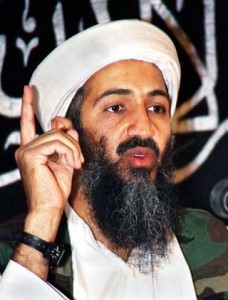
    On 1 May 2011 the world received the news that Osama Bin Laden was dead; gunned down in Pakistan by an elite team of US Navy Seals. Even before his death Bin Laden had become a legendary persona. Not only was he a terrorist leader responsible for the deaths of thousands of innocents but he functioned as a contemporary paradigm of the fanatical religious nutter who promotes hatred, violence and intolerance – much like the symbol Adolf Hitler was to earlier generations.

    Osama Bin LadenThe 9/11 terrorist attacks reinvigorated a fear that has lain dormant in the western psyche since at least the 17th century. This fear is encapsulated in an objection to belief in God known as the argument from historical atrocities. Many critics of religion refer to the religious wars that tore Europe apart during the 17th century, citing events such as the Inquisition and Crusades — although lately the Taliban have been the image of choice.

    Recently, whilst debating the viability of religious morality at the University of Notre Dame, best-selling author Sam Harris repeatedly cited the Taliban as a representative example of theological ethics. One need not read far into the literature of contemporary free thinkers to uncover this line of argument. Consider Jim Peron of the Institute for Liberal Values:

    “To admit religion into the “public arena” is “dangerous.” And long term the results will be just as bloody and violent as they were in the past. … To put religion into that sector is to ignore centuries of history and return to the conflict-ridden, bloody world of the Dark Ages.”

    Peron went on to refer to common motifs of the Inquisition: “crazy Puritans”, Servetus’ execution in Calvin’s Geneva and so on. Similar themes abound in the writings of Dawkins, Harris and Hitchens. The citation of historical cases is not in itself an argument so it is hard to discern the exact objection here. It appears to consist of two claims. Firstly, that some people who believe in God have committed atrocities against other people. Secondly, that if people who hold a belief commit atrocities then that belief is either false or should be avoided by liberal-minded people.

    Historians Ronald Numbers and David Lindberg point to recent research having discredited the portrayal of the early Middle Ages as “the Dark Ages” brought about by Christianity. Similarly, research into Inquisition archives reveal that while such tribunals did exist, many popular beliefs are based on embellishment, exaggeration and propaganda rather than a sober assessment of facts. The picture of the Inquisition that emerges from these studies is significantly more benign than has popularly been thought. Similarly, historian Leland Ryken’s studies on the Puritans have questioned many of the popular stereotypes Peron referred to.

    Take Peron’s allusion to the execution of Servetus. In his study on the life of Calvin, Oxford Theologian Alister McGrath argues (more…)

  • John Lennox on the “Religion v Science” Myth

    John Lennox will arrive in Auckland in less than two weeks for his New Zealand tour.

    If you are not familiar with Lennox watch this video “The “Religion v Science” Myth.” In it Lennox examines the historically ignorant myth that religion is and always has been at odds with science.

    Details of Lennox’s upcoming New Zealand tour are here: Hear John Lennox in New Zealand.

    Hat tip: Glenn Peoples

  • Waitangi’s Christian Heritage

    It is Waitangi Day in New Zealand today; the day where we remember the signing of the treaty of Waitangi in 1840.

    This morning at church I had the privilege of hearing a very interesting talk from my Pastor, Rev. Dr Stuart Lange about the lead up to the Treaty signing. Stuart is a church historian and something of an expert on the history of Christianity in New Zealand. When he is not being a pastor at Massey Presbyterian Church he lectures in Church History at Laidlaw College where he used to be Vice Principal.

    Samuel MarsdenStuart looked at the role of missionaries in NZ society. He pointed out some interesting facts, such as: the relationship between early missionary Samuel Marsden and William Wilberforce, the famous evangelical reformer who spearheaded the abolition of the slave trade in England; and that prior to the Treaty being signed, large numbers of Maori converted to Christianity; he touched on the role of Missionaries in brokering peace between warring tribes, and how these conversions lead to Maori tribes liberating their slaves who then carried the gospel back to their homes. He also noted that, in many respects, prior to 1840 Christianity was more prevalent amongst Maori than the colonial settlers, many of whom were fairly unscrupulous and had little time for serious evangelical commitment.

    He noted also the theological and pastoral motivations of the missionaries in pushing for the Treaty; they were concerned to see that, with colonialists arriving in great numbers, the indigenous people they worked with were protected. He also noted the role of several missionaries in speaking out against early violations of the Treaty.

    Stuart is apparently giving a 90 minute lecture on these issues at Congress 2011: 2020 Vision – The Gospel in the Decade Ahead, a Christian leadership conference in Wellington later this month – check it out if you’re in Wellington. This was a very brief snippet of that talk but it was thoroughly interesting and it was delivered with Stuart’s characteristic humour.

    I have posted on some of the moral issues around the Treaty before and I plan in the future to write some more on this topic but now  I also plan to look into some of the theological history as I found this talk fascinating.

    Anyway happy Waitangi Day fellow kiwis! Let us today all pause, consider and celebrate our country’s heritage and future together – take up Pat Brittenden’s idea and have a Waitangi Day barbeque! Kia kaha.

    RELATED POSTS:
    Maori and Pakeha are Not Partners to the Treaty of Waitangi
    Sovereignty and The Treaty of Waitangi
    View “Marae: The Great Waitangi Debate” Here
    The Foreshore and Seabed Repeal: The Inconvenience of Due Process