Tag: John Stuart Mill

  • Thinking Matters Talk: Does Morality Need God? Part One

    This year the New Zealand apologetics organization Thinking Matters, ran a “Confident Christianity Conference” in Auckland. I was asked to speak at this conference on the topic. Does Morality Need God? Below is a slightly streamlined version of the talk I gave.

    “If God does not exist, then everything is permissible.” These words from Ivan Karamazov in Dostoevsky’s The Brothers of Karamazov express a widely held intuition that moral requirements depend upon God’s existence. Most contemporary ethicists today would dismiss this intuition. In this talk, I will argue their dismissal is premature. I will defend what philosophers call a divine command theory of ethics. The thesis that moral wrongness is (identical to) the property of being contrary to God’s commands.[1] Where God is understood, in orthodox fashion, as a necessarily existent, all-powerful, all-knowing, essentially loving and just, immaterial person who created and providentially ordered the universe. 

    Note three things about this thesis:

    First, it is a thesis about the nature of moral requirements. It is not a thesis about the nature of goodness. The concept of “good, is ambiguous, as is seen by the following statements “I had a really good dip in the spa pool last night,” Or “going on a low carb diet is good for you.” Or “Carlos the Jakal was a good hitman.” The concept of the morally obligatory, or morally required, is not identical to the concept of what it is good to do. It might be good, even saintly, for me to give a kidney to benefit a stranger, but it is not an act I am obliged to do.[2] 

    Second, my thesis is that the property of being morally required is “identical” to the property of being commanded by God.  I am not saying that people cannot know what is right and wrong unless they believe in God. Nor am I claiming that the word “wrong” means “contrary to God’s command.” These are distinct claims. Consider light; Light is identical to a certain visible range of the electromagnetic spectrum. But obviously, that isn’t the meaning of the word “light.” People knew how to use the word “light” long before discovering its physical nature. And they knew the difference between light and darkness long before they understood the physics of light. Analogously, we can know the meaning of moral terms like “right” and “wrong” and know the difference between right and wrong without being aware that the moral requirements are God’s commands.[3]

    Third, this is a thesis about the relationship between God and morality. It is not a claim about the relationship between the bible and morality. The thesis I laid out does not mention any sacred text such as the Bible, Quran, Hadith, Torah, or Talmud. While many divine command theorists accept that God has revealed his commands in an infallible sacred text, some do not. The claim that God’s commands are contained in some sacred text is not part of or entailed by a divine command theory itself. It is the result of other theological commitments they have. One could consistently be a divine command theorist without holding this. Divine command theories are ecumenical; they have had advocates within the Christian, Islamic, Jewish, and even deist traditions.

    Having clarified my thesis, I will defend three contentions.

    • Secular accounts of morality cannot coherently account for our fundamental intuitions about moral requirements.
    • If God exists, then a divine command theory can coherently account for our fundamental intuitions about moral requirements.
    • Standard objections to divine command theories fail.

    I. Four Assumptions about Moral Requirements

    But first, what do I mean by fundamental assumptions? Moral theories are tested, in part, by how well they account for various assumptions about morality implicit in our moral thought and practice. [4] I will begin by listing four plausible assumptions about the type of requirements morality imposes upon us.

    One is that moral requirements are inescapable: they apply to us irrespective of whether following them contributes to any ends or aims we currently desire.  Consider a criminal who stands in the dock convicted of a crime; he openly admits the crime, is unrepentant and informs us that he wanted to kill and torture. Doing so did not frustrate any of his desires. Does our moral condemnation of him depend on us assuming he does not have statistically abnormal desires so that we withdraw this judgment when we discover he really does desire to kill and maim?  Moral requirements can’t be escaped or begged off by noting they don’t fulfill one’s goals or ends. [5]

    Second moral requirements are requirements that are justified from an impartial point of view. Peter Singer explains:

    The ‘Golden Rule’ attributed to Moses, to be found in the book of Leviticus and subsequently repeated by Jesus, tells us to go beyond our own personal interests and ‘love thy neighbour as thyself’ – in other words, give the same weight to the interests of others as one gives to one’s own interests. The same idea of putting oneself in the position of another is involved in the other Christian formulation of the commandment, that we do to others as we would have them do to us. The Stoics held that ethics derives from a universal natural law. Kant developed this idea into his famous formula: ‘Act only on that maxim through which you can at the same time will that it should become a universal law.’ Kant’s theory has itself been modified and developed by R. M. Hare, who sees universalisability as a logical feature of moral judgments. The eighteenth -century British philosophers Hutcheson, Hume, and Adam Smith appealed to an imaginary ‘impartial spectator’ as the test of a moral judgment, and this theory has its modem version in the Ideal Observer theory. Utilitarians, from Jeremy Bentham to J. J. C. Smart, take it as axiomatic that in deciding moral issues ‘each counts for one and none for more than one’; while John Rawls, a leading contemporary critic of utilitarianism, incorporates essentially the same axiom into his own theory by deriving basic ethical principles from an imaginary choice in which those choosing do not know whether they will be the ones who gain or lose by the principles they select…. One could argue endlessly about the merits of each of these characterisations of the ethical; but what they have in common is more important than their differences. They agree that an ethical principle cannot be justified in relation to any partial or sectional group. Ethics takes a universal point of view[6]

    Third moral requirements have practical authority: agents always have conclusive reasons to do what is morally required and never have sufficiently good reasons for doing what is morally wrong. Someone has conclusive reasons to act in a certain way when the reasons in favor of acting, taken together, are stronger than any set of reasons we may have to act in some other way.  If we don’t always have conclusive reasons to do what is right, having total allegiance to morality will be arbitrary and, at worst irrational.   We will have no more reason to do what is right than wrong. Or doing the right thing will be doing what we have a most reason not to do.[7]

    Moral requirements are supposed to answer questions about what we are to do. They are considerations that guide our actions.  When we learn something is wrong, that tells us what we are not to do. They cannot do this if we lack conclusive reasons to do what they say.  Suppose you and I are discussing whether it is my duty to donate to the red cross. You convinced me it is my duty to do so. The red cross knocks on my door. I refuse to donate. I suspect this would puzzle you; didn’t I concede that I had a duty to do it? If I responded with “yes, I am persuaded it is my duty to do it, but that doesn’t mean I have reasons to do it,” I suspect you would think I was missing something. I would deny moral requirements have any authority or claim on my behavior and don’t address the question, “what ought I do?”.[8]

    Or suppose you heard that I had resigned from my high-paying job. You think I am nuts. How am I going to provide for my family? Why would I give up the career I always dreamt of? I tell you, I discovered the firm was engaging in unethical business practices, and I had to resign to avoid being complicit. On hearing this, wouldn’t it now make sense that I did this? I was justified in doing so. If you do, you are assuming that the fact an action is wrong justifies my refraining from doing it.[9]

    Fourth, a final assumption is that if something is morally required, we are accountable for doing it in an important sense.  John Stuart Mill famously stated,

    “We do not call anything wrong unless we mean to imply that a person ought to be punished in some way or other for doing it—if not by law, by the opinion of his fellow creatures, if not by opinion, by the reproaches of his own conscience. This seems the real turning point of the distinction between morality and simple expediency.”[10]

    There is a conceptual link between something being morally obligatory and something being blameworthy. If we do what is morally wrong without excuse, others can legitimately blame us, and guilt is warranted. Moral requirements conceptually are demands people make upon one each, which we can hold each other accountable through demanding an excuse, practices of blaming, criticizing, and guilt.

    Robert Adams asks us to imagine a situation in which there are compelling reasons to support you not walking on the lawn. However, these reasons give you no grounds for feeling guilty if you do, and they provide no reasons for other people to make you feel like you must stay off the lawn or to blame and reproach you for doing so. Adams concludes that while there would be a sense in which you ought not to walk on the lawn, you have no obligation not to do so.[11]

    So, whatever property moral wrongness is, it is the property of being prohibited by certain standards: standards that are inescapable and justified from an impartial point of view. The fact these standards prohibit an action means agents have conclusive reasons not to do the action in question. Agents are also accountable for actions doing actions prohibited by these standards. Others can blame and sanction me if I act contrary to them without an adequate excuse. A plausible thesis about the nature of moral wrongness should account for these facts.

    In my next post, I will defend my first contention: that secular accounts of morality struggle to coherently account for these four assumptions.


    [1] Robert M. Adams, “Divine Command Meta-Ethics Modified Again,” Journal of Religious Ethics 7:1 (1979): 76.

    [2] Example from C. Stephen Evans, Kierkegaard’s Ethic of Love: Divine Commands and Moral Obligations (Oxford: Oxford University Press, 2004), 16.

    [3] This illustration comes from William Lane Craig see “Is Is the Foundation of Morality Natural or Supernatural? The Craig-Harris Debate” available at  https://www.reasonablefaith.org/media/debates/is-the-foundation-of-morality-natural-or-supernatural-the-craig-harris-deba/) accessed 19 August  2022.

    [4] The implicit method here is described in Richard Joyce’s “Theistic Ethics and the Euthyphro Dilemma,” Journal of Religious Ethics 30 (2002): 68-69;”

    [5] Richard Joyce, “Mackie’s Arguments for an Error Theory,” Stanford Encyclopaedia of Philosophy (available at https://plato.stanford.edu/entries/moral-anti-realism/moral-error-theory.html, accessed 20/4/17).

    [6] Peter Singer, Practical Ethics (Cambridge: Cambridge University Press, 1993), 11

    [7] This argument is adapted from C. Stephen Layman’s “God and the Moral Order” Faith and Philosophy, 23 (2006): 306- 307

    [8] This example comes from Michael Smith’s The Moral Problem (Oxford: Blackwell Publishing 1994) 6

    [9] This example comes from C Stephen Layman’s “A Moral Argument for The Existence of God” Is Goodness without God Good Enough: A Debate on Faith, Secularism and Ethics eds Robert K Garcia and Nathan L King (Lanham: Rowman & Littlefield Publishers, 2008) 53-54

    [10] John Stuart Mill, Utilitarianism, chapter 5 available at https://www.utilitarianism.com/mill5.htm accessed 23 August 2022

    [11] Robert M. Adams, Finite and Infinite Goods: A Framework for Ethics (Oxford: Oxford University Press, 1999) 238.
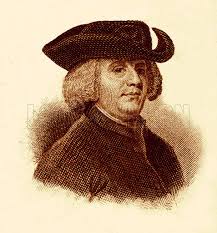
  • Divine Command Theory and Utilitarianism forgotten bedfellows? Paley’s Principles of Moral and Political Philosophy (part two)

    In my last post, I explained the position of Theological Utilitarianism as expounded in William Paley’s The Principles of Moral and Political Philosophy. I pointed out The Principles was first published in 1785, four years before Jeremy Bentham published An Introduction to the Principles of Morals and Legislation. In this post, I want to look at the influence Theological Utilitarianism had in the 18th and 19th centuries. Was Paley expounding some novel idiosyncratic position? Or was he simply repeating a fairly mainstream position on the relationship between Gods law and happiness which had been around for decades?

    1. The influence of Theological Utilitarianism in the 18thand 19th centuries

    Theological Utilitarianism sounds novel to contemporary ears. But it wasn’t an innovative position in the late eighteenth century. Paley notes in the preface that he is a “compiler” of earlier writers of moral theory. Schneewind, states that the theory he proposed was in fact “an assemblage of ideas developed by others and is presented to be learned by students rather than debated by colleagues. “[1] Some trace theological utilitarianism back to the divine command theory of John Locke[2]  However, the earliest clear exponent of this position appears to be George Berkeley’s sermons in 1712.[3]

    It is worth looking at Berkeley in some detail.  According to Berkeley, things are “denominated good or evil” as “they are fitted to augment or impair our own Happiness” Good or Evil. On the other hand, “Moral Goodness” consists in a “Conformity to the Laws of God.” Berkley articulates the relationship between moral and non-moral goodness as follows:

    For Laws being Rules directive of our Actions to the end intended by the Legislator, in order to attain the paleyKnowledge of God’s Laws, we ought first to enquire what that end is, which he designs should be carried on by human Actions. God is a Being of Infinite Goodness. it is plain the end he proposes is Good. But God enjoying in himself all possible Perfection, it follows that it is not his own Good, but that of his Creatures. Again, the Moral Actions of Men are entirely terminated within themselves, so as to have no influence on the other orders of Intelligences or reasonable Creatures: The end therefore to be procured by them, can be no other than the good of Men. But as nothing in a natural State can entitle one Man more than another to the favour of God, except only Moral Goodness, which consisting in a Conformity to the Laws of God, doth presuppose the being of such Laws, and Law ever supposing an end, to which it guides our Actions, it follows that Antecedent to the end proposed by God, no distinction can be conceived between Men; that end therefore itself or general design of Providence is not determined or limited by any Respect of Persons: It is not therefore the private Good of this or that Man, Nation or Age, but the general well-being of all Men, of all Nations, of all Ages of the World, which God designs should be procured by the concurring Actions of each individual. Having thus discover’d the great end, to which all Moral Obligations are Subordinate; it remains, that we enquire what Methods are necessary for the obtaining that End.[4]

    When Berkeley says God is  infinitely good, he like Samuel Clarke seems to mean that God  has “an unalterable disposition to do and to communicate good or happiness.”[5] [6] God’s goal in issuing the commands he does is the happiness, impartially considered of all human beings.

    Berkeley proceeds to note two ways that God could promote this happiness. One would be “without the injunction of any certain universal Rules of Morality, to to oblige “every one upon each particular Occasion, to consult the publick Good, and always to do that, which to him shall seem in the present time and circumstances, most to conduce to it.”  The second is  “by enjoining the Observation of some determinate, established Laws, which, if Universally practised, have from the Nature of things an Essential fitness to procure the well-being of Mankind” Berkeley argues that “”there lie several strong Objections.” Berkeley then anticipates the “self-effacing” objection to act utilitarianism arguing that anyone committed to promoting the happiness of others wouldn’t promulgate act utilitarianism as a decision procedure. Public endorsement and acceptance of the rule “do whatever maximises utility” would probably not maximise utility. Consequently, Berkeley concludes that God has followed the second method.

    Stephen Darwall suggests that the best way to interpret Berkeley is to distinguish between his meta-ethical theory and normative theory. His meta-ethical theory attempts “to answer metaphysical questions of what goodness and rightness themselves, respectively, are.” On the other hand, his normative theory “concerns what actions or things are good and right.” Meta-ethically Berkeley is a divine command theorist “moral goodness consists” consists in a “Conformity to the Laws of God”. However, Berkeley’s normative theory was rule-utilitarian, God commands “Laws, which, if Universally practised, have from the Nature of things an Essential fitness to procure the well-being of Mankind”.[7]

    A position very similar to Berkeley is hinted at in Butler’s writings[8] but is expounded more clearly in the writings of, John Gay [9] John Brown, and Abraham Tucker.   It’s clear that Paley clearly draws upon this earlier tradition.  In the preface to The Principles Paley acknowledges that he is attempting to compile and articulate the positions of John Gay, and Abraham Tucker. Book II chapter 1 of The Principles proposes a line of argument that closely resembles the argument of John Gay “Concerning the Fundamental Principle of Virtue or Morality”.

    Similarly, Paley’s emphasis on rules is, as we saw, found in Berkeley’s Passive obedience and performs the same function. Berkeley’s initial advancement of this distinction and advocacy of rule utilitarianism was part of a broader argument to argue against violent resistance to the state during the Jacobite agitation in Ireland. He was concerned that people were advocating the violation of certain negative rules of the law of nature such as: “do not commit adultery”, “do not steal”, “don’t rebel against the government”, whenever they perceived doing so would further the public good. Paley uses the distinction for similar purposes, to respond to the objection that utilitarianism allows people to break with impunity moral rules against theft and murder whenever they perceive it will make people happy.

    In fact, the proximate source for Paley’s stress on rules appears to be Abraham Tucker. Tucker. Wrote

      As we cannot upon every occasion see to the end of our proceedings, he [the moralist] will establish certain rules to serve as landmarks for guiding us on the way.  These rules, when he has leisure and opportunity for mature consideration, he will build on one another, erecting the whole fabric upon the basis of the summum bonum before described.  (Original emphasis)[10]

    Similarly, Paley’s argument that God wills the happiness of his creatures and so the commands God issues must be coextensive with promoting the happiness is ubiquitous in the tradition that preceded him. This argument is s found in Berkeley, Gay, and Brown Louden also documents the same argument occurs in Adam Smith and Joseph Butler [11]

    Finally, Paley’s exposition of this tradition was very influential. The principles became required text at Cambridge university Schneewind points out “utilitarianism first became widely known in England through the work of William Paley.[12] Paley, not Bentham being its most well-known exponent.  Similarly, Smith points out that Paley’s writings were once as well known in American colleges as were the readers and spellers of William McGuffey and Noah Webster in the elementary schools.[13]

    In fact, Paley’s influence is still seen clearly in John Austin’s work on Jurisprudence, in the early and late nineteenth century.  Mill himself appeals to the tradition:

    We not uncommonly hear the doctrine of utility inveighed against as a godless doctrine. If it be necessary to say anything at all against so mere an assumption, we may say that the question depends upon what idea we have formed of the moral character of the Deity. If it be a true belief that God desires, above all things, the happiness of his creatures, and that this was his purpose in their creation, utility is not only not a godless doctrine, but more profoundly religious than any other. If it be meant that utilitarianism does not recognise the revealed will of God as the supreme law of morals, I answer, that a utilitarian who believes in the perfect goodness and wisdom of God, necessarily believes that whatever God has thought fit to reveal on the subject of morals, must fulfil the requirements of utility in a supreme degree. …Whether this opinion is correct or not, it is superfluous here to discuss; since whatever aid religion, either natural or revealed, can afford to ethical investigation, is as open to the utilitarian moralist as to any other. He can use it as the testimony of God to the usefulness or hurtfulness of any given course of action.[14]

    Mill here explicitly rejects the idea that Utilitarianism does not recognize the revealed will as the supreme law of morals, and uses a line of argument very similar to Paley, whose writings Mill was aware of, to argue the contrary.

    Consequently, Utilitarianism then wasn’t a new or novel theory of ethics proposed by secular thinkers such as Hume and Bentham in the late 18th century. Nor did it develop in response to or in opposition to a conception of morality based divine commands or divine laws. Divine command theorists, in fact, had been advocating Theological Utilitarianism for decades before Bentham, and the popularity of utilitarianism in Anglo-American thought had a good deal to do with the popularity of theological utilitarianism.


    [1]J B Schneewind Moral Philosophy from Montaigne to Kant. (Cambridge: Cambridge University Press. 2002) 446.  Paley was, therefore, summarising an already existing, popular, school of thought.

    [2] See for example A. P. Brogan “John Locke and Utilitarianism” Ethics 69: 2 (1959), 79-93.

    [3] See Berkeley’s A Discourse on Passive Obedience (1712) and dialogues I-III of the   Alciphron (1732). Berkeley had included a systematic treatise on moral theory in the draft of A Treatise Concerning the Principles of Human Knowledge (1710), but the manuscript was lost, leaving historians to piece together his theories from his occasional writings.

    [4] Passive obedience: or, the Christian doctrine of not resisting the supreme power, proved and vindicated … In a discourse deliver’d at the College-chapel. By George Berkeley, M.A. Fellow of Trinity-College, Dublin. Available at https://quod.lib.umich.edu/e/ecco/004899015.0001.000/1:3?rgn=div1;view=fulltext

    [5] Clarke, Demonstration, Prop. XII; in Works, vol. II, p. 572.

    [6] Robert Louden notes this conception of God’s goodness was common in the 18th century and similar arguments can be seen in Smith and Butler see Robert Louden “Butler’s Divine Utilitarianism,” History of Philosophy Quarterly, 12:3 (1995):265–280

    [7] See Stephen Darwall “Berkeley’s Moral and Political Philosophy,” in, The Cambridge Companion to Berkeley, Kenneth Winkler, ed. (Cambridge: Cambridge University Press, 2006)

    [8] Robert Louden “Butler’s Divine Utilitarianism,” History of Philosophy Quarterly, 12:3 (1995):265–280

    [9] John Gay “Concerning the Fundamental Principle of Virtue or Morality” in Lewis Amherst Selby-Bigge, British Moralists, being Selections from Writers principally of the Eighteenth Century, vol. 2 [1897] available at http://oll.libertyfund.org/titles/bigge-british-moralists-vol-2 accessed 26 Aug 2016

    [11] Robert Louden “Butler’s Divine Utilitarianism,” History of Philosophy Quarterly, 12:3 (1995):265–280.

     [12] Schneewind, Moral Philosophy from Montaigne to Kant 446.

    [13] Wilson Smith “William Paley’s Theological Utilitarianism in America” The William and Mary Quarterly Third Series, 11:3 (1954) 402–424

    [14] John Stuart Mill “What is Utilitarianism” available at https://ebooks.adelaide.edu.au/m/mill/john_stuart/m645u/chapter2.htm

  • Contra Mundum: Consenting Adults and Harm

    In debates over abortion, homosexual conduct, euthanasia, prostitution, drugs, those who call themselves liberals often mount the same basic argument; a socially or morally permissive stance is necessitated towards such practices because people have a right to choose do what ever they like with their own bodies. As John Stuart Mill put it in his book On Liberty:

    “The only part of the conduct of anyone, for which he is amenable to society, is that which concerns others. In the part which merely concerns himself, his independence is, of right, absolute. Over himself, over his own body and mind, the individual is sovereign.” [Emphasis added]

    John Stuart Mill

    Here Mill articulates the harm principle. He makes a distinction between other-regarding actions, actions that harm other people, and self-regarding actions, those that harm oneself. He argues that society, either by law or by social pressure, cannot justly regulate any action a person performs unless it is other-regarding; that is, it harms people other than the agent him/herself.

    As Mill’s position is typically interpreted, harm is understood to be governed by the principle volenti non fit injuria (where there is consent there is no injury); it refers to things done to other people without their consent. Mill states that a self-regarding action is one “which affects only himself, or affects others with their free and voluntary, and undeceived consent”.

    Mill intended his principle to be criteria as to what should and should not be made a criminal offence; he did not consider it criteria for determining what is right and wrong. Yet many contemporary liberals appear to use it in this latter way. They contend that as long as the action involves only consenting adults it is morally permissible. It is often asserted in our society, as though it were self-evident, that people have a moral right to do whatever they like with their own bodies.

    I think this claim is far from self-evident. Irving Kristol famously proposed this counter-example in a 1971 article in New York Times Magazine:

    “[T]he plain fact is that none of us is a complete civil libertarian. We all believe that there is some point at which the public authorities ought to step in to limit the “self-expression” of an individual or group even where this might be seriously intended as a form of artistic expression, and even where the artistic transaction is between consenting adults. A playwright or theatrical director might, in this crazy world of ours, find someone willing to commit suicide on stage, as called for by the script. We would not allow that-any more than we would permit scenes of real physical torture on the stage, even if the victim were a willing masochist. And I know of no one, no matter how free in spirit, who argues that we ought to permit gladiatorial contests in Yankee stadium, similar to those once performed in the Coliseum of Rome-even if only consenting adults were involved.”

    The examples Kristol gives are all cases where any person of common sense would condemn the act but where all the victims consent to be harmed.

    In his book Harmless Wrong Doing: Moral Limits of the Criminal Law, Liberal Political Philosopher Joel Feinberg considers Kristol’s objection as the most important and potentially-devastating counter-example to the harm principle and he spends considerable energy attempting to circumvent it. He offers four responses. Here I will argue that these responses fail.

    First, Feinberg questions whether such cases are really cases of consensual homicide. He suggests (more…)

  • Is Abortion Liberal? Part 1

    Laws permitting abortion on demand are often deemed to be liberal. Further, political liberals are frequently ardent defenders of such laws. I think these conclusions are mistaken. In a series of two posts I will provide some reasons why.

    Most contemporary liberals advocate a form of the harm principle, famously articulated by Mill in On Liberty,

    The only part of the conduct of anyone, for which he is amenable to society, is that which concerns others. In the part which merely concerns himself, his independence is, of right, absolute. Over himself, over his own body and mind, the individual is sovereign.[i] [Emphasis added]

    Mill here draws a distinction between other-regarding actions, actions that harm other people, and self-regarding actions, those that harm oneself. He argues that society, either by law or by social pressure, cannot justly regulate any action a person performs unless it is other-regarding; that is, it harms people other than the agent him/herself. As Mill’s position is typically interpreted harm is understood to be governed by the principle volenti non fit injuria (where there is consent, there is no injury) and hence refers to things done to other people without their consent. On this interpretation, self-regarding actions are those that people consent to and that harm no non-consenting, third party. As Mill himself notes, a self-regarding action is that “which affects only himself, or affects others with their free and voluntary, and undeceived consent”.[ii]

    The most common version of the harm principle is known as the non-initiation of force principle; Rothbard sums it up well,

    The libertarian creed rests upon one central axiom: that no man or group of men may aggress against the person or property of anyone else. This may be called the “nonaggression axiom.” “Aggression” is defined as the initiation of the use or threat of physical violence against the person or property of anyone else. Aggression is therefore synonymous with invasion.[iii]

    I do not subscribe to the harm principle or the non-initiation of force interpretation of it (I give some reasons why here). However, in this series of posts I will adopt it for the sake of argument so as to examine what follows for abortion. Abortion involves killing a fetus, usually by dismembering it. Moreover, the fetus does not consent to it. Hence if a Liberal is to support abortion he/she must do so for only one of two reasons. Either,

    (a) the fetus is a person but its existence inside the mother without her consent constitutes a form aggression, and hence, the mother’s action of killing it is defensive; or,
    (b) a fetus is not a person.

    Only if one of these two options is adopted, can a liberal support the non-initiation of force principle and permissive abortion legislation and remain consistent.

    Failed Avoidance Tactics
    At this juncture it is worth noting that two very common tactics of avoiding this conclusion fail. The first is to defend abortion, as Rodney Hide tried to at the recent Family First Forum, on the basis of the perceived positive social consequences of ‘liberal’ abortion laws. In popular political discourse, and in some feminist writings, abortion is defended on consequentialist grounds; it is argued that abortion prevents unwanted children, children who are likely to be poor, abused, neglected or engage in crime. It is hailed as a solution to over-population and the existence of handicapped people. It prevents adult and teenage women from falling into economic hardship and stress and enables them to complete their education, pursue their careers and so on.

    The problem with this line of argument is that this is only cogent for liberals if they assume that abortion does not violate the non-initiation of force principle. If abortion does violate this principle then allowing abortion on these grounds would be tantamount to saying that people can engage in aggression (as Rothbard defines it) they can initiate lethal force against others provided doing so brings about positive consequences, like lower crime rates, less child abuse, lower population rates, access to education and employment, etc. This conclusion contradicts the non-initiation of force principle which states that one cannot justly pursue social utility by violating an individual’s right to life, liberty or property; the very basis of their opposition to socialism.

    The second avoidance tactic is to appeal to slogans such as “you can’t force your morality onto others, you can’t legislate morality”. The problem with these claims is that the non-initiation of force principle is itself a moral principle and liberals believe the state should enforce this principle and should defend people against others who would violate it. This forces a dilemma upon liberals who cite this slogan; either the claim “you can’t force your morality onto others” applies to the non-initiation of force principle or it does not. If it does, then abortion involves an unjust imposition of morality onto another only if you assume it is not the initiation of force. If it does not, then liberalism as a doctrine collapses as the state has no duty to protect the life, liberty and property of its citizens from aggression. In fact, it entails the conclusion that acts of aggression such as rape and murder should be decriminalised alongside abortion.

    It follows then that the liberal cannot rationally avoid the question. If one is to both support ‘liberal’ abortion laws and hold to the non-initiation of force principle, one must do so either on (a) or (b) above. I think neither is terribly defensible. I will address (a) the fetus is a person but its existence inside the mother without her consent constitutes a form aggression, and hence, the mother’s action of killing it is defensive; and, (b) a fetus is not a person, in my next post, Is Abortion Liberal? Part 2.

    [i] John Stuart Mill, On Liberty (London: Penguin Classics, 1985), 69.
    [ii] Ibid. 71.
    [iii] Murray N Rothbard, For A New Liberty: The Libertarian Manifesto (New York: Collier Books, 2002) 23.

  • Against Liberal Morality

    In debates over abortion, homosexual conduct, euthanasia, prostitution, drugs. Those who call themselves liberals often mount the same basic argument. A socially or morally permissive stance is necessitated towards such practices because people have a right to choose do what ever they like with their bodies. As Mill put it,

    The only part of the conduct of anyone, for which he is amenable to society, is that which concerns others. In the part which merely concerns himself, his independence is, of right, absolute. Over himself, over his own body and mind, the individual is sovereign. [1] [Emphasis added]

    Mill here draws a distinction between other-regarding actions, actions that harm other people and self-regarding actions, those that harm oneself. He argues that society, either by law or by social pressure, cannot justly regulate any action a person performs unless it is other-regarding; that is, it harms people other than the agent him/herself. As Mill’s position is typically interpreted harm is understood to be governed by the principle “volenti non fit injuria” (where there is consent there is no injury) and hence refers to things done to other people without their consent. On this interpretation, self-regarding actions are those that people consent to and that harm no non-consenting, third party. As Mill himself notes, a self-regarding action is that “which affects only himself, or affects others with their free and voluntary, and undeceived consent”.[2]

    Perhaps one of the more important counter-examples to this criterion is that of Gladiatorial Matches. Irving Kristol famously proposed this counter-example,

    [T]he plain fact is that none of us is a complete civil libertarian. We all believe that there is some point at which the public authorities ought to step in to limit the “self-expression” of an individual or group even where this might be seriously intended as a form of artistic expression, and even where the artistic transaction is between consenting adults. A playwright or theatrical director might, in this crazy world of ours, find someone willing to commit suicide on stage, as called for by the script. We would not allow that-any more than we would permit scenes of real physical torture on the stage, even if the victim were a willing masochist. And I know of no one, no matter how free in spirit, who argues that we ought to permit gladiatorial contests in Yankee stadium, similar to those once performed in the Coliseum of Rome-even if only consenting adults were involved.[3]

    Kristol notes several cases of unjust homicide, homicide that any person of common sense would condemn but where the victims all consent to be killed.

    In Harmless Wrongdoing Feinberg considers this as the most important and potentially-devastating counter-example and he spends considerable energy attempting to circumvent it. He offers three responses. Here I will argue that these responses fail.

    (a) Consent
    The first response is to question whether, in fact, such cases are really cases of consensual homicide. Feinberg suggests that Kristol is too complacent about “the problem of determining genuine ‘willingness’ and voluntary ‘consent’”.[4] He offers two lines of argument for this. Firstly, he notes that Kristol refers to such things happening in this “crazy world”. Feinberg states, “an agreement is hardly consensual if one of the parties is “crazy”. To exploit a crazy person in the way he describes is not distinguishable from murder”.[5]

    Feinberg is, of course, correct; people who are crazy in the sense of insane are not competent moral agents. However, it is doubtful that Kristol is, in fact, speaking of people who are crazy in the literal sense of the word. His reference is a colloquial comment on the kinds of depravity people will engage in if given the freedom to do so.[6]

    The second reason Feinberg offers is that if gladiatorial matches existed today one would need various mechanisms to ensure consent was actual; such licensing procedures would render the contests unobjectionable. Under the conditions necessary to discern consent, Feinberg suggests that both the contestants and the audience would agree to a set of rules that held that the contest must stop once one fighter has clearly gained his or her dominance.

    This response is inadequate. It is unclear why contestants would agree to these provisions. Why, for example, could they not agree to a free for all or a fight to the death? Arneson notes, “Feinberg has projected a bit of his own nice character onto the world at large” and correctly adds “Feinberg’s liberal principles non-tendentiously applied would hold that we ought to let the free market decide how horrific or bloody the contests should become”.[7]

    Moreover, Arneson adds that even if the contestants and audience did agree to such rules, it is hard to see why the practice would then become unobjectionable.

    Feinberg’s response contains the disturbing suggestion that a state-regulated version of Kristol’s gory spectacles would be acceptable to the liberal … so long as some analogue of the Marquis of Queensberry rules is enforced (no bludgeoning your opponent when he is down; no slashing below the belt; no disembowelling your opponent once he surrenders), commercial combat with lethal weapons should in principle be tolerated by a liberal society. Many would consider this a reductio of the liberal position.[8]

    At one point in the discussion, Feinberg appears aware that it is a stretch to suggest that such matches could not be consensual.

    There could be a presumption that such a person doesn’t fully understand what he is doing, or is not fully free of neurotic influences on his choice, but these hypotheses are rebuttable in principle, and in some cases that we can easily imagine, only with minor difficulty and expense rebuttable in fact. The liberals second and third responses then are the more pertinent ones.[9]

    It is to these I now turn.

    (b) Harm to Third Parties
    Feinberg’s second attempt to circumvent Kristol’s counter-example is to argue that this case would inevitably involve harm to non-consenting, third parties. Reflecting upon the audience in a gladiatorial match Feinberg suggests,

    We cannot hold an image of these wretches in our minds without recoiling, for each of them alone will seem threatening or dangerous, and thousands or millions of them together will be downright terrifying. … When the bloody maiming and slaughtering of a human being is considered so thrilling and enjoyable that thousands will pay dearly to witness it, it would seem to follow that thousands are already so brutalized that there is a clear and present danger that some innocent parties (identities now unknown) will suffer at their hands.[10][Emphasis original]

    Like the former, this response is inadequate. First, the claim that such an activity will lead to the deaths of innocent, third parties is an empirical one. Feinberg simply asserts that it is correct but offers no evidence to prove this. In the absence of such evidence, the claim is speculative.

    A second problem reinforces this. The people killed in gladiatorial matches consent to the fight; the innocent third parties Feinberg mentions do not. In order for enthusiasm for death and killing in a gladiatorial match to spill over into the killing of innocents, fans of such matches must be unable to distinguish between consensual and non-consensual killing so that they are unable to limit their enthusiasm for one without endorsing the other.

    This assumption is implausible. For example, permitting people to engage in and enjoy consensual sodomy does not necessarily mean that those people will engage in sodomous rape. Allowing the consensual use of drugs will not mean that all drug users will then coerce others into drug use. Allowing people to watch pornography would not result in all people forcing others to have sex. Perhaps, even closer to the issue under discussion, allowing people to watch boxing matches does not appear to lead them to inevitably engage in assault. Why then should allowing people to watch consensual homicide lead them to engage in non-consensual homicide?

    (c) Bloated Mouse
    The final response Feinberg proposes is that these counter-examples are what he calls “a bloated mouse”.[11] He concedes that in cases like these we do have a case of unjust homicide that is consensual. However, he suggests cases like this are hypothetical, “[t]here seems little likelihood that they will ever occur, at least in the foreseeable future”.[12]

    It is worth noting that Feinberg again relies upon an unsubstantiated, empirical claim. He asserts, without any reason, that gladiator matches are unlikely to occur at all in the foreseeable future but why think this? Dueling to the death was practiced for centuries. People clearly have been willing to engage in such activities and did so for many years. Moreover, it is also plausible that people would choose to watch such spectacles, even ordinary people. Public executions were popular as late as the nineteenth century, suggesting that people are willing, if allowed, to watch real death and violence. The practice of the circuses in a civilised culture such as Rome shows the appeal of watching such spectacles. There appears no reason for thinking that such an activity is unlikely to occur at all given the history of the human race.

    Interestingly, Feinberg admits this elsewhere in his monograph. In a footnote he notes that the example of gladiatorial contests is no worse and in some respects better, than some forms of commercial brawling that exist in the U.S. He then cites disapprovingly the examples of “tough guy” contests where people fight bar-room brawls with no holds barred, no rules and often on racial lines. The sources he quotes note that such contests are popular, “the newest rage in spectator entertainment”.[13] It is hard to understand then why Feinberg thinks that such things are unlikely to occur in the future.

    ***

    It seems then the Feinberg fails to escape the counter example proposed by Kristol. Liberal Morality provides no basis for condemning blood sports and Gladiator matches and as such it is inadequate.

    [1] John Stuart Mill, On Liberty (London: Penguin Classics, 1985), 69.
    [2] Ibid. 71.
    [3] Irving Kristol “Pornography, Obscenity and the Case for Censorship” New York Times Magazine March 28 1971.
    [4] Feinberg Harmless Wrong Doing: Moral Limits of the Criminal Law. Vol. 4. (New York: Oxford University Press, 1987), 127
    [5] Ibid. 130.
    [6] This highlights another feature of Feinberg’s discussion. Feinberg appears to find it difficult to accept that a sane person would ever choose to engage in the depraved activities outlined in various counter examples. However, if one believes that human beings are capable of evil then much of what he says is implausible.
    [7] Arneson “Liberalism, Freedom and Community” 373, 374.
    [8] Ibid. 374.
    [9] Feinberg Harmless Wrong Doing: 130.
    [10] Ibid. 131.
    [11] Ibid. 130.
    [12] Ibid.
    [13] Ibid. 353.