In my last post, I discussed Walter Sinnott-Armstrong’s argument from harm. I concluded by suggesting that his conclusion missed the point and failed to address the conditional, defended by William Lane Craig that, if theism is true then there exists a sound foundation for moral duties. In this post I will argue that the same […]
Entries Tagged as 'Ethics'
Walter Sinnott-Armstrong, William Lane Craig and the Argument from Harm Part II
April 20th, 2009 7 Comments
Tags: Divine Command Theory · Ethics · God and Morality · Walter Sinnott-Armstrong · William Lane Craig
Walter Sinnott-Armstrong, William Lane Craig and the Argument from Harm Part I
April 18th, 2009 1 Comment
This is the first of a two-part series where I examine a recent argument criticising religious ethics by Walter Sinnott-Armstrong. In many of his publications and debates William Lane Craig has defended the contention that if theism is true then there exists a sound foundation for moral duties. In a recent article, Walter Sinnott-Armstrong has […]
Tags: Divine Command Theory · Ethics · God and Morality · Walter Sinnott-Armstrong · William Alston · William Lane Craig
The Foundations of the Alexandrian Argument against Feticide Part VI
April 16th, 2009 3 Comments
This post marks the conclusion in my series on The Alexandrian Argument. Having addressed whether Exodus 21:22-25 deals with a miscarriage or premature birth, whether the harm mentioned in verses 22 and 23 refers to the woman or the fetus and whether the punishments in the relevant clauses are qualitatively different, I will return to […]
Tags: Abortion · Ethics · Feticide · Philosophy of Religion · The Alexandrian Argument · Theology
The Foundations of the Alexandrian Argument against Feticide Part V
April 15th, 2009 7 Comments
Having previously addressed whether causing the death of a woman is a capital offence, I will now examine how Exodus 21:22-25 views feticide. Is Feticide Condemned as a Minor OffenceHarrison argues that the reference to a fine in v 22 suggests that the law considers feticide did “not constitute a major crime at that time”.[1] […]
Tags: Abortion · Ethics · Feticide · Philosophy of Religion · The Alexandrian Argument · Theology
The Foundations of the Alexandrian Argument against Feticide Part IV
April 13th, 2009 Comments Off on The Foundations of the Alexandrian Argument against Feticide Part IV
See the previous posts beginning here for the context that this post falls in. In this post I will address whether the punishments outlined in Exodus 21:22-25 are qualitatively different beginning with whether the death of the woman is a capital offence. In my next post I will ask if the text considers feticide a […]
Tags: Abortion · Ethics · Feticide · Philosophy of Religion · The Alexandrian Argument · Theology
The Foundations of the Alexandrian Argument against Feticide Part III
April 11th, 2009 3 Comments
This is the next installment in my series examining whether the Septuagint (LXX) translation of Exodus 21:22-25 is a mistranslation of the Hebrew Masoretic Text (MT). See the previous posts beginning here for the context that this post falls in.Is the Harm to the Woman or the Fetus?The RSV renders the word ason> in v […]
Tags: Abortion · Ethics · Feticide · Philosophy of Religion · The Alexandrian Argument · Theology
The Foundations of the Alexandrian Argument against Feticide Part II
April 9th, 2009 9 Comments
In my previous post I gave a brief introduction to The Alexandrian Argument against feticide and noted Harrison’s claim that this argument is based on a mistranslation of the Hebrew by the LXX. In this post I will look at whether the passage refers to a miscarriage. Does the Case Deal with a Miscarriage?The RSV […]
Tags: Abortion · Ethics · Feticide · Philosophy of Religion · The Alexandrian Argument · Theology

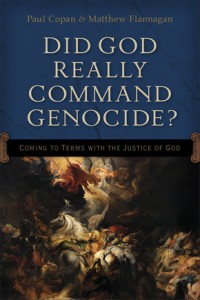 A common objection to belief in the God of the Bible is that a good, kind, and loving deity would never command the wholesale slaughter of nations. In the tradition of his popular Is God a Moral Monster?, Paul Copan teams up with Matthew Flannagan to tackle some of the most confusing and uncomfortable passages of Scripture. Together they help the Christian and nonbeliever alike understand the biblical, theological, philosophical, and ethical implications of Old Testament warfare passages.