Implicit, if not overtly explicit, in much historic Christian moral reflection on feticide is a simple three-premise position. Firstly, that there is a divine law prohibiting homicide, the killing of a human being without adequate justification; secondly, a formed conceptus, a fetus, is a human being; and thirdly, that in all or most cases of […]
Entries Tagged as 'Ethics'
The Foundations of the Alexandrian Argument against Feticide Part I
April 8th, 2009 2 Comments
Tags: Abortion · Ethics · Feticide · Philosophy of Religion · The Alexandrian Argument · Theology
Tooley, The Euthyphro Objection and Divine Commands: Part II
March 25th, 2009 8 Comments
In my last post, Tooley, The Euthyphro Objection and Divine Commands: Part I, I made some critical remarks on Michael Tooley’s critique of William Lane Craig’s version of the divine command theory. Tooley contends that this theory implies the conditional that if God had commanded mankind to torture one another as much as possible then […]
Tags: Divine Command Theory · Ethics · Euthyphro Dilemma · God and Morality · Philosophy of Religion · Walter Sinnott-Armstrong
Tooley, The Euthyphro Objection and Divine Commands: Part I
March 23rd, 2009 12 Comments
In a debate with William Lane Craig at the University of Colorado, Michael Tooley stated, There is a theory which has the consequence that there cannot be objective moral laws unless God exists—that’s the so-called ‘divine command theory of morality’. What it says is that an action is wrong because and only because God forbids […]
Tags: Divine Command Theory · Ethics · Euthyphro Dilemma · God and Morality · Philosophy of Religion · Selection · Walter Sinnott-Armstrong
Marquis, Pruss and the Twinning Argument
March 23rd, 2009 23 Comments
Augustine writes, And therefore the following question may be very carefully inquired into and discussed by learned men, though I do not know whether it is in man’s power to resolve it: At what time the infant begins to live in the womb: whether life exists in a latent form before it manifests itself in […]
Tags: Abortion · Embryocide · Ethics · Feticide · Science and Religion
South Park on Human Embryonic Stem Cell Research
March 22nd, 2009 3 Comments
The flawed reasoning, commonly found in most media commentary on human embryonic stem-cell research, was not lost on the makers of South Park. I love how brutal South Park are in exposing PC rubbish; see the YouTube clips below. [There are two, fast loading, clips below; they are linked so that both will autoplay] Hat […]
Tags: Abortion · Bad Reasoning · Embryocide · Ethics · Feticide · Humour · Science and Religion
Alexander Pruss on Marquis’s Transitivity of Identity Argument
March 20th, 2009 5 Comments
Matt gave an overview of his scepticism here that moral status is attained at conception, citing Don Marquis’ transitivity of identity argument placing moral status beginning at segmentation (14-21 days post-conception). Matt is agnostic as to whether moral status is acquired at conception but argues that unless there are good reasons for thinking the pre-segmentation […]
Tags: Abortion · Embryocide · Ethics · Feticide · Science and Religion
Some Thoughts on Human Embryonic Stem-cell Research
March 12th, 2009 51 Comments
Given Barack Obama’s reversal of the ban on federal funding for research on new lines of human embryonic stem-cells, I thought I might add my own thoughts on the issues around stem-cell research. My thoughts are somewhat tentative; largely because, unlike many in the media, I don’t see the issues as clear cut or as […]
Tags: Abortion · Embryocide · Ethics · Feticide · Science and Religion

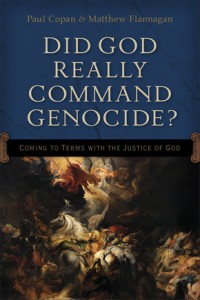 A common objection to belief in the God of the Bible is that a good, kind, and loving deity would never command the wholesale slaughter of nations. In the tradition of his popular Is God a Moral Monster?, Paul Copan teams up with Matthew Flannagan to tackle some of the most confusing and uncomfortable passages of Scripture. Together they help the Christian and nonbeliever alike understand the biblical, theological, philosophical, and ethical implications of Old Testament warfare passages.