Last week I was invited to be part of a discussion on divine command ethics in Google hangouts. The full discussion is now on-line as episode 22 of Ode to Dialogue: “Discussing Divine Command Theory.” Enjoy.
Tag: God and Morality
-
Ethical Supernaturalism is still more Plausible than Naturalism: Carrier’s Preliminary Objections
Last year I had an article Is Ethical Naturalism more plausible than Supernaturalism: A reply to Walter Sinnott Armstrong published in the journal Philo. In the comments section a reader asked me to comment on a response to that article published by classical historian Richard Carrier. This post will be the first of several where I do so.

In, Is Ethical Naturalism more Plausible than Supernaturalism, I did two things. Firstly, I briefly explicated a conditional that has recently been proposed explicitly by William Lane Craig but which is also defended by several others, and secondly I rebutted several arguments raised against this conditional by Walter Sinnott-Armstrong. Carrier argues my rebuttals fail, but before he does so he offers three preliminary arguments against the positive thesis I was defending against Armstrong. It is these that I will address in this post.
The Contention
The conditional I explicated as follows:
Craig’s contention is that if theism is true then we can plausibly explain the nature of moral obligation by identifying obligations with God’s commands, analogous to the way “we explain the nature of water by identifying it with H2O, or explain the nature of heat by identifying it with molecular motion.” By “God” Craig means a necessarily existent, all-powerful, all-knowing, loving and just, immaterial person who created and providentially orders the universe.[1]
Note three things.
First, this is a conditional, if affirms that if theism is true then then we can plausibly explain the nature of moral obligation by identifying obligations with God’s commands.
Second, I define the concept of God used in this conditional as a necessarily existent, all-powerful, all-knowing, loving and just, immaterial person who created and providentially orders the universe.
Third, this conditional specifies the kind of grounding relationship I am addressing, one where the relationship between God’s commands and moral obligations is one of identity. It’s the same kind of (more…)
-
Matt to speak at the EPS Apologetics Conference in Baltimore on Morality and God’s Commands
This blog’s Matthew Flannagan has been invited to speak at the 12th Annual Apologetics Conference of the Evangelical Philosophical Society in Baltimore, USA. The theme of this year’s conference is Reasonable Faith in an Uncertain World. Matt’s talk is titled “Morality and God’s Commands: Answering Common Objections.” The blurb for Matt’s talk is as follows:

“It is widely believed in contemporary philosophy that morality does not depend on God. Theories that attempt to identify our moral obligations with God’s commands are believed to be subject to several important objections. In this talk I will offer reasons for rejecting this position. I will clarify what it means to claim our moral duties depend on God’s commands and I will distinguish this claim from various misconceptions. I will then examine the most common objections to this position and that show they fail.”
Matt is the only New Zealand speaker and he will be speaking alongside some of the top Christian thinkers and speakers in the world such as Dr. Gary Habermas, Sean McDowell, Dr. Paul Copan, Mary Jo Sharp, Dr. Craig Hazen, Dr. John Bloom, Greg Koukl, Dr. Mark Foreman, Patty Houser, Dr. Angus Menuge, and many more. You can see a full list of speakers here. Check out the sessions and tracks for the the EPS Apologetics Conference, which runs from 21-23 November 2013, and register here.
Matt is also speaking at the annual meetings of the Evangelical Theological Society, on Feticide, and the Evangelical Philosophical Society, on Divine Commands re Abraham and Issac, in Baltimore earlier in the week. (See Matt to speak at the 2013 Evangelical Theological Society in Baltimore on Feticide and Matt to speak at the 2013 Evangelical Philosophical Society in Baltimore on Divine Commands re Abraham and Isaac).
If you are minded to support his and my fundraising efforts to get him to Baltimore for his 3 speaking engagements next week, please consider donating using one of the methods in the side bar.
-
Is a Divine Command Theory Psychotic? Sam Harris on Divine Commands Part III
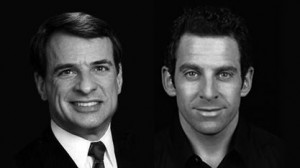 In Sam Harris on Divine Commands Part I I criticised Harris’ characterisation of divine command meta-ethics. I refuted Harris’ contention a divine command theory is pscyopathic in Is a Divine Command Theory Pscyopathic? Sam Harris on Divine Commands: Part II. In this last post in this series, I will address Harris’s contention that a divine command theory reflects a “psychotic moral attitude”. Harris says a divine command theory is “psychotic because this is completely delusional. There’s no reason to believe that we live in a universe ruled by an invisible monster called Yahweh.”
Harris’s argument in this regard seems to involve four premises. [1] A person can accept a divine command theory only if her or she believes in the existence of an invisible monster called Yahweh (which Harris earlier identifed as an “iron age God of war”); [2] there is no evidence for an invisible monster called Yahweh; [3] to believe something without evidence is delusional; [4] to be delusional is to be psyhcotic.
Turning to [1], a divine command theorist holds that the most plausible account of the nature of moral obligations is that moral obligations are constituted by, or are identical with, God’s commands. God is understood by the theorist to be a being worthy of worship, a necessarily existent, essentially loving and just, omniscient, omnipotent, personal being who created, sustains and providentially guides the universe. Holding this position does not commit one to believing in an invisible monster or a stone-age God of war for two reasons.
First, a divine command theory is compatible with being an athiest. Plantinga has noted that a person could argue that moral obligations are best accounted for in terms of God’s commands and then conclude from this that if God does not exist then moral obligations do not exist either. In this sense a divine command theory could be a premise in an atheistic argument for nihilism. Interestingly, when I was a grad student in the 90’s I attended a conference where one of the presenters offered an argument for nihilism very much along these lines.
Second, most divine command theorists accept the existence of moral obligations. Most would accept, for example, that moral claims such as that it is wrong to torture children purely for entertainment are true, and that, the action of torturing children in this way actually has the property of being wrong, further, that it does so independently of whether we or our society believe that it does.
A divine command theorist does not have to identify this God with Yahweh. Obviously, divine command theorists who are Jews or Christians will do this, but that’s in virtue of their Judaism or Christianity, it is not in virtue of their belief in divine command meta-ethics. Strictly speaking a divine command theorist could reject the identification and still maintain that moral obligations are best identified with the commands of God.
Third, even if one does identify God with Yawheh, it is evident that such an identification would rule out construing God as “an invisible monster” who is, according to Harris, ” a stone-age God of war”. If Yahweh is identified as a loving and just, invisible person, then he is neither an invisible monster or a stone-age God of war. Of course, a person who held this view might grant that at one piont in history, perhaps in the late Bronze Age or early Iron Age, various people groups believed that Yahweh was a God of war, but by identifying God as Yahweh, such a person is explictly rejecting this conception. The fact that people once concieved of something a certain way tells us nothing about whether that thing is, in fact, that way. Harris may as well castigate contemporary atomic theory by pointing out that ancient greek atomists held scientifically indefensible understandings of an atom.
So Harris’ [1], the contention that a person can accept a divine command theory only if they believe in the existence of an invisible monster is false.
Turning then to [2], the contention that there is no evidence for the existence of an invisible monster called Yahweh. Harris’s argument is circular. Suppose, for the sake of argument, (more…)
-
There Probably are no Duties. Now Stop Worrying and Enjoy Your Life!
Some atheists offer moral critiques of theism; their claim is not just that belief in God is false or unjustified, it is that such irrational beliefs are intricately linked with immoral and oppressive practices. Moral outrage often motivates the critiques offered – one only needs to read the condemnation of religious wars, religiously motivated terrorism, inquisitions, witch hunts, the suppression of science, sexism, homophobia, and so on, which is so prevalent in many free thought writings. Similarly, one needs only to read the accusations, regularly repeated in popular atheist literature, that the Bible condones slavery, or genocide, or stoning cheeky children, or rape, to observe this.
 Note that behind this critique is the presupposition that there are moral duties. People have a duty to not engage in wars or acts of terrorism, religious people who promote sexist or homophobic practices are wrong for doing so. I think this is nonsense as it assumes there is such a thing as a moral duty, it assumes things religious people do can be wrong. This is false and here is why:
First, the burden of proof is on he who makes a claim. I am not making a claim. I am simply not affirming that moral duties exist, therefore I do not have to justify my non-belief in duties. Instead those who believe in duties have to come up with compelling proof that they exist.
Second, no-one has ever seen a duty. Duties have no colour, shape or smell or sound, hence, they are invisible to sensory perception. One cannot empirically verify or falsify the claim that duties exist so it is meaningless incoherent nonsense to believe in duties until verification of them is given. Moreover, the inability to verify these claims shows they are unscientific and so they cannot be accepted as rational.
Third, no one as yet has provided a proof that duties of any sort exist. Such things, if they can be decided at all, must be shown to exist by the methods of natural science. To date no one has shown that belief in moral duties is necessary to any scientific theory; physics or chemistry or biology each have no need of that hypothesis to explain the world.
Fourth, think of all the evil done in the name of duties. Almost every war fought throughout history has been justified by those who claimed they were doing the right thing. Inquisitions, crusades and the suppression of science were all done in the name of doing the right thing and avoiding the wrong thing. While science flies us to the moon, belief in duties flies planes into buildings. (more…)
-
Published in Philo: Is Ethical Naturalism more Plausible than Supernaturalism? A Reply to Walter Sinnott-Armstrong
Jeffery Jay Lowder has informed me that my article “Is Ethical Naturalism more Plausible than Supernaturalism? A Reply to Walter Sinnott-Armstrong” was published in the Spring/Summer 2012 issue of Philo. The abstract is below:
 “In many of his addresses and debates, William Lane Craig has defended a Divine Command Theory of moral obligation (DCT). In a recent article and subsequent monograph, Walter Sinnott-Armstrong has criticized Craig’s position. Armstrong contended that a DCT is subject to several devastating objections and further contended that even if theism is true a particular form of ethical naturalism is a more plausible account of the nature of moral obligations than a DCT is. This paper critiques Armstrong’s argument. I will argue Armstrong’s objections do not refute a DCT and the ethical naturalism he defends is not more plausible than Craig’s ethical supernaturalism.”
You can read “Is Ethical Naturalism more Plausible than Supernaturalism? A Reply to Walter Sinnott-Armstrong” here.
-
Is a Divine Command Theory Pscyopathic? Sam Harris on Divine Commands: Part II
In my last post, Sam Harris on Divine Commands: Part I, I criticised Sam Harris’ characterisation of divine command meta-ethics. In this post I want to turn to his second line of criticism of a Divine Command Theory. In Harris’ debate with William Lane Craig at Notre Dame, transcript here, Harris stated:“I’m glad he raised the issue of psychopathy—we are being offered a psychopathic and psychotic moral attitude. It’s psychotic because this is completely delusional. There’s no reason to believe that we live in a universe ruled by an invisible monster Yahweh. But it is, it is psychopathic because this is a total detachment from the, from the well-being of human beings. It, this so easily rationalizes the slaughter of children. Ok, just think about the Muslims at this moment who are blowing themselves up, convinced that they are agents of God’s will. There is absolutely nothing that Dr. Craig can s—can say against their behavior, in moral terms, apart from his own faith-based claim that they’re praying to the wrong God. If they had the right God, what they were doing would be good, on Divine Command theory.”
Here, Harris suggests a Divine Command Theory expresses both a psychopathic and a psychotic moral attitude. I will address the charge of a Divine Command Theory being “psychotic” in a later post. Here, I want to address what I think is Harris’ main concern: a Divine Command Theory is psychopathic. It involves a “total detachment … from the well-being of human beings” and “so easily rationalizes the slaughter of children”. Why does Harris think this? “Because, at this moment Islamic terrorists are blowing themselves up convinced they are agents of God’s will, and a divine command theory can say nothing against their behavior in moral terms except the faith based claim that they are praying to the wrong God.”
A lot could be said about this argument. First, note that even if it were sound, it does not show the Divine Command Theory is false. Harris is, in fact, offering pragmatic arguments against the theory: it is dangerous, or is easily misused – but there are many things which are dangerous and easily misused that are nevertheless true.
More importantly, the argument is unsound. A Divine Command Theory contends that an action is obligatory if God actually commands that action. It does not contend that an action is obligatory if someone claims, or believes that God commands it. Obviously, simply believing something is the case does not mean that it is true. Harris, as an atheist, surely recognises this; many people believe and are convinced God exists yet Harris thinks they are mistaken.
Hence, the mere fact an Islamic terrorist believes God has commanded him or her to “blow themselves up” does not commit the divine command theorist to supporting terrorism. All a divine command theorist needs to say in response to Islamic terrorists is that (more…)