During the Q & A at the recent Auckland Cooke – Craig debate, Professor Raymond Bradley (Bradley), Emeritus Professor of Philosophy at Auckland University, offered an argument, which he has laid out in more detail in his article A Moral Argument for Atheism, as follows: Christians accept that: [1] Any act that God commits, causes, […]
Entries Tagged as 'God and Morality'
William Lane Craig, Raymond Bradley and the Problem of Hell Part One
June 21st, 2008 5 Comments
Tags: Apologetics · Atheism · Bill Cooke · Debates · Divine Command Theory · Faith and Reason · God and Morality · Hermeneutics · NZARH · Philosophy of Religion · Rationalists · Raymond Bradley · William Lane Craig
Patrick Nowell Smith on Divine Commands
April 15th, 2008 2 Comments
In a widely-anthologised essay Morality: Religious and Secular. Patrick Nowell Smith offers a influential criticism of “religious morality” It is clear from his definition of religious morality that it is Voluntarism ( or a Divine Command Theory of Ethics) he has in mind. Smith states that the religious moralist has “assumed that just as the […]
Tags: Divine Command Theory · Ethics · God and Morality · Patrick Nowell Smith · Philosophy of Religion
The Euthyphro Objection Part III: The Redundancy of God is Good
November 1st, 2007 8 Comments
My first post in this series, The Euthyphro Objection Part I: Against Divine Commands & Avoiding Strawmen, I examined Peter Singer’s version of the Euthyphro argument and demonstrated that it relies upon a strawman. In my Part II I criticised Singer’s utilisation of the arbitrariness objection against divine command theory. Singer’s last objection comes as a rejoinder […]
Tags: Divine Command Theory · Edward Weirenga · Ethics · Euthyphro Dilemma · God and Morality · Paul Faber · Peter Singer · Philosophy of Religion
The Euthyphro Objection Part II: Arbitrariness
October 31st, 2007 4 Comments
In his work Practical Ethics Singer proposes a version of the Euthyphro dilemma to criticise a divine command theory of ethics, Some theists say that ethics cannot do without religion because the very meaning of “good” is nothing other than “what God approves”. Plato refuted a similar view more than two thousand years ago by […]
Tags: Divine Command Theory · Ethics · Euthyphro Dilemma · God and Morality · James Rachels · Mane Hajdin · Peter Singer · Philosophy of Religion · Roy Perrett
The Euthyphro Objection Part I: Against Divine Commands & Avoiding Strawmen
October 28th, 2007 2 Comments
Perhaps the most common argument against an appeal to divine commands in ethical reasoning is the Euthyphro dilemma, first articulated by Plato and utilised by numerous critics of divine commands ever since. A representative example of this line of argument occurs in Peter Singer’s widely-acclaimed monograph Practical Ethics. In the first chapter of Practical Ethics, […]
Tags: Divine Command Theory · Edward Weirenga · Ethics · Euthyphro Dilemma · God and Morality · John Hare · Peter Singer · Philip Quinn · Philosophy of Religion · Robert Adams · William Alston
The Meta-Ethical Argument for Christian Theism: A Response to Richard Chappell
July 3rd, 2007 15 Comments
if we ask what God would have commanded in counterfactual situations we will get contradictory answers.
Tags: Divine Command Theory · God and Morality · Richard Chappell · Robert Adams · Thomas Carson
Misrepresenting Catholic Theology
December 28th, 2006 1 Comment
The Herald has run a story with the no-brainer title “Patient dies after machine unplugged“. According to the article an italian doctor turned off a patient’s life support system (did the title of the article give you a clue?) at his request. The article went on to suggest that this might be illegal euthanasia, outlined […]
Tags: Ethics · Euthanasia · God and Morality · Theology

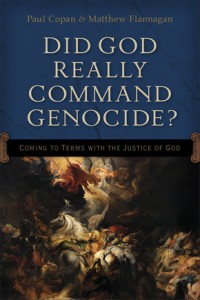 A common objection to belief in the God of the Bible is that a good, kind, and loving deity would never command the wholesale slaughter of nations. In the tradition of his popular Is God a Moral Monster?, Paul Copan teams up with Matthew Flannagan to tackle some of the most confusing and uncomfortable passages of Scripture. Together they help the Christian and nonbeliever alike understand the biblical, theological, philosophical, and ethical implications of Old Testament warfare passages.