Tag: God and Morality

  • Sam Harris on Divine Commands: Part I

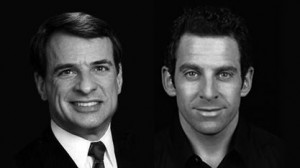
    William Lane Craig v Sam HarrisIn a previous post, Divine Commands and Pyschopathic Tendancies, I said I would look in more detail at Sam Harris’ charge that Divine Command Theories (“DCT”) of meta-ethics are psychopathic. In this, and in several forthcoming posts, I will attempt to deliver on that promise.

    In Harris’ debate with William Lane Craig at Notre Dame, transcript here, Harris offered three direct lines of argument against a DCT. (I say direct lines because many of Harris’ rebuttals did not address DCT at all; rather he engaged popular objections to Christian doctrines about exclusivism and hell.) The first direct argument was as follows:

    “According to Dr Craig’s Divine Command theory, God is not bound by moral duties; God doesn’t have to be good. Whatever he commands is good, so when he commands that the Israelites slaughter the Amalekites, that behavior becomes intrinsically good because he commanded it.”

    Here Harris makes three claims.  First he argues that according to a DCT God does not “have to be good”. Second, he infers from this that God can therefore make any action at all intrinsically good. Third, he alludes to an incident in the book of Samuel where, on the face of it, God commands the killing of the Amalekites.

    Turning to Harris’s first claim, according to DCT a person has a duty to a person to do some action only if that person is commanded by God to do it. As God does not issue commands to himself he is not bound by moral duties. Harris infers from this that “God doesn’t have to be good”.

    Whether this is inference is sound depends on what Harris means by “have to be good”. There are at least two possible things he could mean by this.

    Sometimes when we say someone does or does not “have” to do something, we mean they are not morally obligated to do it. When I tell my children they have to tell the truth, for example, I am saying they have a duty to tell the truth. In other contexts however, when we say that someone does or does not “have” to do something we mean it is possible for them to do it.

    If Harris, in saying “God does not have to be good”, means God is not under an obligation to be good then his inference is sound; if God is not bound by duties then he obviously does not have an obligation to be good. This, however, does not entail that it is logically possible for God to lack goodness.

    If, on the other hand, Harris’ claim that “God does not have to be good” carries the implication that it is possible for God to do evil then it is a a flat out straw man.

    Craig’s position is that (more…)

  • Mark Murphy Reviews Walter Sinnott-Armstrong.

    Those who have followed my recent discussions of Walter Sinnott-Armstrong’s writings on God and Morality. Might be interested in this review of Armstrong’s book “Morality without God”  by Mark Murphy in Notre Dame Philosophical Reviews. Mark  is a lecturer in moral philosophy at Georgetown University. He is is one of the leading critics of divine command ethics writing today.

    Interestingly, there is some overlap in his comments and mine, particularly the issues regarding “social obligations” and how moral obligations constitute reasons for action.

    Enjoy

  • Thinking Matters Youth Conference

    This Saturday is the first, of hopefully many, Thinking Matters Youth Conference, the schedule is  below.  I am leading a breakout session on Moral Relativism

    WHEN: Saturday, February 18
    WHERE: Greenlane Christian Centre, 17 Marewa Rd, Greenlane, Auckland
    COST: $10


    Schedule:
    10am Registration
    10.30am Jeff Tallon – Is Science a Threat to Faith?
    11.30am Sean McDowell – Is Faith Blind? (via Skype)
    12.15pm Lunch
    1pm Breakout Sessions 1

    • Stream 1: Is morality relative and does it matter? – Matt Flannagan
    • Stream 2: How can one religion be “right” and the others “wrong”? – Trevor Mander
    • Stream 3: Why doesn’t God do something about the evil in the world? – Ben Carswell
    • Stream 4: Does God get mad when we doubt? – Jason Kumar and Dominic Bnonn Tennant
    1.45pm Breakout Sessions 2 (repeated)
    2.30pm Tim McGrew – Is the Bible Reliable? (via Skype)
    3.30pm Q&A Panel – Jeff Tallon, Ben Carswell, Matt Flannagan, and Trevor Mander
    4.15pm Conference closes
  • Is Ethical Naturalism more Plausible than Supernaturalism? A Reply to Walter Sinnott-Armstrong Part I

    This is  first half of the paper I presented to the Naturalisms in Ethics Conference at Auckland University last year.

    In many of his addresses and debates William Lane Craig has defended a Divine Command Theory of moral obligation (“DCT”). In a recent article Walter Sinnott-Armstrong has criticized this contention.[1] Armstrong contends that even if theism is true then a particular form of ethical naturalism is a more plausible account of the nature of moral obligations than a DCT is. This paper critiques Armstrong’s argument.

    Craig’s contention
    Craig’s contention is that if theism is true then we can plausibly explain the nature of moral obligation by identifying obligations with God’s commands analogous to the way “we explain the nature of water by identifying it with H2O, or explain the nature of heat by identifying it with molecular motion.”[2] By “God” Craig means a necessarily existent, all-powerful, all-knowing, loving and just, immaterial person who created the universe.

    This emphasis, both on God as a loving and just being and identifying moral obligations with God’s commands suggests that Craig defends a version of the modified DCT defended by Robert Adams,[3] William Alston[4] and C Stephen Evans[5]. Both Adams and Evans have argued, like Craig, that if God exists then his commands “best fill the role assigned to wrongness by the concept”.[6] Much of Craig’s arguments can be seen as an appropriation and popularisation of Adams.[7]

    Armstrong’s Argument from Harm
    Walter Sinnott-ArmstrongArmstrong contends that such a position is “incredible”[8], he states:
    There is a much more plausible foundation for morality. It seems obvious to me, and to everyone who does not start with peculiarly religious assumptions, that what makes rape morally wrong is the extreme harm that rape causes to rape victims.[9]

    We do not need a “new supernatural level” for morality because a natural property, the property of harming others without an adequate reason, fulfils the role assigned to wrongness by the concept better than divine commands do. Armstrong provides two arguments for this conclusion.

    (a) The harm account makes moral obligations more objective than a DCT does;

    (b) The harm account is more economical than a DCT.

    Armstrong contends that his argument refutes, not just Craig, but any theistic account of ethics, “Other theists might try to give better arguments for a religious view of morality. I don’t see how they could avoid all the problems in Craig’s account without leaving traditional Christianity far behind.”[10]

    I will address arguments (a) and (b) below. However, it is worth noting that, as stated, Armstrong’s conclusion here misses the point. He contends that everyone who does not start with peculiarly religious assumptions will see that the harm-based account is more plausible than a DCT. But Craig’s contention is that if God exists then a DCT is a plausible account of the nature of moral obligations. Neither Craig nor Adams contend that a DCT is the most plausible theory in the absence of religious assumptions. They contend that a DCT is the more “attractive theory, given those [theistic] beliefs, than any other meta-ethical theory is, given non-theistic (more…)

  • Contra Mundum: When Scientists Make Bad Ethicists

    One thing I find particularly frustrating is reading commentary on theology and philosophy written by scientists. To be fair, some scientists I have read are informed and do offer astute and insightful comments; commonly, however, one finds a person who is undoubtedly brilliant in their own field, writing with confident gusto, articles that fail to understand the most basic theological and philosophical distinctions.

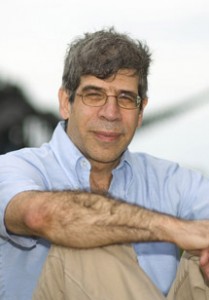
    Jerry CoyneA good example can be seen in a recent USA Today article by influential biologist Jerry Coyne entitled, As atheists know, you can be good without God. Coyne, an outspoken atheist, is disturbed that many Americans, including some prominent scientists, believe that our instinctive sense of right and wrong is “strong evidence for [God’s] existence.” He ventures into moral philosophy to explain why this is clearly mistaken.

    From the get-go Coyne demonstrates he does not understand the issues.

    It is necessary to accurately understand the position Coyne is criticising before we look at the paucity of his critique. The argument that our instinctive sense of right and wrong “is strong evidence for [God’s] existence” found its most important formulation in a 1979 article by Yale Philosopher Robert Adams. In it, Adams noted that we instinctively grasp that certain actions, like torturing children for fun, are wrong; hence, he reasoned, we are intuitively aware of the existence of moral obligations. According to Adams, the best account of the nature of such obligations is that they are commands issued by a loving and just God. Identifying obligations with God’s commands can explain all the features of moral obligation better than any secular alternative. Consequently, the existence of moral obligations provides evidence for God’s existence.

    It is important to note what Adams did not claim. Central to Adams’ argument, and to pretty much every author who follows him, is a vital distinction; this is the distinction between the claim that moral obligations are, in fact, divine commands and the claim that one cannot recognise what our moral obligations are unless one believes in divine commands or some form of divine revelation. Adams illustrates this distinction with the example of H20 and water.

    Contemporary chemistry tells us that the best account of the nature of water is that water is, in fact, H20 molecules. This, of course, means that water cannot exist unless H20 does. However, it does not mean that people who do not know about or believe in the existence of H20 cannot recognise water when they see it. For centuries people recognised, swam in, sailed on and drank water before they knew anything about modern chemistry.

    This distinction has important implications. The claim that moral obligations are, in fact, commands issued by God does not entail that people must believe that God exists and has issued commands in order to be able to recognise right and wrong. These are separate and logically distinct claims.

    Coyne conflates this distinction from the outset. After noting that some people believe that moral obligations provide strong evidence for God’s existence, he claims that this is an oft-heard argument, “‘Evolution,’ many argue, ‘could never have given us feelings of kindness, altruism and morality…’;” to this he rejoins that, “scientists studying our primate relatives, such as chimpanzees, see evolutionary rudiments of morality: behaviours that look for all the world like altruism, sympathy, moral disapproval, sharing — even notions of fairness.”

    This is confused. Apart from the fact that no one who cites morality as evidence for God actually makes the argument about evolution that Coyne sets out, the claim that moral obligations cannot exist independently of God is not the claim that without God people would not have moral feelings. Feeling that one has an obligation to do something and actually having an obligation to do it are clearly different things. People can feel that they have a certain obligation without it actually being the case that they do.

    Coyne makes a similar mistake when he argues that secular European countries like Sweden and Denmark “are full of well-behaved and well-meaning citizens, not criminals and sociopaths running amok.” This  (more…)

  • Does Moral Commitment Presuppose Belief in Providence?

    John HareLast week I had the privilege of hearing Professor John Hare, of Yale Divinity school, speak on God and morality at the Naturalisms in Ethics and APRA conferences. One idea Hare proposes, which fascinates me, is that commitment to morality presupposes belief in what he calls “strong providence” the position that “the world is so ordered that a person’s own virtue is consistent with her own happiness, whether other people are virtuous or not.”[1]

    Here is one line of argument he gives for this conclusion:

    “Consider the fact that we try to teach our children to be moral. We also want them to be happy. If we thought that being virtuous would make them miserable, we would be more ambivalent about teaching them virtue than we actually are. But many people persevere in the attempt to bring up their children to be morally good people even though they do not think their children will be living in a society in which most of their fellows are morally good people. … What lies behind such perseverance is surely a belief that the world is so ordered that when their children grow up, they can be both morally good and happy, and that this is secured not by general human virtue but by something else. The nature of this something else is often, I think, left indeterminate.”[2]

    This example is interesting because it focuses not on one’s own happiness but on the happiness of others. Appeals to self-interest and one’s own happiness are often dismissed as corruptions to moral motivation. In Hare’s example, one is concerned about the happiness of others, in particular one’s children, so the concerns he highlights are altruistic as opposed to egoistic.

    I am inclined to think there is something to Hare’s argument.  I do think that if we thought being virtuous would make our children miserable then a lot of parents might be less disposed towards bringing up their children to be pursue good. Most I talk to agree;  it is hard to comprehend how a loving and caring parent could teach children to be virtuous if doing so would result in their unhappiness. However, our practice of trying to teach our children to be moral suggests we do not believe being virtuous and being happy are incompatible.

    This has me wondering, does commitment to morality as an institution, where we attempt to follow its precepts and encourage them in others, commit us to assumptions about some kind of moral providential order to the world? What would happen to morality if we rejected this? Would there be something sadistic about inculcating moral virtue in our children or encouraging it in others?


    [1] John Hare Moral Faith and Providence, a paper presented at the 1996 Annual Wheaton Philosophy Conference, accessed 27 December 2010.
    [2] Ibid.

    Don’t miss hearing John Hare speak in Auckland next week, he is not in New Zealand for long. All the following events will be held at the University of Auckland and are open to the public, click on the links to get the details:


  • Transcript: Sam Harris v William Lane Craig Debate “Is the Foundation of Morality Natural or Supernatural?” UPDATED

    William Lane Craig v Sam HarrisSam Harris and William Lane Craig debated the moot “Is the Foundation of Morality Natural or Supernatural?” at the University of Notre Dame on 7 April 2011. We’ve already linked to the debate MP3 and a playlist of the video and we have published a two part review but now, as an MandM exclusive, we bring you the transcript.

    This transcript is the result of some 32 playbacks of the debate and is accurate down to the “uhs” and “oks”.

    UPDATE:
    Since publishing this transcript, William Lane Craig has emailed us and asked us to adjust the paragraph breaks and punctuation in his sections of the transcript in accord with where he placed them — something he conceded was very hard to get right when one is transcribing from audio. He also provided us with the footnotes for his sources which we have also included below.

    If Sam Harris wishes us to adjust his sections of this transcript in the same manner we are very happy to do so.

    – Madeleine

    Transcript of the Harris v Craig debate

    MODERATOR:

    Welcome to the second installment of “The God Debate”. My name is Michael Rea. I’m a professor of philosophy here at the University of Notre Dame, and the director of the Center for Philosophy of Religion, one of the sponsors of tonight’s event. The Center for Philosophy of Religion was founded in the late 1970s with the aim of promoting cutting-edge research on topics in the philosophy of religion, and in distinctively Christian philosophy. One of our goals in sponsoring the “God Debate” series is to try to bring some of the very issues discussed among our research fellows to a wider, non-academic audience, and in a format that will hopefully be fun and engaging.

    Our show tonight, as you already know, is a debate between William Lane Craig and Sam Harris, coming together for the very first time to discuss the question, “Are the foundations of moral values natural or supernatural?”

    William Lane Craig is Research Professor of Philosophy at Talbot School of Theology in La Mirada, California. He is best-known among philosophers for his extensive and influential work in the philosophy of time and the philosophy of religion. He is known to the wider public as someone who is able to articulate and defend the doctrines of the Christian faith in a way that is highly accessible but also philosophically and theologically rigorous. He became a Christian at the age of 16, pursued undergraduate studies at Wheaton College, and holds two earned doctorates: one in philosophy from the University of Birmingham, and one in theology from the University of Munich. He has authored or edited over 30 books, as well as over a hundred articles in professional journals of philosophy and theology.

    Known as one of the “Four Horsemen” of the New Atheist movement, Sam Harris is the author of the New York Times best sellers: The Moral Landscape, The End of Faith, and Letter to a Christian Nation. The End of Faith won the 2005 Pen Award for non-fiction. Mr. Harris’s writing has been published in over 15 languages. He and his work have been discussed in Newsweek, Time, The New York Times, Scientific American, Nature, Rolling Stone, and many other journals. His writing has appeared in Newsweek, The New York Times, The Los Angeles Times, The Economist, The Times London, The Boston Globe, The Atlantic, the Annals of Neurology, and elsewhere. Mr. Harris is a co-founder and CEO of Project Reason, a non-profit foundation devoted to spreading scientific knowledge and secular values in society. He received a degree in philosophy from Stanford University, and a PhD in neuroscience from UCLA.

    The structure of tonight’s debate will be as follows: Each debater will take 20 minutes for his opening speech, followed by rebuttals of 12 minutes and 8 minutes respectively, and then closing speeches of 5 minutes each. At the conclusion of the debate, we will have about 30 minutes for questions from the audience. If you would like to ask a question, line up behind one of the two microphones in front, or in the balcony. We’re letting Notre Dame students ask the first four questions tonight, so if you are not a Notre Dame student, and somehow find yourself at the front of the Q&A line, please allow a student to go ahead of you.

    Time will be kept strictly. There is a timekeeper in the front who can be seen by both speakers, and once each speaker’s time has elapsed, he will be given at most 15 seconds to finish his final sentence before being rudely interrupted by me, the time enforcer. Because we are keeping the time strict, we ask you to hold all applause and other indications of agreement or disagreement, cheering, crowd-surfing, and the like, until the very end of the debate. Please remember that flash photography, video taping, and active cell phones are all prohibited.

    Finally, remember that Notre Dame is the world’s number one institution in the philosophy of religion, and also has one of the world’s best theology departments. Any questions you don’t get to ask during the 25 or 30 minute Q&A, you can ask of your local faculty in the days and weeks to come. And now, on with the show.

    CRAIG:

    Well, good evening. It’s wonderful to be here at the University of Notre Dame, and I want to begin by

    MODERATOR:

    Bill

    CRAIG:

    thank—

    MODERATOR:

    Sorry.

    CRAIG:

    Sorry.

    MODERATOR:

    I need to—We’re gonna begin each speech with me checking with the timekeeper to make sure that he’s ready, and then the timekeeper is gonna hit “Go”, and then you get to go—

    CRAIG:

    Alright.

    MODERATOR:

    So, so you go—

    CRAIG:

    Sorry—

    MODERATOR:

    —when I say “Begin”.

    CRAIG:

    Sorry for jumping the gun.

    MODERATOR:

    Professor Craig gets, uh, gets the first word in the debate, uh, Dr. Harris gets the last word. Timekeeper, are you ready? This is 20 minutes. Begin.

    CRAIG:

    I want to begin by (more…)