Tag: Published

  • Matt’s book “Did God Really Command Genocide” on sale for $1.99

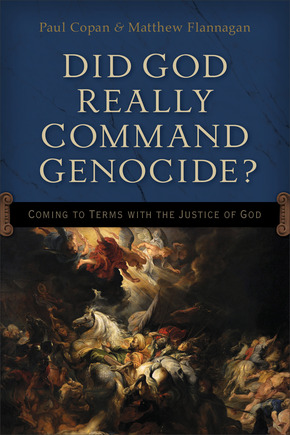
    As long-time readers of MandM will know, in 2014  I co-wrote a book with Paul Copan entitled Did God Really Command Genocide: Coming to Terms with the Justice of God.Did God Really Command Genocide?

    Yesterday Baker books have notified me that, for the month of September, Amazon, Barnes and Noble, and CBD, are running an ebook promotion on this book. During September the eBook version of our book will be available for $1.99.

    Please feel, to take advantage of this deal, also please feel free to let anyone you know who may be interested to take advantage of it and to share this information to anyone you know who may be interested.

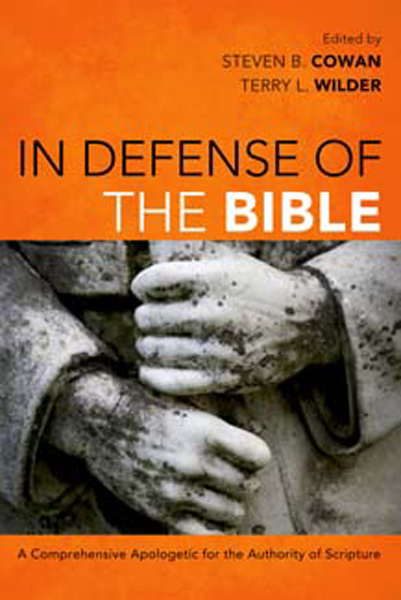
  • In Defense of the Bible: A Comprehensive Apologetic for the Authority of Scripture

    In Defense of the Bible: A Comprehensive Apologetic for the Authority of Scripture

    In Defense of the Bible: A Comprehensive Apologetic for the Authority of Scripture

    Another of the books Matt has contributed to arrived from the publisher’s today. In Defense of the Bible: A Comprehensive Apologetic for the Authority of Scripture addresses and responds to the major contemporary challenges to the divine inspiration and authority of Scripture. It is edited by Steven B Cowan and Terry L Wilder and published by B&H Academic.

    The blurb from the publishers:

    In Defense of the Bible begins by looking at philosophical and methodological challenges to the Bible—questions about whether or not it is logically possible for God to communicate verbally with human beings; what it means to say the Bible is true in response to postmodern concerns about the nature of truth; defending the clarity of Scripture against historical skepticism and relativism.

    Contributors also explore textual and historical challenges—charges made by Muslims, Mormons, and skeptics that the Bible has been corrupted beyond repair; questions about the authorship of certain biblical books; allegations that the Bible borrows from pagan myths; the historical reliability of the Old and New Testaments.

    Final chapters take on ethical, scientific, and theological challenges— demonstrating the Bible’s moral integrity regarding the topics of slavery and sexism; harmonizing exegetical and theological conclusions with the findings of science; addressing accusations that the Christian canon is the result of political and theological manipulation; ultimately defending the Bible as not simply historically reliable and consistent, but in fact the Word of God.

    Contributors include R Douglas Geivett, William A Dembski, Mary Jo Sharp, Darrell L Bock and Paul Copan, with whom Matt co-authored a chapter entitled “Does the Bible Condone Genocide?”

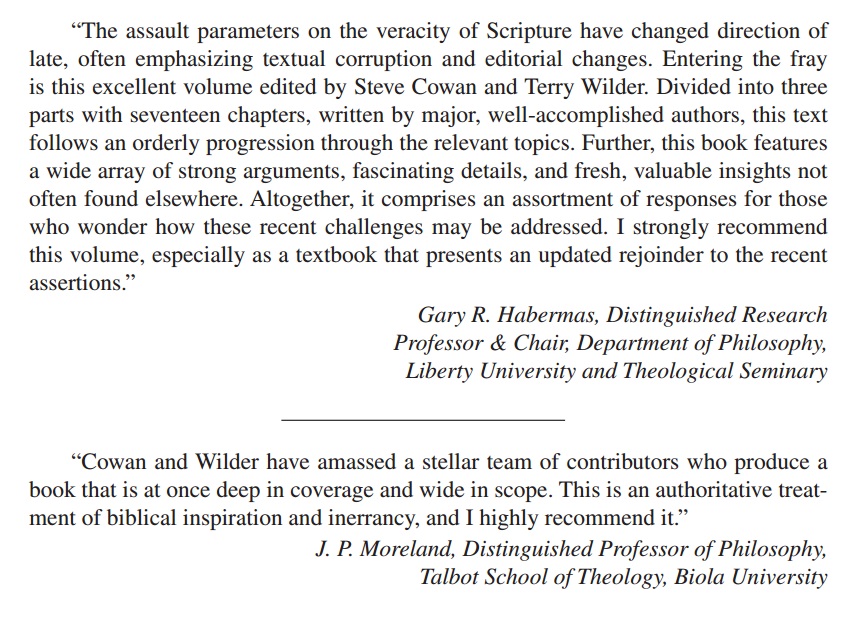
    A couple of endorsements:

    Endorsements

    In Defense of the Bible is available in both Kindle and Paperback formats. Get your copy from Amazon or Book Depository or wherever you like.

  • Matt’s Latest Publication: Virtues in Action – New Essays in Applied Virtue Ethics

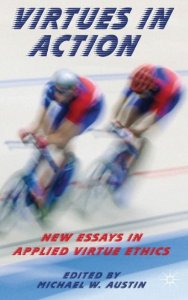
    Matt’s lastest publication in a book arrived by courier today. The book is Virtues in Action: New Essays in Applied Virtue Ethics; it is an an edited collection of new work in applied virtue ethics.

    Virtues in Action: New Essays in Applied Virtue EthicsVirtues in Action is edited by Michael W. Austin, who is Professor of Philosophy at Eastern Kentucky University, a specialist in ethics and philosophy of religion, author of Conceptions of Parenthood (2007), and editor or co-editor of several works, including The Philosophy of the Olympics (2012) and Being Good: Christian Virtues for Everyday Life (2012) – Being Good was the book Matt and each gave a paper on at the 2012 Evangelical Philosophy Society’s Annual Meeting in Milwaukee. Mike blogs at Ethics for Everyone.

    The chapter Matt wrote is called “Some Critical Reflections on Abortion and Virtue Theory.”

    From the Publisher:

    “In recent decades, many philosophers have considered the strengths and weaknesses of a virtue-centered approach to moral theory. Much less attention has been given to how such an approach bears on issues in applied ethics. The essays in this volume apply a virtue-centered perspective to a variety of contemporary moral issues, and in so doing offer a fresh and illuminating perspective. Some of the essays focus on a particular virtue and its application to one or more realms of applied ethics, such as temperance and sex or humility and environmental ethics. Other chapters focus on an issue in applied ethics and bring several virtues into a discussion of that issue or realm of life, such as sport, education, and business. Finally, several of the chapters engage relevant psychological research as well as current neuroscience, which enhances the strength of the philosophical arguments.”

    Table of contents:

    Introduction
    PART I: PROFESSIONAL VIRTUE
    1. Virtue-Centered Approaches to Education: Prospects and Pitfalls; Gregory Bassham
    2. The Virtues of Honorable Business Executives; Dan Demetriou
    3. Sport as a Moral Practice: An Aristotelian Approach; Michael W. Austin
    PART II: SOCIAL VIRTUE
    4. Sex, Temperance, and Virtue; Stan van Hooft
    5. Extend Your Benevolence: Kindness and Generosity in the Family and Beyond; Heidi Giebel
    6. A Virtue Ethical Case for Pacifism; Franco V. Trivigno
    7. Some Critical Reflections on Abortion and Virtue Theory; Matthew Flannagan
    PART III: ENVIRONMENTAL VIRTUE
    8. Environmental Degradation, Environmental Justice, and the Compassionate Agent; Chris Frakes
    9. Humility and Environmental Virtue Ethics; Matthew Pianalto
    PART IV: INTELLECTUAL VIRTUE
    10. Hope as an Intellectual Virtue; Nancy E. Snow
    11. Virtue Ethics and Moral Failure: Lessons from Neuroscientific Moral Psychology; Lisa Tessman
    12. Getting Our Minds Out of the Gutter: Fallacies that Foul Our Discourse (and Virtues that Clean it Up); Robert K. Garcia and Nathan L. King

    Get your copy from Amazon.

  • Philosophia Christi: Abstract Objects and Divine Command Ethics Down-Under

    In December we were told that Matt’s article “Tooley, Plantinga and the Deontological Problem of Evil”  had passed peer review and would be published in Philosophia Christi.  Issue, 13: 2  is  now out and if you look at the contents page you’ll see Matt’s article has now been published.

    The abstract to Matt’s article is as follows:
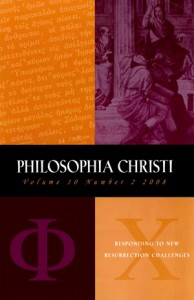
    Philosophia ChristiThis article criticises the deontological argument from evil proposed by Michael Tooley  in The Knowledge of God. I sketch Tooley’s distinction between deontological and axiological arguments from evil. Tooley rejects the axiological version because it rests  on “controversial ethical claims”, claims that are “likely to be rejected by many theists” and formulates a deontological version in its place. I argue that Alvin Plantinga’s criticism of the moral premises of this argument can be reformulated by appealing to a divine command theory of ethics. So reformulated, I argue that Tooley’s argument relies on controversial moral assumptions that many theists reject. I defend this response against potential criticisms found in the writings of Linda Zagzebski,  Tooley’s debate with William Lane Craig, and Peter Van Inwagen.

    Much of the focus of this issue is the topic of God and Abstract Objects. However, fortuitously, our good friend and fellow Kiwi, Glenn Peoples from Say Hello to My Little Friend,  has also been published in the same issue of Philosophia Christi immediately after Matt. His abstract is below:

    Of the objections to divine command ethics that still circulate in the literature, the epistemological objection is one of the two most common (the other being the objection from abhorrent commands). If morality is based on divine commands, the objection goes, then those who do not believe in God cannot know what is right or wrong. In this paper I explain the way in which this objection has been answered in the past (especially by Philip Quinn and Robert Adams) and I then look at a new attempt by Wes Morriston to resurrect and re-state the epistemological objection.  I explain the way in which this objection succumbs to responses that have already been made in the literature and is not new at all in spite of appearances, and I explain how it misconstrues the social nature of obligation in Robert Adams’ account of divine commands. In giving this explanation I flesh out the potentially difficult notion of a “sign” as an epistemic indicator of moral duty, and I argue that all the epistemological objections to divine command ethics this far fail because they have an underdeveloped concept of a “sign” as a central component of a command.

    Perhaps the theme for this issue should have been God, Abstract Objects and Divine Command ethics Down Under?
  • Published: Abortion and Capital Punishment UPDATED

    ThinkHeh!

    I just discovered on Cambridge Journals that my publication for the Spring 2009 edition of Think: A Journal of the Royal Institute for Philosophy is online.

    UPDATE: As some people are having trouble with the direct link to the pdf, try here for the html version of Abortion and Capital Punishment: A Response to Beverly Harrison.
  • New Publication

    I just received word from the Editor of The Journal of Ethics and Medicine that my article “Boonin’s Defense of the Sentience Criteria: A Critique” has been accepted for publication in a future issue (the exact issue is still being decided). There may be some minor amendments made but at present the following is the accepted abstract for this article.

    Defenders of the permissibility of feticide commonly argue that killing an organism is not homicide unless the organism’s brain has developed enough for it to acquire sentience: the capacity for consciousness and the ability to perceive pleasure and pain. In this paper I will critique one of the more sophisticated versions of this argument that proposed by David Boonin in A Defense of Abortion. In I I will sketch some prima facie problems faced by any appeal to sentience. In section II I will examine Boonin’s attempt to defend an appeal to sentience against these problems by contructing a modified future like ours (FLO) account of the wrongness of killing. I will argue that Boonin’s modified future like ours (FLO) defence of sentience fails. Both his argument for the modified FLO account and his application of this account to feticide rest on ad hoc arbitrary manoeuvres, manoeuvres which mean that the modified FLO account is a plausible criteria for the right to life only if one already grants that feticide is not homicide.

  • Published

    This morning I received word that my article Abortion and Capital Punishment : No Contradiction, will be published in one of the next 3-4 issues of Think.

    I would like to thank Perfect Man whose comments motivated me to submit this section of my thesis for publication.