The flawed reasoning, commonly found in most media commentary on human embryonic stem-cell research, was not lost on the makers of South Park. I love how brutal South Park are in exposing PC rubbish; see the YouTube clips below. [There are two, fast loading, clips below; they are linked so that both will autoplay] Hat […]
Entries Tagged as 'Science and Religion'
South Park on Human Embryonic Stem Cell Research
March 22nd, 2009 3 Comments
Tags: Abortion · Bad Reasoning · Embryocide · Ethics · Feticide · Humour · Science and Religion
Alexander Pruss on Marquis’s Transitivity of Identity Argument
March 20th, 2009 5 Comments
Matt gave an overview of his scepticism here that moral status is attained at conception, citing Don Marquis’ transitivity of identity argument placing moral status beginning at segmentation (14-21 days post-conception). Matt is agnostic as to whether moral status is acquired at conception but argues that unless there are good reasons for thinking the pre-segmentation […]
Tags: Abortion · Embryocide · Ethics · Feticide · Science and Religion
Some Thoughts on Human Embryonic Stem-cell Research
March 12th, 2009 51 Comments
Given Barack Obama’s reversal of the ban on federal funding for research on new lines of human embryonic stem-cells, I thought I might add my own thoughts on the issues around stem-cell research. My thoughts are somewhat tentative; largely because, unlike many in the media, I don’t see the issues as clear cut or as […]
Tags: Abortion · Embryocide · Ethics · Feticide · Science and Religion
Take Nobody’s Word for Anything – Especially Bob Brockie’s
October 3rd, 2008 3 Comments
In one of the definitive discussions of the issue, Philosophers Alvin Plantinga and Robert Pennock debated the teaching of evolutionary theory in public schools of religiously pluralistic societies at the December 1998 meeting of the Eastern Division of the American Philosophical Association. [The following is a crude rendition of the issues in the debate – […]
Tags: Bad Reasoning · Bob Brockie · Christian History · Faith and Reason · Science and Religion · Urban Myths
More on the “Dark Ages” and Other Propaganda
September 27th, 2008 13 Comments
Those of you who have followed my discussions with Peter Cresswell on the history of Christianity and the relationship between faith and reason in the middle ages may find this abridged article by Dr James Hannam interesting. Dr Hannam has recently completed his PhD on the History of Science at the University of Cambridge. UPDATE: […]
Tags: Christian History · Dark Ages · Faith and Reason · James Hannam · Science and Religion
More on God, Negatives and the Burden of Proof: Some responses to Mark V
July 13th, 2008 6 Comments
In my last post I took a swipe at certain popular dismissals of theism on the grounds that “God’s existence can’t be proved.” Mark V offered a measured and thoughtful response in the comments section. We enjoy feedback from our readers and I have always enjoyed his, particularly those on the Euthyphro dilemma and I […]
Tags: Atheism · Faith and Reason · Mark V · Philosophy of Religion · Science and Religion
The “Dark Ages” and Other Propaganda
April 22nd, 2008 12 Comments
Perhaps I am a glutton for punishment, but I have been having an interesting dialogue with Peter Cresswell about the history of theology. To sum up PC follows the 20th century novelist Ayn Rand. Rand’s followers view Aristotle as the “father of the enlightenment,” they appear to hold a view of history that is extremely […]
Tags: Christian History · Dark Ages · Faith and Reason · Peter Cresswell · Science and Religion

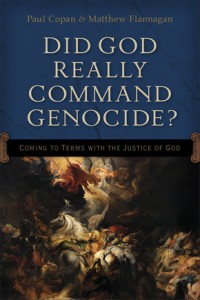 A common objection to belief in the God of the Bible is that a good, kind, and loving deity would never command the wholesale slaughter of nations. In the tradition of his popular Is God a Moral Monster?, Paul Copan teams up with Matthew Flannagan to tackle some of the most confusing and uncomfortable passages of Scripture. Together they help the Christian and nonbeliever alike understand the biblical, theological, philosophical, and ethical implications of Old Testament warfare passages.