Tag: William Lane Craig

  • Response to William Lane Craig’s Question 225: “The ‘Slaughter’ of the Canaanites Re-visited” Part I

    Every week William Lane Craig answers a question on his website; this week’s question of the week is entitled “The “Slaughter” of the Canaanites Re-visited”. The questioner asked what Craig thinks of the Canaanite Conquest account. I got a mention in Craig’s reply:

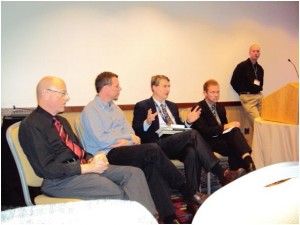
    The EPS Session at the SBL: Richard Hess, Randal Rauser, Paul Copan, me, Michael Rea

    “The topic of God’s command to destroy the Canaanites was the subject of a very interesting exchange at the Evangelical Philosophical Society session last November at the Society of Biblical Literature Convention in Atlanta. Matt Flannagan defended the view put forward by Paul Copan in his Is God a Moral Monster? that such commands represent hyperbole typical of Ancient Near Eastern accounts of military conquests. Obviously, if Paul is right about this, then the whole problem just evaporates. But this answer doesn’t seem to me to do justice to the biblical text, which seems to say that if the Israeli soldiers were to encounter Canaanite women and children, they should kill them (cf. Samuel’s rebuke of Saul in I Sam. 15.10-16).”
    Craig raises an important issue. In God and the Genocide of the Canaanites I, II and III I defended Nicholas Wolterstorff’s take on the Canaanite massacre in “Reading Joshua”.[1] Wolterstorff argued that the book of Joshua is a highly figurative, hagiographic and hyperbolic account of Israel’s early skirmishes and it is not intended to be taken literally in its details. My adaptation of Wolterstorff’s argument consists of three points.

    First, taken as a single narrative, and taken literally, Joshua 1-11 gives a contradictory account of events to that narrated by Judges and also to that narrated by the later chapters of Joshua itself.

    Second, those who put these books into a single narrative would have been well aware of the obvious contradictions mentioned above. These editors were not mindless or stupid, particularly if we hold that God spoke through them.

    Third, while Judges reads more like “down-to-earth”[2] history, a careful reading of Joshua shows it to be full of ritualistic, stylised accounts and formulaic language. I supported this third point with research into Ancient Near Eastern conquest accounts. Studies show such accounts are hyperbolic, hagiographic, figurative and follow a common transmission code. Comparisons between these accounts and the early chapters of Joshua suggest Joshua was written according to the same literary conventions and transmission code. I suggest these three points, taken together, provide compelling reasons for thinking that one should interpret the text as a hyperbolic, hagiographic and figurative account of what occurred; it was not meant to be taken as literally true in all its details.

    Craig’s objection to my position (and that of Paul Copan’s whose position is very close to mine) is a reference to 1 Samuel 15. Craig referred specifically to verses 10-16, where Samuel rebuked Saul “because [Saul] has turned away from [God] and has not carried out [God’s] instructions.”[3] The instructions in question were given in verse 3; God commanded Saul, “Now go and strike [nakah] Amalek [the Amelekites] and utterly destroy [haram] all that he has, and do not spare [hamal] him; but put to death both man and woman, child and infant, ox and sheep, camel and donkey.”[4] Craig suggests this “seems to say that if the Israeli soldiers were to encounter Canaanite women and children, they should kill them”. I think Craig pushes an important objection (more…)

  • Transcript: Sam Harris v William Lane Craig Debate “Is the Foundation of Morality Natural or Supernatural?” UPDATED

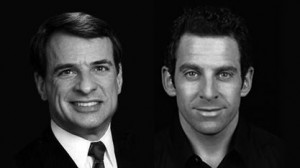
    William Lane Craig v Sam HarrisSam Harris and William Lane Craig debated the moot “Is the Foundation of Morality Natural or Supernatural?” at the University of Notre Dame on 7 April 2011. We’ve already linked to the debate MP3 and a playlist of the video and we have published a two part review but now, as an MandM exclusive, we bring you the transcript.

    This transcript is the result of some 32 playbacks of the debate and is accurate down to the “uhs” and “oks”.

    UPDATE:
    Since publishing this transcript, William Lane Craig has emailed us and asked us to adjust the paragraph breaks and punctuation in his sections of the transcript in accord with where he placed them — something he conceded was very hard to get right when one is transcribing from audio. He also provided us with the footnotes for his sources which we have also included below.

    If Sam Harris wishes us to adjust his sections of this transcript in the same manner we are very happy to do so.

    – Madeleine

    Transcript of the Harris v Craig debate

    MODERATOR:

    Welcome to the second installment of “The God Debate”. My name is Michael Rea. I’m a professor of philosophy here at the University of Notre Dame, and the director of the Center for Philosophy of Religion, one of the sponsors of tonight’s event. The Center for Philosophy of Religion was founded in the late 1970s with the aim of promoting cutting-edge research on topics in the philosophy of religion, and in distinctively Christian philosophy. One of our goals in sponsoring the “God Debate” series is to try to bring some of the very issues discussed among our research fellows to a wider, non-academic audience, and in a format that will hopefully be fun and engaging.

    Our show tonight, as you already know, is a debate between William Lane Craig and Sam Harris, coming together for the very first time to discuss the question, “Are the foundations of moral values natural or supernatural?”

    William Lane Craig is Research Professor of Philosophy at Talbot School of Theology in La Mirada, California. He is best-known among philosophers for his extensive and influential work in the philosophy of time and the philosophy of religion. He is known to the wider public as someone who is able to articulate and defend the doctrines of the Christian faith in a way that is highly accessible but also philosophically and theologically rigorous. He became a Christian at the age of 16, pursued undergraduate studies at Wheaton College, and holds two earned doctorates: one in philosophy from the University of Birmingham, and one in theology from the University of Munich. He has authored or edited over 30 books, as well as over a hundred articles in professional journals of philosophy and theology.

    Known as one of the “Four Horsemen” of the New Atheist movement, Sam Harris is the author of the New York Times best sellers: The Moral Landscape, The End of Faith, and Letter to a Christian Nation. The End of Faith won the 2005 Pen Award for non-fiction. Mr. Harris’s writing has been published in over 15 languages. He and his work have been discussed in Newsweek, Time, The New York Times, Scientific American, Nature, Rolling Stone, and many other journals. His writing has appeared in Newsweek, The New York Times, The Los Angeles Times, The Economist, The Times London, The Boston Globe, The Atlantic, the Annals of Neurology, and elsewhere. Mr. Harris is a co-founder and CEO of Project Reason, a non-profit foundation devoted to spreading scientific knowledge and secular values in society. He received a degree in philosophy from Stanford University, and a PhD in neuroscience from UCLA.

    The structure of tonight’s debate will be as follows: Each debater will take 20 minutes for his opening speech, followed by rebuttals of 12 minutes and 8 minutes respectively, and then closing speeches of 5 minutes each. At the conclusion of the debate, we will have about 30 minutes for questions from the audience. If you would like to ask a question, line up behind one of the two microphones in front, or in the balcony. We’re letting Notre Dame students ask the first four questions tonight, so if you are not a Notre Dame student, and somehow find yourself at the front of the Q&A line, please allow a student to go ahead of you.

    Time will be kept strictly. There is a timekeeper in the front who can be seen by both speakers, and once each speaker’s time has elapsed, he will be given at most 15 seconds to finish his final sentence before being rudely interrupted by me, the time enforcer. Because we are keeping the time strict, we ask you to hold all applause and other indications of agreement or disagreement, cheering, crowd-surfing, and the like, until the very end of the debate. Please remember that flash photography, video taping, and active cell phones are all prohibited.

    Finally, remember that Notre Dame is the world’s number one institution in the philosophy of religion, and also has one of the world’s best theology departments. Any questions you don’t get to ask during the 25 or 30 minute Q&A, you can ask of your local faculty in the days and weeks to come. And now, on with the show.

    CRAIG:

    Well, good evening. It’s wonderful to be here at the University of Notre Dame, and I want to begin by

    MODERATOR:

    Bill

    CRAIG:

    thank—

    MODERATOR:

    Sorry.

    CRAIG:

    Sorry.

    MODERATOR:

    I need to—We’re gonna begin each speech with me checking with the timekeeper to make sure that he’s ready, and then the timekeeper is gonna hit “Go”, and then you get to go—

    CRAIG:

    Alright.

    MODERATOR:

    So, so you go—

    CRAIG:

    Sorry—

    MODERATOR:

    —when I say “Begin”.

    CRAIG:

    Sorry for jumping the gun.

    MODERATOR:

    Professor Craig gets, uh, gets the first word in the debate, uh, Dr. Harris gets the last word. Timekeeper, are you ready? This is 20 minutes. Begin.

    CRAIG:

    I want to begin by (more…)

  • Fallacy Friday: Denying the Antecedent

    This week I will look at the fallacy of denying the antecedent. Before I can elaborate exactly what is involved in this fallacy, it is important to introduce and analyse some valid arguments that are superficially similar.

    Modus Ponens
    One of the very first valid inferences one learns in logic is modus ponens. To use the well worn example that was repeated ad nauseam when I was learning logic (and one I probably bored my students with too) a paradigmatic example of modus ponens is,

    1. If it is raining then the  grass will be wet.

    2. It is raining;

    Therefore:

    3. The grass will be wet.

    Put more abstractly, a modus ponens has the form:

    1’ If P then Q.

    2’ P;

    Therefore:

    3’ Q.

    UnicornModus ponens proceeds with the first premise contending that a conditional statement is true. A conditional statement is a statement about a hypothetical situation; in this case the claim is “if it is raining then the grass will be wet”. Notice that for this conditional to be true, it does not have to actually be raining. On a sunny day it is still true that if it starts raining the grass will be wet. A conditional statement tells us what will be the case if some other thing or event is the case – not what actually is the case.

    Conditional statements of the form “if P then Q” have what logicians call an “antecedent” and a “consequent”. P is the antecedent; in the above example the antecedent is the claim, “it is raining”. In a conditional statement one talks about what occurs if the antecedent is true. Q is the consequent; in the example above the consequent is the proposition “the grass will be wet”. The consequent is what is said to be true if the antecedent is correct.

    Modus ponens proceeds by first affirming that a conditional statement is true and then affirming the antecedent is true. If both a conditional statement is true and its antecedent is true then it is impossible for the consequent to not also be true. This is obvious upon immediate reflection. If the conditional ‘if P then Q’ is true, and P is true, then Q must also be true. Note, that in a valid modus ponens inference, one affirms the antecedent. (more…)

  • Debate Review: Sam Harris and William Lane Craig on Ethical Naturalism Part II

    William Lane Craig v Sam HarrisIn Part I of my review of the debate between Sam Harris and William Lane Craig on the moot “Is the Foundation of Morality Natural or Supernatural? I discussed Craig’s defence of the contention that:

    1. If God exists then we have a plausible account of (a) the nature of moral goodness and (b) the nature of moral obligation.

    I noted that Harris’s attempt to refute this conditional failed miserably. However, he did not just offer a negative case; Harris contended that:

    2. If atheism is true then we have a plausible account of (a) the nature of moral goodness and (b) the nature of moral obligation.

    Harris defended 2(a) by contending that moral goodness could be identified with human well-being, which he “in turn” identified with physical states of the brain. Harris defended 2(b) by identifying our moral obligations with the property of promoting human well-being. Harris suggested that this means that moral questions are scientific questions that can be answered by science.

    Harris’s Argument for Ethical Naturalism
    Harris’s argument for 2(a) consisted of three claims. First, he proposed a thought experiment of a world without conscious beings. Intuitively, we judge that nothing is good or bad in this world because nothing matters to anyone in such a world, since there is no one for anything to matter to. Harris concluded that the existence of goodness is dependent on conscious beings.

    Second, Harris asked us to imagine a world full of conscious creatures who live forever in excruciating pain. We intuitively judge this state of affairs to be bad and we intuitively assume a duty to avoid it.

    Third, since states of consciousness are brain states, science can develop ways of promoting these states.

    However, this argument fails to establish Harris’s conclusion. The first claim shows only that goodness depends on the existence of conscious beings. It does not show that goodness is a state of consciousness. Moreover, the second and third premises affirm that we have a duty to avoid maximising pain and that science can tell us how to fulfil this duty. It does not show that moral obligation is the property of promoting or enhancing human flourishing. Nor does the argument show that science can answer moral questions.

    The argument, in fact, relies on people determining, by moral intuition, what things are good and what obligations we have prior to scientific investigation. After this is determined science is used to ascertain how to fulfil these duties. Nothing in Harris’s argument implies that science can discover what our duties are or what is good in the first place.

    Moreover, as I noted in my previous post, this method involves accepting moral beliefs as properly basic. However, if it is the case that we can accept moral beliefs as properly basic then what is the problem with Alvin Plantinga’s contention that belief in God is properly basic? What exactly is it about religious beliefs that disqualifies them from being basic in the same way Harris contends moral beliefs are? (more…)

  • Debate Review: Sam Harris and William Lane Craig on Divine Command Theory Part I

    William Lane Craig v Sam HarrisLast week Sam Harris and William Lane Craig debated the question: “Is the Foundation of Morality Natural or Supernatural?” at the University of Notre Dame. Given my interest in divine command meta-ethics I found the debate and the subsequent online discussion concerning it extremely interesting. I was particularly interested in how the ‘new atheist’ movement would address this issue given Dawkins’ neglect of moral arguments in The God Delusion. Unfortunately, the debate turned out to be very one-sided. [Both the debate video and the debate MP3 are now online.]

    In this review I will analyse the debate in two parts. In Part I, I will look at the discussion of Craig’s contention that,

    1. If God exists then we have a plausible account of (a) the nature of moral goodness and (b) the nature of moral obligation.

    In Part II, I will examine Harris’s contention that,

    2. If atheism is true then we have a plausible account of (a) the nature of moral goodness and (b) the nature of moral obligation.

    A couple of definitions are necessary here; what both Craig and Harris are defending are rival accounts of what both goodness and moral obligation are. When Craig or Harris offers an account of the nature of goodness, each is offering an account of what moral values and obligation are, that is, their ontological or metaphysical nature. Similarly, when Craig refers to God, he is referring to a personal immaterial being who is necessarily existent, omniscient, omnipotent and morally perfect.

    Craig’s Argument for a Divine Command Theory
    In support of 1(a) Craig argued that if theism is true, goodness could be identified with God himself. His view is that goodness is best understood in terms of an exemplar, that good is identified with the perfect paradigm of a good person and that the goodness of everything else is measured by its resemblance to this paradigm. An analogy to this idea is the official “metre stick” that exists in France today. The metre stick is exactly one metre long, and the length in metres of every other length is determined by comparison with it. In the same way, God is both perfectly good and is the standard of goodness for everything else. God’s goodness, for Craig, is cashed out in terms of certain character traits. To claim God is good is to claim that he is truthful, benevolent, loving, gracious, merciful and just, and that he is opposed to certain actions such as murder, rape, torturing people for fun and so on.

    In support of 1(b) Craig argued that if God exists, moral obligations can be identified with Gods commands. He therefore advocated the version of a divine command theory of obligation proposed by Robert Adams in Finite and Infinite Goods.

    While Craig sketched his account of goodness and obligation in his opening statement, he never offered any actual argument for why he thinks that if theism is true, this account is correct; yet later in the debate he said it was obvious. While I myself agree with a certain version of divine command theory, I think this suggestion is inadequate. There have been many objections raised against such theories in the literature, and hardly any of them presuppose the non-existence of God. I think these objections fail, and most of them fail miserably. But it would be a gross overstatement to claim that, given the truth of theism, a divine command theory is obvious.

    Later in the debate, (more…)

  • Video: Sam Harris v William Lane Craig Debate “Is the Foundation of Morality Natural or Supernatural?”

    Sam Harris and William Lane Craig debated the moot “Is the Foundation of Morality Natural or Supernatural?” at the University of Notre Dame on 7 April 2011. We’ve already linked to the debate  MP3 but here is the video of the whole debate.

    Hat tip: Pondering the Preponderance

    See Matthew Flannagan’s:
    Debate Review: Sam Harris and William Lane Craig on Divine Command Theory Part I


  • Sam Harris v William Lane Craig Debate @ Notre Dame – UPDATE MP3 Online

    The debate between Sam Harris and William Lane Craig at The University of Notre Dame on the topic “Is the Foundation of Morality Natural or Supernatural?” will be streamed free and live on Notre Dame TV at 7:00pm EST on 7 April 2011 [11:00am NZ time on 8 April 2011].

    William Lane Craig v Sam Harris

    Hat tip: The Apologist

    UPDATE: The audio is now available as an MP3 over at Apologetics 315.

    RELATED POSTS: Matt has written a few posts here on MandM defending Divine Command Theory for those interested in reading a little more on the position William Lane Craig defended.

    Also see Matt’s:
    Debate Review: Sam Harris and William Lane Craig on Divine Command Theory Part I