Tag: William Lane Craig

  • Is Ethical Naturalism More Plausible than Supernaturalism? A Reply to Walter Sinnott-Armstrong: Part II

    This is the second part of the paper I presented to the Naturalisms in Ethics Conference at Auckland University last year.

    In my previous post, I noted that Robert Adams has argued that if God exists, then divine commands “best fill the role assigned to wrongness by the concept”.[1] He argues that if moral obligations are divine commands this explains the fact, that (i) “wrongness is an objective property of actions,”[2], (ii) it accounts “for the wrongness of a major portion of the types of action that we have believed to be wrong,”[3]   (iii) it “plays a causal role … in their coming to be regarded as wrong”,[4]  (iv) it explains how moral obligations constitute a “supremely weighty reason” for acting or refraining from an action,   and (v) he contends that DCT explains the intuition that moral duties comprise “a law or standard that has a sanctity greater than that of any merely human will or institution”.[5]

    Moreover, in my last post, I also argued that, for Armstrong to conclude his arguments call into question any theistic account of ethics, he must argue that his harm account of moral obligation provides a better explanation of all these features. Failing that, if his account doesn’t preserve these features of moral obligation, then he must provide us with a reason to suppose that they are not part of the concept of moral obligation. Or he must provide reasons for revising our concepts.

    In his monograph “Morality without God” he attempted to do this. It’s my contention that he has failed in this task.

    1. Social Requirements

    Let’s begin with (v), In “Morality without God”, Armstrong purports to address this line of argument, he claims that “the best line of argument-because it is the only argument is that moral laws require a lawgiver”[6]. He attributes to popular writer Dinesh D’Souza. He then proceeds to make short work of D’Souza’s argument.

    However, this is neither the best, nor the only argument offered in favour of a DCT. In subsequent articles and a monograph, Adam’s has developed (v) in some detail.[7] Adam’s proposes a “social requirement theory” of obligation whereby “being obligated to do something consists in being required (in a certain way under certain situations) by another person or groups of persons not to do it”[8]. Obligations are a kind of social relationship where one person makes a demand on another, failure to comply results ruptures in the relationship expressed in terms of blame, censure, punishment and alienation, which can be expiated by forgiveness. Adam’s offers a sustained argument that the role of guilt, censure, punishment, social inculcation, moral motivation, moral knowledge and forgiveness plays in our concept of obligation, make a social requirement theory plausible.[9] Nowhere in Armstrong “Morality without God” does Armstrong even (more…)

  • Come Let Us Reason: New Essays in Christian Apologetics – Available on Kindle or Pre-Order the Book, Feat. William Lane Craig, Paul Copan, JP Moreland, Gary Habermas, Matthew Flannagan et al.

    The kindle edition of Come Let Us Reason: New Essays in Christian Apologetics, published by B&H Academic, edited by William Lane Craig and Paul Copan and featuring Craig, Copan, JP Moreland, Gary Habermas, Craig Keener, Mary Jo Sharp, this blog’s Matthew Flannagan, and others, with the foreword written by Rick Warren, is now available at the link above on Amazon.

    The book version of Come Let Us Reason: New Essays in Christian Apologetics can be pre-ordered at this link on Amazon.

    Matt’s chapter is “Did God Command Canaanite Genocide?” Here is the editorial review from Amazon:

    Come Let Us Reason: New Essays in Christian ApologeticsCome Let Us Reason is the third book in a series on modern Christian apologetics that began with the popular Passionate Conviction and Contending with Christianity’s Critics. The nineteen essays here raise classical philosophical questions in fresh ways, address contemporary challenges for the church, and will deepen the thinking of the next generation of apologists. Packed with dynamic topical discussions and informed by the latest scholarship, the book’s major sections are:

    • Apologetics, Culture, and the Kingdom of God
    • The God Question
    • The Gospels and the Historical Jesus
    • Ancient Israel and Other Religions
    • Christian Uniqueness and the World’s Religions

    Click to View the Table of Contents of Come Let us Reason

    Contributors include J. P. Moreland (“Four Degrees of Postmodernism”), William Lane Craig (“Objections So Bad That I Couldn’t Have Made Them Up”), Gary R. Habermas (“How to Respond When God Gives You the Silent Treatment”), Craig Keener (“Gospel Truth: The Historical Reliability of the Gospels”), and Paul Copan (“Does the Old Testament Endorse Slavery?”).

    Paul Copan is a professor and the Pledger Family Chair of Philosophy and Ethics at Palm Beach Atlantic University in West Palm Beach, Florida. He holds a Ph.D. in Philosophy from Marquette University.

    William Lane Craig is research professor of Philosophy at Talbot School of Theology in La Mirada, California. His Ph.D. in Philosophy is from the University of Birmingham in the United Kingdom.

    The Come let us Reason series is designed to bring scholarly work to the lay person so, depending on whether you prefer Kindle or book form, order or pre-order your copy now and let us know what you think.

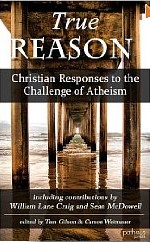
  • True Reason: Christian Responses to the Challenges of Atheism – on Kindle

    The kindle edition of new book featuring responses to the New Atheists, aimed to be readable at the popular level entitled True Reason: Christian Responses to the Challenges of Atheism is now available on Amazon. This blog’s Matthew Flannagan contributed to a chapter in it alongside William Lane Craig, Sean McDowell and others.

    Matt’s chapter is a reprint of his chapter “Did God Command Canaanite Genocide?” in the forthcoming in April B&H Academic book: Come Let Us Reason: New Essays in Christian Apologetics edited by Paul Copan and William Lane Craig.

    Here is the editorial review from Amazon:

    True Reason: Christian Responses to the Challenge of Atheism“While New Atheists like Richard Dawkins, Sam Harris, and others proclaim loudly their rationality, clear thinking, and incontrovertible scientific arguments, others are beginning to wonder how genuinely rational they are. Have they proved anything? Have they argued convincingly? Have they pinpointed any real challenges to the credibility of Christian faith?

    “True Reason,” edited by Tom Gilson and Carson Weitnauer, brings together a compendium of writers–philosophers, apologists, ethicists, theologians, historians–who look carefully at the best arguments atheism has and evaluate their validity, logic, assumptions, and naturalist conclusions.Authors include noted philosopher William Lane Craig and popular apologist Sean McDowell, along with Gilson, Weitnauer, John DePoe, Chuck Edwards, Matthew Flannagan, Peter Grice, Randy Hardman, David Marshall, Glenn Sunshine, David Wood, and Samuel Youngs. Each chapter tackles a different atheist argument and brings reason fully into the discussion.

    Which is more reasonable: atheism or Christianity? Read “True Reason” and think for yourself.”

    Get your copy now, read it, and let us know what you think both here and on Amazon 🙂

  • Jerry Coyne on God and Morality Revisited

    Late last year I, wrote a criticism of Jerry Coyne’s piece in USA today. Entitled, As  atheists know, you can be good without God.  My critique attracted some attention. Getting commentary from Mary Ann Spikes, Jason Thibodeau,  Jeffery Lay Lowder, and Brian Zamulinski.  Since the USA today article Coyne has written a follow up article where he purports to address the kinds of criticisms I made in this post. This article is entitled Maybe my Philosophy isn’t so Unsophisticated After All.  However, far from exonerating his poor reasoning, Coyne’s response simply further demonstrates my point.

    In this article Coyne focuses almost exclusively on criticisms I and others have made to his use of the arbitrariness objection. This is significant, for this criticism was just one of several criticisms of Coyne’s article that I raised .  Consequently, even if Coyne’s rejoinder is sound it addresses only one of my objections.  The rest remain untouched.

    As it is, his response is poor.  He begins by noting the response to the arbitrariness objection proposed by William Lane Craig. According to Coyne, Craig’s response is “whatever God orders is good and morally obligatory simply by virtue of the fact that He is God.” He cites this as a quotation but fails to provide a source. His response to this is to refer to alleged atrocities taught in the Old Testament and claim Craig’s response is “too stupid to address”

    Three things are evident, First, this is not Craig’s response to the arbitrariness objection; in his book Philosophical Foundations of  a Christian Worldview, Craig argues that Our moral duties are constituted by the commands of a just and loving God” (emphasis original)   and that

     this fact also supplies the key to the arbitrariness objection.  For our duties are determined by the commands, not merely of a supreme potentate, but of a just and loving God.  God is essentially compassionate, fair, kind, impartial, and so forth, and His commandments are reflections of His own character.  Thus, they are not arbitrary, and we need not trouble ourselves about counterfactuals with impossible antecedents like “If God were to command child abuse . . . .[1]

    So, Craig, in fact, maintains it’s impossible for God to command actions which are cruel, unjust and so on.   He does not, claim such actions can become good merely by God commanding them and Coyne appears to insinuate.

    Second, I actually addressed the Old Testament atrocity argument in my original article . However, Coyne simply repeats his argument.

    Third, calling someone “stupid” is not a rational rebuttal of their position; it commits a fallacy that logicians call the ad hominem fallacy, where one attacks the arguer instead of rebutting his argument. The distinction between attacking a person and refuting their argument is an elementary one in logic; it’s hard to believe Coyne is unaware of it.

    If Coyne thinks misrepresenting people, insulting them and then repeating an argument which has been addressed counts as competent philosophical or theological analysis he is gravely mistaken.

    After setting this tone, Coyne turns specifically to my criticisms. After suggesting that responding to on MandM is “a mugs game” he directs the reader to an article by Jason Thibodeau who Coyne calls a “real” philosopher” and cites two paragraphs which he claims “decisively” refute me.

    Now it doesn’t need saying that simply finding an article that agrees with you and maintaining the author of that article is a “real scholar” is not really a response to anything. Neither is simply asserting that someone has offered a refutation itself a refutation.

    But what’s interesting is Coyne’s selective citation. After noting my point, that a loving and just person would not command the kinds of actions he mentions, Thibodeau states

    There are a few problems with this response. The most important (and the one that I think that Coyne had in mind) is that if we are to understand the reply to mean that a moral God would not issue immoral commands… the response implies that there is a standard of morality that is independent of God against which he and his commands can be judged. But if morality is independent of God, then the DCT [divine command theory] is false.

    Coyne suggests this response “shows pretty definitively that” my argument fails and it “sets the record straight” for all thinking Christian’s

    In fact this response is mistaken. The fact that a loving and just being does not command certain actions does not entail that there is a moral standard independent of that being requiring them to not command those things. This is because it is possible for a person to be loving and just with being obligated to be loving and just. Suppose, for the sake of argument, morality was an illusion and in reality no one really was required to love their children.  Would it follow that all parents would cease to love them, or that they could not exercise love?  Not at all, I can be loving without being under an obligation to be loving. So this objection fails.

    Interestingly however, Thibodeau actually points this out in the very next line of the article which Coyne snips from his quotation. Thibodeau writes:

    In any event, as Flannagan indicated, the debate does not end here because the divine command theorist may concede the point but still insist that all he needs is that God is all-loving, and he will get the same consequence (or at least one that is close enough); namely that God will not issue commands that require us to cause horrible pain and suffering (or do anything that we all agree would be horrendous). If developed in the appropriate direction, this reply can lead to a fully developed response to the arbitrariness objection.

    So, the “real philosopher” Coyne cites actually says this argument is unsuccessful, for reasons I had already indicated in my criticisms.  Coyne’s response therefore appears to be as follows (a) find an article that agrees with his conclusions (b) assert the author (apparently unlike me) is a real philosopher (c)  quote an argument  the author actually says fails to address my point (d) Snip the context so your readers don’t know this (e) assert boldly that his comment refutes me.  Far from showing that my criticisms of Coyne are mistaken these kinds of tactics suggest I was on the mark.  Of course readers of Coyne’s work online or in USA today won’t have the original articles Coyne cites from and so will take his assertions on faith. This is effective propaganda but little else.

    After these dubious manoeuvres, Coyne then asserts that the rest of Thibodeau’s article makes devastating points against me but does not cite or summarise these arguments.

    In fact Thibodeau’s makes two arguments both of which fail.

    Thibodeau’s, first argument appeals to God’s omnipotence, which he defines as the ability to do whatever is logically possible.  If omnipotence is defined this way, then God could command the torture of children.

    Now whether omnipotence should be defined in this way is in fact a matter of dispute. However, suppose we grant Thibodeau’s definition; the argument still fails. Adams’ position is that that moral obligations are constituted by the commands of a loving and just God.  Even if God, being omnipotent could command the torture of children, he could not do so and continue to be loving and just. This is because it’s not logically possible for a loving and just being to command things like this. So this argument does nothing to show that a loving and just God could command torturing children and hence does not refute Adams’ position.

    Thibodeau’s second argument is similarly mistaken. Thibodeau argues that it’s possible that there exists an all-powerful creator that enjoys watching sentient beings suffer, he labels this being Azura. He then notes that Azura could command the torture of children.

    Now assuming that it is possible that Azura exists (which I doubt), this argument is beside the point. The fact that an evil being who is all powerful could command the torture of children, does not entail that a loving and just God could. So Adam’s contention that moral obligations are best accounted for by the commands of a loving and just God remains un-refuted.

    Both arguments fail because they misconstrue the position that Adams and those who follow him defend. These people contend that the nature of moral obligations is best explained by the commands of a loving and just God. Pointing out that they are not explained by a God who lacks these attributes does not address this contention. It ignores it.

    Interestingly,  in  some commentary on Coyne’s exchange with myself arguments philosopher and ethicist  Brian Zamulinski notes that he had pointed this out to Coyne months before he wrote the USA today article. Zamulinski  writes

    Robert Merrihew Adams contended that morality is constituted by the commands of an essentially loving God.  The Euthyphro dilemma collapses because an essentially loving God could not command just anything.  In his USA Today article, Coyne rehearses the Euthyphro dilemma but does not mention the Adams reformulation.  This is odd.  I had an e-mail correspondence with Coyne some months earlier in which I pointed out the Adams reformulation.  Coyne should have taken time to rebut the reformulation.  He did not.

    Coyne’s final riposte is to ask a question, how do you know a loving God exists? And this whole issue is “moot unless you can show that there’s a God to issue moral commands”. This however is to reason in a circle, in his USA today article Coyne was criticising the argument that morality was “strong evidence for [God’s] existence.” People like Adams argue it is because the best account of the nature of moral obligations is that moral obligations are commands issued by a loving and just God.  To contend Adams is wrong because no one has offered an argument for a loving God’s existence is to assume the very issue under dispute. One could just as easily argue Coyne’s argument is flawed on the grounds that his arguments are flawed.

    Nothing in Coyne’s follow up leads me to revisit my initial conclusion. Misrepresenting people’s views, calling people names, quoting from articles out of context, denigrating others’ scholarly qualifications and confidently asserting a position whilst reasoning in a circle, and ignoring objections, are not the same as actually addressing them.  I doubt such sophistry would pass muster in the scientific community when people write on scientific topics, and it does not pass muster when scientists comment on theology or philosophy.

    [1]William Lane Craig and J P Moreland Philosophical Foundations of a Christian WorldView (Downers Grove Il:Intervarsity Press academic), 531,

  • Is Ethical Naturalism more Plausible than Supernaturalism? A Reply to Walter Sinnott-Armstrong Part I

    This is  first half of the paper I presented to the Naturalisms in Ethics Conference at Auckland University last year.

    In many of his addresses and debates William Lane Craig has defended a Divine Command Theory of moral obligation (“DCT”). In a recent article Walter Sinnott-Armstrong has criticized this contention.[1] Armstrong contends that even if theism is true then a particular form of ethical naturalism is a more plausible account of the nature of moral obligations than a DCT is. This paper critiques Armstrong’s argument.

    Craig’s contention
    Craig’s contention is that if theism is true then we can plausibly explain the nature of moral obligation by identifying obligations with God’s commands analogous to the way “we explain the nature of water by identifying it with H2O, or explain the nature of heat by identifying it with molecular motion.”[2] By “God” Craig means a necessarily existent, all-powerful, all-knowing, loving and just, immaterial person who created the universe.

    This emphasis, both on God as a loving and just being and identifying moral obligations with God’s commands suggests that Craig defends a version of the modified DCT defended by Robert Adams,[3] William Alston[4] and C Stephen Evans[5]. Both Adams and Evans have argued, like Craig, that if God exists then his commands “best fill the role assigned to wrongness by the concept”.[6] Much of Craig’s arguments can be seen as an appropriation and popularisation of Adams.[7]

    Armstrong’s Argument from Harm
    Walter Sinnott-ArmstrongArmstrong contends that such a position is “incredible”[8], he states:

    There is a much more plausible foundation for morality. It seems obvious to me, and to everyone who does not start with peculiarly religious assumptions, that what makes rape morally wrong is the extreme harm that rape causes to rape victims.[9]

    We do not need a “new supernatural level” for morality because a natural property, the property of harming others without an adequate reason, fulfils the role assigned to wrongness by the concept better than divine commands do. Armstrong provides two arguments for this conclusion.

    (a) The harm account makes moral obligations more objective than a DCT does;

    (b) The harm account is more economical than a DCT.

    Armstrong contends that his argument refutes, not just Craig, but any theistic account of ethics, “Other theists might try to give better arguments for a religious view of morality. I don’t see how they could avoid all the problems in Craig’s account without leaving traditional Christianity far behind.”[10]

    I will address arguments (a) and (b) below. However, it is worth noting that, as stated, Armstrong’s conclusion here misses the point. He contends that everyone who does not start with peculiarly religious assumptions will see that the harm-based account is more plausible than a DCT. But Craig’s contention is that if God exists then a DCT is a plausible account of the nature of moral obligations. Neither Craig nor Adams contend that a DCT is the most plausible theory in the absence of religious assumptions. They contend that a DCT is the more “attractive theory, given those [theistic] beliefs, than any other meta-ethical theory is, given non-theistic (more…)

  • Back from San Francisco: A Belated Report

    MandM has been quite of late, this is because Madeleine and I have been very busy.  With moving house in the midst of Christmas and New Years and Madeleine working part-time in a law firm and so on, we’ve had little time to blog. We are now set up, to some extent, and so this post will be a belated comment on my recent trip to San Francisco.

    In November I flew to San Francisco where I attended I attended the  Meeting of the Evangelical Theological Society (ETS), The Annual Meeting of the Evangelical Philosophical Society (EPS), The Evangelical Philosophical Society Apologetics Conference and The Annual Meeting of the Society for Biblical Literature (SBL) and American academy of religion.(AAR). While I would love to give detailed commentary on each session, to do so would require several blog posts of inordinate length, instead I will simply summarise what went down.

    I arrived in San Francisco at around 4pm  on the 15th. I presented my first paper at 8:30am the next morning. My paper was a critique of Walter Sinnott Armstrong’s arguments against divine command theory meta-ethics. Armstrong contends that the nature of moral obligation is best explained by identifying moral obligations with the natural property of harming others without justification, and, focusing largely on Craig’s work, argues this is superior to divine command ethics. I argued: (a) his argument fails to note the conditional nature of Craig’s (his main target’s) contention that if theism is true moral obligations are best explained as divinecommands (b) Armstrong’s does not provide a better account of moral objectivity (c) Armstrong’s account is not more economical than a divine command theory. (d) Even if it were an economical account, it does not explain various features of obligation such as (i) the social nature of moral obligations (ii) the fact that moral obligations constitute a decisive reason for acting and (iii) the specific moral content of obligations; as well as a divine command theory. All in around 30 minutes!!! The paper was very well received, with several people asking me to forward them a copy. I plan to get it published later this year.

    The rest of the morning was filled with me hearing various papers on moral theory and philosophy of religion all of which were interesting and stimulating. These panellists all shared similar perspectives yet were astutely critical of each other’s arguments. Particularly interesting was the dialogue between Baggett and Craig. Some of the issues here were technical and deserve further discussion so I plan to blog on this dialogue in more detail in the future. But in sum: Craig has defended a counterfactual: if God did not exist then moral obligations would not exist. Baggett  argued for various reasons that this is too strong; if God, the creator and sustainer of the universe, did not exist, the universe would not exist. To make sense, Craig’s claim needs to envisage a compossible world, which is like the actual world in all respects except that God does not exist, if it’s like the world in all other respects however, then it has all the features of the world God has created – and hence the resources for something like moral obligations to exist. Instead, Baggett contended, one should argue that a world with God provides a better explanation of the nature and existence of moral obligations than a world without God does. This means the theist does not have to argue, with Craig, that there is no adequate secular account of the existence of moral obligations, only that a divine command theory is more plausible than such accounts. Both Craig and Baggett made telling points which I will have to elaborate on some other time. highlight of Wednesday was the afternoon session. A panel discussion of David Baggett and Jerry Wall’s new book “Good God: The Theistic Foundations of Morality”. This book is the latest defence of divine command theory ethics, recently published by Oxford University Press. Baggett and Walls sketched briefly the content of the book and Paul Copan and William Lane Craig offered critical commentary, to which Baggett and Walls responded.

    Thursday started with an excellent critique of evolutionary (more…)

  • Response to William Lane Craig’s Question 225: “The ‘Slaughter’ of the Canaanites Re-visited” Part II

    Samuel rebukes SaulIn my last post “Response to William Lane Craig’s Question 225: “The ‘Slaughter’ of the Canaanites Re-visited” Part I” I discussed William Lane Craig’s position on the Canaanite Conquest account (in light of the fact that Craig referred to my argument in his question of the week: “Question 225: The “Slaughter” of the Canaanites Re-visited”). I clarified the delineations as to where he agrees and disagrees with the position I presented at the Evangelical Philosophical Society’s session at the Society for Biblical Literature Meeting in Atlanta last year and I established that the point of divergence in our agreement rests on 1 Samuel 15.

    In my Atlanta paper I argued that Nicholas Wolterstorff’s reading of the Canaanite conquest accounts in Joshua can also be applied to the account of Saul exterminating the Amalekites in 1 Sam 15.

    First, the so-called ‘genocide accounts’ in 1 Sam 15 are part of a broader context that includes the rest of Samuel and also other canonical books, such as 2 Samuel and the book of Chronicles. When one reads the whole sequence, one observes that while 1 Samuel 15 describes Saul, at God’s command, exterminating the Amalekites, later passages in Samuel and Chronicles proceed on the assumption this never literally happened.

    The key passage is God’s command to Samuel, “strike [nakah] Amalek [the Amalekites] and utterly destroy [haram] all that he has, and do not spare [hamal] him; but put to death both man and woman, child and infant, ox and sheep, camel and donkey.”[1] The text goes on to explicitly state that the Amalekites were all wiped out:

    “So Saul defeated [nakah] the Amalekites, from Havilah as you go to Shur, which is east of Egypt. He captured Agag the king of the Amalekites alive, and utterly destroyed [haram] all the people with the edge of the sword. But Saul and the people spared [hamal] Agag and the best of the sheep, the oxen, the fatlings, the lambs, and all that was good, and were not willing to destroy them utterly; but everything despised and worthless, that they utterly destroyed.” [2]

    A few verses later (15:33) the text records that Agag, the sole survivor, was executed. So, read literally, this passage states that all the Amalekites were killed and all their livestock were either destroyed or taken as plunder to be sacrificed to God at Gilgal.[3]

    Now the language of “defeated” (or struck), “utterly destroyed”, the reference to “sparing” and to livestock parallels the language of the command in 15:3. Given this, it seems implausible that we should interpret the command in verse 3 as literal but the fulfilment, just 4 verses later, as hyperbolic; the text requires that the command and fulfilment be read in the same sense.

    That said, when one reads this passage as part of as a single narrative a literal reading appears untenable; the proceeding text states quite emphatically that the Amalekites were not, in fact, literally wiped out. In 1 Samuel 27:8-9 David invaded a territory full of Amalekites:

    “Now David and his men went up and raided the Geshurites, the Girzites and the Amalekites. (From ancient times these peoples had lived in the land extending to Shur and Egypt.) Whenever David attacked an area, he did not leave a man or woman alive, but took sheep and cattle, donkeys and camels, and clothes. Then he returned to Achish.”

    Not only does this text affirm that the Amalekites still existed but the reference to Egypt and Shur states that they existed in the very same area that Saul ‘utterly destroyed every single one of them’ in in the previous passages. Moreover, David took sheep and cattle as plunder; again, livestock was another of the things Saul was said to have already eradicated.

    After the text has told us that Saul “utterly destroyed all the people”, including King Agag, and despite the text telling us that when David attacked an area (the very same areas as Saul) he did “not leave a man or woman alive”, three chapters later we read that a sizeable Amalekite army attacked Ziklag![4] David apparently pursued this army and fought a long battle with them and 400 Amalekites fled on horseback!![5] Where are all these Amalekites coming from?

    These are not the only examples. In 2 Samuel 1:8 an Amalekite took credit for killing Saul –but didn’t Saul “utterly destroy all the people”? In 1 Chronicles 4:43 Amalekites were still around in battle-ready numbers during the reign of Hezekiah who reigned after Saul and David.

    Read literally, the narrative affirms both that the Amalekites were and were not totally wiped out. This apparent contradiction in the Samuel narrative is (more…)