Below is the second part of a talk I delivered at Crossroads Presbyterian Church. 3. What Did Jesus Mean So if Jesus did not command us to refrain from judging others, what does he teach in this passage? I think Jesus is not, in this passage, telling us to “not judge.” He is instead telling […]
Entries from August 27th, 2025
To Judge or not to Judge: Part Two
August 27th, 2025 Comments Off on To Judge or not to Judge: Part Two
Tags: Judging · Sermon on the Mount · Sermons
New publication: “Can a Divine Command Theory Vindicate the Objectivity of Morality?”
August 26th, 2025 Comments Off on New publication: “Can a Divine Command Theory Vindicate the Objectivity of Morality?”
My paper, “Can a Divine Command Theory Vindicate the Objectivity of Morality?” has been published in the latest issue of Philosophia Christi. Abstract:Defenders of divine command metaethics (DCM) often argue that one of its key advantages is its ability to vindicate the objectivity of moral judgments. Critics, however, contend that DCM is a subjectivist theory […]
Tags: David Brink · Divine Command Theory · Elizabeth Tropman · Michael Huemer · Objectivism
To Judge or not to Judge?: Part One
August 25th, 2025 Comments Off on To Judge or not to Judge?: Part One
Below is part one of a sermon I presented at Crossroads Presbyterian Church in Pokeno. “Do not judge, or you too will be judged. 2 For in the same way you judge others, you will be judged, and with the measure you use, it will be measured to you. 3 “Why do you look at […]
Tags: Judging · Sermon on the Mount · Sermons
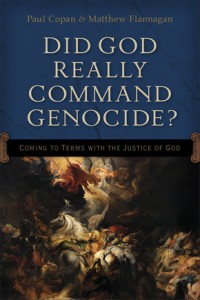 A common objection to belief in the God of the Bible is that a good, kind, and loving deity would never command the wholesale slaughter of nations. In the tradition of his popular Is God a Moral Monster?, Paul Copan teams up with Matthew Flannagan to tackle some of the most confusing and uncomfortable passages of Scripture. Together they help the Christian and nonbeliever alike understand the biblical, theological, philosophical, and ethical implications of Old Testament warfare passages.