Category: Announcements

  • New publication: “Can a Divine Command Theory Vindicate the Objectivity of Morality?”


    My paper, “Can a Divine Command Theory Vindicate the Objectivity of Morality?” has been published in the latest issue of Philosophia Christi.

    Abstract:
    Defenders of divine command metaethics (DCM) often argue that one of its key advantages is its ability to vindicate the objectivity of moral judgments. Critics, however, contend that DCM is a subjectivist theory and therefore inherits the difficulties such theories face in accounting for the apparently objectivist features of moral thought. In this paper, I examine and critique three prominent versions of this objection: David Brink’s appeal to appraiser independence, Elizabeth Tropman’s appeal to stance independence, and Michael Huemer’s concept of observer independence. I argue that none of these criticisms succeeds.

  • The Naturalness of Belief: New Essays in Theism’s Rationality.

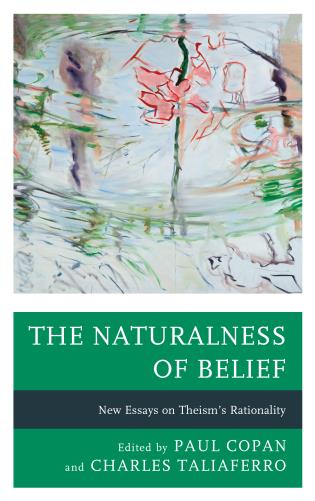
    The book The Naturalness of Belief: New Essays on Theism’s Rationality recently arrived from the publishers and is available on Amazon. Matt contributed a chapter to this book entitled “Divine Commands and the Euthyphro Dilemma: Some Naturalistic Misperceptions” The Naturalness of Belief is edited by Paul Copan (Palm Beach Atlantic) and Charles Taliaferro (St Olaf College) and published by Lexington Books.

    The table of contents is as follows:

    Introduction
    Part I: The Unnaturalness of Naturalism?
    1. Naturalism and Naturalness: A Naturalist’s Perspective
    —Graham Oppy
    Part II: Foundational Considerations
    2. Is Naturalism Natural?
    —Charles Taliaferro
    3. The Contraction and Expansion of Naturalism and the Theistic Challenge
    —Charles Taliaferro
    4. Taking Philosophical Naturalism Seriously
    —R. Scott Smith
    Part III: Theistic Belief, Science, and Naturalism
    5. In What Sense Might Religion Be Natural?
    —Justin Barrett and Aku Visala
    6. Science, Methodological Naturalism, and Question-Begging
    —Robert Larmer
    Part IV: Axiology and Naturalism
    7. Alienating Humanity: How Evolutionary Ethics Undermines Human Rights
    —Angus Menuge
    8. Divine Commands, Duties, and Euthyphro: Theism and Naturalist Misunderstandings
    —Matthew Flannagan
    9. Beauty: A Troubling Reality for the Scientific Naturalist
    —R. Douglas Geivett and James Spiegel
    Part V: Naturalism and Existential Considerations
    10. Existential Arguments for Theistic Belief
    —Clifford Williams
    11. Psychological Factors Contributing to Atheism: Bad Father Relationships and Just Bad Relationships as in Autistic Spectrum Disorders
    —Paul C. Vitz
    12. The Cultural Implications of Theism versus Naturalism
    —Paul Copan and Jeremiah J. Johnston
    Part VI: Naturalism, Freedom, and Immortality
    13. Theism, Robust Naturalism, and Robust Libertarian Free Will
    —J.P. Moreland
    14. Naturalism, Theism, and Afterlife Beliefs
    —Jonathan Loose

    The blurb from Amazon is as follows.

    Despite its name, “naturalism” as a world-view turns out to be rather unnatural in its strict and more consistent form of materialism and determinism. This is why a number of naturalists opt for a broadened version that includes objective moral values, intrinsic human dignity, consciousness, beauty, personal agency, and the like. But in doing so, broad naturalism begins to look more like theism. As many strict naturalists recognize, broad naturalism must borrow from the metaphysical resources of a theistic world-view, in which such features are very natural, commonsensical, and quite “at home” in a theistic framework.

    The Naturalness of Belief begins with a naturalistic philosopher’s own perspective of naturalism and naturalness. The remaining chapters take a multifaceted approach in showing theism’s naturalness and greater explanatory power. They examine not only rational reasons for theism’s ability to account for consciousness, intentionality, beauty, human dignity, free will, rationality, and knowledge; they also look at commonsensical, existential, psychological, and cultural reasons—in addition to the insights of the cognitive science of religion.

    Get your copy now, read it, and let us know what you think both here and on Amazon.
  • Matt’s book “Did God Really Command Genocide” on sale for $1.99

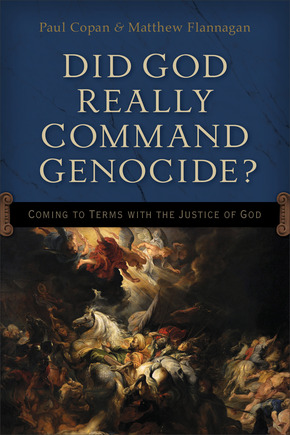
    As long-time readers of MandM will know, in 2014  I co-wrote a book with Paul Copan entitled Did God Really Command Genocide: Coming to Terms with the Justice of God.Did God Really Command Genocide?

    Yesterday Baker books have notified me that, for the month of September, Amazon, Barnes and Noble, and CBD, are running an ebook promotion on this book. During September the eBook version of our book will be available for $1.99.

    Please feel, to take advantage of this deal, also please feel free to let anyone you know who may be interested to take advantage of it and to share this information to anyone you know who may be interested.

  • “Robust Ethics and the Autonomy Thesis” Now Online

    Recently, Philosophia Christi published Matt’s article “Robust Ethics and the Autonomy Thesis: A reply to Erik Wielenberg”. This article consisted of some critical commentary and responses to Erik Wielenberg’s bookdefaul1 Robust Ethics: The Metaphysics and Epistemology of Godless Normative Realism.

    Since then Matt’s article has received a little bit of unexpected attention. One of my arguments was discussed in a dialogue between William Lane Craig and Erik Wielenberg that took place at North Carolina State University earlier this year, and on the back of this, we have received several received requests to read the paper. It is now available here: Flannagan Robust Ethics PC 19 2 (1)

    Permission has been granted from the Editor of Philosophia Christi to upload this contribution. Learn more about the Journal by going to www.epsociety.org/philchristi.

  • “Robust Ethics and the Autonomy Thesis” published in Philosophia Christi

    Matt’s article, “Robust Ethics and the Autonomy Thesis: A reply to Erik Wielenberg” has been published in the wiPhilosophia Christinter issue ( Vol 19 Num. 2 – Winter 2017) of Philosophia Christi.  An overview of the contents of the full issue can be found here.  The editor has given Matt permission to upload the article in a couple of months. For now here is the abstract:

    In his monograph, Robust Ethics: The Metaphysics and Epistemology of Godless Normative Realism, Erik Wielenberg offers arguably one of the most sophisticated defenses of the autonomy thesis to date. Wielenberg argues that (I) the divine command theory is problematic because it cannot account for the moral obligations of reasonable unbelievers; (II) Godless normative robust realism (GRNR) can be formulated in a way that avoids the standard objections to the autonomy thesis; and (III) GRNR provides a better account of intrinsic value. In this paper, I will argue Wielenberg’s defenses of the autonomy thesis fails. I will argue that his objection to divine command theories fails, that he fails to address two standard challenges to the autonomy thesis adequately, and, finally, that Wielenberg fails to show that GRNR better accounts for the intuition that certain things are intrinsically good than various forms of theistic alternatives.

  • Matt Elected to the Executive Board of the Evangelical Philosophical Society

    Evangelical Philosophical SocietyCongratulations to this blog’s Matthew Flannagan who was just elected to the executive board of the Evangelical Philosophical Society. Congratulations also to Frank Beckwith, Paul Franks who were also just elected to the board.

    Matt, Frank and Paul will join the existing board, who can be seen at the above link. Their first meetings are in Atlanta next week. As far as I can tell, Matt seems to be the first kiwi scholar to hold the position.