Category: Collaboration

  • Problems in Value Theory An Introduction to Contemporary Debates: My Chapter with Graham Oppy is finally published

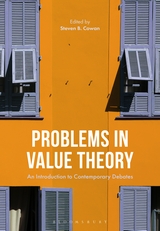
    Yesterday, I was informed that the book Problems in Value Theory An Introduction to Contemporary Debates has finally been published. The book is now available both on amazon on Bloomsbury’s website. Chapter 3 of this book “Does Morality Depend on God?” is co-authored by myself and Graham Oppy (Monash University). Both Graham and I each wrote an article (around 5000 words) spelling out our respective answers to the question, and then wrote a shorter piece (1500 words) where we responded to the others original essay. 

    Problems in Value Theory is edited by Steve Cowan (Lincoln Memorial University). The table of contents is as follows:

      Introduction, Steven B. Cowan

      Part I: Problems in Ethics and Aesthetics
     Introduction to Part I, Steven B. Cowan

      1. Is Morality Relative?

     Morality Is Relative, Michael Ruse

     Morality Is Objective, Francis J. Beckwith

     Responses:

     Beckwith’s Response to Ruse

     Ruse’s Response to Beckwith

      2. What Makes Actions Right or Wrong?

     Consequences Make Actions Right, Alastair Norcross

     Respect for Persons Makes Actions Right, Mark Linville

     Responses:

     Linville’s Response to Norcross

     Norcross’s Response to Linville

      3. Does Morality Depend on God?

     Morality Depends on God, Matthew Flannagan

     Morality Does Not Depend on God, Graham Oppy

     Responses:

     Oppy’s Response to Flannagan

     Flannagan’s Response to Oppy

      4. Is Beauty in the Eye of the Beholder?

     Beauty is Relative, James Mock

     Beauty is Objective, Carol S. Gould

     Responses:

     Gould’s Response to Mock

     Mock’s Response to Gould

      5. What Is the Meaning of Life?

     The Meaning of Life Is Found in God, Douglas Groothuis

     The Meaning of Life Can Be Found without God, Christine Vitrano

     Responses:

     Vitrano’s Response to Groothuis

     Groothuis” s Response to Vitrano

      Essay Suggestions

     For Further Reading

      Part II: Problems in Political Philosophy

     Introduction to Part II, Steven B. Cowan

      6. Do We Need Government?

     We Do Not Need Government, Roderick T. Long

     We Need Some Government, Alex Tuckness

     Responses:

     Tuckness’s Response to Long

     Long’s Response to Tuckness

      7. Should Wealth Be Redistributed?

     Wealth Should Be Redistributed, Jon Mandle

     Wealth Should Not Be Redistributed, Jan Narveson

     Responses:

     Narveson’s Response to Mandle

     Mandle’s Response to Narveson

     8. When May the Government Wage War?

     The Government Should Never Wage War, Andrew Alexandra

     The Government May Sometimes Wage War, Nathan L. Cartagena

     Responses:

     Cartagena’s Response to Alexandra

     Alexandra’s Response to Cartagena

      Essay Suggestions

     For Further Reading

     Index

     The blurb from Bloomberry is as follows:

    Problems in Value Theory takes a pro and con approach to central topics in aesthetics, ethics and political theory.

     Each chapter begins with a question: What Makes Actions Right or Wrong? Does Morality Depend on God? Do We Need Government? Contemporary philosophers with opposing viewpoints are then paired together to argue their position and raise problems with conflicting standpoints. Alongside an up-to-date introduction to a core philosophical stance, each contributor provides a critical response to their opponent and clear explanation of their view.

     Discussion questions are included at the end of each chapter to guide further discussion.

     With chapters ranging from why the government should never wage war to what is art and does morality depend on God, this introduction covers questions lying at the heart of debates about what does and does not have value.

    Get your copy now, read it, and let me know what you think both here and on Amazon. I am sure there is much more both Graham and I could say on this topic. Graham Oppy is one the best Philosophers of Religion in the world, and it was a real privilege being part of this project with him.  

  • Matthew Flannagan (MandM) and Jason Thibodeau (Secular Outpost) Debate God and Morality

    Yesterday, I had a long and enjoyable public discussion with Jason Thibodeau on the topic of The Euthyphro dilemma.

    Jason is a writer for the Secular Outpost and teaches philosophy at Cypress college in California. He also is the author of a recent article entitled “God’s Love is Irrelevant to the Euthyphro Problem” published in Sophia  The team at Real Atheology recently interviewed Jason about his paper a couple of weeks prompting  Cameron Bertuzzi from Capturing Christianity to have both of us discuss the matter further on his youtube channel.

    Those who follow MandM regularly will know, Jason and I have been engaging in written exchanges on this issue for several years and he has always been a thoughtful and intelligent dialogue partner. Jason has raised some challenging responses to my arguments and yesterday’s two-hour discussion/ debate was no different. It was one of the better dialogues I have had on religion and morality in a long time. Hopefully, the dialogue generates more light than heat.

    The whole dialogue is available on YouTube here:


  • Divine Commands Post 9/11

    The night of September 11, 2001, was a night we did not get much sleep in. By 4am September 12 (New Zealand time) our two-week old son and 14 month old daughter had woken us twice already. Frustratingly, I awoke again sometime after 4am to a different noise coming from the lounge; it turned out that our eldest son, then aged 6, was up watching television. I stumbled into the room and told him to go back to bed. As I got back into bed I told Madeleine “It’s OK hon, it was just Christian watching some movie about New York” (I’d seen the Twin Towers on the screen as I switched the TV off). Less than an hour later our sleep was interrupted again, this time by the telephone. Madeleine, awoken for the 4th time that night, angrily moaned “who the hell is ringing at this time? Don’t they know we have a newborn?” It was my Dad.

    “Matt” he told me tersely “I am just ringing to say I am alright. I got grounded at Heathrow airport and did not fly into the US as I had intended to this morning and so was not caught up in the drama that’s unfolded.”

    “What drama?” I said bewilderedly “why wouldn’t you be ok?”

    “Haven’t you heard?” he responded “planes have been high-jacked; there has been a terrorist attack in America – the World Trade Centre has been hit, as has the Pentagon”.

    I suddenly was wide awake.

    9/11 World Trade Centre Terrorist AttackOne particularly poignant fact about the events of 9/11 is that the terrorists who carried out the attacks justified their actions by claiming God commanded them to do so. That fact has lead many contemporary commentators to argue that a divine command theory of ethics is indefensible. September 11 is just the most recent example in a series of incidents throughout history such as the Crusades, Inquisition and wars of religion. Divine command ethics is discredited by the fact that people appeal to such commands to justify terrorism.

    At first glance this objection is hard to take seriously; the premise is that some people have appealed to divine commands to commit atrocities. The conclusion is that any appeal to divine commands in ethics should be rejected.  This conclusion does not follow. To be valid the objector must assume a tacit premise: if people appeal to certain reasons to justify atrocities, then appeals to those reasons are always problematic. This premise is false.

    An analogous line of reasoning applies to appeals to right and wrong per se. Take any historical atrocity that people have attempted to justify; in almost every case the justifier will have argued that the action in question was the right action to do, the justifier invariably appeals to the purported rightness of their action. If the tacit premise is true then appeals to right and wrong are always problematic.

    Other examples illustrate the same point. The “reign of terror” during the French Revolution was justified by appeals to liberty, equality, fraternity and the rights of humankind; one victim of the guillotine famously remarked, “Oh, liberty, what crimes are committed in your name?” Millions have been slaughtered by appeals to the greater good of society or the liberation of the oppressed classes and it is well known that people have defended wars on the basis of justice and social peace. Should we therefore avoid liberty, equality, opposing oppression, seeking justice, social peace and so on? Obviously not.

    The fact that people have attempted to offer justifications for atrocities by appealing to some reason does not entail that any or all appeals to such reasons are problematic. This is a fairly innocuous claim. Take any premise you like – secular or theological – it is true that a person could appeal to this premise in an attempt to justify something but this fact does not mean the premise is problematic. For the appeals to atrocities argument to have bite one needs to show more than just that someone has tried to justify an abhorrent action by appealing to God’s commands; one would have to show that they did so successfully, that God actually commands such practises.

    The claim that God commands atrocities appears to be indefensible. We need to remember that we are not talking about the commands of just anyone; we are talking about God, who is typically defined as a being who is omnipotent, omniscient, and morally perfect. So, as the terms are defined, the claim that it is possible for God to command people to torture others for fun is true only if it is possible for a morally perfect person to command an atrocious thing. But this is not possible. The very reason that critics cite atrocities in their arguments against God is because they regard these actions as paradigms of conduct that no morally good person could ever (more…)

  • MandM and Friends UPDATED

    Recently we placed an advertisement on Facebook for contributors to MandM. We were looking for people with some training in analytic philosophy who are careful, articulate and interesting writers who can contribute to MandM in a complementary style to ours.

    Those we have chosen to add to our team should bring some variety to our pages and help us to contribute better towards an online “community where in we build upon the things we have in common and explore the things that make us different.”1

    Our new contributors are:

    Andre ZAndré Z is a student in the final year of undergraduate degrees in arts (philosophy) and science at the University of Auckland. André is particularly interested in the relationship between science and Christian faith and the challenges which the scientific project and our intuitive understanding of persons pose for naturalism. He intends to undertake post-graduate studies in science.

    Theologically André would describe himself as an evangelical Anglican. He is active in his local church and the wider Diocese. He is involved in a number of student clubs including leadership of a Tertiary Student Christian Fellowship-affiliated group. He has been known to occasionally contribute to ‘The Anglican’ magazine as well as his personal blog MetaEquilibrium and Thinking Matters.

    AndrewAndrew is a philosophy major at Auckland University with a particular interest in philosophical theology. His present study focuses around various cosmological and meta-ethical arguments for theism.

    Theologically, he’d describe himself as Evangelical but agnostic as to the question of Reformed or Arminian soteriology. A few of the thinkers who influence Andrew are: John Calvin, William Lane Craig, Paul Copan, Alvin Plantinga and Chris Tucker.

    Andrew’s other interests other interests include sailing, hiking and socializing and he too has been an occasional contributor to  Thinking Matters.

    Machine PhilosophyMachine Philosophy was first recognized in a graduate philosophy of religion textbook when he was a freshman in college, for being as familiar with the thought of a leading philosopher of religion, “as any living person”. He earned a BA in Philosophy and is currently pursuing a PhD in Philosophy.

    Machine Philosophy has edited textbooks in the philosophy of logic and classical Indian metaphysics. This year, he published a book of redacted quotations and is now working on a book on how the criterial assumptions of atheism imply a theistic God.

    His interests include atheism, theism, philosophy of mind, self-reference, naturalistic ethics, materialism, epistemology, a priori knowledge and artificial intelligence.

    ________________________________

    Please join us in welcoming our friends to MandM and keep an eye out for their blog posts.

    UPDATE:
    We have also added John Tertullian to the team:

    John TertullianJohn Tertullian (JT) posts regularly at the blog Contra Celsum. “John Tertullian” is a pseudonym, inspired by the Church Father, Tertullian who trenchantly emphasized the conflict between the Christian faith and all forms of unbelief. Unbelief was always religious; it was always idolatrous. So, Tertullian famously declaimed, “What has Jerusalem to do with Athens!”

    JT has a couple of post-grad degrees, for which he is thankful.  But, in truth, he finds the Scriptures to be more profound and instructive than a million books. And our Lord is peerless and His Kingdom has been found to be a pearl of great price.

    [1] Joel Watts The Future of Bibilo/Theoblogging? The Community Blog

  • And the Winners of the Best Biblical Blog Post are…

    The winner of the best blog post from a biblical blogger has been announced and it is a clean-sweep for the kiwis (even the nominees were all kiwis!):

    First Place: Contra Mundum: The Flat-Earth Myth – by Matthew Flannagan

    Nominated by (in order of nominations received):

    Madeleine Flannagan
    Phil Middlemiss
    Ropata

    Second Place: John Milbank’s Atavistic Orthodoxy – by Deane Galbraith

    Nominated by:

    Erepphun

    The prize for first place is a $50 USD Eisenbrauns Gift Certificate
    The prize for second place is a $25 USD Eisenbrauns Gift Certificate

    [There is also a $25 gift certificate for the nominees though I am not clear on how that works whether it is only for first place or for second too and I am not sure how the fact Matt’s piece got 3 nominations will be dealt with…]

    Well done the kiwis and thanks to all who nominated and voted.

  • Vote for MandM

    Nominations have now closed in the search for the best blog post from a biblical blogger. Of the 9 final entries, MandM blog posts made up 4 (see entries: 1, 2, 3 and 7).

    The entries are:

    1. Contra Mundum: The Flat-Earth Myth
    2. Religious Restraint and Public Policy: Part I
    3. Sunday Study: Joshua and the Genocide of the Canaanites Part I
    4. The AG paper on Creation and Ken Ham
    5. From Pentecost to Resurrection: Part 5
    6. An Oldie but a Goodie, or, Perichoresis has Nothing to Do with Dancing!
    7. Contra Mundum: Selling Atheism
    8. This “Christ” thing…
    9. John Milbank’s Atavistic Orthodoxy

    Voting is only open for 24 hours – it closes 1 Oct (US time).

    To vote go here

    The prize is a $50 (US) Eisenbrauns Gift Certificate for the winner and a $25 gift certificate for the nominee. There is also a $25 gift certificate for second place. Eisenbrauns are a bookstore specialising in Ancient Near Eastern and Biblical scholarship so it is a pretty cool prize for a blogger with an interest in the topic.

  • Free eBook “Is Christianity True?”

    Not so long ago Apologetics 315 ran an essay series on the topic Is Christianity True? Twenty-three apologist bloggers contributed, Matt’s essay “Showing Christianity is True” was selected to be the concluding essay in the series, before Brian Auten’s conclusion.

    23 Essays Exploring the Truth of Christianity

    At the time, an audio version of each essay was created and the series was turned into a podcast. Now, Apologetics 315 have made the series available as a free ebook entitled, “23 Essays Exploring the Truth of Christianity.”

    Kindle Version | Mobi | ePub| PDF.

    Chris Reese – Foreword
    Brian Auten – Introduction
    Tawa Anderson – Does God Exist?
    Jim Wallace – The Best Explanation
    Wes Widner – Coherent, Consistent & Livable
    Richard Gerhardt – The Failure of Naturalism
    Bob Perry – Defrocking the Priests of Scientism
    Peter Grice – Orthogonal Complexity
    Chad Gross – Cumulative Reasons for Christianity
    Shelby Cade – Prophecy and Resurrection
    Luke Nix – Making Sense of the Resurrection
    Aaron Brake – The Facts of the Resurrection
    Amy Hall – The Historical Event of the Resurrection
    James Patrick Holding – The Impossible Faith
    Stephen J. Bedard – Christianity and Other Ancient Religions
    Anthony Horvath – Christianity Proved by the Nature of the Jewish Nation
    Mariano Grinbank – The Euthyphro Dichotomy
    Marcus McElhaney – Christianity is Objectively True
    Vocab Malone / Paul D. Adams – The Gospels Tell Me So
    Glenn Hendrickson – Christianity Explains Logic
    Brian Colón – Atheism: A Falsified Hypothesis
    Kyle Deming – Testing Christianity’s Core Truth Claims
    Matthew Flannagan – Showing Christianity is True
    Brian Auten – The Wise Man Seeks God

    H/T: Thinking Matters