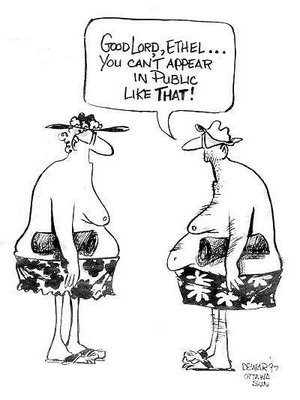
When a Christian says that all other religions are false, he is deemed narrow minded.
When an atheist says that all religions are false, she is deemed open minded.
When a Christian says that all other religions are false, he is deemed narrow minded.
When an atheist says that all religions are false, she is deemed open minded.
 He is not one to pull punches and true to form, in To a Louse, Ed Feser holds a mirror up to the kind of reasoning that is all too common amongst Dawkins and Myers fans with this fictional dialogue between a scientist and a science sceptic;
Skeptic: Science is BS. Physicists believe in these things called “quarks,” which are little flavored particles that spin around and work like magic charms. Their evidence is that they read about them in a James Joyce novel. Some of them think the universe is made up of tiny shoelaces tied together, though they admit that they have no evidence for this and have to take it on faith. Einstein said morality is all relative – which is why he stole his ideas from this guy who worked in a patent office, and why Richard Feynman stole atomic secrets during WWII. Meanwhile, the chemists contradict the physicists and believe instead in little colored balls held together by sticks. Biologists believe monkeys can give birth to human beings. What a bunch of crap! It’s child abuse to teach kids about this stuff in schools.
Scientist: Are you joking? If not, I suggest that you actually read some science before criticizing it.
Skeptic: I’ve already read a lot about it, in blog comboxes like this one. And why should I waste my time reading anything else? I already know it’s all BS! Didn’t you hear the examples I just gave?
Scientist: No, you’re missing my point. You’ve completely distorted what scientists actually say. It’s not remotely as silly as you think it is. In fact it’s not silly at all. But you need to actually read the stuff to see that.
Skeptic: So you deny that physicists believe in quarks? What flavor are your quarks, chocolate or vanilla? Do you deny that they think we came from monkeys? Which monkey was your mother?
Scientist: No one says that monkeys gave birth to humans. That’s a ridiculous caricature. And of course I don’t deny that physicists believe in quarks, but you’re badly misunderstanding what they mean when they attribute “flavor” to them. They don’t mean that literally…
Skeptic: Oh so it’s just empty verbiage, then. See, you’re just proving my point for me.
Scientist: No, it’s not empty verbiage. It’s technical terminology.
Skeptic: I see, like magic spells. That’s why (more…)
To formulate a statement that reduces a universal domain that includes myself and my thoughts or statements, to one or more factors that affect truth-value domain-wide, I must nevertheless transcend that universal domain so that I can make that factor-exempt statement itself, as well as any factor-exempt arguments that I might want to offer for that statement.
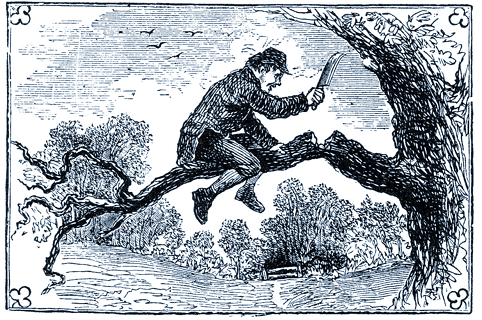 Otherwise, precisely because everything including the reduction itself is by that reduction’s own assertion subject to the effects of those truth-limiting or truth-changing factors, that reduction cannot be true merely in and of itself as a statement within the predicated domain that nevertheless makes a general statement about it.
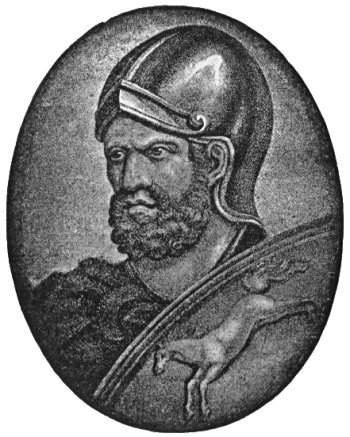 Historian James Hannam has written an entertaining article called “Satirising the Christ Myth.” The piece uses similar methods employed by those seeking to make the case for the claim that Jesus never existed to show that Hannibal of Carthage did not exist either. It is written in Hannam’s classicly witty yet accurate style;
Did Hannibal Really Exist?
To ask whether or not the great Carthaginian general Hannibal ever actually existed might seem rather pointless. It might be an exercise for a student learning about the nature of historical evidence, but not something any serious scholar would waste time on. But maybe we should not be too hasty in acquiescing with the opinion of establishment historians (in other words, there’s a plot by academics stifling debate).
In fact, although there is plenty of writing about Hannibal, none of it is contemporary and there is no archaeological evidence for him at all (not surprising given the Romans razed the city from whence he came). Furthermore he is not mentioned in any Carthaginian sources, which is incredible, given he was supposed to be their greatest leader (there are no Carthaginian sources as the Romans burnt their city down)! We find when we actually try to pin him down he tends to recede further into the mists of time. His exploits, such as leading elephants over the Alps, are clearly legendary (the skeptic pretends to be incredulous but seems happy to buy his own amazing theory) and it is not hard to find a motive for the creation of this colorful character by Roman writers (as long we can invent a motive for fabrication we can assume that fabrication exists).
Rome and Carthage were great trading rivals in the Western Mediterranean and it did not take them long to come to blows. Rome signed a peace treaty but, under the leadership of the elder Cato, desperately wanted to rid itself permanently of the competition (this is actually true and so helps to conceal the moment when we slip into fantasy). The Romans needed an excuse and the idea they developed was brilliant. Like many ancient civilizations, the Romans rewrote history as it suited them to exhibit their own prowess (a useful and exaggerated generalization). Consequently we should not be surprised to find that they invented a great enemy from Carthage to demonstrate the threat still existed and justify a further war to wipe them out.
The author of the fiction was Cato himself (we need someone to point the finger at; note also how there is no distinction made between the background material above and theorizing here), as Cato wrote the earliest Roman History (true as well, as it happens). But it was intended simply as a justification for a further war with Carthage. It contained the details of Hannibal’s alleged campaigns against the Romans, including his victories on Italian soil (Cato’s history has conveniently not survived so we can speculate freely about what it contained). Cato brilliantly combined the truth with his own anti-Carthaginian propaganda with the intention of goading Rome into another wholly unjustified war with the old enemy (give the fabricator lots of credit for his invention). Once the war was over and Carthage was razed to the ground, the Romans were able to ensure that only their version of history survived (this is important as it enables all other sources to be declared forgeries).
Therefore the myth of the great Carthaginian war leader became an accepted fact. Later Roman historians like the notoriously unreliable Livy (we have to denigrate counter sources) simply assumed Cato’s fabrications were true (because the ancients were stupid and simply could not do any research themselves).
The earlier parts set out in “The Christ Myth won’t die“ are also worth reading.
RELATED POSTS:
Guest Post: James Hannam on Dan Brown’s History of Science
The “Dark Ages” and Other Propaganda
More on the “Dark Ages” and Other Propaganda
A lot of people are up in arms at the moment about a paragraph in William Lane Craig’s answer to Question 193 “Overweening Ignorance.” Facebook, blogs, twitter and message boards are abuzz with Christians angrily attacking Craig with the charge that this paragraph shows he either does not hold to the doctrine of original sin or that he thinks it is not essential to Christianity. Here is what some are saying about the offending paragraph:
“Craig denies that original sin is essential to the Christian faith.” Steve Hays
In “Bible-optional Christianity” Hays sets out the offending sentences from the offending paragraph then puts them alongside Romans 5:12 and Corinthians 15:21-22, 45-49 (passages which speak of man’s sinful nature and the need for Christ’s salvation). The conclusion we are supposed to draw is that Craig is denying the truth of these passages and views these as “optional.”
In “Hollywood Squares” Hays draws a ejusdem generis parallel between Craig’s paragraph and the writings of liberal scholars like Spong, Bultmann and The Archbishop of Canterbury.
In the comments section of his third post on the paragraph “Rabbit Ears“, where he accuses Craig of making “a V-sign behind God’s head when God is speaking (the rabbit-ear gesture),” Hays writes:
“Craig doesn’t seem to care what the Bible teaches about original sin. He simply absolves his correspondent of responsibility to believe what the Bible teaches on this subject, regardless.”
On Facebook Dominic Bnonn Tennant wrote:
“This is why, contrary to the objections of some, William Lane Craig not the world’s foremost apologist. The first duty of apologetics is to the truth. Not to unbelieving presuppositions. You can’t have good apologetics without good theology.”
On Hays’ blog Bnonn Tennant wrote:
“As I think someone has said already, the problem with Craig is that he starts with philosophy and only then worries about theology. That’s ass-backwards.”
James R White of Alpha & Omega Ministries Apologetics Blog wrote:
“this is not the first time WLC has made this statement. I have said repeatedly that WLC’s theology is way too hobbled to support biblical Christian theism, which is why he has to produce a much smaller theism to defend. And this is one of the manifestations of starting with philosophy and then crafting a theology to match your philosophical opinions.”
Jonathan wrote:
“Some apologists are eager to get people into the “Kingdom” anyway they can.”
Saint and Sinner wrote:
“I am so sick of minimalist Christianity”
Peter Pike wrote:
“Without Original Sin, there is no basis by which Christ’s blood can be applied to any sinner whatsoever. Craig should know this. He has a responsibility to teach this. I don’t care if ignorant, non-biblical “Christians” don’t hold to it–Craig is held to a higher standard, and his outright ignoring of this doctrine instead of teaching it in a way that someone can understand it simply neuters Christianity.
You don’t defend Christianity by surrendering”

Apparently, Craig is not only affirming heresy but is a compromiser who is not committed to the truth, who denies that the existence of universal sinfulness and that the need for salvation is an essential Christian belief.
This own goal demonstrates not just an alarming inability for many Christians to read in context but also some overweening ignorance about theology (not to mention an alarming lack of charity for the man who is internationally renowned and respected for publicly defending the faith by lay people and the academy alike.)
Let us take a look at the offending paragraph (more…)
 Zeitgeist – The Movie is an internet phenomenon that has taken a lot of people in. I know several people who have seen it and have either been convinced by it or it has heavily rocked them. We’ve had commenters on this blog raising issues and asking questions which clearly have their roots in Zeitgeist. There is a global movement complete with a New Zealand chapter.
For me the claims in Zeitgeist are patently absurd, funny almost and I totally got what Glenn Peoples was on about when he said on Facebook “I swear, watching Zeitgeist is draining my IQ” but it is important to not dismiss the opportunity to take such a clearly influential phenomenon apart, examine the claims it makes and clearly demonstrate the flaws in it so that those who are rocked by it have a good resource to get their feet back on solid ground with. It also won’t hurt those of us immune to Zeitgeist’s charms to take the time to see how best to respond to it for the next time we encounter someone who has been swayed by its content.
For these reasons when Glenn asked for suggestions for his next podcast topic I suggested an analysis of Zeitgeist and for much the same reasons he leaped on it. Glenn has a PhD in Philosophy and a Masters and Bachelors in Theology. He is also a very lucid and clear thinker who makes the best podcasts which often have cool sound effects and original music. So grab a cuppa and sit back and listen to his podcast Episode 038: Zeitgeist (you’ll need a spare 55 minutes).
One of the accompanying links Glenn has with his podcast is a must-view. It is written by a non-Christian and it thoroughly examines the astrological claims made by Zeitgeist complete with astrological charts and diagrams. The author states:
“I prefer honesty in polemics. Some of the astronomical and astrological claims of Zeitgeist are simply wrong, and lead to a wrong impression of the origins of Jesus’ birth narrative. I hope to demonstrate scientifically why they’re wrong”.
The link to this is here: Zeitgeist Astronomy.
 I once caught 5 minutes of Oprah discussing religion. She made the comment, in a very sage-sounding tone, that she believed all religions are true. The audience immediately interrupted her with resounding applause; camera shots caught audience members nodding in approval, clearly impressed with the wisdom of the claim just made.
This commonly heard platitude may sound clever, wise and sensible but let’s unpack it:
Therefore:
[The same line of argument works with any religion which rejects the first premise.]