Entries Tagged as 'Philosophy of Religion'
www.youtube.com/watch?v=6iVyVJAMiOY.
Recently, Erik Wielenberg has developed a novel objection to divine command meta-ethics (DCM). DCM “has the implausible implication that psychopaths have no moral obligations and hence their evil acts, no matter how evil, are morally permissible” (Wielenberg (2008), 1). Wielenberg develops this argument in response to some criticisms of his earlier work. One of the […]
Tags: C Stephen Evans · Divine Command Theory · Erik Wielenberg · God and Morality · Psychopathy · Robert Adams · William Lane Craig
This is one of a series of posts based on a class I teach for level 3 NCEA Religious Studies. In the last few posts we saw that most of the Christian religious tradition sketched the following argument against feticide; Premise [1] Killing a human being without justification violates the law of God. Premise [2] […]
Tags: Abortion · David Oderberg · Feticide · Michael Tooley · Peter Singer · Susan Sherwin · Viability
The book The Naturalness of Belief: New Essays on Theism’s Rationality recently arrived from the publishers and is available on Amazon. Matt contributed a chapter to this book entitled “Divine Commands and the Euthyphro Dilemma: Some Naturalistic Misperceptions” The Naturalness of Belief is edited by Paul Copan (Palm Beach Atlantic) and Charles Taliaferro (St Olaf […]
Tags: Books · Divine Command Theory · Euthyphro Dilemma · Naturalism · Publications · The Naturalness of Belief
Some readers of MandM will know that for the last three years I have taught Theology and Philosophy at a Catholic high-school. I teach five to six classes a day, year 9 to year 13 subjects such introduction to scripture, church history, NCEA religious studies, Cambridge world religions and Divinity. My goal has always been […]
Tags: Abortion · Judaism · Philo
Most versions of Divine command meta-ethics (DCM) contend that the property of being morally required is informatively identical with the property of being commanded by God.[1] A common objection to divine command meta-ethics is the horrendous deeds objection. We can formalise this objection as follows: [P1] If DCM is true, then if God commands unjust […]
Tags: Brad Hooker · Divine Command Theory · God and Morality · Philip Quinn
In Best Argument Against God (BAAG) Graham Oppy sketches a sophisticated argument for atheism. Oppy’s conclusion is the result of applying a particular method to the question of God’s existence. He contends that question of Gods existence should not be determined by examining the arguments for and against the existence of God. Instead philosophy of […]
Tags:
A common objection to divine command theories of ethics (DCT) is that they make morality arbitrary. There are several ways this objection can be cashed out. The most common is what is called the ‘Horrendous deeds objection’. The Horrendous deeds objection can be formalised as follows: (1) If the DCT is true, then if God commanded […]
Tags: Divine Command Theory · God and Morality · Jason Thibodeau


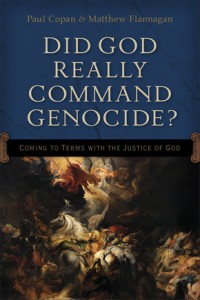 A common objection to belief in the God of the Bible is that a good, kind, and loving deity would never command the wholesale slaughter of nations. In the tradition of his popular Is God a Moral Monster?, Paul Copan teams up with Matthew Flannagan to tackle some of the most confusing and uncomfortable passages of Scripture. Together they help the Christian and nonbeliever alike understand the biblical, theological, philosophical, and ethical implications of Old Testament warfare passages.

IS A FETUS A HUMAN BEING? Part one: Viability
June 7th, 2019 1 Comment
This is one of a series of posts based on a class I teach for level 3 NCEA Religious Studies. In the last few posts we saw that most of the Christian religious tradition sketched the following argument against feticide; Premise [1] Killing a human being without justification violates the law of God. Premise [2] […]
Tags: Abortion · David Oderberg · Feticide · Michael Tooley · Peter Singer · Susan Sherwin · Viability