In Best Argument Against God (BAAG) Graham Oppy sketches a sophisticated argument for atheism. Oppy’s conclusion is the result of applying a particular method to the question of God’s existence. He contends that question of Gods existence should not be determined by examining the arguments for and against the existence of God. Instead philosophy of […]
Entries Tagged as 'Philosophers'
Is Naturalism simpler than Theism? Some reflections on Graham Oppy’s “Best argument against God”
October 30th, 2018 2 Comments
Tags:
Matthew Flannagan (MandM) and Jason Thibodeau (Secular Outpost) Debate God and Morality
September 24th, 2018 4 Comments
Yesterday, I had a long and enjoyable public discussion with Jason Thibodeau on the topic of The Euthyphro dilemma. Jason is a writer for the Secular Outpost and teaches philosophy at Cypress college in California. He also is the author of a recent article entitled “God’s Love is Irrelevant to the Euthyphro Problem” published in Sophia […]
Tags: Divine Command Theory · Euthyphro Dilemma · Jason Thibodeau
Contemporary Philosophy of Religion and NCEA Religious Studies: Part Four
October 23rd, 2017 Comments Off on Contemporary Philosophy of Religion and NCEA Religious Studies: Part Four
This is a talk I gave to the New Zealand Association of Philosophy Teachers annual conference at St Cutherberts College in September this year. Several people have asked me to make this talk available. I have broken my talk up into four parts. Part One introduces what philosophy of religion. In part two I will outline two […]
Tags: Graham Oppy · John Mackie · NCEA
Contemporary Philosophy of Religion and NCEA Religious Studies: Part three
October 21st, 2017 Comments Off on Contemporary Philosophy of Religion and NCEA Religious Studies: Part three
This is a talk I gave to the New Zealand Association of Philosophy Teachers annual conference at St Cutherberts College in September this year. Several people have asked me to make this talk available. I have broken my talk up into four parts. Part One introduces what philosophy of religion. In part two I will outline two […]
Tags: Alvin Plantinga · Evidentialism · Kai Neilsen · Marilyn Adams · Phillip Quinn · Reformed Epistemology · Verificationism
Erik Wielenberg and the Autonomy thesis: part four Intrinsic goodness
March 31st, 2017 23 Comments
In my last two posts, I argued that Erik Wielenberg fails to show that Godless Normative Robust Realism (GRNR) avoids some of the standard objections to the autonomy thesis. This brings me to Wielenberg’s third claim III, Wielenberg suggests that GRNR is prima facie preferable to various theistic accounts of axiological properties. Several authors have […]
Tags: Erik Wielenberg · God and Morality · Intrinsic Value · Linda Zagzebski · Mark Murphy · Moral Realism · Robert Adams · supervenience · Thomas Carson
Erik Wielenberg and the Autonomy Thesis: part one Wielenberg’s criticism of Divine command meta-ethics
March 11th, 2017 2 Comments
The autonomy thesis contends that there can be moral requirements to φ regardless of whether God commands, desires, or wills that people φ. In his monograph, Robust Ethics: The Metaphysics and Epistemology of Godless Normative Realism,[1] Erik Wielenberg offers arguably one of the most sophisticated defences of the autonomy thesis to date. Wielenberg argues that: […]
Tags: Divine Command Theory · Erik Wielenberg · God and Morality · Wes Morriston
Matt Elected to the Executive Board of the Evangelical Philosophical Society
November 15th, 2015 Comments Off on Matt Elected to the Executive Board of the Evangelical Philosophical Society
Congratulations to this blog’s Matthew Flannagan who was just elected to the executive board of the Evangelical Philosophical Society. Congratulations also to Frank Beckwith, Paul Franks who were also just elected to the board. Matt, Frank and Paul will join the existing board, who can be seen at the above link. Their first meetings are in Atlanta […]

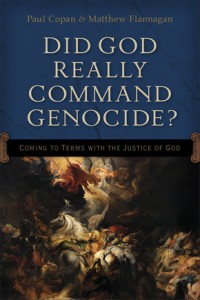 A common objection to belief in the God of the Bible is that a good, kind, and loving deity would never command the wholesale slaughter of nations. In the tradition of his popular Is God a Moral Monster?, Paul Copan teams up with Matthew Flannagan to tackle some of the most confusing and uncomfortable passages of Scripture. Together they help the Christian and nonbeliever alike understand the biblical, theological, philosophical, and ethical implications of Old Testament warfare passages.