Category: Philosophers

  • Divine Command Theory and the Euthyphro Dilemma: Part III

    This is a talk I gave to the Philosophy Club at Glendale Community College in Phoenix, Arizona, this weekend. The talk was followed by a long discussion with some faculty, students at the college, and others who zoomed in.

    In this talk, I introduced and defended a divine command theory of ethics. I divided the talk into three parts. In section I, I set out what modern divine command theories of ethics typically contend. I distinguished this from some common misunderstandings in section II. In Section III, I discussed the Euthyphro dilemma. I will suggest this objection is not the conclusive rebuttal it is often assumed to be. In my first post, I reproduced sections I and II. My second post began my discussion of the Euthyphro objection in section III. This post continues that discussion. 

    In my last post, I argued that a divine command theory does not entail the content of morality is arbitrary, in the sense that anything at all could be right or wrong. It entails that an action can only be permissible, only in situations where it is possible for a fully informed, rational, loving and just person to command it knowingly. Far from being absurd, this implication is entirely plausible. 

    Some have objected that divine command theory makes morality arbitrary in a different sense. It means there is no reason why one action is right or wrong rather than another. Russ Shafer-Landau presses the following dilemma: “Either there are, or there are not, excellent reasons that support God’s prohibitions. If there are no such reasons, then God’s choice is arbitrary, i.e. insufficiently well supported by reason and argument.” [1] Alternatively:

    If God is, in fact, issuing commands based on excellent reasons, then it is those excellent reasons and not the fact of God’s having commanded various actions, that make those actions right. The excellent reasons that support the requirements of charity and kindness are what make it right to be charitable and kind.[2]

    We can summarise this argument as follows, take a paradigmatically immoral action such as rape.

    (P1) Either (a) God has a reason for prohibiting rape, or (b) God has no reason for prohibiting rape. 

    (P2) If God has no reason for prohibiting rape, then God’s commands are arbitrary. 

    (P3) If God has a reason for prohibiting rape, then that reason is what makes rape morally wrong. 

    (P4) If something distinct from God’s commands is what makes rape morally wrong, then the divine command theory is false.  

    (C1) Either morality is arbitrary, or the divine command theory is false 

    This argument is based on a subtle equivocation. (P3) and (P4) refer to what “makes” something morally right. But the word “makes” is ambiguous. 

    In this context, Stephen Sullivan has argued that the word “make” can be used in two different senses.[3] The first sense refers to what Sullivan calls a constitutive explanation: On a hot February day, I pour a glass of water to drink it and quench my thirst. There is a legitimate sense in which I can say that what makes me pour a glass of water is the fact that I am pouring a glass of H20. When I speak like this, I use the word “makes” to refer to a relationship of identity. I am explaining one thing (the pouring of the water) but citing the existence of another thing that I take to be identical with it.

    The second sense involves what Sullivan calls a motivational explanation, such as when I state that what makes me pour a glass of water is the fact that I am thirsty. Motivational explanations do not explain an action by referring to something taken to be identical with it. Instead, they attempt to tell us why an agent acted the way they did by giving us the reasons and motivations the agent acted upon. 

    Let’s assume that Landau is using the word “makes” in the “motivational” sense. The inference is:

    (P1) Either (a) God has reasons for prohibiting rape, or (b) God doesn’t have reasons for prohibiting rape. 

    (P2) If God doesn’t have reasons for prohibiting rape, then God’s commands are arbitrary. 

    (P3)’ If God has reasons for prohibiting rape, then those reasons motivationally explain why rape is morally wrong.  

    (P4)’ If something distinct from God’s commands motivationally explain why rape is morally wrong, then a divine command theory is false.  

    (C1) Either morality is arbitrary, or the divine command theory is false. 

    On this interpretation of the argument (P3)’ is plausible. Suppose God has reasons for issuing the commands he does, and the property of being wrong is identical with the property of being contrary to God’s commands. In that case, these reasons do provide a motivational explanation as to why rape is wrong. However, (P4′) is false. The fact that God’s prohibition does not motivationally explain the wrongness of rape is wrong does not entail that the prohibition is not identical to the moral wrongness of rape. Divine command theories contend that wrongness is identical with the property of being contrary to God’s commands. So it only in the constitutive sense of the word “makes” that they deny anything other than God’s commands “make” actions wrong. 

    Consequently, For Shafer-Landau’s argument to have a bite, he must use the word “makes” to refer to a constitutional explanation. So interpreted, the argument is:

    (P1) Either: (a) God has reasons for prohibiting rape, or (b) God doesn’t have reasons for prohibiting rape. 

    (P2) If God doesn’t have reasons for prohibiting rape, then God’s commands are arbitrary. 

    (P3)” If God has reasons for prohibiting rape, then those reasons are identical with the property of moral wrongness.   

    (P4)” If something distinct from God’s commands is identical with the property of moral wrongness, then a divine command theory is false.  

    (C1) Either morality is arbitrary, or the divine command theory is false. 

    On this interpretation (P4)” is plausible, if something distinct from God’s prohibition is identical with wrongness. God’s prohibition cannot be identical with wrongness.

    However, now (P3)” turns out to be implausible. Why should the fact that God has reasons for issuing a command mean that those reasons are identical with the property of being morally wrong? The Landau seems to assume the following inference: If A is identical to B, and someone has reasons r for bringing about B, then A is identical with r.  However, this inference is invalid. An analogy will show this; A Batchelor is identical to an unmarried man, John has reasons for being unmarried, he dislikes women. Does it follow that the property of being a Bachelor is identical with the property of disliking women?[4]

    Landau’s argument, therefore, is unsound. Graham Oppy proposes a more direct argument for the conclusion that a divine command theory makes morality arbitrary:

    Could it have been, for example, that murder, rape, lying, stealing and cheating were good because God proclaimed them so? Surely not! But what could explain God’s inability to bring it about, that murder, rape, lying, stealing and cheating are good by proclaiming them so, other than its being the case that murder, rape, lying, stealing and cheating are wrong quite apart from any proclamations that God might make?[5]

    However, this is implausible. Suppose God has character traits such as being essentially loving and just. In that case, God can and would have reasons for prohibiting actions like rape, murder, or cheating, quite apart from whether these actions are antecedently wrong. Antecedent to any command on God’s part, these actions won’t have the property of being morally prohibited. But they could still have other properties such as being cruel or harmful or unjust or detrimental to human happiness— or being expressions of hatred, for example. And a loving and just God could prohibit these actions because these actions have these non-moral properties.

    Consequently, divine command theories do not entail that morality is arbitrary. If anything, the opposite is the case. A divine command theory entails that actions will be wrong in virtue of certain non-moral properties those actions have. Non-moral properties that would provide an informed, loving and just person with reasons for prohibiting those actions.


    [1] Russ Shafer-Landau, “Introduction to Part IV,” in Ethical Theory: An Anthology, ed. Russ Shafer-Landau (Malden MA: Blackwell Publishing, 2007), 237.

    [2]Ibid., 238.

    [3] Stephen Sullivan, “Arbitrariness, Divine Commands, and Morality,” International Journal of Philosophy of Religion 33:1 (1993): 33-45.

    [4] These points are made cogently by Stephen Sullivan, “Arbitrariness, Divine Commands, and Morality,” 37-39. See also Matthew Flannagan’s, “Is Ethical Naturalism More Plausible than Supernaturalism: A Reply to Walter Sinnott-Armstrong,” Philo 15:1 (2012): 19-37.

    [5]  Graham. Oppy, Best Argument against God (Hampshire: Palgrave Pivot, 2014), 44.

  • Divine Command Theory and the Euthyphro Dilemma: Part II

    This is a talk I gave to the Philosophy Club at Glendale Community College in Phoenix, Arizona, this weekend. The talk was followed by a long discussion with some faculty, students at the college, and others who zoomed in.

     In this talk, I introduced and defended a divine command theory of ethics. The talk was divided into three parts. In section I, I set out what modern divine command theories of ethics typically contend. I distinguished this from some common misunderstandings in section II. In Section III, I discussed the Euthyphro dilemma. I will suggest this objection is not the conclusive rebuttal it is often assumed to be. In my first post, I reproduced sections I and II. This post will begin my discussion of the Euthyphro objection in section III. 

    In my last post, I argued that semantic and epistemic objections to a divine command theory fail. However, the most famous and important objection to divine command theories is an argument known as “The Euthyphro Objection”. After a dialogue written by the ancient Greek philosopher Plato in the 4th century BC. Plato’s original argument is somewhat obscure and applied only to polytheistic religions (those religions that believe in many gods). However, the version used by philosophers today is an adaptation of Plato’s argument for use against monotheistic faiths. Critics of divine command theories appeal to three arguments that are loosely associated with Plato’s dialogue. These are (1) the anything goes objection, (2) the arbitrariness objection, and (3) the vacuity objection. I will take each in turn.

    The Anything Goes Objection

    One objection is that a divine command theory makes morality arbitrary in the sense that anything at all could be right or wrong. King and Garcia explain the alleged problem in this way:

    [Divine command theory] implies that it is possible for any kind of action, such as rape, not to be wrong. But it seems intuitively impossible for rape not to be wrong. So [Divine command theory] is at odds with our common-sense intuitions about rape.[1]

    We can formalise the objection as follows:

    (P1) If the divine command theory is true, then whatever God commands is morally required.

    (P2) God could command rape.

    (C1) So, if the divine command theory is true, rape could be morally obligatory.

    (P3) But rape could not be morally obligatory.

    (C2) Therefore, the divine command theory is false.

    In response, divine command theorists have contested (P2) Divine command theorists do not contend that moral requirements are dependent upon the commands of just anyone. They base moral obligations on the commands of God conceived in a particular way. God is an all-powerful, all-knowing, essentially loving, just, immaterial person who created the universe on their conception. Once we realize this, the horrendous deeds objection appears to be unsound.

    We can put this in terms of a dilemma: consider (P2): (P2) only holds if it is possible for a fully informed, rational, loving and just person to knowingly command rape. However, this is unlikely. Critics cite examples of rape because they view it as an action that no virtuous person could ever knowingly entertain. So (P2) appears to be false. However, suppose; I am mistaken about this. It is possible for an essentially loving and just person to command rape. Rape, then, would only be commanded in situations where a just and loving person aware of all the relevant facts could endorse it. Under these circumstances, it is hard to see how (P3) could be maintained.

    Once we realize that God, as conceived by the divine command theorist, is essentially loving and just, it is difficult, if not impossible, to see how both (P2) and (P3) can be true. Whatever reasons we have for thinking (P2) is true seem to undermine (P3). By contrast, whatever reasons we have for accepting (P3) undermine (P2).


    [1]Nathan L King, “Introduction”, in Is Goodness without God Good Enough: A Debate on Faith, Secularism and Ethics, eds. Robert K Garcia and Nathan L King (Lanham: Rowan & Littlefield Publishers, 2008), 11.


  • What is the Question?: Henry Sidgwick’s Dualism of Practical Reason

    In a previous post, I criticised Richard Dawkins’s discussion of the question: if there is no God, why be good? One criticism I raised was that Dawkins seemed to misunderstand the challenge this rhetorical question presents.  This raises the question as to how we should understand this rhetorical question. What exactly is the problem being alluded to when people ask, “if there is no God, why be good.”? I have been thinking a bit about this of late. In this post, I will begin an attempt to do this by looking at someone who developed an influential version of the problem, Henry Sidgwick.

    Who was Henry Sidgwick?

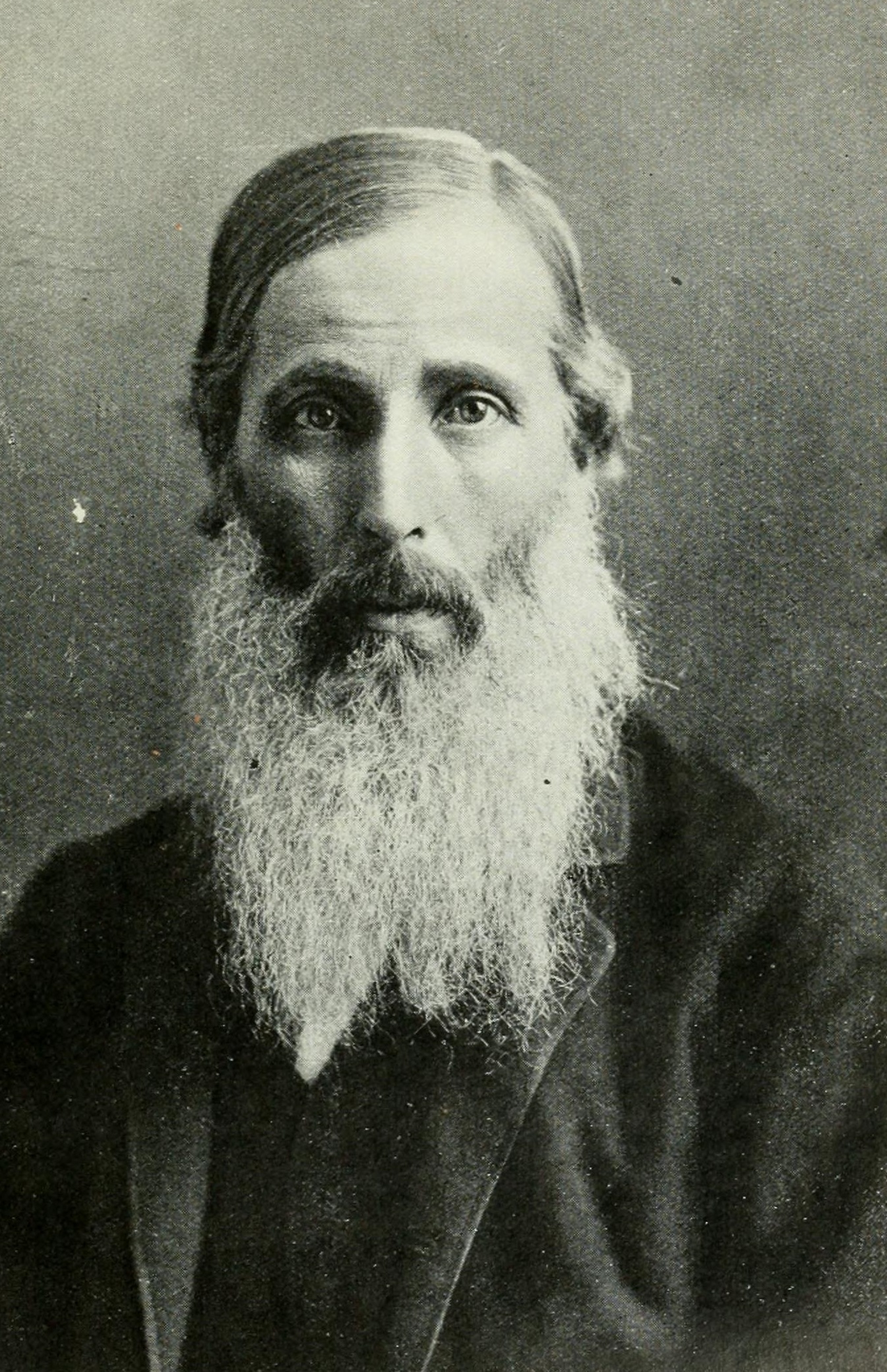
    Henry Sidgwick was a moral philosopher based at Cambridge University in the late nineteenth century. Outside of the world of Moral Philosophy, Henry Sidgwick is probably not a household name. However, within the world of moral philosophy, Sidgwick’s book “The Method of Ethics” (ME) is widely considered a classic of Moral Philosophy. Sidgwick represents the high point of the classical Utilitarian moral tradition tracing back to John Stuart Mill and Jeremy Bentham. His work has widely influenced leading utilitarian philosophers such as Roger Crisp, Peter Singer and Derek Parfit. 

    Interestingly, Sidgwick ended the book with a degree of pessimism about whether a coherent secular utilitarian moral theory was possible.  Sidgwick’s believed that secular versions of utilitarianism could not coherently answer the most fundamental question of ethics: why should I always do my duty? By contrast, Sidgwick thought Theism could coherently answer this question.

    Sidgwick spells out the reasons he came to this conclusion in the final chapter of ME. As I interpret him, his argument contains three steps. 

    • First, he argued that unless we assume there is “harmony” between “rational benevolence” and “prudence”, morality cannot be entirely rational. Instead,  and our “fundamental intuitions” about morality will be “incoherent”. 
    • Second, he argues that secular accounts of sanctions and moral and accountability would, if true, undermine this assumption. They imply that “rational benevolence” and “prudence” are not in harmony. 
    • By contrast, a divine command theory, would if true, vindicate this assumption and provide a coherent account of our fundamental intuitions. 

    The conclusion is those divine command theories can coherently answer the question: “why should I always do my duty?” whereas secular ethical theories cannot.  Because Sidgwick was both an agnostic and a utilitarian, this conclusion caused him considerable anxiety. He wrestled with it for much of his academic life.

    Why do we need to assume harmony between benevolence and Prudence?

    Let’s begin by looking at the first step in Sidgwick’s argument. Sidgwick begins the final chapter by (ME) arguing: “If morality is to be made completely rational, the harmony between the maxim of prudence and the maxim of rational benevolence must be somehow demonstrated.”[1]

    Let me clarify the terminology here:

    First, Sidgwick uses the term “rational benevolence”. In earlier chapters, Sidgwick had argued that analysis and systematisation of our common-sense moral beliefs suggest that moral requirements are requirements justified from a certain point of view. A point of view of impartial benevolence. It is a point of view which the welfare or the good of everyone, which does so impartiality; not considering anyone’s interest or welfare more important than anyone else’s. Sidgwick refers to this as “the point of view of the universe” or the “maxim of rational benevolence”. Because the phrase “moral requirements that are justified from the point of view of impartial benevolence” is unwieldy. I will use the phrase “impartial demands” as shorthand for this.

    Second, Sidgwick says demonstrating the harmony between impartial demands and Prudence is necessary if morality is to be “completely rational”. What he means by “completely rational” is explicated later in the chapter. Failure to “completely” rationalise Morality” means: 

    [P]ractical reason would still impel us decisively to the performance of duty in ordinary cases where what is recognised as duty is in harmony with self-interest properly understood. But in the rarer cases where we find a conflict between self-interest and duty, practical reason, being divided against itself, would cease to be a motive on either side. The conflict would have to be decided by which of two groups of non-rational impulses had more force.[2]

    For morality to be “completely rational” means that we always have decisive reasons to do our duty. Someone has decisive reasons to act in a certain way when the reasons in favour of acting, taken together, are stronger than any set of reasons we may have to act in some other way.  

    Sidgwick’s, claim then is this: unless it is in our long term self-interest to always comply with impartial demands, we will not always have decisive reasons to do our duty. Sometimes, the strongest reasons will favour doing our duty; on other occasions, they will not. Commitment to always doing what is right will at best be rationally optional and at worst irrational.

    Why does Sidgwick think this? Sidgwick was concerned about a specific sort of practical dilemma which he thought irresolvable. Suppose it is not always in one’s long-term self-interest to act according to impartial demands. This will mean impartial demands sometimes come into conflict with prudential requirements. When they do, we face the question: What reason is there to act impartially, rather than in one’s self-interest. What reason do we have for assuming that impartial demands are always stronger or weightier than prudential requirements when the two clash?

    Sidgwick raises this question repeatedly in the preface to the sixth edition. He asks what the  “rational ground.”[3] is for “subordinating self-interest…to “altruistic” impulses and sentiments” on “what ground?” do we make the “moral choice of the general happiness” or “acquiescence in self-interest.”[4]. What reasons other than “blind habit.”[5] were there in favour is making altruistic sacrifices of one’s self-interest in this way? Sidgwick concluded that no answer is forthcoming. Envisaging someone faced with such a dilemma, Sidgwick states: 

    He might say, “I quite admit that when the painful necessity comes for another man to choose between his own happiness and the general happiness, he must as a reasonable being prefer his own, i.e. it is right for him to do this on my principle….It did not seem to me that this reasoning could be effectively confuted. No doubt it was, from the point of view of the universe, reasonable to prefer the greater good to the lesser, even though the lesser good was the private happiness of the agent. Still, it seemed to me also undeniably reasonable for the individual to prefer his own. The rationality of self-regard seemed to me as undeniable as the rationality of self-sacrifice.

    Suppose Sidgwick is correct and there is no reason for giving impartial demands precedence over prudential requirements in a conflict. If a conflict occurs, the total reasons in favour of doing what is impartially demanded will not be stronger than the reasons against so acting. We can summarise Sidgwick’s conclusion here as an inference from three premises, which he takes to be intuitively plausible: 

    [1] The strongest reasons always favour doing what is morally required.

    [2] An action is morally required if and only if it is demanded from a perspective of impartial benevolence.

    [3] If there are cases where, what is impartially demanded of a person, is an action that is contrary to their long-term self-interest, then the strongest reasons do not always favour doing the action that is demanded from a perspective of impartial benevolence. 

    Suppose [1] [2] and [3] are correct. In that case, we must either embrace the thesis that impartial demands and prudential demands never conflict or embrace a contradiction.  To see this, suppose we assume these demands do conflict:

    [3a] there are cases where an action is demanded from a perspective of impartial benevolence is contrary to one’s own long term self-interest 

    It follows from [3] that, 

    [3b] the strongest reasons do not always favour doing what is demanded from a perspective of impartial benevolence. 

    And [3b] conjoined with [2] entails that;

    [3c] The strongest reasons do not always favour doing what is morally required.

    However, [1] states.

    [1] The strongest reasons always favour doing what is morally required.

    [1] and [3] are obviously in contradiction. Sidgwick concludes that the hypothesis of “harmony of duty and self-interest “is required” to avoid a basic contradiction in one chief part of our thought”. Denying this hypothesis results in “practical reason being divided against itself” and forces us “to abandon the idea of rationalising [morality] it completely.”[6] Sidgwick referred to this problem as “the dualism of practical reason”. “‘self-love’ and ‘Conscience’ claim to rule, and neither will yield to the other.”[7]

    Why do Secular Moral Theories Undermines this assumption?

    This brings me to the second step of Sidgwick’s argument. Sidgwick argues that secular accounts of sanctions and moral and accountability would, if true, undermine this assumption. In ME., Sidgwick examines what sanctions are attached to impartial rules. Sidgwick defines a sanction as “the pleasures that come from conforming to moral rules, and the pains that come from violating them”[8]. Importantly, he initially confines himself to sanctions we might call “secular” or naturalistic. “[T]he coincidence of duty and happiness considered as something that we know about from experience and can expect to show up in our present earthly life.”[9]. Sidgwick identifies several different kinds of secular sanctions which might attach to impartial rules Legal sanctions: “penalties inflicted by the authority of the state”. Social sanctions: “the pleasures to be expected from the approval and goodwill of our fellowmen” and internal sanctions: “the pleasurable emotion, or absence of remorse that accompanies virtuous action”. Linked with internal sanctions is also “sympathy”, where the suffering of others causes us to feel pain and suffering ourselves.

     Sidgwick examines whether the existence of these types of sanctions gives us any reason to think that it is always in our self-interest to comply with impartial demands. His discussion is subtle and detailed, and space prevents me from elaborating it in detail. However, his conclusion is pessimistic.: “when we carefully analyse and estimate the consequences of virtue to the virtuous agent, it appears improbable that this alignment is complete and universal.”[10] He concludes. “the more carefully we examine how the different sanctions—legal, social, and conscientious—operate in the actual conditions of human life, the harder it is to believe that they can always produce this coincidence ·of happiness with social virtue.”[11]. 

    If the only sanctions annexed to impartial rules are secular sanctions, the assumption that it is always in our interests to act according to impartial demands is probably false. 

    Why Divine command theories vindicate this assumption.

    Sidgwick next turns to what he calls religious sanctions.

    This [the failure of secular sanctions] has led other utilitarian writers to prefer to throw the weight of duty on the religious sanction;. From this point of view, the utilitarian code is conceived as the law of God, who is to be regarded as having commanded men to promote general happiness, and announced that he will reward those who obey his commands and punish those who don’t. It’s clear that if we feel convinced that an omnipotent being has somehow signified such commands and announcements, a rational egoist can’t need any further inducement to shape his life on utilitarian principles.[12]

    The other utilitarians” Sidgwick is referring to here are advocates of the theological utilitarianism that was proposed by writers, such as Paley, Berkeley, John Gay, John Brown, John Austin. Theological Utilitarian’s had combined normative rule utilitarianism with a divine command theory of meta-ethics.[13]  These writers had argued that moral requirements are divine commands.  And this assumption enables them to coherently affirm [1] and [2] and [3] without contradiction.

    Because God is both benevolent and impartial, omniscient and rational, he issues those commands that are justified from a perspective of impartial benevolence in light of all relevant facts.  Hence, a divine command theory, if true, entails the truth of [2].

    Similarly, because commands were understood as prescriptions or rules, which God holds people accountable, one always had decisive reasons to comply with impartial demands. So, it is always in one’s long-term self-interest to act in accord with impartial demands. 

    Consequently, If moral requirements are divine commands, then the assumption of harmony between impartial demands and prudential requirements is vindicated.  Note the issue here is not just that the coincidence is consistent with divine command meta-ethics. The claim is that would if true, entail or predict this coincidence.

    Sidgwick then argues three things; (a) unless we assume that it is in our long-term self-interest always to follow impartial demands, we don’t have decisive reasons to do what is right;  (b) Secular accounts of morality, if true, undermine this assumption, and; (c) divine command theories, if true, vindicate it. 

    Of course, I have not in a short post defended these claims. Advocates of secular forms of utilitarianism will contest each of these steps. But the point is there is a serious line of thought here that needs to be addressed. Just as a divine command theorist cannot just assert that God provides the best account of morality and has to address sceptical challenges to their position, such as the Euthyphro dilemma. Opponents of religious morality have to address concerns raised by Sidgwick’s dualism of practical reason. It is not enough to caricature it as the crude claim that “the only motive I have to be good is fear” and dismissing this claim as obviously ridiculous.


    [1] Henry Sidgwick, The Method of Ethics, 242 available at https://www.earlymoderntexts.com/assets/pdfs/sidgwick1874.pdf accessed 20/3/21

    [2] Ibid 284

    [3] Preface to the Sixth Edition” Methods of Ethics, Henry Sidgwick available at https://www.laits.utexas.edu/poltheory/sidgwick/me/me.preface.s06.html accessed 20/30/21

    [4] Ibid

    [5] Ibid

    [6] Henry Sidgwick, The Method of Ethics, 248 available at https://www.earlymoderntexts.com/assets/pdfs/sidgwick1874.pdf accessed 20/3/21.

    [7] This quote is from Barton Schultz “Henry Sidgwick” in the Stanford Encyclopaedia of Philosophy, https://plato.stanford.edu/entries/sidgwick/ accessed 26/3/21.

    [8] Ibid 76

    [9] Ibid, 75

    [10] Ibid, 82

    [11] Ibid 243

    [12] Ibid 246

    [13] See my posts  http://www.mandm.org.nz/2018/01/divine-command-theory-and-utilitarianism-forgotten-bedfellows-paleys-principles-of-moral-and-political-philosophy-part-one.html and http://www.mandm.org.nz/2018/01/divine-command-theory-and-utilitarianism-forgotten-bedfellows-paleys-principles-of-moral-and-political-philosophy-part-two.html accessed 26/3/21

  • The Psychopath Objection to Divine Command Theory: Presentation

    Last year, I presented a talk entitled “The Psychopath Objection to Divine Command Theory: Another Reply to Erik Wielenberg” to the New Zealand Association of Philosophers conference in Auckland. This was a follow up to interaction I have had with the work of Erik Wielenberg.

    In 2017 I wrote a critical response to Wielenberg’s book Robust Ethics: The Metaphysics and Epistemology of Godless Normative Realism. Some, of my criticisms, were discussed in the dialogue between William Lane Craig and Erik Wielenberg at  North Carolina State University in 2018 which was subsequently published by Routledge . Wielenberg has since responded to these criticisms. The talk at the NZAP was my thoughts on his latest paper.

    Over 2020, I have revised the substance of this talk substantially, and a version of the paper will be published in The European Journal for Philosophy of Religion next year. In November has the opportunity to present the revised paper at the annual meeting of the Evangelical Philosophical Society, which was held online in November. Below is a video of that paper.

    Abstract: Recently, Erik Wielenberg has developed a novel objection to divine command metaethics (DCM). The objection is that DCM “has the implausible implication that psychopaths have no moral obligations and hence their evil acts, no matter how evil, are morally permissible”. This article criticizes Wielenberg’s argument. Section 1 expounds Wielenberg’s new “psychopath argument” in the context of the recent debate over the Reasonable Nonbelievers Objection. Section 2 discusses two ambiguities in the argument: in particular, Wielenberg’s formulation is ambiguous as to whether Wielenberg uses the word “obligation” in an objective or subjective sense. Section 3 argues that this ambiguity undercuts the argument. If Wielenberg is using the word obligation in a subjective sense, his arguments do not show that psychopaths “have no moral obligations”. By contrast, if Wielenberg is using the word obligation in an objective sense, his arguments do not show that divine command theorists are committed to denying that psychopaths have obligations.

  • The Psychopath Objection to Divine Command Theory: Another Response to Erik Wielenberg (part one)

    Recently, Erik Wielenberg has developed a novel objection to divine command meta-ethics (DCM). DCM “has the implausible implication that psychopaths have no moral obligations and hence their evil acts, no matter how evil, are morally permissible” (Wielenberg (2008), 1). Wielenberg develops this argument in response to some criticisms of his earlier work. One of the critics he addresses is me. In some forthcoming posts, I will respond to Wielenberg’s arguments. In this post, I will set the scene by explaining the argument and the context in which it occurs. Subsequent posts will offer criticism of the argument

    1. Wielenberg’s New Argument from Psychopathy.

    Wielenberg calls his new argument the Psychopathy objection. The Psychopathy objection is the latest move in the contemporary debate between Wielenberg and his critics over the defensibility of divine command meta-ethics. By divine command theory, Wielenberg has in mind the divine command meta-ethics (DCM) defended by Robert Adams (1999) (1979), William Lane Craig (2009), William Alston (1990), Peter Forrest (1989) and C. Stephen Evans (2013). This version of DCM holds that the property of being morally required is identical with the property of being commanded by God.

    In previous writings, Wielenberg has pioneered the promulgation objection to divine command meta-ethics. (see Wielenberg (2005), 60–65; Morriston (2009); Wielenberg (2014), 75–80). According to this objection, a divine command theory is problematic because it cannot account for the moral obligations of reasonable unbelievers.

    In making this argument, Wielenberg takes for granted the existence of “reasonable non-believers” people whom “—have been brought up in nontheistic religious communities, and quite naturally operate in terms of the assumptions of their own traditions.” Similarly, “many western philosophers, have explicitly considered what is to be said in favor of God’s existence, but have not found it sufficiently persuasive.” Wielenberg assumes many people in these groups are “reasonable non-believers, at least in the sense that their lack of belief cannot be attributed to the violation of any epistemic duty on their part.” (Wielenberg (2018), 77)

    Wielenberg argues that if the property of being morally required is identical with the property of being commanded by God, then these people would have no moral obligations. Seeing reasonable non-believers clearly, do have moral obligations it follows that, DCM is false. 

    Why do reasonable non-believers lack moral obligations, given DCM? Wielenberg cites the following exposition of the problem from Wes Morriston:

    Even if he is aware of a “sign” that he somehow manages to interpret as a “command” not to steal, how can he [a reasonable non-believer] be subject to that command if he does not know who issued it, or that it was issued by a competent authority? To appreciate the force of this question, imagine that you have received a note saying, “Let me borrow your car. Leave it unlocked with the key in the ignition, and I will pick it up soon.” If you know that the note is from your spouse, or that it is from a friend to whom you owe a favor, you may perhaps have an obligation to obey this instruction. But if the note is unsigned, the handwriting is unfamiliar, and you have no idea who the author might be, then it is as clear as day that you have no such obligation.

    In the same way, it seems that even if our reasonable non-believer gets as far as to interpret one of Adams’ “signs” as conveying the message, “Do not steal”, he will be under no obligation to comply with this instruction unless and until he discovers the divine source of the message. (Morriston (2009), 5-6)

    I have responded to Wielenberg both in my book and in a recent article. I argued that Morriston’s argument contains a subtle equivocation. In the first line above, he expresses a disjunction. A person is not subject to a command if he does not know (a) who issued it, or (b) that it has an authoritative source. The example he cites, the case of an anonymous note to borrow one’s car, is a case where neither of these disjuncts holds. The owner of the car knows neither who the author is, nor whether its author has authority. We can illustrate this mistake, by reflecting on examples where, a person does not know who the author of the command is, but does recognize that it has an authoritative source.

    Consider two counter-examples I offered, first:

    Suppose I am walking down what I take to be a public right of way to Orewa Beach, New Zealand. I come across a locked gate with a sign that says: “private property, do not enter, trespassers will be prosecuted.” In such a situation, I recognize that the owner of the property has written the sign, though I have no idea who the owner is. Does it follow I am not subject to the command? That seems false. To be subject to the command, a person does not need to know who the author of the command is. All they need to know is that the command is authoritative over their conduct. (Flannagan (2017), 348)

    A second counter-example I provided was; 

    Suppose, for example, that an owner of one of the beachfront properties in Orewa puts up a sign that states “private property do not enter, trespassers will be prosecuted” and that John sees the sign and clearly understands what it says. He understands the sign as issuing an imperative to “not enter the property.” John recognizes this imperative is categorical and is telling him to not trespass; he also recognizes this imperative as having authority over his conduct, he also recognizes that he will be blameworthy if he does not comply with this imperative. However, because of a strange metaphysical theory, he does not believe any person issued this imperative and so it is not strictly speaking a command. He thinks it is just a brute fact that this imperative exists. Does this metaphysical idiosyncrasy mean that the command does not apply to him and that he has not heard or received the command the owner issued? That seems to be false. While John does not realize who the source of the command is, he knows enough to know that the imperative the command expresses applies authoritatively to him and that he is accountable to it. (Flannagan (2017), 351)

    In the first example, I am aware of the command but do not know who issued it. Despite my ignorance of the source of the command, I know it is authoritative over my conduct, and hence can be said to be subject to it. In the second example, John does not believe he is being commanded. However, he discerns the imperative expressed by the command and is aware both that it authoritatively applies to him and that he is accountable for performing it. A person who doesn’t believe in God can be subject to his commands if he discerns the imperative the command expresses and percieves its authority. 

    Craig, (2018) Evan’s (2013) and Adams (1999) have raised similar counter-examples. In a dialogue at the University of Purdue between with Wielenberg Craig responded by citing my second example and discussed is subsequently on his podcast. Evan’s gives a similar counter-example. He imagines a person walking on the border between Iraq and Iran, who perceives a sign warning him to stay on the path. Because he is on the border, he does not know whether the Iranian or the Iraqi governments posted the command, yet he knows some government has issued it. (Evans (2013), 113-114) Adam’s argues: “We can suppose it is enough for God’s commanding if God intends the addressee to recognize a requirement as extremely authoritative and as having imperative force. And that recognition can be present in non-theists as well as theists.” (Adams (1999), 268) These examples all suggest that reasonable believers can be “subject to God’s commands” without believing or knowing that God exists.

    In his most recent work, Wielenberg (2018) appears to concede the problem. He concludes that a reasonable unbeliever does not need to recognize moral obligations as God’s commands to be subject to them. However, he suggests this response to the promulgation objection raises a deeper worry. Wielenberg suggests that, behind the responses of Evan’s, Adam’s, Craig and myself is a “plausible principle” which he labels R.

    (R) God commands person S to do act A only if S is capable of recognizing the requirement to do A as being extremely authoritative and as having imperative force. 

    R enables the divine command theorist to claim consistently that a reasonable non-believer has moral obligations. However, Wielenberg contends this comes at a cost; this is because when conjoined with DCM, R implies that Psychopath’s lack of moral obligations. 

    According to Wielenberg “the mainstream view of psychopaths in contemporary psychology and philosophy” which is that lack “conscience and are incapable of grasping the authority and force of moral demands”. Wielenberg states, “According to principle (R) above, since psychopaths cannot grasp morality’s authority and force, God has not issued any commands to them, and so DCT implies that they have no moral obligations” (Wielenberg (2018), 8) 

    Wielenberg summarises his argument as follows:

    The Psychopath Objection to Divine Command Theory

    [1] There are some psychopaths who are incapable of grasping the authority and force of moral demands. (empirical premise) 

    [2] So, there are some psychopaths to whom God has issued no divine commands. (from 1 and R) .

    [3] So, if DCT is true, then there are some psychopaths who have no moral obligations. (from 2 and DCT). 

    [4] But there are no psychopaths who have no moral obligations. 

    [5.] Therefore, DCT is false. (from 3 and 4)

    In the next few posts, I will criticise this argument. In my next post, I will argue that the argument is crucially ambiguous in some of its key terms. In a subsequent post, I will argue that these ambiguities undermine the argument.


    Adams Robert Divine Command Metaethics Modified Again [Journal] // The Journal of Religious Ethics. – Spring 1979. – 1 : Vol. 7. – pp. 6-79,.

    Adams Robert Finite and Infinite Goods: A Framework for Ethics [Book]. – Oxford : Oxford University Press, 1999.

    Alston William Some Suggestions for Divine Command Theorists [Book Section] // Christian Theism and the Problems of Philosophy / ed. Beaty Michael. – Notre Dame  : Notre Dame University Press, 1990.

    Craig William Lane Debate: God & Morality: William Lane Craig vs Erik Wielenberg [Online] // Reasonablefaith.org. – February 23, 2018. – 8 10, 2019. – https://www.youtube.com/watch?v=6iVyVJAMiOY.

    Craig William Lane This most Gruesome of Guests [Book Section] // Is Goodness Without God Good Enough? A Debate on Faith, Secularism and Ethics / ed. King Robert K Garcia and Nathan L. – Lanthan: : Rowan and Littlefield Publishers Inc, 2009.

    Evans C Stephen God and Moral Obligation [Book]. – Oxford : Oxford University Press, 2013.

    Flannagan Matthew Robust Ethics and the Autonomy Thesis [Journal] // Philosophia Christi. – 2017. – 2 : Vol. 17. – pp. 345-362.

    Forrest Peter An argument for the Divine Command Theory of Right Action [Journal] // Sophia. – 1989. – 1 : Vol. 28. – pp. 2–19.

    Morriston Wes The Moral Obligations of Reasonable Non-Believers: A special problem for divine command meta-ethics [Journal] // International Journal of Philosophy of Religion. – 2009 . – Vol. 65.

    Wielenberg Erik Divine command theory and psychopathy [Journal] // Religious Studies. – 2018. – pp. 1-16.

    Wielenberg Erik Robust Ethics: The Metaphysics and Epistemology of Godless [Book]. – New York : Oxford University Press, 2014.

    Wielenberg Erik  Virtue and Value in a Godless Universe [Book]. – Cambridge : Cambridge University Press, 2005


  • IS A FETUS A HUMAN BEING? Part one: Viability

    This is one of a series of posts based on a class I teach for level 3 NCEA Religious Studies.

    In the last few posts we saw that most of the Christian religious tradition sketched the following argument against feticide;

    Premise [1] Killing a human being without justification violates the law of God.

    Premise [2] A formed conceptus (i.e. a fetus) is a human being.

    Premise [3] In the case of feticide (at least in the majority of cases) insufficient or no justification is forthcoming.

    In this next series of posts, we will look at [2], the claim that a fetus, is a human being.

    Viability

    A very common position put forward today is that a foetus doesn’t become a human being until the point of viability. Viability refers to the point in pre-natal development where a foetus can live outside the mother’s womb. The idea is that fetus is not a human being until it is capable of surviving independently of another individual, before this period, it does not have an independent existence from its mother.

    Philosopher Susan Sherwin expresses this idea when she states that a fetus “is wholly dependent on her [the mother’s] unique contribution to its maintenance, while a newborn is physically separate, though still in need of a lot of care”[1]. Current medical technology means that viability occurs around 22-24 weeks after conception. At this point in time an infant that is born prematurely survive and be placed in an incubator.

    Objections to viability

    Obviously, the claim that a fetus is not a human being until viability is controversial. Several important objections have been raised to this position. We will look at the main ones below.

    A. The problem of differing technology

    The Philosopher Peter Singer contends that just because a fetus cannot survive independently of its mother that does not mean it is not a human being. This is because whether a fetus is viable or not depends more on the medical technology of a particular culture than any feature of the fetus itself. A fetus that is not viable in a more impoverished country like Chad is viable in a city like Los Angeles. If viability is necessary for something to be a human, then a woman pregnant with a viable fetus in Los Angeles who flies from Los Angeles to Chad carries a human being when she leaves, but this human being ceases to exist when she arrives in India and yet becomes human again when she returns.

    2. The problem of conjoined twins

    The Philosopher Michael Tooley offers a different criticism of people who claim that viability is the point where a human comes into existence. Tooley argues this claim has the strange implications that conjoined (Siamese) twins are not humans either[2]. Consider conjoined twins Bob and Scott. If Bob is a human being, then since Scott cannot live independently of Bob, Scott must not be a human person. However, it is difficult to see what property Bob has that Scott lacks which would justify considering one a human and the other not. It appears then that one would be forced to conclude that they both are, and are not, human. However, both Bob and Scott are humans and killing one or both of them would be homicide despite this entailing that they are both human beings even though one cannot live independently of the other.

     C. Does Dependence end at Birth

    Above we quoted the philosopher Susan Sherwin, Sherwin argued that the difference between a fetus and a newborn infant is that a fetus is dependent on the mothers care and cannot live independently of her. Some Philosophers have argued this is false, they claim that when you reflect on the facts carefully, it is clear that dependence doesn’t end at birth. Philosopher David Oderberg is an example:

    A born baby is also totally dependent on its mother, only instead of being fed and sheltered by the mother’s automatic internal processes, it is fed and sheltered by the mother’s consciously controlled external, behaviour. How can that make a difference to whether or not a foetus is a human being?[3]

    Peter Singer points out that a new-born is entirely dependent on its mother if it happens to be born in an isolated area where there are no other lactating women or the means of bottle-feeding. An elderly woman may be entirely dependent on her children looking after her. A hiker who breaks her leg a week’s walk from a road will die if her companions do not bring help. Yet in these situations. Yet the hiker, the elderly women or the baby are still t human beings.  He concludes it is not plausible to suggest that the dependence of the non-viable fetus upon its mother makes it non-human.


    [1] Susan Sherwin, “Abortion a Feminist Perspective,” in Ethical Issues in Modern Medicine, 5th ed., ed.

    Bonnie Steinbock & John D. Arras (Mountain View CA: Mayfield Publishing Co, 1999), 364.

    [2] Michael Tooley, “Abortion and Infanticide” Philosophy and Public Affairs, Vol. 2, No. 1 (Autumn, 1972), 51

    [3] David Oderberg, Applied Ethics: A Non-Consequentialist Approach (Oxford: Blackwell Publishers Co, 2000), 5.


  • The Naturalness of Belief: New Essays in Theism’s Rationality.

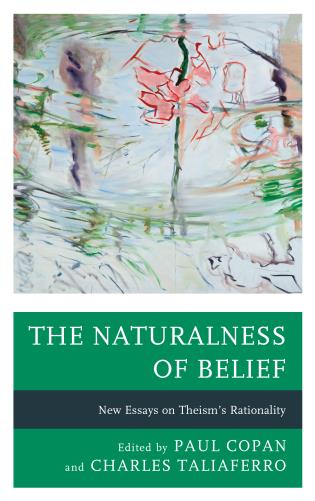
    The book The Naturalness of Belief: New Essays on Theism’s Rationality recently arrived from the publishers and is available on Amazon. Matt contributed a chapter to this book entitled “Divine Commands and the Euthyphro Dilemma: Some Naturalistic Misperceptions” The Naturalness of Belief is edited by Paul Copan (Palm Beach Atlantic) and Charles Taliaferro (St Olaf College) and published by Lexington Books.

    The table of contents is as follows:

    Introduction
    Part I: The Unnaturalness of Naturalism?
    1. Naturalism and Naturalness: A Naturalist’s Perspective
    —Graham Oppy
    Part II: Foundational Considerations
    2. Is Naturalism Natural?
    —Charles Taliaferro
    3. The Contraction and Expansion of Naturalism and the Theistic Challenge
    —Charles Taliaferro
    4. Taking Philosophical Naturalism Seriously
    —R. Scott Smith
    Part III: Theistic Belief, Science, and Naturalism
    5. In What Sense Might Religion Be Natural?
    —Justin Barrett and Aku Visala
    6. Science, Methodological Naturalism, and Question-Begging
    —Robert Larmer
    Part IV: Axiology and Naturalism
    7. Alienating Humanity: How Evolutionary Ethics Undermines Human Rights
    —Angus Menuge
    8. Divine Commands, Duties, and Euthyphro: Theism and Naturalist Misunderstandings
    —Matthew Flannagan
    9. Beauty: A Troubling Reality for the Scientific Naturalist
    —R. Douglas Geivett and James Spiegel
    Part V: Naturalism and Existential Considerations
    10. Existential Arguments for Theistic Belief
    —Clifford Williams
    11. Psychological Factors Contributing to Atheism: Bad Father Relationships and Just Bad Relationships as in Autistic Spectrum Disorders
    —Paul C. Vitz
    12. The Cultural Implications of Theism versus Naturalism
    —Paul Copan and Jeremiah J. Johnston
    Part VI: Naturalism, Freedom, and Immortality
    13. Theism, Robust Naturalism, and Robust Libertarian Free Will
    —J.P. Moreland
    14. Naturalism, Theism, and Afterlife Beliefs
    —Jonathan Loose

    The blurb from Amazon is as follows.

    Despite its name, “naturalism” as a world-view turns out to be rather unnatural in its strict and more consistent form of materialism and determinism. This is why a number of naturalists opt for a broadened version that includes objective moral values, intrinsic human dignity, consciousness, beauty, personal agency, and the like. But in doing so, broad naturalism begins to look more like theism. As many strict naturalists recognize, broad naturalism must borrow from the metaphysical resources of a theistic world-view, in which such features are very natural, commonsensical, and quite “at home” in a theistic framework.

    The Naturalness of Belief begins with a naturalistic philosopher’s own perspective of naturalism and naturalness. The remaining chapters take a multifaceted approach in showing theism’s naturalness and greater explanatory power. They examine not only rational reasons for theism’s ability to account for consciousness, intentionality, beauty, human dignity, free will, rationality, and knowledge; they also look at commonsensical, existential, psychological, and cultural reasons—in addition to the insights of the cognitive science of religion.

    Get your copy now, read it, and let us know what you think both here and on Amazon.