I teach NCEA Religious Studies, at level three, one standard is to “Analyse the response of a religious tradition to a contemporary ethical issue”. Officially students have to describe the response a religious tradition has made to a moral issue. Our school like a lot of schools looks at Christian responses to abortion. Because I […]
Entries Tagged as 'Theology'
FETICIDE IN CHRISTIAN MORAL THOUGHT Part two : Feticide in Patristic Thought
February 16th, 2019 Comments Off on FETICIDE IN CHRISTIAN MORAL THOUGHT Part two : Feticide in Patristic Thought
Tags: Abortion · Christian History · NCEA · Tertullian
The Naturalness of Belief: New Essays in Theism’s Rationality.
February 10th, 2019 Comments Off on The Naturalness of Belief: New Essays in Theism’s Rationality.
The book The Naturalness of Belief: New Essays on Theism’s Rationality recently arrived from the publishers and is available on Amazon. Matt contributed a chapter to this book entitled “Divine Commands and the Euthyphro Dilemma: Some Naturalistic Misperceptions” The Naturalness of Belief is edited by Paul Copan (Palm Beach Atlantic) and Charles Taliaferro (St Olaf […]
Tags: Books · Divine Command Theory · Euthyphro Dilemma · Naturalism · Publications · The Naturalness of Belief
Brad Hooker and Philip Quinn
January 10th, 2019 6 Comments
Most versions of Divine command meta-ethics (DCM) contend that the property of being morally required is informatively identical with the property of being commanded by God.[1] A common objection to divine command meta-ethics is the horrendous deeds objection. We can formalise this objection as follows: [P1] If DCM is true, then if God commands unjust […]
Tags: Brad Hooker · Divine Command Theory · God and Morality · Philip Quinn
Is Naturalism simpler than Theism? Some reflections on Graham Oppy’s “Best argument against God”
October 30th, 2018 2 Comments
In Best Argument Against God (BAAG) Graham Oppy sketches a sophisticated argument for atheism. Oppy’s conclusion is the result of applying a particular method to the question of God’s existence. He contends that question of Gods existence should not be determined by examining the arguments for and against the existence of God. Instead philosophy of […]
Tags:
God and Moral Grounding Power
October 6th, 2018 1 Comment
A common objection to divine command theories of ethics (DCT) is that they make morality arbitrary. There are several ways this objection can be cashed out. The most common is what is called the ‘Horrendous deeds objection’. The Horrendous deeds objection can be formalised as follows: (1) If the DCT is true, then if God commanded […]
Tags: Divine Command Theory · God and Morality · Jason Thibodeau
Religious Studies Scholarships and the NZAPT
October 2nd, 2018 Comments Off on Religious Studies Scholarships and the NZAPT
Those who follow me on Facebook will know that two years ago I began teaching Philosophy and Theology full time at St Peters College one of New Zealand’s largest Catholic high schools. Only a handful of schools teach Philosophy in New Zealand and while it has official subject recognition one cannot gain any credits for […]
Tags: NCEA · State Education
Matthew Flannagan (MandM) and Jason Thibodeau (Secular Outpost) Debate God and Morality
September 24th, 2018 4 Comments
Yesterday, I had a long and enjoyable public discussion with Jason Thibodeau on the topic of The Euthyphro dilemma. Jason is a writer for the Secular Outpost and teaches philosophy at Cypress college in California. He also is the author of a recent article entitled “God’s Love is Irrelevant to the Euthyphro Problem” published in Sophia […]
Tags: Divine Command Theory · Euthyphro Dilemma · Jason Thibodeau

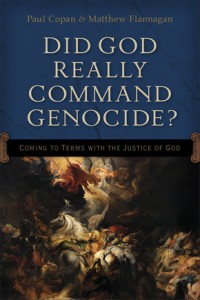 A common objection to belief in the God of the Bible is that a good, kind, and loving deity would never command the wholesale slaughter of nations. In the tradition of his popular Is God a Moral Monster?, Paul Copan teams up with Matthew Flannagan to tackle some of the most confusing and uncomfortable passages of Scripture. Together they help the Christian and nonbeliever alike understand the biblical, theological, philosophical, and ethical implications of Old Testament warfare passages.