Category: Theology

  • Problems in Value Theory An Introduction to Contemporary Debates: My Chapter with Graham Oppy is finally published

    Yesterday, I was informed that the book Problems in Value Theory An Introduction to Contemporary Debates has finally been published. The book is now available both on amazon on Bloomsbury’s website. Chapter 3 of this book “Does Morality Depend on God?” is co-authored by myself and Graham Oppy (Monash University). Both Graham and I each wrote an article (around 5000 words) spelling out our respective answers to the question, and then wrote a shorter piece (1500 words) where we responded to the others original essay. 

    Problems in Value Theory is edited by Steve Cowan (Lincoln Memorial University). The table of contents is as follows:

      Introduction, Steven B. Cowan

      Part I: Problems in Ethics and Aesthetics

     Introduction to Part I, Steven B. Cowan

      1. Is Morality Relative?

     Morality Is Relative, Michael Ruse

     Morality Is Objective, Francis J. Beckwith

     Responses:

     Beckwith’s Response to Ruse

     Ruse’s Response to Beckwith

      2. What Makes Actions Right or Wrong?

     Consequences Make Actions Right, Alastair Norcross

     Respect for Persons Makes Actions Right, Mark Linville

     Responses:

     Linville’s Response to Norcross

     Norcross’s Response to Linville

      3. Does Morality Depend on God?

     Morality Depends on God, Matthew Flannagan

     Morality Does Not Depend on God, Graham Oppy

     Responses:

     Oppy’s Response to Flannagan

     Flannagan’s Response to Oppy

      4. Is Beauty in the Eye of the Beholder?

     Beauty is Relative, James Mock

     Beauty is Objective, Carol S. Gould

     Responses:

     Gould’s Response to Mock

     Mock’s Response to Gould

      5. What Is the Meaning of Life?

     The Meaning of Life Is Found in God, Douglas Groothuis

     The Meaning of Life Can Be Found without God, Christine Vitrano

     Responses:

     Vitrano’s Response to Groothuis

     Groothuis” s Response to Vitrano

      Essay Suggestions

     For Further Reading

      Part II: Problems in Political Philosophy

     Introduction to Part II, Steven B. Cowan

      6. Do We Need Government?

     We Do Not Need Government, Roderick T. Long

     We Need Some Government, Alex Tuckness

     Responses:

     Tuckness’s Response to Long

     Long’s Response to Tuckness

      7. Should Wealth Be Redistributed?

     Wealth Should Be Redistributed, Jon Mandle

     Wealth Should Not Be Redistributed, Jan Narveson

     Responses:

     Narveson’s Response to Mandle

     Mandle’s Response to Narveson

     8. When May the Government Wage War?

     The Government Should Never Wage War, Andrew Alexandra

     The Government May Sometimes Wage War, Nathan L. Cartagena

     Responses:

     Cartagena’s Response to Alexandra

     Alexandra’s Response to Cartagena

      Essay Suggestions

     For Further Reading

     Index

     The blurb from Bloomberry is as follows:

    Problems in Value Theory takes a pro and con approach to central topics in aesthetics, ethics and political theory.

     Each chapter begins with a question: What Makes Actions Right or Wrong? Does Morality Depend on God? Do We Need Government? Contemporary philosophers with opposing viewpoints are then paired together to argue their position and raise problems with conflicting standpoints. Alongside an up-to-date introduction to a core philosophical stance, each contributor provides a critical response to their opponent and clear explanation of their view.

     Discussion questions are included at the end of each chapter to guide further discussion.

     With chapters ranging from why the government should never wage war to what is art and does morality depend on God, this introduction covers questions lying at the heart of debates about what does and does not have value.

    Get your copy now, read it, and let me know what you think both here and on Amazon. I am sure there is much more both Graham and I could say on this topic. Graham Oppy is one the best Philosophers of Religion in the world, and it was a real privilege being part of this project with him.  

  • Divine Command Theory: answering classic and contemporary objections

    Last week Jordan Hampton from Crash Course Apologetics interviewed me about chapters 12-13 of my book Did God Really Command Genocide. In this is the section of the book, I discuss divine command metaethics and critique some of the most important objections raised against divine command theories. The interview is nearly two and a half hours long. We go over every objection I respond to in the book. Enjoy


  • The Psychopath Objection to Divine Command Theory: Another Response to Erik Wielenberg (Part three)

    In Part One, I expounded the Psychopath objection to divine command meta-ethics (DCM) that has recently been defended by Erik Wielenberg. Wielenberg argues as follows:

    R1) If God commands a person S to do act A, this command imposes an obligation on S to do A, only if S is capable of recognising the requirement to do A as being extremely authoritative and as having imperative force.

    [1] There are some psychopaths who are incapable of grasping the authority and force of moral demands. (empirical premise) 

    [2] So, there are some psychopaths to whom God has issued no divine commands. (from 1 and R)

    [3] So, if DCT is true, then there are some psychopaths who have no moral obligations. (from 2 and DCT). 

    [4] But there are no psychopaths who have no moral obligations. 

    [5.] Therefore, DCT is false. (from 3 and 4)

    In my last post, I contended this argument is crucially ambiguous; the word “obligation” occurs in both R1 and [3] and [4]. However, one can use the word “obligation” in an objective and a subjective sense. Objective obligatoriness (or rightness or wrongness) is the deontic status that an action has in virtue of its actual circumstances and consequences” By contrast, “Subjective obligatoriness (or rightness or wrongness) is the deontic status an action has in virtue of the agent’s beliefs about its morally relevant circumstances and consequences” (Smith (2010), 4)

    I contend that the distinction between objective and subjective obligation makes trouble for the Psychopath Objection. For the argument to be logically valid, and avoid committing the fallacy of equivocation, the word “obligation must be used the same way in both premise [R] and premise [4]. When one examines Wielenberg’s argument; however, we find this is not the case. If we interpret the word obligation in the “subjective sense” premise [4] is not justified by the evidence Wielenberg offers. By contrast, if we interpret obligation in the objective sense, then [R] is unjustified.

     The Subjectivist Interpretation

    Let us begin first by interpreting [R] and [4] in the subjective sense:

     (R1 Subjective) If God’s commands a person S to do act A, this command imposes a subjective obligation on S to do A, only if S is capable of recognising the requirement to do A as being extremely authoritative and as having imperative force.


    [1] There are some psychopaths who are incapable of grasping the authority and force of moral demands. (empirical premise) 

    [2*] So, there are some psychopaths to whom God has issued commands that generate no subjective obligations. (from 1 and R) .

     [3*] So, if DCT is true, then there are some psychopaths who have no subjective moral obligations. (from 2 and DCT). 

    [4S] But there are no psychopaths who have no subjective moral obligations. 

    [5.] Therefore, DCT is false. (from 3 and 4)

    If we interpret [4] in terms of [4S], then Wielenberg must contend not just that Psychopaths have objective obligations’ but also that they are subjectively obligated to refrain from immoral activity. He must hold that Psychopath’s act contrary to their own non-culpable recognition of what morality requires. The data he cites, however, does not support this. Consider the following examples, which Wielenberg cites to support premise [1] 

    The mainstream view of psychopaths in contemporary psychology and philosophy has it that they have significant neurological deficits that leave them with an absent or significantly diminished capacity for love, compassion, and guilt. They are often described as lacking conscience and are incapable of grasping the authority and force of moral demands…(emphasis added) (Wielenberg (2018), 5)

    ‘Since their dysfunctional conscience does not stimulate moral feelings, psychopaths do not become aware of the constraints required to understand that they have obligations. Their conscience does not make them responsive to the constraining power of morality’..(Emphasis added) (Ibid., 6)

    About one in twenty-five individuals are sociopathic, meaning, essentially, that they do not have a conscience … The intellectual difference between right and wrong does not bring on the emotional sirens and flashing blue lights, or the fear of God, that it does for the rest of us. … ‘[Psychopaths] do not appear… to be aware of the need to justify actions which infringe moral rules … [and] do not really understand the concept of morality’… ‘Psychopaths do not merely behave contrary to moral standards . . . but seem in some sense not even to understand the notion of a moral standard in any “serious” sense. (Emphasis added) (Ibid., 5-6)


     Even more, telling is the conclusion Wielenberg draws from this data.

    Notice that the problem here is not that DCT implies that psychopaths are not responsible for their immoral actions. There are robust philosophical debates about the extent to which psychopaths are legally or morally responsible for their actions (see, e.g. Malatesti & McMillan (2010) ). ….However, as far as I can tell, all parties to these debates would accept the claim about psychopaths upon which the argument of this article depends: psychopaths cannot grasp the authority and force of moral demands. As Erick Ramirez puts it, ‘psychopaths are said to suffer from moral blindness. Philosophers disagree on whether this moral blindness exempts them from responsibility for their bad behavior’ (Ramirez (2013), 244). As this remark suggests, the moral blindness of psychopaths is widely taken for granted – and that moral blindness of psychopaths is the foundation of the central argument of this article. Accordingly, the problem for DCT that I have advanced here is not that it implies that psychopaths violate moral obligations but are not (legally or morally) responsible for doing so; rather, the problem is that DCT implies that psychopaths have no moral obligations to violate in the first place. (Wielenberg (2018), 8)

    This data, if accurate, undermines the claim that Psychopaths have subjective obligations. The evidence does not-unequivocally support the idea that they do what is wrong, given what they non-culpably believe about the situation. Wielenberg concedes Psychopaths are “morally blind” may “lack a conscience” “do not understand the concept of morality” and “lack the constraints necessary constraints required to understand that they have obligations.” His claim they have obligations carries no implications that they are culpable of their actions or culpably act contrary to what they discern to be obligatory. Consequently, [4S] is unjustified. [4] is only justified if Wielenberg is using obligation in the objective sense. 

    Objectivist Interpretation

    This leads us to consider next an “objectivist” interpretation of the argument.

      (R1 Objective) If God’s commands a person S to do act A, this command imposes an objective obligation on S to do A, only if S is capable of recognising the requirement to do A as being extremely authoritative and as having imperative force. 


    [1] There are some psychopaths who are incapable of grasping the authority and force of moral demands. (empirical premise) 

    [2**] So, there are some psychopaths to whom God has issued commands that generate no objective obligations. (from 1 and R) .

     [3] So, if DCT is true, then there are some psychopaths who have no objective moral obligations. (from 2 and DCT). 

    [4O] But there are no psychopaths who have no subjective moral obligations. 

    [5.] Therefore, DCT is false. (from 3 and 4)


    If [4] is interpreted in terms of [4O], then [4] is plausible. Even if Pscyopath’s suffer from “a moral blindness” which prevents them from recognising their objective obligations, it is implausible to think Psychopaths lack objective moral requirements. 

    The problem is that now (R1 Objective) is no longer plausible. We saw above that Wielenberg argues for R by contending that standard responses to the promulgation objection rely on it. Wielenberg argued:

    A distinctive feature of DCT is that a given human being has moral obligations only if a divine command is somehow communicated to that human being. This aspect of the theory is emphasised by many proponents of the theory. For example, Adams writes: ‘A command does not exist or have any force unless it is issued – that is, unless, it is in some way communicated’ (R. Adams (1999), 263). In defence of this position, Adams memorably remarks that ‘[g]ames in which one party incurs guilt for failing to guess the unexpressed wishes of the other party are not nice games. They are no nicer if God is thought of as a party to them’ (ibid., 261) (Wielenberg (2018), 2)

    He immediately continues:

    Stephen Evans similarly emphasises the importance of divine communication in this passage:

    A law that was passed in secret and never revealed to anyone would hardly be binding on the citizens of a state. It is true that it is often said that ignorance of the law is not a valid excuse for not obeying the law, but this principle surely assumes that the law in question is a matter of public record and that the individual who should obey the law could have known about it. Something similar must hold for moral laws as well. (Evans (2013), 37) 

    In accordance with Adams’s view that ‘[i]n order to exist, a command… .must be communicated to those who are subject to it’ (R. Adams (1999), 263), I shall henceforth use ‘command’ to mean obligation-bestowing command. On this usage, no divine command is issued unless it imposes some moral obligation on those to whom it is issued (Ibid.)

    This argument does not, however, seem plausible if by R we mean (R1 objective). On the face of it, Adam’s and Evan’s are using the word “obligation” in the subjective sense in these paragraphs. 

    Consider Adam’s first, Adam’s repudiates a “picture of divine-human relations, one in which the wish of God’s heart imposes binding obligations without even being communicated, much less issuing in a command.” This is because “Games in which one party incurs guilt for failing to guess the unexpressed wishes of the other party are not nice games. They are no nicer if God is thought of as a party to them.” In this passage, the phrase “binding obligation” is being used synonymously with “incurring guilt”. The problem he is addressing is that that one cannot incur guilt unless one non-culpably knows what is required. This best fits the concept of a subjective obligation. 

    We can say similar things about Evan’s. Evans states that a law “passed in secret” would not be “is binding” on citizens. However, he explains what he means next sentence; it is about whether someone has a valid excuse due to non-culpable ignorance. Evans is talking about an obligation of which one is not culpably ignorant and so incurs guilt for violating. So, Evan’s is plausibly talking about a subjective obligation. 

    Conclusion

    My conclusion, therefore, is that Wielenberg’s latest round in the dialectic on divine command meta-ethics is unsuccessful. His new Psychopathy objection commits the fallacy of equivocation. When he claims that God’s commands, do not impose an obligation unless the commandee is capable of recognising the requirement as both authoritative and as having imperative force he uses the word objective either in a subjective or objective sense. If he has in mind the former, then the very data he cites does not support his claim that Psychopaths have moral obligations. If he uses the word in an objective sense, then divine command theorists are not committed to denying Psychopaths have moral obligations.


    Adams Robert Finite and Infinite Goods: A Framework for Ethics [Book]. – Oxford : Oxford University Press, 1999.

    Evans C Stephen God and Moral Obligation [Book]. – Oxford : Oxford University Press, 2013.


    Smith Holly
    The Moral Clout of Reasonable Beliefs [Book Section] // Oxford Studies in Normative Ethics / book auth. Timmons Mark. – Oxford : Oxford University Press, 2010. – Vol. 1.

    Wielenberg Erik Divine command theory and psychopathy [Journal] // Religious Studies. – 2018. – pp. 1-16.

  • The Psychopath Objection to Divine Command Theory: Another Response to Erik Wielenberg (part one)

    Recently, Erik Wielenberg has developed a novel objection to divine command meta-ethics (DCM). DCM “has the implausible implication that psychopaths have no moral obligations and hence their evil acts, no matter how evil, are morally permissible” (Wielenberg (2008), 1). Wielenberg develops this argument in response to some criticisms of his earlier work. One of the critics he addresses is me. In some forthcoming posts, I will respond to Wielenberg’s arguments. In this post, I will set the scene by explaining the argument and the context in which it occurs. Subsequent posts will offer criticism of the argument

    1. Wielenberg’s New Argument from Psychopathy.

    Wielenberg calls his new argument the Psychopathy objection. The Psychopathy objection is the latest move in the contemporary debate between Wielenberg and his critics over the defensibility of divine command meta-ethics. By divine command theory, Wielenberg has in mind the divine command meta-ethics (DCM) defended by Robert Adams (1999) (1979), William Lane Craig (2009), William Alston (1990), Peter Forrest (1989) and C. Stephen Evans (2013). This version of DCM holds that the property of being morally required is identical with the property of being commanded by God.

    In previous writings, Wielenberg has pioneered the promulgation objection to divine command meta-ethics. (see Wielenberg (2005), 60–65; Morriston (2009); Wielenberg (2014), 75–80). According to this objection, a divine command theory is problematic because it cannot account for the moral obligations of reasonable unbelievers.

    In making this argument, Wielenberg takes for granted the existence of “reasonable non-believers” people whom “—have been brought up in nontheistic religious communities, and quite naturally operate in terms of the assumptions of their own traditions.” Similarly, “many western philosophers, have explicitly considered what is to be said in favor of God’s existence, but have not found it sufficiently persuasive.” Wielenberg assumes many people in these groups are “reasonable non-believers, at least in the sense that their lack of belief cannot be attributed to the violation of any epistemic duty on their part.” (Wielenberg (2018), 77)

    Wielenberg argues that if the property of being morally required is identical with the property of being commanded by God, then these people would have no moral obligations. Seeing reasonable non-believers clearly, do have moral obligations it follows that, DCM is false. 

    Why do reasonable non-believers lack moral obligations, given DCM? Wielenberg cites the following exposition of the problem from Wes Morriston:

    Even if he is aware of a “sign” that he somehow manages to interpret as a “command” not to steal, how can he [a reasonable non-believer] be subject to that command if he does not know who issued it, or that it was issued by a competent authority? To appreciate the force of this question, imagine that you have received a note saying, “Let me borrow your car. Leave it unlocked with the key in the ignition, and I will pick it up soon.” If you know that the note is from your spouse, or that it is from a friend to whom you owe a favor, you may perhaps have an obligation to obey this instruction. But if the note is unsigned, the handwriting is unfamiliar, and you have no idea who the author might be, then it is as clear as day that you have no such obligation.

    In the same way, it seems that even if our reasonable non-believer gets as far as to interpret one of Adams’ “signs” as conveying the message, “Do not steal”, he will be under no obligation to comply with this instruction unless and until he discovers the divine source of the message. (Morriston (2009), 5-6)

    I have responded to Wielenberg both in my book and in a recent article. I argued that Morriston’s argument contains a subtle equivocation. In the first line above, he expresses a disjunction. A person is not subject to a command if he does not know (a) who issued it, or (b) that it has an authoritative source. The example he cites, the case of an anonymous note to borrow one’s car, is a case where neither of these disjuncts holds. The owner of the car knows neither who the author is, nor whether its author has authority. We can illustrate this mistake, by reflecting on examples where, a person does not know who the author of the command is, but does recognize that it has an authoritative source.

    Consider two counter-examples I offered, first:

    Suppose I am walking down what I take to be a public right of way to Orewa Beach, New Zealand. I come across a locked gate with a sign that says: “private property, do not enter, trespassers will be prosecuted.” In such a situation, I recognize that the owner of the property has written the sign, though I have no idea who the owner is. Does it follow I am not subject to the command? That seems false. To be subject to the command, a person does not need to know who the author of the command is. All they need to know is that the command is authoritative over their conduct. (Flannagan (2017), 348)

    A second counter-example I provided was; 

    Suppose, for example, that an owner of one of the beachfront properties in Orewa puts up a sign that states “private property do not enter, trespassers will be prosecuted” and that John sees the sign and clearly understands what it says. He understands the sign as issuing an imperative to “not enter the property.” John recognizes this imperative is categorical and is telling him to not trespass; he also recognizes this imperative as having authority over his conduct, he also recognizes that he will be blameworthy if he does not comply with this imperative. However, because of a strange metaphysical theory, he does not believe any person issued this imperative and so it is not strictly speaking a command. He thinks it is just a brute fact that this imperative exists. Does this metaphysical idiosyncrasy mean that the command does not apply to him and that he has not heard or received the command the owner issued? That seems to be false. While John does not realize who the source of the command is, he knows enough to know that the imperative the command expresses applies authoritatively to him and that he is accountable to it. (Flannagan (2017), 351)

    In the first example, I am aware of the command but do not know who issued it. Despite my ignorance of the source of the command, I know it is authoritative over my conduct, and hence can be said to be subject to it. In the second example, John does not believe he is being commanded. However, he discerns the imperative expressed by the command and is aware both that it authoritatively applies to him and that he is accountable for performing it. A person who doesn’t believe in God can be subject to his commands if he discerns the imperative the command expresses and percieves its authority. 

    Craig, (2018) Evan’s (2013) and Adams (1999) have raised similar counter-examples. In a dialogue at the University of Purdue between with Wielenberg Craig responded by citing my second example and discussed is subsequently on his podcast. Evan’s gives a similar counter-example. He imagines a person walking on the border between Iraq and Iran, who perceives a sign warning him to stay on the path. Because he is on the border, he does not know whether the Iranian or the Iraqi governments posted the command, yet he knows some government has issued it. (Evans (2013), 113-114) Adam’s argues: “We can suppose it is enough for God’s commanding if God intends the addressee to recognize a requirement as extremely authoritative and as having imperative force. And that recognition can be present in non-theists as well as theists.” (Adams (1999), 268) These examples all suggest that reasonable believers can be “subject to God’s commands” without believing or knowing that God exists.

    In his most recent work, Wielenberg (2018) appears to concede the problem. He concludes that a reasonable unbeliever does not need to recognize moral obligations as God’s commands to be subject to them. However, he suggests this response to the promulgation objection raises a deeper worry. Wielenberg suggests that, behind the responses of Evan’s, Adam’s, Craig and myself is a “plausible principle” which he labels R.

    (R) God commands person S to do act A only if S is capable of recognizing the requirement to do A as being extremely authoritative and as having imperative force. 

    R enables the divine command theorist to claim consistently that a reasonable non-believer has moral obligations. However, Wielenberg contends this comes at a cost; this is because when conjoined with DCM, R implies that Psychopath’s lack of moral obligations. 

    According to Wielenberg “the mainstream view of psychopaths in contemporary psychology and philosophy” which is that lack “conscience and are incapable of grasping the authority and force of moral demands”. Wielenberg states, “According to principle (R) above, since psychopaths cannot grasp morality’s authority and force, God has not issued any commands to them, and so DCT implies that they have no moral obligations” (Wielenberg (2018), 8) 

    Wielenberg summarises his argument as follows:

    The Psychopath Objection to Divine Command Theory

    [1] There are some psychopaths who are incapable of grasping the authority and force of moral demands. (empirical premise) 

    [2] So, there are some psychopaths to whom God has issued no divine commands. (from 1 and R) .

    [3] So, if DCT is true, then there are some psychopaths who have no moral obligations. (from 2 and DCT). 

    [4] But there are no psychopaths who have no moral obligations. 

    [5.] Therefore, DCT is false. (from 3 and 4)

    In the next few posts, I will criticise this argument. In my next post, I will argue that the argument is crucially ambiguous in some of its key terms. In a subsequent post, I will argue that these ambiguities undermine the argument.


    Adams Robert Divine Command Metaethics Modified Again [Journal] // The Journal of Religious Ethics. – Spring 1979. – 1 : Vol. 7. – pp. 6-79,.

    Adams Robert Finite and Infinite Goods: A Framework for Ethics [Book]. – Oxford : Oxford University Press, 1999.

    Alston William Some Suggestions for Divine Command Theorists [Book Section] // Christian Theism and the Problems of Philosophy / ed. Beaty Michael. – Notre Dame  : Notre Dame University Press, 1990.

    Craig William Lane Debate: God & Morality: William Lane Craig vs Erik Wielenberg [Online] // Reasonablefaith.org. – February 23, 2018. – 8 10, 2019. – https://www.youtube.com/watch?v=6iVyVJAMiOY.

    Craig William Lane This most Gruesome of Guests [Book Section] // Is Goodness Without God Good Enough? A Debate on Faith, Secularism and Ethics / ed. King Robert K Garcia and Nathan L. – Lanthan: : Rowan and Littlefield Publishers Inc, 2009.

    Evans C Stephen God and Moral Obligation [Book]. – Oxford : Oxford University Press, 2013.

    Flannagan Matthew Robust Ethics and the Autonomy Thesis [Journal] // Philosophia Christi. – 2017. – 2 : Vol. 17. – pp. 345-362.

    Forrest Peter An argument for the Divine Command Theory of Right Action [Journal] // Sophia. – 1989. – 1 : Vol. 28. – pp. 2–19.

    Morriston Wes The Moral Obligations of Reasonable Non-Believers: A special problem for divine command meta-ethics [Journal] // International Journal of Philosophy of Religion. – 2009 . – Vol. 65.

    Wielenberg Erik Divine command theory and psychopathy [Journal] // Religious Studies. – 2018. – pp. 1-16.

    Wielenberg Erik Robust Ethics: The Metaphysics and Epistemology of Godless [Book]. – New York : Oxford University Press, 2014.

    Wielenberg Erik  Virtue and Value in a Godless Universe [Book]. – Cambridge : Cambridge University Press, 2005


  • IS A FETUS A HUMAN BEING? Part one: Viability

    This is one of a series of posts based on a class I teach for level 3 NCEA Religious Studies.

    In the last few posts we saw that most of the Christian religious tradition sketched the following argument against feticide;

    Premise [1] Killing a human being without justification violates the law of God.

    Premise [2] A formed conceptus (i.e. a fetus) is a human being.

    Premise [3] In the case of feticide (at least in the majority of cases) insufficient or no justification is forthcoming.

    In this next series of posts, we will look at [2], the claim that a fetus, is a human being.

    Viability

    A very common position put forward today is that a foetus doesn’t become a human being until the point of viability. Viability refers to the point in pre-natal development where a foetus can live outside the mother’s womb. The idea is that fetus is not a human being until it is capable of surviving independently of another individual, before this period, it does not have an independent existence from its mother.

    Philosopher Susan Sherwin expresses this idea when she states that a fetus “is wholly dependent on her [the mother’s] unique contribution to its maintenance, while a newborn is physically separate, though still in need of a lot of care”[1]. Current medical technology means that viability occurs around 22-24 weeks after conception. At this point in time an infant that is born prematurely survive and be placed in an incubator.

    Objections to viability

    Obviously, the claim that a fetus is not a human being until viability is controversial. Several important objections have been raised to this position. We will look at the main ones below.

    A. The problem of differing technology

    The Philosopher Peter Singer contends that just because a fetus cannot survive independently of its mother that does not mean it is not a human being. This is because whether a fetus is viable or not depends more on the medical technology of a particular culture than any feature of the fetus itself. A fetus that is not viable in a more impoverished country like Chad is viable in a city like Los Angeles. If viability is necessary for something to be a human, then a woman pregnant with a viable fetus in Los Angeles who flies from Los Angeles to Chad carries a human being when she leaves, but this human being ceases to exist when she arrives in India and yet becomes human again when she returns.

    2. The problem of conjoined twins

    The Philosopher Michael Tooley offers a different criticism of people who claim that viability is the point where a human comes into existence. Tooley argues this claim has the strange implications that conjoined (Siamese) twins are not humans either[2]. Consider conjoined twins Bob and Scott. If Bob is a human being, then since Scott cannot live independently of Bob, Scott must not be a human person. However, it is difficult to see what property Bob has that Scott lacks which would justify considering one a human and the other not. It appears then that one would be forced to conclude that they both are, and are not, human. However, both Bob and Scott are humans and killing one or both of them would be homicide despite this entailing that they are both human beings even though one cannot live independently of the other.

     C. Does Dependence end at Birth

    Above we quoted the philosopher Susan Sherwin, Sherwin argued that the difference between a fetus and a newborn infant is that a fetus is dependent on the mothers care and cannot live independently of her. Some Philosophers have argued this is false, they claim that when you reflect on the facts carefully, it is clear that dependence doesn’t end at birth. Philosopher David Oderberg is an example:

    A born baby is also totally dependent on its mother, only instead of being fed and sheltered by the mother’s automatic internal processes, it is fed and sheltered by the mother’s consciously controlled external, behaviour. How can that make a difference to whether or not a foetus is a human being?[3]

    Peter Singer points out that a new-born is entirely dependent on its mother if it happens to be born in an isolated area where there are no other lactating women or the means of bottle-feeding. An elderly woman may be entirely dependent on her children looking after her. A hiker who breaks her leg a week’s walk from a road will die if her companions do not bring help. Yet in these situations. Yet the hiker, the elderly women or the baby are still t human beings.  He concludes it is not plausible to suggest that the dependence of the non-viable fetus upon its mother makes it non-human.


    [1] Susan Sherwin, “Abortion a Feminist Perspective,” in Ethical Issues in Modern Medicine, 5th ed., ed.

    Bonnie Steinbock & John D. Arras (Mountain View CA: Mayfield Publishing Co, 1999), 364.

    [2] Michael Tooley, “Abortion and Infanticide” Philosophy and Public Affairs, Vol. 2, No. 1 (Autumn, 1972), 51

    [3] David Oderberg, Applied Ethics: A Non-Consequentialist Approach (Oxford: Blackwell Publishers Co, 2000), 5.


  • FETICIDE IN CHRISTIAN MORAL THOUGHT (Part Four) : Feticide in the Reformed Protestant Tradition

    In our last post we saw how Medieval Christian’s adopted the same position on abortion we saw developed in Alexandrian Judaism and by Patristic theologians. We also saw how this position found its way into European and English law.  Of course during the medieval period, Christian’s in Europe were Catholic.  However, during the sixteenth and seventeenth centuries, the Protestant Reformation happened.

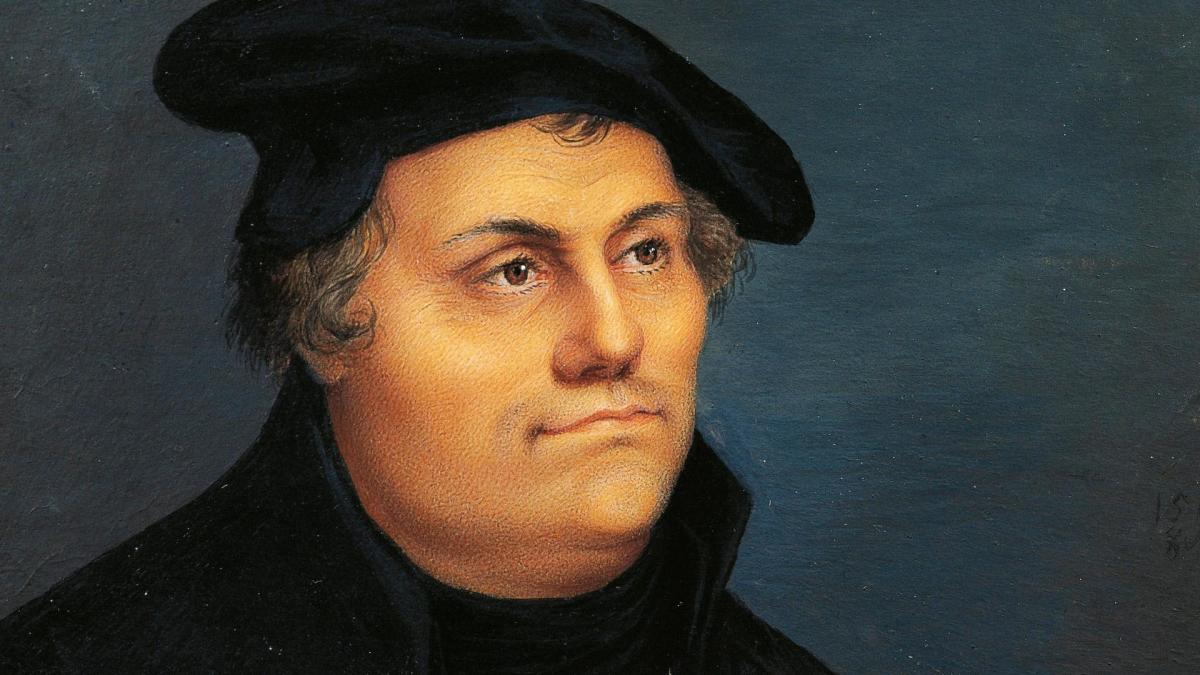
    I. Martin Luther

    In 1517 Martin Luther nailed 95 theses: propositions of protest, to the Wittenberg chapel door, sparking off a debate which would split Europe into religious factions. Luther began a movement known as Protestantism.  Protestants departed from several teachings that were advocated by the Roman Catholic Church during the Middle Ages.  These teachings predominately dealt with issues of whether a person is saved by faith or works and questions of authority and church government. There were however also some differences in opinion on certain moral issues such as divorce and celibacy.

    What is interesting however is that on abortion, the leaders of the Protestant Reformation came to essentially the same answer as their Catholic predecessors.

    In his writings, Luther addressed the issue of feticide briefly stating, “those who have no regard for pregnant women and do not spare the tender fruit are murderers and infanticides”[1].93  Luther claims that killing a fetus is both murder and infanticide.

    II. Philip Melanchthon (1497 –1560)

    A similar stance was taken by Philip Melanchthon. Melanchthon was a close companion of Luther and, next to Luther, was probably the most important leader in the Protestant Reformation and one of the first Protestant theologians. Melanchthon stated that on the forty-fifth day after conception a “fetus with formed distinct members begins to live” and he added, “souls are inserted into children about the forty fifth-day and then not only should it [the conceptus] be called an embryo but even an infant”.[2]   The reference to the forty-fifth day is probably a reference to the biological theories of ancient Greek philosophers which we looked when we studied  Alexandrian Judaism.

    III. John Calvin

    After Luther and Melanchthon, the next most important figure in the Reformation was John Calvin. Calvin established one of the most important schools of Protestant Theology in Geneva and wrote the most important defence of Protestant theology in the period.  In his Commentary on the Five Books of Moses. Calvin wrote that:

    [T]he fetus, though enclosed in the womb of its mother, is already a human being, (homo,) and it is almost a monstrous crime to rob it of the life which it has not yet begun to enjoy. If it seems more horrible to kill a man in his own house than in a field, because a man’s house is his place of most secure refuge, it ought surely to be deemed more atrocious to destroy a fetus in the womb before it has come to light.[3]

    This comment occurs in Calvin’s discussion of Exodus 21:22-25. The is the passage we looked at when we studied Alexandrian Judaism.  Calvin appeals directly to the law regarding a pregnant woman, which was cited by Alexandrian Jews, such as Philo, and Patristic writers like Jerome, Augustine.  Calvin concludes that killing a fetus in the womb is homicide.  Like these other writers, Calvin takes abortion to violate the fifth of the ten commandments. The quote above occurs in a commentary on the ten commandments specifically in the section that explains the meaning of the commandment “you shall not kill.”

    IV. Early Calvinists

    Calvin’s influence on later Protestants was immense. People who followed Calvin’s ideas were often called “Calvinists” or “reformed”. In England, a group of Calvin’s followers emerged who historians call “the Puritans” they wanted to reform the Church of England along much more Calvinist lines and make its liturgy less  Catholic.

    A leader of this group was a man called William Gouge (1575–1653) Gouge was the chairperson of a committee which drew up a document called “The Westminster Confession in 1640. The Westminster Confession was an official statement of Protestant belief and is still the official belief statement of Presbyterian and Reformed Churches today. Gouge wrote that it was a violation of the fifth commandment to abort “that which hath received a soul formed in it by God” and that “if it be unjustly cast away, shall be revenged”.[4]

    Calvinists understood the sixth commandment to forbid killing a human being without justification. Calvin had argued that “The sum of this Commandment is, that we should not unjustly do violence to anyone”.[5][Emphasis added]

    Calvin acknowledged that sometimes killing or violence are justified and in his commentary proceeded to justify homicide in certain situations based on the law itself. The conclusions that he reached were summarized in the Westminster Catechism under the question, “What is forbidden by the Sixth Commandment?” the answer was, “The sins forbidden in the Sixth Commandment are, all taking away the life of ourselves, or of others, except in case of public justice, lawful war, or necessary defence”[6] Seeing it makes no sense to punish a fetus for a crime or literally go to war with a fetus. These conclusions suggest that in the reformed tradition feticide can be justified, if at all, only under the justification of self-defence.


    [1] Ewald M Plass, What Luther Says: An Anthology, (St Louis, MO: Concordia Publishing House, 1959) 509, cited in G. Willams, “Religious Residues and Presuppositions in the American Debate on Abortion,” Theological Studies 31:1

    [2] Melanchthon, “Definitio Animae Usitata in Eccesia,” Corpus Reformatorum 13, cited in G. Willams, “Religious Residues and Presuppositions in the American Debate on Abortion,” Theological Studies 31:1 (1970).

    [3] John Calvin, Harmony of the Law, Vol. 3 http://www.ccel.org/c/calvin/comment3/comm_vol05/htm/TOC.htm.

    [4] W Gouge, Of Domesticall Duties, Eight Treatises 506, cited in G. Willams “Religious Residues and Presuppositions in the American Debate on Abortion,” Theological Studies 31:1 (1970).

    [5] Plass, What Luther Says, 509, cited in G. Willams, “Religious Residues and Presuppositions in the American Debate on Abortion” Theological Studies, 31:1 (1970).

    [6] Larger Westminster Catechism, question 136

  • PART THREE: FETICIDE IN CHRISTIAN MORAL THOUGHT (Part three) : The Medieval Period

    I teach NCEA Religious Studies, at level three, one standard is to “Analyse the response of a religious tradition to a contemporary ethical issue”. Officially students have to describe the response a religious tradition has made to a moral issue. Our school like a lot of schools looks at Christian responses to abortion. Because I did my PhD thesis on this very subject in the last year I have been going through my dissertation and simplifying, summarising and rewriting it into short sections I can use with my classes. Because there is some interest in this, I have decided to post some of these on MandM. I welcome any feedback or comments.

    In our last  post we looked at how Christian theologians who wrote during the Patristic period, the period from 90AD to 475 AD, addressed the question of abortion. Our survey suggested they adopted essentially the same position we saw earlier in Alexandrian Judaism and which is found in the Septuagint. In this next section, we will look at the medieval period. Historians date the medieval period from 500 AD -1500. AD, during this period Christian Theologians adopted pretty much the same stance they did during the Patristic period.

    I. Canon Law

    The period from 500-1000 AD is known as the early middle ages. During this time the church in Europe developed what is called Canon law. Canon law is a set of laws developed by church authorities to govern the church and its members. One thing that Canon law had to deal with was penance; suppose someone commits a seriously immoral action, how should the church respond, what penalties practices of confession and repentance, should be in place to deal with this such practices are known in Catholicism as penance.

    During the early middle ages, manuals about how penance should be applied were developed. Many of these manuals addressed abortion. Here are some examples:

    • Manual Canones Hibernenses (675 A.D.) refers to abortion as a sin but draws a distinction between an unformed embryo and a formed, fetus. While both incur a penalty, The latter is punished more severely.[1]
    • The Bigotian Penitential (8th Century AD) draws a distinction between an embryo in liquid form and a fetus with flesh and spirit. Both abortions are punished, but the latter is punished more severely. [2]
    • The Anglo-Saxon Penitentials (668-690 A.D.) associated with the then the Archbishop of Canterbury Theodore drew a distinction between an abortion before and after 40 days. Penances are imposed for both periods; however, the penance after 40 days is stricter.[3] 
    • The Penitentiale Discupulus Umbrensium, states that if abortion takes place before an embryo has a soul the penance will be a year or three forty-day periods [4]

    In 1000 AD Pope Leo began reforming canon law and attempted and get a consistent practice. A Bishop called Ivo de Chartres collected together various manuals which became the standard rules for the church. Ivo dealt with abortion under the heading of “Homicide” he cited various Patristic writers we mentioned in our last lesson such as Jerome and Augustine and argued that a formed embryo or fetus is a human being and hence killing is a form of homicide[5] Ivo’s position became the standard position in Medieval Canon law. Ivo’s position was adopted by Gratian (1160) and Gratian’s work on Concordia became the dominant text of Canon law until the nineteenth century.

    1. II. Medieval Theology

    Alongside Canon law, we can also examine what Theologians or Philosophers who taught at Universities wrote.

    1.Peter Lombard

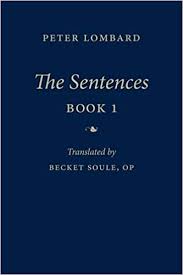
    One of the most important Theologians of the middle ages was Peter Lombard. Lombard lived from 1095-1160 A.D. He is important because he wrote The Sentences which was the most widely used textbook in Medieval universities.  When discussing feticide, Lombard repeated the texts cited by Gratian and Patristic writers such as Augustine, Jerome and also quote from the Septuagint.[6]

    Because Lombard’s book was such a widely used , other scholars of the period wrote commentaries on it.

    • In his commentaries, Albert the Great (1206-1280) accepted Lombard’s position that killing a formed conceptus was homicide.[7]
    • In his commentary Bonaventure (1221-1274) also accepted Lombard’s position that killing a fetus was homicide.[8]

    2.Thomas Aquinas

    The most famous Theologian and philosopher of the middle ages was Thomas Aquinas (1225-1275). In his commentary the Sentences he accepted Lombard’s basic position.80 Later, in the Summa Theologiae, Aquinas quotes Exodus 21:22-25:

    He that strikes a woman with child does something unlawful: wherefore if there results the death either of the woman or of the animated fetus, he will not be excused from homicide, especially seeing that death is the natural result of such a blow.[9]

    3.John of Naples

    A final theologian to note is fifteenth-century theologian John of Naples.  John wrote a book called Quodlibeta; in which he addressed the question “is it acceptable to give medical treatment to a pregnant woman if doing so will cause an abortion?”  John’s answer. If the drugs are provided for the purpose of destroying the embryo or fetus, then this is forbidden. On the other hand, if the drugs are provided to save the woman’s life from a fatal illness, then one can provide this treatment to her provided the fetus is not formed at the time.

    John was the first Theologian since Tertullian to explicitly address the question of whether abortion was acceptable to save a woman’s life. His position was taken up by later theologians and lead to a debate about under what circumstances abortion was acceptable if it saved a pregnant woman’s life.

    III. Medieval Law

    We will close our examination of the medieval period by looking at the law.

    1. Roman Law
    During the medieval period, Europeans followed Roman law. Roman law regarding abortion had developed as follows:

    • Roman dictator Sulla (81 BC) passed the Lex Cornelia a general law against selling and distributing poison.
    • Roman legal scholar Iulius Paulus applied the Lex Cornelia to cover drugs that cause an abortion:

    If anyone gives another a love potion or an abortion potion, even without an evil intention, since it is a source of bad example, he will be condemned to work in the mines if he belongs to the lower classes. If he belongs to the upper classes, he will be exiled and part of his property confiscated. But if the man dies, he will be punished with a capital sentence.[10]

    This became known as the Qui Abortionis law. The phrase “but if a man dies” probably referred to the death of the mother. However, during the medieval period, European lawyers began interpreting Roman law in accord with both the Septuagint and canon law. As a result, the reference to killing a man in the Qui Abortion was understood to include the killing of a fetus, 40 days after conception.

    2.English Common Law

    Canon law and medieval European law had an influence on English common law:  English common law is that part of English law which is based on custom.

    • Henry Bracton, (1210 – 1268 AD ) recorded English common law as stating: “If there is anyone who strikes a pregnant woman or gives her a poison which produces an abortion if the foetus be already formed or animated, and especially if it be animated, he commits homicide.” [11]
    • In 1290 an anonymous royal official wrote a book called Fleta according to this book:

    One is rightly a homicide who has pressed on a pregnant woman or has given her a poison or struck her to produce an abortion … if the foetus was already formed and ensouled… A woman also commits homicide if, by a potion or the like, she destroy the ensouled child in her womb. 89

    Bracton and Fleta tell us that killing a fetus was considered homicide in English common law.

    3.The Quickening rule

    The courts had difficulty applying these laws in practice. In English law, a person cannot be prosecuted for murder unless it is proven beyond a reasonable doubt that they deliberately killed a human being. I was hard to do this in medieval times. Miscarriage sometimes happens naturally, and it is difficult to determine how long a woman has been pregnant and whether or not the child in her womb had died of natural causes. Two prominent legal cases in the middle ages   resulted in an acquittal because of an inability to prove

    These difficulties lead to the development of what is called the “quickening rule”. Quickening refers to the time when a woman first feels the fetus move inside her. English law treated any action which caused the death of a fetus after quickening a serious criminal offence.  But refused to treat it as murder unless the fetus was born alive and died from wounds which were obviously caused while the woman was pregnant. This way of applying the law was followed by the famous English judge Edward Coke (1552 –1634) and is recorded as the law of England by the judge William Blackstone 1723 – 1780) This remained the English law till the mid-19th century.


    [1] Canones Hibernenses,1 Canons 6-8.

     [2] Penitentiale Bigotianum, 4.2, 2-4.

    [3] Penitentiale, 14, 24 also 27.

    [4] Penitentiale, 14, 24 also 27.

    [5] Ivo of Chartres, Decretum, 10 55-58.

    [6] Peter Lombard, Libri Sententiarium, Lib 4 d.31.

    [7] Albert, Commentarium, in L IV d. 31 a18.

    [8] Bonaventure, Commentarium in Librum IV Sententiarium, d 31 dub 4. 80 Thomas Aquinas, Commentarium in Librum IV Sententiarium, d 31.

    [9] Thomas Aquinas, Summa Theologiae II II Q64 Article 8. 82 Connery, Abortion:, 112.

    [10] Justinian, Digest 48. 19. 38. 5.

    [11] Henry Bracton, On the Laws and Customs of England, 2: 341.