Category: Theologians

  • A very belated report on my trip to San Diego

    With trips to the US, Christmas, New Years, the summer break, Madeleine’s work, my preaching and juggling the family and the launch of my book, it has been a while since I blogged. Since the last post was about me going to the US I figured I should start by giving a very belated update on the trip before I get down to more run of the mill blog posts.

    Last time Madeleine blogged it was Wednesday 19 November 2014, the day after I had flown out of Auckland. I arrived in Los Angeles at 10 am on Tuesday 18 November 2014 (love the international date line!) and I finally arrived in San Diego that afternoon where I had an enjoyable dinner with Moore College President Mark Thompson.

    The Evangelical Theological Society (ETS) and Evangelical Philosophical Society (EPS)  meetings began the next day. The first session I attended was a very good paper by Richard Davis and Paul Franks critiquing Wes Morriston’s criticisms of divine command meta-ethics (DCM). This paper was technical so I’ll try to summarise: Morriston objects that if moral requirements are identical with God’s commands, and even if it’s impossible for a perfectly good God to command the random sacrifice of 3 years olds, DCM still entails that if this impossibility were actualised and God were to command the random slaughter of 3 year olds, then such slaughter is wrong.

    This objection involves what is called a counter-possible, which is a hypothetical statement with an impossible antecedent. In this case the antecedent is that a perfectly good person could command the random sacrifice of children. According to the standard semantics for counter in modal logic all counter-possibles are  trivially true. Morriston argues this approach to standard semantics is mistaken; it is plausible that some counter possibles are false and that this counter-possible is one such example.

    Davis and Franks, give an interesting and thoughtful reply to Morriston in their forthcoming article “Counterpossibles and the ‘Terrible’ Divine Command Deity“. They argue: (a) Morristons’ own criteria  for distinguishing true from false counter-possibles entails that the counter-possible, If God commanded random sacrifice then random sacrifice is morally required, is, in fact, true and not false. Second, (b) they argue that DCM does not entail this counter-possible.

    To put their point in a nutshell: they argue that a world where God commands evil is a world where God ceases to be good; and since goodness is an essential property of God this entails that in such a world God would cease to exist. However, given God is the creator and sustainer of all that is distinct from him, a world where God does not exist is a world where nothing exists. Hence, it is false that if God commands evil, evil would be morally required. This was an excellent paper and I enjoyed some stimulating discussion with both of the authors during the Q&A and also at lunch.

    Next up was a paper by Frank Beckwith discussing Judith Jarvis Thomson’s famous article “A defence of abortion”. Thomson famously concedes for the sake of argument that a fetus is a human being and then argues, from analogy, that even if that is the case abortion is still permissible. Beckwith argued that, in fact, Thomson does not grant the personhood of the fetus in the way opponents of abortion understand it, but instead assumes a radically individualistic understanding of persons whereby people are not bound by any obligations to others which they do not willingly consent to, a picture which appears to rule out such things as parental duties to children or children’s duties to parents.

    This was followed by Micheal Rea’s interesting paper on whether God is gendered and the use of masculine and feminine language and imagery in describing God. His argument was that God is not gendered and the fact that most imagery used in scripture to describe God is masculine does not justify conceptualising God is exclusively masculine terms.

    In the break I had some very good fellowship and discussion over pizza with members of the Facebook group, Christian Apologetics Alliance.

    In the afternoon I took part in the ethics session of the ETS. The session kicked off with an interesting paper on how capital punishment is practiced in the US. The author, Ken Magnuson, made several disturbing observations about the fact that wealthy people almost always escape capital murder charges whereas the poor do not. This paper was unclear on what the nature of the core problem was: was it that innocent poor people were executed, or that the guilty escaped justice? While the fact that large numbers of innocent are executed might be a reason for opposing the death penalty, the fact that some guilty people get off does not seem to be. If the problem is that some escape capital punishment who deserve it, then ensuring everyone escapes capital punishment will increase the injustice. What was clear was that there needs to be some reforms to ensure less inequitable outcomes.

    Next was a paper by Evan Lenow where he argued that the philosophical doctrine of self-ownership, as articulated in its progenitor John Locke, does not support abortion rights. In this I thought he was right; Locke’s writing in the first treatise makes Lenow’s case even stronger.

    That afternoon I gave my paper, “Abortion as Self-Defence”. I offered a critique of Elieen Mcdonagh’s contention that even if a fetus is a human being, its presence inside a women who does not wish to be pregnant constitutes an act of unjustified aggression and so a women’s right to self-defence entitles her to kill it. My criticism was based on the fact that, in non rape cases, the fetus’ existence inside the woman is due to voluntary sexual intercourse for which her and her partner are responsible and this action confers parental obligations upon both of them. Given that parents have an obligation to provide the basic necessities of life to their children, the fetus’ appropriation of such necessities cannot be unjust aggression. This paper was well received and there was some excellent discussion about rape cases and therapeutic abortion in the Q&A. (Audio of my talk is available here.)

    Thursday was equally intense. I began the morning hearing a paper by David Wood on Paul Draper’s version of the problem of evil. This was followed by a panel discussion on Scott Smith’s recent book, In Search of Moral Knowledge. The panel consisted of Francis Beckwith, David Baggett and James Dew, all offering critique and commentary on the book and Smith offering a response.
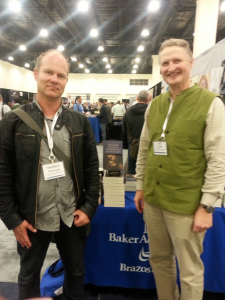
    Matthew Flannagan and Paul CopanOver lunch I met with Paul Copan and a representative from Baker Academic to discuss the launch of Copan’s and my book, Did God Really Command Genocide?: Coming to Terms with the Justice of God, the promotional events we would each be participating in, and also the prospect of further publications in the future. I was then interviewed on camera for US television about the book. (more…)
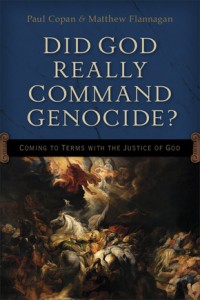
  • Out Now: Did God Really Command Genocide? Coming to Terms with the Justice of God by Paul Copan and Matthew Flannagan

    Did God Really Command Genocide?Well done Matt and Paul. 🙂

    Out now!

    Get your copy today of Did God Really Command Genocide? Coming to Terms with the Justice of God, by Paul Copan and Matthew Flannagan, published by Baker Books.

    More here.

    Buy from Baker Books
    Buy on Amazon in paperback
    Buy for your Kindle
    Buy from Book Depository

    (The New Zealand store launch is not until 31 January 2015 but Book Depository do free international posting.)

  • Did God Really Command Genocide? A new book by Copan and Flannagan

    Did God Really Command Genocide?Coming to a bookstore near you in November 2014: Did God Really Command Genocide? Coming to Terms with the Justice of God by: Paul Copan and Matthew Flannagan

    From Baker Publishing Group’s page:

    “Reconciling a violent Old Testament God with a loving Jesus
    Would a good, kind, and loving deity ever command the wholesale slaughter of nations? We often avoid reading difficult Old Testament passages that make us squeamish and quickly jump to the enemy-loving, forgiving Jesus of the New Testament. And yet, the question remains.

    In the tradition of his popular Is God a Moral Monster?, Paul Copan teams up with Matthew Flannagan to tackle some of the most confusing and uncomfortable passages of Scripture. Together they help the Christian and nonbeliever alike understand the biblical, theological, philosophical, and ethical implications of Old Testament warfare passages.”

    Some of the endorsements are below, you can read more here:

    “The Old Testament describes God as a warrior who directs his people to fight the Canaanites. Divine violence in the Bible is a theme that has aroused the ire of atheists and the discomfort and confusion of many Christians. Copan and Flannagan address the arguments of the atheists who use these texts to undermine belief and confidence in God. Not only are they adept at biblical interpretation and philosophy as they effectively counter this challenge, but they also write in a deeply compelling way that will appeal to both students and laypeople.”

    Tremper Longman III, Robert H. Gundry Professor of Biblical Studies, Westmont College, Santa Barbara, California

    “In their wide-ranging book, Copan and Flannagan go beyond standard treatments of Old Testament warfare; they incorporate biblical, theological, philosophical, ethical, legal, and historical perspectives on a much-debated but often misunderstood topic. This volume makes important strides forward in laying out a case for the coherence of divine command theory in connection with these Yahweh-war texts.”

    William Lane Craig, research professor of philosophy, Talbot School of Theology, La Mirada, California

    “As a full-scale follow-up to the excellent popular treatment of the topic in Is God a Moral Monster?,this book provides the most thorough and comprehensive treatment of the problem of violence in the Old Testament that I have encountered. The authors tackle the aggressive charges of the new atheists, as well as other equally sceptical but less strident critics of ‘the God of the Old Testament.’ And they do so with a blend of careful biblical exegesis and incisive moral argumentation. The book reaches deep, but remains readable, and the summaries at the end of every chapter are a great help in following the case as it is steadily built up. All of us who, in teaching or preaching the Old Testament, are constantly bombarded with ‘But what about the Canaanites?’ will be very grateful for these rich resources for a well-informed, gracious, and biblically faithful reply.”

    Christopher J. H. Wright, International Ministries Director, Langham Partnership, author of Old Testament Ethics for the People of God and  The God I Don’t Understand

    Chapter 1 is available here.

    Pre-order your copy now on Amazon, Book Depository or Mighty Ape (or wherever you normally get your books).

  • “Telling the Big Story” (or how not to engage culture with theology)

    One thing that tends to make my eyes glaze over is the mantra, expressed so frequently by some evangelicals in New Zealand,  that we live in a post-modern society and so theology should, instead of involving the rational defense of truth, be focused on “telling the big story” or “sharing the narrative”, and we should invite others to partake and find meaning.

    William Lane Craig, expresses well some of the reservations I have with this position in the video below.

  • Shawn Bawulski and the Problem of Hell: Part One

    The traditional conception of hell understands the punishment of the finally impenitent to be conscious eternal torment. The punishment of hell is eternal in the sense of it being of unending duration and it involves conscious torment. Annihilationists, on the other hand, argue the traditional view is contrary to scripture. They contend that, in scripture, the punishment of hell is eternal destruction, which involves the total and irreversible destruction of the wicked. Hell is eternal in the sense that the ultimate punishment inflicted in hell, death, is permanent; one is dead forever and is never resurrected or reincarnated to live another life.

    HellMuch of the debate over this in evangelical circles is exegetical. It focuses on the meanings of biblical phrases such as “eternal fire,” “eternal destruction,” “death,” “perish,” “everlasting contempt,” “eternal punishment,” “unquenchable fire,” “second death,” “killing the body, “soul,” “lake of fire,” “the smoke of their torment rises forever,” “blackest darkness [that] has been reserved forever,” “outer darkness where there is weeping and gnashing of teeth”, and so on. Traditionalists take these passages to refer to eternal conscious torment where as annihilationists argue that, in their contexts, they signify permanent destruction of the wicked.
    In his article, “Annihilationism, Traditionalism and the problem of Hell”[1], Shawn Bawulski brackets these exegetical issues and focuses on the ability of each conception to answer an objection to the concept of hell. He dubs this objection as “the logical problem of hell”. His conclusion is that traditionalism offers a more plausible answer to this objection than annihilationism does. I think Bawulski’s arguments for this conclusion fails. Here, however, I will simply comment on the “problem of hell” as he articulates it.

    Bawulski’s elucidates the problem of hell as follows:

    (A) Justice demands that punishment for sins must be proportionate to their seriousness; it is unjust for punishment of sins to be disproportionate to their seriousness.
    (B) No human sin or lifetime of human sinning can be infinite in seriousness.
    (C ) Hell is infinite punishment.
    (D) To punish human sins with hell is to punish human sins disproportionately to their seriousness. (From (B) and (C)).
    (E) Therefore, hell is an unjust punishment for human sins.[2]

    This argument turns on the notion of “infinity.” Bawulski notes: “The language of infinitude in this discussion can be vague and slippery” and the argument “has the liability of possibly equivocating” and can, be used in at least two different senses. The first sense, is the sense Bawulski officially states (more…)

  • Dialogue with Randal Rauser

    When I was in Baltimore last November I caught up with fellow theologian and blogger Randal Rauser. Randal is professor of Theology at Taylor Seminary in Edmonton Canada.

    Randal and I have had some spirited but cordial exchanges in the past, including a panel discussion at the Society of Biblical Literature in 2010.While we do not always agree I find him to be a very astute critic of my work.

    Randal Rauser and Matthew Flannagan

    Randal asked to interview me in Baltimore on the topic “Matthew Flannagan on God, ethics, and divine commands” so the readers of his blog could get a take on the positions I have staked out. The interview is now available at the link above.

  • Matt to speak at the 2013 Evangelical Theological Society in Baltimore on Feticide

    This blog’s Matthew Flannagan has had his paper “Boonin’s Defense of the Sentience Criterion: A Critique” accepted for the 65th Annual Meeting of the Evangelical Theological Society (“ETS”). The abstract for Matt’s paper is as follows:

    Abstract
    “Defenders of the permissibility of feticide commonly argue that killing an organism is not homicide unless the organism’s brain has developed enough for it to acquire sentience: the capacity for consciousness and the ability to perceive pleasure and pain. In this paper I critique one of the more sophisticated versions of this argument, proposed by David Boonin in
     A Defense of Abortion. First, I sketch some prima facie problems faced by any appeal to sentience. Second, I examine Boonin’s attempt to defend an appeal to sentience against these problems by constructing a modified future like ours (FLO) account of the wrongness of killing. I argue that Boonin’s modified FLO defence of sentience fails. Both his argument for the modified FLO account and his application of this account to feticide rest on ad hoc arbitrary manoeuvres, manoeuvres which mean that the modified FLO account is a plausible criteria for the right to life only if one already grants that feticide is not homicide.”

    Matt’s ETS paper will be based on his article “Boonin’s Defense of the Sentience Criterion: A Critique” which was published in Ethics and Medicine – An International Journal of Bioethics Vol 25:2 (Summer 2009) 95-106. (You can download this article here).

    This year’s Annual Meeting will be held in Baltimore, Maryland, USA from 19-21 November 2013.

    ETS Annual Meeting Flyer

    This year’s theme is “Evangelicalism, Inerrancy, and the Evangelical Theological Society: Retrospect and Prospect”. Plenary speakers for this year’s meeting are Dr Donald A Carson (Research Professor at Trinity Evangelical Divinity School), Dr John M Frame (Professor of Systematic Theology and Philosophy at Reformed Theological Seminary), and Ben Witherington III (Jean R Amos Professor of New Testament at Asbury Theological Seminary).

    Matt has also had a paper accepted for the Evangelical Philosophical Society’s Annual Meeting which is also in Baltimore around the same time – see Matt to speak at the 2013 Evangelical Philosophical Society in Baltimore on Divine Commands re Abraham and Isaac.

    As with previous years we will be fundraising to raise the $2,500 NZD to get him there . Donations greatly appreciated.