Category: Ethics

  • Published in Philo: Is Ethical Naturalism more Plausible than Supernaturalism? A Reply to Walter Sinnott-Armstrong

    Jeffery Jay Lowder  has informed me that my article “Is Ethical Naturalism more Plausible than Supernaturalism? A Reply to Walter Sinnott-Armstrong”  was  published in the Spring/Summer 2012 issue of Philo. The abstract is below:

    Is Ethical Naturalism more Plausible than Supernaturalism? A Reply to Walter Sinnott-Armstrong“In many of his addresses and debates, William Lane Craig has defended a Divine Command Theory of moral obligation (DCT). In a recent article and subsequent monograph, Walter Sinnott-Armstrong has criticized Craig’s position. Armstrong contended that a DCT is subject to several devastating objections and further contended that even if theism is true a particular form of ethical naturalism is a more plausible account of the nature of moral obligations than a DCT is. This paper critiques Armstrong’s argument. I will argue Armstrong’s objections do not refute a DCT and the ethical naturalism he defends is not more plausible than Craig’s ethical supernaturalism.”

    You can read “Is Ethical Naturalism more Plausible than Supernaturalism? A Reply to Walter Sinnott-Armstrong” here.

  • Hear Matt @ the Stayin’ Alive 2013 Pro Life Internship Program in Wellington

    This blog’s Matt will join Brendan Malone, and other speakers, to talk at the 2013 Pro Life Internship Program in Kapiti, Wellington which is running from 1-6 July 2013.

    Pro Life Internship

    Matt’s talks will be:

    Tuesday 2 July
    15:00 – 16:00
    Moral Relativism and Abortion

    Wednesday 3 July
    09:00 – 10:00
    Kant, Utilitarianism and Abortion

    10:10 – 11:10
    Logic and Logical Fallacies

    For more information and details on how to register go to Stayin’ Alive.

  • Is a Divine Command Theory Pscyopathic? Sam Harris on Divine Commands: Part II

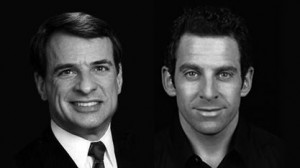
    William Lane Craig v Sam HarrisIn my last post, Sam Harris on Divine Commands: Part I, I criticised Sam Harris’ characterisation of divine command meta-ethics.  In this post I want to turn to his second line of criticism of a Divine Command Theory. In Harris’ debate with William Lane Craig at Notre Dame, transcript here, Harris stated:

    “I’m glad he raised the issue of psychopathy—we are being offered a psychopathic and psychotic moral attitude. It’s psychotic because this is completely delusional. There’s no reason to believe that we live in a universe ruled by an invisible monster Yahweh. But it is, it is psychopathic because this is a total detachment from the, from the well-being of human beings. It, this so easily rationalizes the slaughter of children. Ok, just think about the Muslims at this moment who are blowing themselves up, convinced that they are agents of God’s will. There is absolutely nothing that Dr. Craig can s—can say against their behavior, in moral terms, apart from his own faith-based claim that they’re praying to the wrong God. If they had the right God, what they were doing would be good, on Divine Command theory.”

    Here, Harris suggests a Divine Command Theory expresses both a psychopathic and a psychotic moral attitude. I will address the charge of a Divine Command Theory being “psychotic” in a later post. Here, I want to address what I think is Harris’ main concern: a Divine Command Theory is psychopathic. It involves a “total detachment … from the well-being of human beings” and “so easily rationalizes the slaughter of children”. Why does Harris think this? “Because, at this moment Islamic terrorists are blowing themselves up convinced they are agents of God’s will, and a divine command theory can say nothing against their behavior in moral terms except the faith based claim that they are praying to the wrong God.”

    A lot could be said about this argument. First, note that even if it were sound, it does not show the Divine Command Theory is false. Harris is, in fact, offering pragmatic arguments against the theory: it is dangerous, or is easily misused – but there are many things which are dangerous and easily misused that are nevertheless true.

    More importantly, the argument is unsound. A Divine Command Theory contends that an action is obligatory if God actually commands that action. It does not contend that an action is obligatory if someone claims, or believes that God commands it. Obviously, simply believing something is the case does not mean that it is true. Harris, as an atheist, surely recognises this; many people believe and are convinced God exists yet Harris thinks they are mistaken.

    Hence, the mere fact an Islamic terrorist believes God has commanded him or her to “blow themselves up” does not commit the divine command theorist to supporting terrorism. All a divine command theorist needs to say in response to Islamic terrorists is that (more…)

  • Why Defamatory Speech is not Free Speech

    The following is a representation of the standard argument as to why a remedy requiring the removal of defamatory speech from a publication is not a violation of the right to free speech:

    1. The right to Freedom of Expression is protected by s14 of the Bill of Rights Act 1990 (“BORA”).
    2. The operational provisions of the BORA provide in section 5 that a reasonable limit to Freedom of Expression can be justified in a free and democratic society where that limit is prescribed by law.
    3. Section 5 is subject to section 4, which states in mandatory terms that no court can decline to apply any provision of an enactment on the sole grounds that the provision is inconsistent with the BORA.
    4. Notwithstanding this, section 6 requires the court rule in a manner as consistent as possible with Bill of Rights.
    5. If a Respondent’s actions constitute a breach of s4 of the Defamation Act 1992 therefore the remedy sought, removal of the defamatory material from the publication, does not violate the Respondent’s right to Freedom of Expression.

    Freedom of SpeechWhile this is the standard argument it has always felt wrong to me. There is something unsatisfactory about appealing to a mechanism in the law that, as argued, feels like it is shearing off a part of an important right and freedom, even if the law says that it is ok.

    I find this argument unsettling and lacking something; at the same time defamatory speech is insidious, causes harm, hurts; intuitively it just feels wrong to say that one is morally justified in spreading harmful falsehoods about a person and is not required to account for the wrongs done, because of their right to free speech.

    After discussions with Matt about this I have decided that I prefer the following argument:

    1. Freedom of Expression exists to allow people to freely express their opinions and impart information without fear of legal penalty.
    2. Defamation is expression imparted to another that lowers the standing of a person in the eyes of their peers and is not true and is not honest opinion which is genuinely held.(I am ignoring the third defence, privilege).
    3. A person who expresses defamation is not engaging in Freedom of Expression as where there is no truth or honest opinion then a person is neither attempting to inform another or attempting to express their opinion.
    4. The basis for this is that to attempt to inform someone is to attempt to increase that person’s repertoire of true beliefs’ and to impart an opinion is to express what one honestly believes to be the case.
    5. Therefore, the freedom that the right to Freedom of Expression protects is all speech that is true or honestly held to be true by the speaker.

    That is much better.

    Defamatory speech is not free speech therefore legal sanctions against it are entirely appropriate in both legal and moral senses.

    Context:
    Two blogs have recently been found to have published defamation of me, the nature of which was described as “extremely serious” by a Court of Law. The above demonstrates why I feel I was perfectly justified in seeking the removal of the defamatory material, one by Court Order, one by private request. John Stuart Mill, the UN Charter, Milton, Common Law, to point to a few, have agreed for centuries that defining Freedom of Speech to be all speech that is not Defamation is just in all mediums. Defamatory speech being restricted or punished by law, offline or online, poses no threat to anyone.

  • Sam Harris on Divine Commands: Part I

    William Lane Craig v Sam HarrisIn a previous post, Divine Commands and Pyschopathic Tendancies, I said I would look in more detail at Sam Harris’ charge that Divine Command Theories (“DCT”) of meta-ethics are psychopathic. In this, and in several forthcoming posts, I will attempt to deliver on that promise.

    In Harris’ debate with William Lane Craig at Notre Dame, transcript here, Harris offered three direct lines of argument against a DCT. (I say direct lines because many of Harris’ rebuttals did not address DCT at all; rather he engaged popular objections to Christian doctrines about exclusivism and hell.) The first direct argument was as follows:

    “According to Dr Craig’s Divine Command theory, God is not bound by moral duties; God doesn’t have to be good. Whatever he commands is good, so when he commands that the Israelites slaughter the Amalekites, that behavior becomes intrinsically good because he commanded it.”

    Here Harris makes three claims.  First he argues that according to a DCT God does not “have to be good”. Second, he infers from this that God can therefore make any action at all intrinsically good. Third, he alludes to an incident in the book of Samuel where, on the face of it, God commands the killing of the Amalekites.

    Turning to Harris’s first claim, according to DCT a person has a duty to a person to do some action only if that person is commanded by God to do it. As God does not issue commands to himself he is not bound by moral duties. Harris infers from this that “God doesn’t have to be good”.

    Whether this is inference is sound depends on what Harris means by “have to be good”. There are at least two possible things he could mean by this.

    Sometimes when we say someone does or does not “have” to do something, we mean they are not morally obligated to do it. When I tell my children they have to tell the truth, for example, I am saying they have a duty to tell the truth. In other contexts however, when we say that someone does or does not “have” to do something we mean it is possible for them to do it.

    If Harris, in saying “God does not have to be good”, means God is not under an obligation to be good then his inference is sound; if God is not bound by duties then he obviously does not have an obligation to be good. This, however, does not entail that it is logically possible for God to lack goodness.

    If, on the other hand, Harris’ claim that “God does not have to be good” carries the implication that it is possible for God to do evil then it is a a flat out straw man.

    Craig’s position is that (more…)

  • Yet Another Lawyer Agrees: Marriage Amendment Act Bill is an Affront to Freedom of Religion and Belief

    Barrister Ian Bassett has given another opinion describing the risks to freedom of religion and belief of Louisa Wall’s Marriage Amendment Act Bill if it is enacted in its presently proposed form, which would include this amendment:

    “Without limiting the generality of subsection (1), no celebrant who is a minister of religion recognised by a religious body enumerated in Schedule 1, and no celebrant who is a person nominated to solemnize marriages by an approved organisation, is obliged to solemnize a marriage if solemnizing that marriage would contravene the religious beliefs of the religious body or the religious beliefs or philosophical or humanitarian convictions of the approved organisation.”

    It is clear that any marriage celebrant exercising their public function who is not covered by the amendment risks being in breach of the New Zealand Bill of Rights Act 1990 and the Human Rights Act 1993 if they refuse to perform their public function as marriage celebrants because it is a same sex couple seeking to be married.

    Injustice

    Church ministers, marriage celebrants, court registrars, church elders, leaders, photographers and caterers and any other person or entity supplying services to the public risks being in breach of the Human Rights Act 1993 if they refuse to supply services to a couple seeking to be married because the couple are same sex. For some this could also mean risking their employment.

    Service providers to the public risk being in breach of the Human Rights Act 1993 if they refuse to supply services to a married couple because the couple are same sex.

    The New Zealand Law Society’s Law Reform Committee headed by Professor Paul Rishworth LLB (Hons) M Jur highlighted the risk to freedom of religion and belief in the Bill in its submission to Parliament:

    “The proposer of the Bill said that the Bill was not intended to compel marriage celebrants to perform marriages contrary to their religious beliefs. However, in the Law Society’s view, Professor Rishworth says it is arguable that marriage celebrants who refuse to perform same-sex marriages will be acting unlawfully under the Human Rights Act 1993, the New Zealand Bill of Rights Act 1990, or both.

    “We want to highlight arguable conclusions which seem to be at odds with the settled intentions of the Bill’s drafters. Whatever the position, the Law Society believes it makes sense to put the matter beyond doubt,” Professor Rishworth says.

    The only thing that the amended Bill puts beyond doubt is that the critics of those raising fears about the Bill’s threat to freedom of religion and belief were wrong. By recommending an amendment the Select Committee are agreeing that a risk existed, as the likes of Ian Bassett, Grant Illingworth have argued, contra to The Human Rights Commission’s claim that all “…religious officials and leaders are free to refuse to perform marriages that are not in accordance with their religious beliefs.”

    Bassett, Illingworth and Rishworth are not alone with their concerns among the legal fraternity.

    Graeme Edgeler, a Wellington Barrister has been quoted in the Herald saying:

    … if an independent celebrant declined to marry a same-sex couple, the couple could then complain to the Human Rights Commission.

    “It’s not about [celebrants] being forced, it’s about people getting in trouble afterwards if they didn’t,” he told APNZ.

    “They’re not breaking any rule in the Marriage Act, but rules in other acts. The main one would be the Human Rights Act, which says you can’t discriminate on the basis on sexual orientation or gender.”

    Auckland Barrister Rachel Wong has raised issues against the Bill.

    This blog’s Madeleine Flannagan LLB, Associate Barrister and Solicitor at Coast Legal, adds her voice:

    “The Bill, in its present form, fails to protect individual freedom of religion and belief (belief being a comprehensive viewpoint not based on religion). The proposed amendment only protects group religious rights, which is little protection at all for most religious celebrants as few denominations hold formal views on marriage, many practitioners of religion do not belong to a group and for those that do they might hold a different personal view on this topic to the group view. The amendment then fails to protect the religious freedom of most religious celebrants just as it utterly fails to protect the freedom of belief of non-religious celebrants who have no group to appeal to to protect their freedom.”

    Ian Bassett’s latest opinion thoroughly analyses the legal effects of the amended Bill, a summary as to whose freedom of religion and belief it protects and whose it does not follows: (more…)

  • Hear Matt Speak at Stayin’ Alive Pro Life Training Day

    The Autumn 2013 Stayin’ Alive Pro-Life Training Day will be held in Christchurch this Saturday 16 March 2013. Matt will be speaking twice.

    Stayin' Alive Autumn 2013

    8:15am Rego’s and tea & coffee (YouTube videos in main hall)
    9:00am Introduction, housekeeping, and ice breaker (people bingo)
    09:30am session: ‘Relativism, Utilitarianism and Abortion’ – Dr Matthew Flannagan
    10:30am Morning tea break
    10:50am session: ‘Abortion Apologetics’ – Brendan Malone
    11:50pm Break
    12:00pm session: ‘The media and the culture of life’ – Bob McCoskrie
    12:45pm Lunch Break
    13:30pm WORKSHOPS:

    1. ‘Modern medicine and abortion’ – Dr C. Hallagan
    2. ‘The truth about post-abortion trauma’ – Carolina Gnad
    3. ‘Practical media skills’ – Bob McCoskrie

    14:30pm Break
    14:45pm WORKSHOPS:

    1. ‘What women in crisis-pregnancy need from us’ – Sandra Martin
    2. ‘Using the Internet to build a culture of life’ – Jason McTague
    3. ‘Skills every pro-life apologist needs’ – Dr Matthew Flannagan

    15:45pm Afternoon tea break
    16:15pm session ‘Be the voice your culture needs you to be!’ – Brendan Malone
    17:00pm Small group discussion
    17:15pm Final wrap up
    17:45pm BBQ Dinner
    19:00pm Finish and clean up

    When and where:
    Saturday 16 March, 2013 at:

    Burwood Christian Centre
    54 Bassett Street
    Burwood
    Christchurch

    Registration starts at 8:45am on Saturday 16 March, and the event runs all day finishing with a BBQ dinner at approximately 5:45pm.

    The registration fee is $20 per person (includes lunch and dinner plus morning and afternoon tea).

    More information including how to register is available on the Stayin’ Alive website.