This year the New Zealand apologetics organization Thinking Matters ran a “Confident Christianity Conference” in Auckland. I was asked to speak at this conference on the topic. Does Morality Need God? Below is a slightly streamlined version of the talk I gave. This brings me to my second contention: If God exists, a divine command theory […]
Entries Tagged as 'Thinking Matters'
Thinking Matters Talk: Does Morality Need God? Part Three:
September 8th, 2022 3 Comments
Tags: Anything goes Objection · Arbitrariness Objection · Divine Command Theory · Euthyphro Dilemma · God and Morality · Graham Oppy · Nathan L King · Plato
Thinking Matters Talk: Does Morality Need God? Part One
August 24th, 2022 Comments Off on Thinking Matters Talk: Does Morality Need God? Part One
This year the New Zealand apologetics organization Thinking Matters, ran a “Confident Christianity Conference” in Auckland. I was asked to speak at this conference on the topic. Does Morality Need God? Below is a slightly streamlined version of the talk I gave. “If God does not exist, then everything is permissible.” These words from Ivan […]
Tags: Divine Command Theory · God and Morality · John Stuart Mill · Peter Singer · Robert Adams
The Challenge of Moral Relativism: Three Problems with Relativism
June 25th, 2018 Comments Off on The Challenge of Moral Relativism: Three Problems with Relativism
This is the third of a series of posts on moral relativism. These talks are based on some talks I have given on the subject in the last few months. In the first post, I looked at what the basic issues are. The second post examines some of the reasons people offer for accepting relativism. This […]
Tags: Ethics · Moral Relativism
The Challenge of Moral Relativism: Arguments for Relativism
June 22nd, 2018 Comments Off on The Challenge of Moral Relativism: Arguments for Relativism
This post is based on a series of talks I have given on moral relativism. In my last post, I looked at what relativism and objectivism are. Here I examine some common reasons people accept or defend relativism I will offer critical commentary on these arguments. When examining any position in philosophy it is important […]
Tags: Ethical Theory · Moral Relativism · Tolerance
The challenge of Moral Relativism: Relativism vs Objectivism: understanding the issues:
June 20th, 2018 11 Comments
www.youtube.com/watch?v=sZmPYtnBP4Q&feature=youtu.be”>Tauranga
This post is the first of a series of posts which reproduce a talk on Moral Relativism I gave at both the Auckland and Tauranga Confident Christianity Conference’s and was given earlier in the year as part at a series of talks on apologetics at Orewa Community Church. In moral debates about you will hear […]
Tags: Allan Bloom · Ethical Theory · Francis Howard-Sydner · Moral Relativism
Video: The Smith-Flannagan Debate “Morality Does Not Need God”
July 6th, 2016 Comments Off on Video: The Smith-Flannagan Debate “Morality Does Not Need God”
On Wednesday 21st May at the University of Waikato retired Philosophy and Political science lecturer Dr Ron Smith and Dr Matthew Flannagan (of this blog) debated the resolution “Morality Does not need God”. Here is the video of that debate.
Tags: Debates · Divine Command Theory · God and Morality · Ron Smith · Waikato University
Hear Matt speak @ the Auckland Confident Christianity Apologetics Conference
April 14th, 2015 Comments Off on Hear Matt speak @ the Auckland Confident Christianity Apologetics Conference
This ANZAC weekend make sure you check out the Thinking Matters Confident Christianity Apologetics Conference at Northcote Baptist Church. Matt will be speaking along with a number of other great speakers. Full conference schedule here. In brief, from the Thinking Matters’ Facebook Event page: Does God exist? Why is there so much suffering? Is truth relative? Are science and […]
Tags:

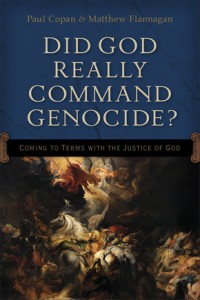 A common objection to belief in the God of the Bible is that a good, kind, and loving deity would never command the wholesale slaughter of nations. In the tradition of his popular Is God a Moral Monster?, Paul Copan teams up with Matthew Flannagan to tackle some of the most confusing and uncomfortable passages of Scripture. Together they help the Christian and nonbeliever alike understand the biblical, theological, philosophical, and ethical implications of Old Testament warfare passages.