Category: Jurisprudence

  • PART THREE: FETICIDE IN CHRISTIAN MORAL THOUGHT (Part three) : The Medieval Period

    I teach NCEA Religious Studies, at level three, one standard is to “Analyse the response of a religious tradition to a contemporary ethical issue”. Officially students have to describe the response a religious tradition has made to a moral issue. Our school like a lot of schools looks at Christian responses to abortion. Because I did my PhD thesis on this very subject in the last year I have been going through my dissertation and simplifying, summarising and rewriting it into short sections I can use with my classes. Because there is some interest in this, I have decided to post some of these on MandM. I welcome any feedback or comments.

    In our last  post we looked at how Christian theologians who wrote during the Patristic period, the period from 90AD to 475 AD, addressed the question of abortion. Our survey suggested they adopted essentially the same position we saw earlier in Alexandrian Judaism and which is found in the Septuagint. In this next section, we will look at the medieval period. Historians date the medieval period from 500 AD -1500. AD, during this period Christian Theologians adopted pretty much the same stance they did during the Patristic period.

    I. Canon Law
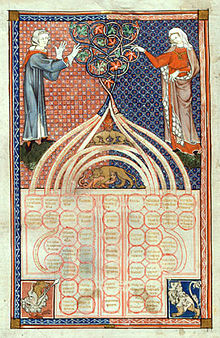
    The period from 500-1000 AD is known as the early middle ages. During this time the church in Europe developed what is called Canon law. Canon law is a set of laws developed by church authorities to govern the church and its members. One thing that Canon law had to deal with was penance; suppose someone commits a seriously immoral action, how should the church respond, what penalties practices of confession and repentance, should be in place to deal with this such practices are known in Catholicism as penance.

    During the early middle ages, manuals about how penance should be applied were developed. Many of these manuals addressed abortion. Here are some examples:

    • Manual Canones Hibernenses (675 A.D.) refers to abortion as a sin but draws a distinction between an unformed embryo and a formed, fetus. While both incur a penalty, The latter is punished more severely.[1]
    • The Bigotian Penitential (8th Century AD) draws a distinction between an embryo in liquid form and a fetus with flesh and spirit. Both abortions are punished, but the latter is punished more severely. [2]
    • The Anglo-Saxon Penitentials (668-690 A.D.) associated with the then the Archbishop of Canterbury Theodore drew a distinction between an abortion before and after 40 days. Penances are imposed for both periods; however, the penance after 40 days is stricter.[3] 
    • The Penitentiale Discupulus Umbrensium, states that if abortion takes place before an embryo has a soul the penance will be a year or three forty-day periods [4]

    In 1000 AD Pope Leo began reforming canon law and attempted and get a consistent practice. A Bishop called Ivo de Chartres collected together various manuals which became the standard rules for the church. Ivo dealt with abortion under the heading of “Homicide” he cited various Patristic writers we mentioned in our last lesson such as Jerome and Augustine and argued that a formed embryo or fetus is a human being and hence killing is a form of homicide[5] Ivo’s position became the standard position in Medieval Canon law. Ivo’s position was adopted by Gratian (1160) and Gratian’s work on Concordia became the dominant text of Canon law until the nineteenth century.

    1. II. Medieval Theology

    Alongside Canon law, we can also examine what Theologians or Philosophers who taught at Universities wrote.

    1.Peter Lombard

    One of the most important Theologians of the middle ages was Peter Lombard. Lombard lived from 1095-1160 A.D. He is important because he wrote The Sentences which was the most widely used textbook in Medieval universities.  When discussing feticide, Lombard repeated the texts cited by Gratian and Patristic writers such as Augustine, Jerome and also quote from the Septuagint.[6]
    Because Lombard’s book was such a widely used , other scholars of the period wrote commentaries on it.

    • In his commentaries, Albert the Great (1206-1280) accepted Lombard’s position that killing a formed conceptus was homicide.[7]
    • In his commentary Bonaventure (1221-1274) also accepted Lombard’s position that killing a fetus was homicide.[8]

    2.Thomas Aquinas

    The most famous Theologian and philosopher of the middle ages was Thomas Aquinas (1225-1275). In his commentary the Sentences he accepted Lombard’s basic position.80 Later, in the Summa Theologiae, Aquinas quotes Exodus 21:22-25:

    He that strikes a woman with child does something unlawful: wherefore if there results the death either of the woman or of the animated fetus, he will not be excused from homicide, especially seeing that death is the natural result of such a blow.[9]

    3.John of Naples

    A final theologian to note is fifteenth-century theologian John of Naples.  John wrote a book called Quodlibeta; in which he addressed the question “is it acceptable to give medical treatment to a pregnant woman if doing so will cause an abortion?”  John’s answer. If the drugs are provided for the purpose of destroying the embryo or fetus, then this is forbidden. On the other hand, if the drugs are provided to save the woman’s life from a fatal illness, then one can provide this treatment to her provided the fetus is not formed at the time.

    John was the first Theologian since Tertullian to explicitly address the question of whether abortion was acceptable to save a woman’s life. His position was taken up by later theologians and lead to a debate about under what circumstances abortion was acceptable if it saved a pregnant woman’s life.

    III. Medieval Law

    We will close our examination of the medieval period by looking at the law.

    1. Roman Law
    During the medieval period, Europeans followed Roman law. Roman law regarding abortion had developed as follows:

    • Roman dictator Sulla (81 BC) passed the Lex Cornelia a general law against selling and distributing poison.
    • Roman legal scholar Iulius Paulus applied the Lex Cornelia to cover drugs that cause an abortion:

    If anyone gives another a love potion or an abortion potion, even without an evil intention, since it is a source of bad example, he will be condemned to work in the mines if he belongs to the lower classes. If he belongs to the upper classes, he will be exiled and part of his property confiscated. But if the man dies, he will be punished with a capital sentence.[10]

    This became known as the Qui Abortionis law. The phrase “but if a man dies” probably referred to the death of the mother. However, during the medieval period, European lawyers began interpreting Roman law in accord with both the Septuagint and canon law. As a result, the reference to killing a man in the Qui Abortion was understood to include the killing of a fetus, 40 days after conception.

    2.English Common Law

    Canon law and medieval European law had an influence on English common law:  English common law is that part of English law which is based on custom.

    • Henry Bracton, (1210 – 1268 AD ) recorded English common law as stating: “If there is anyone who strikes a pregnant woman or gives her a poison which produces an abortion if the foetus be already formed or animated, and especially if it be animated, he commits homicide.” [11]
    • In 1290 an anonymous royal official wrote a book called Fleta according to this book:

    One is rightly a homicide who has pressed on a pregnant woman or has given her a poison or struck her to produce an abortion … if the foetus was already formed and ensouled… A woman also commits homicide if, by a potion or the like, she destroy the ensouled child in her womb. 89

    Bracton and Fleta tell us that killing a fetus was considered homicide in English common law.

    3.The Quickening rule

    The courts had difficulty applying these laws in practice. In English law, a person cannot be prosecuted for murder unless it is proven beyond a reasonable doubt that they deliberately killed a human being. I was hard to do this in medieval times. Miscarriage sometimes happens naturally, and it is difficult to determine how long a woman has been pregnant and whether or not the child in her womb had died of natural causes. Two prominent legal cases in the middle ages   resulted in an acquittal because of an inability to prove

    These difficulties lead to the development of what is called the “quickening rule”. Quickening refers to the time when a woman first feels the fetus move inside her. English law treated any action which caused the death of a fetus after quickening a serious criminal offence.  But refused to treat it as murder unless the fetus was born alive and died from wounds which were obviously caused while the woman was pregnant. This way of applying the law was followed by the famous English judge Edward Coke (1552 –1634) and is recorded as the law of England by the judge William Blackstone 1723 – 1780) This remained the English law till the mid-19th century.


    [1] Canones Hibernenses,1 Canons 6-8.

     [2] Penitentiale Bigotianum, 4.2, 2-4.

    [3] Penitentiale, 14, 24 also 27.

    [4] Penitentiale, 14, 24 also 27.

    [5] Ivo of Chartres, Decretum, 10 55-58.

    [6] Peter Lombard, Libri Sententiarium, Lib 4 d.31.

    [7] Albert, Commentarium, in L IV d. 31 a18.

    [8] Bonaventure, Commentarium in Librum IV Sententiarium, d 31 dub 4. 80 Thomas Aquinas, Commentarium in Librum IV Sententiarium, d 31.

    [9] Thomas Aquinas, Summa Theologiae II II Q64 Article 8. 82 Connery, Abortion:, 112.

    [10] Justinian, Digest 48. 19. 38. 5.

    [11] Henry Bracton, On the Laws and Customs of England, 2: 341.

  • Erik Wielenberg and the Autonomy Thesis: Part Three Standard Objections to the Autonomy Thesis, Human Rights and Dignity without God

    In my last post I looked at Erik Wielenberg’s response to the objection that, in the absence of God, people lack compelling reasons to comply with morality’s demands.  A second objection Wielenberg briefly addresses is that without certain theological doctrines, one cannot provide a plausible basis for human rights and dignity.  Wielenberg, here again, takes Craig as paradigmatic.

    defaul1If there is no God, then what’s so special about human beings? They’re just accidental by-products of nature that have evolved relatively recently on an infinitesimal speck of dust lost somewhere in a hostile and mindless universe and that are doomed to perish individually and collectively in a relatively short time[1]

    Craig’s rhetorical question alludes to a serious point, made in more detail by Peter Singer, Louis Pojman, and Nicholas Wolterstorff, this is that it is hard to plausibly accommodate the thesis that all human beings have equal dignity and rights outside a theistic framework. Wielenberg’s response is that human rights are grounded in “non-moral intrinsic properties of human beings” He notes: “Human beings can, reason, suffer, fall in love, set goals for themselves and so on. God or no God, human beings obviously differ when it comes to intrinsic properties than dogs or mere lumps of clay[2]”

    Wielenberg here appeals to certain higher cognitive capacities human beings possess that other animals lack.

    This brief response to Craig is central to his Wielenberg’s rebuttal of evolutionary debunking arguments against moral realism latter in the book. Sharon Street and others have raised epistemological challenges to moral realism by noting that many of our basic evaluative capacities, our disposition to judge certain types of behaviour as morally wrong, has been shaped by naturalistic evolution.  Naturalistic evolution, however, isn’t guided by considerations of truth, in selecting such dispositions, but by adaptability, these basic evaluative judgements exist, because making such judgements enabled our ancestors to reproduce effectively in the environment in which they lived. Street notes “the striking coincide between independent moral truths posited by the realist and the normative views evolution has pushed us towards” and “challenges the realist to explain this coincidence.”[3]

    Wielenberg proposes that “our cognitive capacities” explain the coincidence. Moral rights D supervene upon any creature that possesses certain cognitive capacities.  Seeing these are the same cognitive capacities which produce moral beliefs. It follows that any being which believes it has moral rights will necessarily have them.[4]

    Wielenberg specifies that the supervenience relationship here involves both modal covariation, and a form of “robust causation” analogous to the way theist understand God’s relationship to the created universe, just as Theists believe that God immediately sustains the universe in existence moment by moment simply by willing its existence. So, natural those properties which constitute our higher cognitive faculties, robustly cause the existence of moral rights, without any intermediatory agency or laws of nature.

    This answer both to the grounding of human rights and evolutionary debunking arguments has a cost.  As Wolterstorff [5] and Singer [6].  have both pointed out, while it is true that normal adult humans have the cognitive capacities in question, many important categories of human beings do not. Infants and small children cannot reason, or fall in love, set goals for themselves, nor do they have the developed moral cognition Wielenberg refers to. In fact, David Boonin has noted: “by any plausible measure dogs, and cats, cows, and pigs, chickens and ducks are more intellectually developed than a new born infant.”[7].

    So, Wielenberg’s answer gives us no reason for thinking a child or infant has a rights or dignity, over and above any other animal. In fact, seeing moral rights modally covary with possession of the relevant cognitive faculties, such capacities are necessary and sufficient for the possession of moral rights.  Consequently, His position seems to entail that infant’s small children, and mentally impaired human adults have no moral rights.


    [1] Wielenberg, Robust Ethics 51, the citation is from William Lane Craig and Walter Sinnott-Armstrong God: A Debate Between a Christian and an Atheist (Oxford: Oxford University Press, 2004) 18

    [2] Ibid 51

    [3] Ibid 155

    [4] Ibid 134-175

    [5] Nicholas Wolterstorff Justice: Rights and Wrongs (Princeton NJ: Princeton University Press, 2008) 325-341.

    [6] Peter Singer, Writings on an Ethical Life (London: Harper Collins Publishers, 2001) 186-187

    [7] David Boonin, A Defense of Abortion (Cambridge: Cambridge University Press, 2003), 121, the neurological data is summarised in Michael Tooley’s Abortion and Infanticide (New York: Oxford University Press, 1983) Ch. 11.5.

  • John Corvino on Liberals and Being Judgemental

    0199856311bRecently I have been reading John Corvino’s book, “What’s wrong with Homosexuality?” Corvino describes himself as a religious sceptic and is one of the leading defenders of the moral permissibly of homosexual conduct, and also an articulate defender of what is commonly called “gay rights”. In terms of the conclusions we each have, Corvino and I are on very different pages. Yet despite our significant differences, I was pleasantly surprised at how much of his book I agreed with, particularly, his attempt to bring a degree of clear thought to the issue as opposed to the emotionalistic sloganising and rhetorical bullying that so often accompanies this issue.

    I want to share with my readers this gem, which comes from the first chapter:

    “Some people claim that morality is a “private matter” and that, in any case, people’s rights shouldn’t hinge on others’ moral opinions. I think this view is badly mistaken. Morality is about how we treat one another, and thus it is quintessentially a matter for public concern. It’s about the ideals we hold up for ourselves and others. It’s about the kind of society we want to be: what we will embrace, what we will tolerate, and what we will forbid. And while it’s true that a free society grants a good deal of personal latitude here, avoiding legal force except where transgressions infringe upon others’ liberty, it doesn’t follow that morality is irrelevant to the law. People’s moral views strongly influence how they vote, and thus, ultimately, what laws get passed. There’s a philosophical connection as well. Laws depend on moral foundations, broadly speaking, for their legitimacy, and the commitment to “liberty and justice for all” is a moral commitment. So it irks me when my fellow liberals insist that “we ought not judge one another.” I understand where they’re coming from: Moralistic finger-wagging is tiresome, not to mention counterproductive, and nobody likes a know-it-all. One might also point to Biblical support for the directive, though presumably in that context it means that humans have no business making “Final Judgments,” not that we can’t make judgments at all. But as a general rule, the claim that we ought not judge one another is misguided—logically, rhetorically, and morally.  It’s misguided logically because it’s self-refuting. (If we ought not judge one another, then why are you telling me what to do?) It’s misguided rhetorically because it makes liberals seem as if they have conceded “moral values” to the other side, leaving them in the  untenable position of being “opposed” to moral values. And it’s misguided morally, because people have a moral responsibility not only to behave well themselves but also to promote standards of right conduct. The moral tone of society is everyone’s responsibility, liberals included.  This is not to say that we ought to become moral busybodies. Humility is a moral virtue, as is kindness, and those who wield morality as a weapon are at least as confused as those who insist that it’s a “private matter.” But we shouldn’t confuse the rejection of bad moralizing with the rejection of moralizing altogether. Morality is too important for that.”

    Excluding the phrase “my fellow liberals”, I could not agree more with  Corvino’s sentiments.

  • Nonsense on Stilts: Non-Discrimination Rights

    When the Human Rights Act was passed in 1993 I supported the writing of non-discrimination rights into law. At that time I, like many New Zealanders, believed that people had a right to not be discriminated against that the government should protect. Since then, reflecting on the issue has lead me to change my mind. I am now inclined to think that non-discrimination rights do not exist, they are “nonsense on stilts”. Laws which purport to recognise and protect them are recognising and protecting something that does not exist.

    My position now is that discrimination is not wrong, it is morally neutral. It is justified and reasonable to discriminate on certain grounds in certain contexts, and it is unjustified to do so in other contexts. When it is unjustified, what makes it so are factors that have nothing to do with discrimination; these factors would be problematic if applied equally.

    Jake the muss: not a skinny asian womanBefore elaborating my reasons for being sceptical about such rights, let us be clear as to what denying non-discrimination rights does not mean. It does not mean I believe that it is permissible for people to refuse to serve ethnic minorities because one holds to false sterotypes and has unwarranted hatred towards those minorities. Nor does it mean I support depriving women or African Americans of the vote. Likewise I do not support racist lynchings or gay bashings.

    A sceptic about anti-discrimination rights can oppose all these things and still not be committed to supporting the existence of anti-discrimination rights. All that is entailed by my scepticism is that these thing are not wrong because they violate a right to not discriminate, and its clear to me that this is true; they are wrong for other reasons.

    Discriminating against minorities in the manner suggested above is wrong because we have duties to not stereotype and treat people with contempt. If we treated everyone equally in this way it would still be wrong. Similarly, racist lynchings are wrong because they involve kidnapping, assault and homicide. If people were equal-opportunity lynchers who indiscriminately lynched people of all races, sexes, lifestyles and degrees of ability, it would still be wrong for them to do so. Depriving people of the vote is wrong because people have a right to vote, the right is not attached to sex or race, and so on. The point is that the wrongness of these sorts of practices can be adequately explained, and I think is more plausibly explained, without recourse to an alleged right to not be discriminated against. An appeal to “discrimination” misdiagnoses the moral problems with the action complained of.

    Why Discrimination is Not Wrong
    It is not wrong to discriminate. To discriminate against one person in favour of another is to treat the former less favourably than the latter. The problem is that, so defined, discrimination is clearly not wrong. In fact, discrimination is essential to any moral thinking at all.

    To make a moral judgement condemning a particular action involves adopting a less favourable stance towards those who perform that action. We condemn particular actions, and if a person doing those actions lacks an adequate excuse we blame and censure that person for what he or she did. We expect the person to feel guilty and to make appropriate apology and reparations. On the other hand to judge an action is right (more…)

  • Religious Freedom and Non-Discrimination

    Currently I am working on a post on the issue of non-discrimination rights and the morality of discrimination. In the mean-time  I thought I would highlight the thoughtful commentary from James-Michael Smith in this video.

  • Flannagan v ACC – Victory

    Long time readers of this blog will remember than 5 1/2 years ago I was in a car accident that saw me suffer a herniated cervical (neck) disc and require disc replacement surgery. Readers will also be aware that the pain I lived (live) with did not end after that surgery and that when the Accident Compensation Corporation (ACC) went on to cut my entitlements, plunging our family into poverty (NZ definition) as I was the primary earner, I instructed John Miller Law in Wellington to fight their decision.

    Matt and I were terrified at the possible $8,000 + bill we might face if we lost; trying to provide for our 4 children in Auckland on $15,000 p/a was extremely difficult as it was without a debt like that being added to the mix. We appealed on this blog for donations and with the help of those who generously gave, along with the generosity of John Miller Law, who more than once wrote off parts of my bill, we managed to keep the legal proceedings going even after we lost the Review Hearing.

    I pressed on for a number of reasons. I firmly believe that ACC deliberately set about to exit me from cover by sending me to a doctor they knew would say I had degeneration. I believe this on the basis of the Court’s previous findings on Mr Otto and on the basis of his reputation among his peers – I have previously blogged my experience of phoning Orthapaedic Surgeon’s offices and sharing what those offices had to say about him to me. I also believe this on the basis of what happened at the appointment with Mr Otto – his pronouncement of my having a degenerative condition before he’d asked me if a single medical question and shortly before he shared that he had not yet seen my MRI, X-Ray or Bone Scan films and reports. I knew my condition was not degenerative or pre-existing: I was working full-time, studying part-time, raising 4 children, running a house and was engaging in equestrian sport on the weekends immediately prior to the accident.

    The other reason I filed was for all the other people like me. I believed then, and I still do, that ACC did what they did to me (cutting me off by sending me to a specialist they know will say a condition is degenerative when other specialists would not) to many other people and that doing so was a numbers game for them – a way of cutting their bottom line. Cut x number of people off, only teeny proportion y will fight; of those who fight ignore them unless and until you are faced with a court date, then quickly settle before that court date to avoid the public damage the judgment of the Court can deliver.

    We filed my appeal earlier this year. This consisted of three expert reports written by Orthopaedic Surgeons Greg Finch and Michael Barnes. We also filed affidavits from Matt and I, which we wrote ourselves. ACC offered to settle in full shortly after they were served: legal costs, report costs and full reinstatement of my entitlement, the maximum I could have won in Court.

    More than one person said to me ‘but Madeleine, if you settle no light will be shone on ACC’s practices’. While I shared their concerns at the lack of a precedent being set if I settled, as a lawyer I know the Court’s view on people who refuse good settlement offers and press on to hearing. I took the settlement and resolved to shine light another way. I am one of the lead stories today on the New Zealand Herald’s website (and on the website of the Otago Daily Times🙂

    Mother wins 3 year fight with ACC

    Click to read: Mother wins 3 year fight with ACC

    Mr Otto states in the NZ Herald article, after acknowledging he has no memory of my case, that I “would not have realised he could receive x-rays via email and that he would have seen them before diagnosing her”. I reject this. As I deposed in my affidavit:

    [40] A few minutes after making his opening statement that my condition was degenerative, Mr Otto asked me if I had brought my x-rays, MRI and bone scans. I told him that I had not been asked to and that the other specialists I had seen had all been able to log into some central record holding place and view them so it did not occur to me to bring them. He told me that his office did not have that kind of technology but he would request copies of the reports and films. I offered to send them to him but he said not to bother as ACC had only sent him a letter which didn’t say much so he was going to have to request various things from my file anyway.

    [41] In this moment it was clear that Mr Otto had made his statement about the purpose of the appointment being to discuss my “degenerative condition” in advance of asking me a single question, without having examined my x-rays and scans and on the basis of whatever ACC had communicated to him about me.

    [42] It was also clear that Mr Otto had conducted the appointment with a predetermined purpose: to determine a degenerative condition. He had decided this was my diagnosis before the examination, before being in receipt of the relevant medical evidence. I did not have confidence his diagnosis post-appointment could be objective or unbiased.

    My and Matt’s affidavits are here in full:
    13.03.22 Affidavit of Madeleine Flannagan – Flannagan v ACC
    13.03.22 Affidavit of Matthew Flannagan – Flannagan v ACC

    This is the case I refer to in my affidavit where Mr Otto was found by the Court to prefer his degeneration diagnosis in the face of evidence to the contrary: Lu-v-Accident-Compensation-Corporation-2011-NZACC-45 (A New Zealand Herald article about that case is available here)

    ACC said in the NZ Herald article “An ACC spokesman said it found the consistency and rationale of the two specialists’ opinions “more compelling” than Mr Otto’s report. “As a result ACC decided to reverse its decision.””

    I would like to stress that until ACC insisted (see affidavits) I see Mr Otto, every specialist and doctor who had seen me at that point said my issues were accident related. Mr Otto was the only one who said otherwise. Subsequant to Mr Otto’s report ACC were provided with 2 reports from Greg Finch and 1 from Michael Barnes  – these were the reports ACC found “more compelling” than Mr Otto’s – they were provided the first of these approximately 2 years before they settled, the others they received approximately 1 year before they settled. The service papers for my appeal containing these same reports they received a couple of weeks before they settled.

    Make up your own mind as to whether is was “the consistency and rationale of the two specialists’ opinions” that caused ACC to reverse its decision or whether it was the threat of a court case.

    I have to thank John Miller Law, all those who donated and encouraged me, Greg Finch, Michael Barnes, my church, my family and friends and especially my children and husband who suffered so much along side me – if it wasn’t for Matt going to my lectures and taping my classes and taking notes for me for me to attend to on the couch I would never have finished my law degree. I still live with pain today and it still impacts my life adversely but I am a lot better than I was and I continue to improve.

    Update: For those wondering how I completed a law degree when I could not work, I refer you to Matt’s post Madeleine Admitted to the Bar where he outlines just what it took and how hard it was given my injuries. It is also documented in the affidavits I have published in this post.

    NewstalkZB focussed on Madeleine’s case during the Leighton Smith show.