This is a talk I gave to the New Zealand Association of Philosophy Teachers annual conference at St Cutherberts College in September this year. Several people have asked me to make this talk available. I have broken my talk up into four parts. Part One introduces what philosophy of religion. In part two I will […]
Entries Tagged as 'Philosophy of Science'
Contemporary Philosophy of Religion and NCEA Religious Studies: Part one
October 17th, 2017 Comments Off on Contemporary Philosophy of Religion and NCEA Religious Studies: Part one
Tags: Anselm · Augustine · Bentham · David Hume · James Rachels · Jeremy Bentham · John Locke · Philosophy of Religion · Utilitarianism · William Paley
Comparing the Old & New Teleological Arguments
October 20th, 2011 78 Comments
The “New Teleological Argument” is a theistic argument which attempts to show that theism is more probable than the postulate of an “atheistic single universe”[i]. There are number of reasons why this argument is termed the “New” teleological argument. Chief among these reasons is that its explanandum i.e. the incredible fine tuning of the laws […]
Tags: Apologetics · Design Arguments · Evolution · Fine-Tuning · Natural Theology · Philosophy of Religion · Robin Collins · Teleological Arguments · The Likelihood Principle · William Paley
Hear all of John Lennox’s New Zealand Talks
March 23rd, 2011 2 Comments
John Lennox recently toured New Zealand and most of his hosts recorded his talks. Here are all the MP3s of Lennox’s New Zealand talks handily in one post. Howick Baptist Sunday morning service (27 Feb) – Why? Considering the Goodness and Sovereignty of God in the Midst of Suffering (video here). Greenlane Christian Center evening service […]
Tags: John Lennox · MP3
Induction: Assuming the Uniformity of Nature
March 4th, 2011 Comments Off on Induction: Assuming the Uniformity of Nature
Most people engage in what philosophers call “inductive” reasoning. People make accurate predictions about the future on the basis of conjunctions they have observed in the past. For example, I assume the sun will rise tomorrow because in the past I have observed it rise. Scientists, in particular, rely on extrapolations of this sort in […]
Tags: Conjunction · Induction · Philosophy of Science · Regularity View · Uniformity of Nature
John Lennox on the “Religion v Science” Myth
February 15th, 2011 273 Comments
John Lennox will arrive in Auckland in less than two weeks for his New Zealand tour. If you are not familiar with Lennox watch this video “The “Religion v Science” Myth.” In it Lennox examines the historically ignorant myth that religion is and always has been at odds with science. Details of Lennox’s upcoming New […]
Tags: Historical Ignorance · John Lennox · Science and Religion · Urban Myths
Hear John Lennox in New Zealand UPDATED
February 15th, 2011 6 Comments
Professor John Lennox of the University of Oxford will arrive in New Zealand in a fortnight for a brief public speaking tour in the centres of Auckland, Wellington and Christchurch. His New Zealand speaking itinerary of public events is below; all public events are free. Auckland Sunday 27 February 9:30 – 11:00am Preaching at Howick Baptist […]
Tags: Auckland · Christchurch · Compass · Events · John Lennox · Philosophy of Religion · Philosophy of Science · Science and Religion · Wellington
False Alarm: Falsificationism and its Misapplication
January 4th, 2011 21 Comments
A fair number of people are fond of the claim that if one is to be able to take a claim seriously, it really ought to be falsifiable. One easy response is that it’s difficult to see how this particular claim, about how we are to go about accumulating knowledge and believing stuff, is itself […]
Tags: Falsificationism · Friedel Weinert · Karl Popper · Philosophy of Science · Science and Religion · Scientism

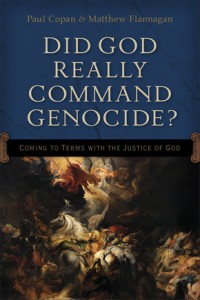 A common objection to belief in the God of the Bible is that a good, kind, and loving deity would never command the wholesale slaughter of nations. In the tradition of his popular Is God a Moral Monster?, Paul Copan teams up with Matthew Flannagan to tackle some of the most confusing and uncomfortable passages of Scripture. Together they help the Christian and nonbeliever alike understand the biblical, theological, philosophical, and ethical implications of Old Testament warfare passages.