The autonomy thesis contends that there can be moral requirements to φ regardless of whether God commands, desires, or wills that people φ. In his monograph, Robust Ethics: The Metaphysics and Epistemology of Godless Normative Realism,[1] Erik Wielenberg offers arguably one of the most sophisticated defences of the autonomy thesis to date. Wielenberg argues three […]
Entries Tagged as 'Atheists'
Erik Wielenberg and the Autonomy Thesis: Part Two Standard Objections to the Autonomy Thesis, Reasons to be Moral Without God
March 20th, 2017 3 Comments
Tags: Erik Wielenberg · God and Morality · Robert Adams · Stephen Layman · Why be Moral? · William Lane Craig
Carrier on infantile moral reasoning: one more time
March 16th, 2017 1 Comment
In a previous post, I discussed Carrier’s defence of “The infantile Objection” to divine a command theory (DCT) of meta-ethics. Some comments he makes in the same paper, suggest a slightly different version of the argument. Seeing I have found this version of the objection relatively common in oral discussions. It is worth having a […]
Tags: Divine Command Theory · Historical Atrocities · Richard Carrier
Is it Immoral to Believe in God? Matt responds to Michael Ruse
November 28th, 2016 1 Comment
The Christian Research Journal have published an online copy of an article I wrote for their journal last year: In a recent op-ed piece in the New York Times, the distinguished philosopher of science Michael Ruse raises the question, Is it morally wrong to believe in God? Some skeptics maintain there is something irrational about […]
Tags: God and Morality · Michael Ruse · New Atheists · Publications
Ed Feser reviews Jerry Coyne
July 7th, 2016 1 Comment
Over at First Thing’s, Edward Feser has an interesting, but characteristically scathing review of Jerry Coyne’s book Faith vs Fact: Why Religion and Science Are Incompatible.
Tags:
Richard Carrier and the “Infantile” objection to God’s command’s
October 27th, 2015 1 Comment
In his article, “Why Traditional Theism Cannot Provide an Adequate Foundation for Morality”, Walter Sinnott-Armstrong argued that a “Divine command theory makes morality childish.”[1] In my response to Armstrong, “Is Ethical Naturalism more Plausible than Supernaturalism?”[2] I made two points. First, I addressed a tangential point: that Armstrong’s argument caricatures divine command theory (“DCT”) by tacitly assuming that […]
Tags: Autonomy · Divine Command Theory · God and Morality · Hell · Richard Carrier · Walter Sinnott-Armstrong
Is belief in God essential for Morality? Why Crime Statistics don’t answer this question
November 18th, 2014 7 Comments
Readers of this blog will note that, of late, I have been focusing a lot in my thinking, writing and research on questions of the relationship between religion and morality. One particular frustration I encounter in this topic is the, unfortunately common, tendency for writers and researchers to conflate separate questions and subsequently give answers […]
Tags: Atheism · God and Morality
Jerry Coyne on Deception and the Omission of Facts
October 21st, 2014 4 Comments
In 2011 I wrote a criticism of Jerry Coyne’s USA Today article, “As atheists know, you can be good without God.” My critique, “When Scientists make bad Ethicists,” attracted some attention motivating Coyne to write a response. I wrote a following up piece the next year, “Jerry Coyne on God and Morality Revisited,” my conclusions were not […]
Tags: Atheists · Divine Command Theory · God and Morality · Jerry Coyne · William Lane Craig

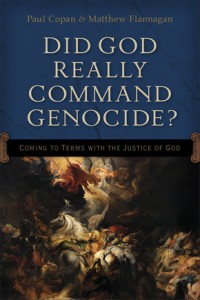 A common objection to belief in the God of the Bible is that a good, kind, and loving deity would never command the wholesale slaughter of nations. In the tradition of his popular Is God a Moral Monster?, Paul Copan teams up with Matthew Flannagan to tackle some of the most confusing and uncomfortable passages of Scripture. Together they help the Christian and nonbeliever alike understand the biblical, theological, philosophical, and ethical implications of Old Testament warfare passages.