Recently I did a post on relativism and in earlier posts I have defended a divine command theory of ethics against various objections. In the comments section Mark V raised an interesting and thoughtful response. I hope Mark does not mind if I pick up on his points because the themes he raises are well […]
Entries Tagged as 'Philosophers'
On a Common Equivocation
January 12th, 2009 6 Comments
Tags: Divine Command Theory · Ethics · God and Morality · James Cornman · Keith Lehrer · Louise Anthony · Mark V · Patrick Nowell Smith · Philosophy of Religion · Walter Sinnott-Armstrong · William Lane Craig
Some More Thoughts on Religion and Public Life: Robert Audi’s Critique of Wolterstorff
January 6th, 2009 12 Comments
In two earlier posts, I discussed John Rawls’ defence of the contention that theological premises should be bracketed or excluded from public discourse. In particular, I appropriated the criticisms of Rawls’s position made by Nicholas Wolterstorff. In “Wolterstorff on Religion, Politics, and the Liberal State” in Religious Beliefs in the Public Square, Robert Audi argues […]
Tags: John Rawls · Nicholas Wolterstorff · Philosophy of Religion · Religion in Public Life · Robert Audi
Rawls on Religion and Public Life Part 2
December 27th, 2008 Comments Off on Rawls on Religion and Public Life Part 2
In part 1, I outlined Rawls’ position on Religion and Public Life and now I will offer some critical comments on this position drawing from Nicholas Wolterstorff. There are numerous problems with Rawls’ contention here. Wolterstorff sums some of them up. Suppose, then, that someone has followed that strategy; she has analyzed our political mentality […]
Tags: John Rawls · Nicholas Wolterstorff · Philosophy of Religion · Religion in Public Life
Rawls on Religion and Public Life Part 1
December 26th, 2008 Comments Off on Rawls on Religion and Public Life Part 1
In a two part series I will reflect on John Rawls’ widely celebrated discussion on religion and public life. In part 1, I will outline Rawls’ position and then in part 2 I will offer some critical comments on this position drawing from Nicholas Wolterstorff. One common line of argument for excluding theological premises from […]
Tags: John Rawls · Nicholas Wolterstorff · Philosophy of Religion · Religion in Public Life
Moral Issues and Direct Democracy
December 8th, 2008 10 Comments
I have been involved in a discussion over at MacDoctor Moments on various aspects of the abortion debate, though in this post I don’t want to talk about that issue. In the course of this discussion Chuck advocated for a policy of direct democracy to decide moral issues and it is this that I want […]
Tags: Chuck Bird · MacDoctor · Paul Wolff · Plato · Public Policy · Referenda
Cultural Confusion and Ethical Relativism III
December 6th, 2008 24 Comments
Arguments against Relativism In my previous post I argued that the common arguments for relativism fail. In this post I want to go one step further and suggest there are good reasons for rejecting relativism. Many reasons could be mustered here; I will limit myself to three. Counter Examples Both cultural and individual ethical relativism […]
Tags: Ethics · Louis Pojman · Philosophy of Religion · Relativism
Cultural Confusion and Ethical Relativism II
December 5th, 2008 13 Comments
In my previous post, I set out the differences between relativist and objectivist views of ethics. I noted that objectivist views were widely disparaged in our culture in favour of relativist ones. I now want to raise what, I think, is an obvious question, why should we accept the relativism assumed in much cultural ethical […]
Tags: Ethics · Frances Howard-Snyder · Philosophy of Religion · Relativism · Rodney Stark

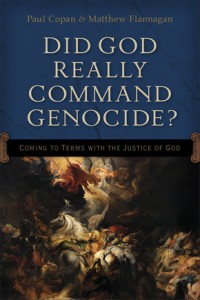 A common objection to belief in the God of the Bible is that a good, kind, and loving deity would never command the wholesale slaughter of nations. In the tradition of his popular Is God a Moral Monster?, Paul Copan teams up with Matthew Flannagan to tackle some of the most confusing and uncomfortable passages of Scripture. Together they help the Christian and nonbeliever alike understand the biblical, theological, philosophical, and ethical implications of Old Testament warfare passages.