Paul’s polemic against Judaizers in the Galatian correspondence, as well as his insistence in Romans that justification comes by faith (pistis) and not by works of the Torah, has led many interpreters to see Pauline ethics as thoroughly anti-nomian. In a previous post I challenged this thesis by documenting Paul’s appeal to both the Torah […]
Entries Tagged as 'Uncategorized'
“Remove the wicked man from among yourselves” THE TORAH AS A NORMATIVE AUTHORITY IN 1ST CORINTHIANS 5 (part two)
January 12th, 2018 Comments Off on “Remove the wicked man from among yourselves” THE TORAH AS A NORMATIVE AUTHORITY IN 1ST CORINTHIANS 5 (part two)
Tags:
“Remove the wicked man from among yourselves” THE TORAH AS A NORMATIVE AUTHORITY IN 1ST CORINTHIANS 5 (Part One)
January 9th, 2018 6 Comments
This post is based on an essay I wrote for an undergraduate course on the history of religion I did a couple of years ago. I plan to expand upon it and publish it in the future. Feel free to add comments and thoughts on my admittedly controversial ideas. Paul’s polemic against Judaizers in the […]
Tags:
Contemporary Philosophy of Religion and NCEA Religious Studies: Part two
October 19th, 2017 Comments Off on Contemporary Philosophy of Religion and NCEA Religious Studies: Part two
This is a talk I gave to the New Zealand Association of Philosophy Teachers annual conference at St Cutherberts College in September this year. Several people have asked me to make this talk available. I have broken my talk up into four parts. Part One introduces what philosophy of religion. In part two I will outline two […]
Tags: Antony Flew · Bertrand Russell · Evidentialism · John Mackie · Verificationism · William Clifford
Contemporary Philosophy of Religion and NCEA Religious Studies: Part one
October 17th, 2017 Comments Off on Contemporary Philosophy of Religion and NCEA Religious Studies: Part one
This is a talk I gave to the New Zealand Association of Philosophy Teachers annual conference at St Cutherberts College in September this year. Several people have asked me to make this talk available. I have broken my talk up into four parts. Part One introduces what philosophy of religion. In part two I will […]
Tags: Anselm · Augustine · Bentham · David Hume · James Rachels · Jeremy Bentham · John Locke · Philosophy of Religion · Utilitarianism · William Paley
Erik Wielenberg and the Autonomy Thesis: Part Three Standard Objections to the Autonomy Thesis, Human Rights and Dignity without God
March 25th, 2017 1 Comment
In my last post I looked at Erik Wielenberg’s response to the objection that, in the absence of God, people lack compelling reasons to comply with morality’s demands. A second objection Wielenberg briefly addresses is that without certain theological doctrines, one cannot provide a plausible basis for human rights and dignity. Wielenberg, here again, takes Craig […]
Tags: David Boonin · Erik Wielenberg · Infanticide · Loius Pojman · Nicholas Wolterstorff · Peter Singer · Rights · William Lane Craig
Thank God for the New Zealand Anti Terrorist Squad: Online
October 16th, 2016 1 Comment
Matt’s article is available at this link flannagan-pc-18-1 Permission has been granted from the Editor of Philosophia Christi to upload this contribution. Learn more about the journal by going to www.epsociety.org/philchristi.
Tags: Ethics · Just War · Pacifism · Philosophia Christi
Matt’s Sermons at Takanini Community Church
September 19th, 2016 Comments Off on Matt’s Sermons at Takanini Community Church
Those who read MandM may be aware that I work as a teaching elder part time at Takanini Community Church. This involves me preparing and giving a lesson for the Takanini Community Church congregation every two weeks. In case you’re interested, my sermons at Takanini can be found online here. I have done a series […]
Tags:

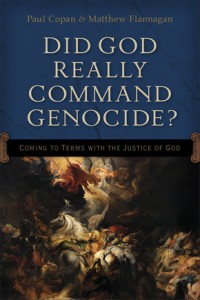 A common objection to belief in the God of the Bible is that a good, kind, and loving deity would never command the wholesale slaughter of nations. In the tradition of his popular Is God a Moral Monster?, Paul Copan teams up with Matthew Flannagan to tackle some of the most confusing and uncomfortable passages of Scripture. Together they help the Christian and nonbeliever alike understand the biblical, theological, philosophical, and ethical implications of Old Testament warfare passages.