This is the paper I presented to the Bioethics section of the Evangelical Theological Society, annual meeting. In November last year. Abstract:Op ponents of abortion often agonise over two difficult cases. (a) Cases where the pregnancy originates in rape and (b) cases the pregnancy or threatens the life of the mother. This paper will explore […]
Entries Tagged as 'Uncategorized'
Abortion Hard Cases and Self Defence: Presentation
January 14th, 2021 Comments Off on Abortion Hard Cases and Self Defence: Presentation
Tags:
The Psychopath Objection to Divine Command Theory: Presentation
December 15th, 2020 Comments Off on The Psychopath Objection to Divine Command Theory: Presentation
www.youtube.com/watch?v=xHhmuqBW6Dw”>dialogue
Last year, I presented a talk entitled “The Psychopath Objection to Divine Command Theory: Another Reply to Erik Wielenberg” to the New Zealand Association of Philosophers conference in Auckland. This was a follow up to interaction I have had with the work of Erik Wielenberg. In 2017 I wrote a critical response to Wielenberg’s book Robust […]
Tags: Divine Command Theory · Erik Wielenberg · Psychopath Objection · Wes Morriston · William Lane Craig
Divine Command Theory: answering classic and contemporary objections
February 3rd, 2020 Comments Off on Divine Command Theory: answering classic and contemporary objections
Last week Jordan Hampton from Crash Course Apologetics interviewed me about chapters 12-13 of my book Did God Really Command Genocide. In this is the section of the book, I discuss divine command metaethics and critique some of the most important objections raised against divine command theories. The interview is nearly two and a half hours long. We […]
Tags: Arbitrariness Objection · Divine Command Theory · Erik Wielenberg · God and Morality · Michael Tooley · Russ Shafer Landau · Sam Harris · Wes Morriston
The Psychopath Objection to Divine Command Theory: Another Response to Erik Wielenberg (Part two)
September 11th, 2019 Comments Off on The Psychopath Objection to Divine Command Theory: Another Response to Erik Wielenberg (Part two)
In my last post, I expounded the Psychopath objection to divine command meta-ethics (DCM) that has recently been defended by Erik Wielenberg. To recap. Wielenberg suggests that my response to his earlier “reasonable unbeliever’s objection” relies on the following principle: R) God commands person S to do act A only if S is capable of […]
Tags: C Stephen Evans · Divine Command Theory · Erik Wielenberg · God and Morality · Wes Morriston
FETICIDE IN CHRISTIAN MORAL THOUGHT PART ONE: Alexandrian Judaism
February 8th, 2019 1 Comment
Some readers of MandM will know that for the last three years I have taught Theology and Philosophy at a Catholic high-school. I teach five to six classes a day, year 9 to year 13 subjects such introduction to scripture, church history, NCEA religious studies, Cambridge world religions and Divinity. My goal has always been […]
Reflections on Annihilationism, Traditionalism and the Problem of Hell
July 28th, 2018 Comments Off on Reflections on Annihilationism, Traditionalism and the Problem of Hell
Last year I gave a paper entitled “Reflections on Annihilationism, Traditionalism and the Problem of Hell’ at the Rethinking Hell conference in Auckland. This talk is now available online.
Tags: Annhilationism · Eschatology · Hell · Shawn Bawulski
Divine Command Theory and Utilitarianism forgotten bedfellows? Paley’s Principles of Moral and Political Philosophy (part two)
January 18th, 2018 1 Comment
In my last post, I explained the position of Theological Utilitarianism as expounded in William Paley’s The Principles of Moral and Political Philosophy. I pointed out The Principles was first published in 1785, four years before Jeremy Bentham published An Introduction to the Principles of Morals and Legislation. In this post, I want to look at the influence Theological Utilitarianism had […]
Tags: Abraham Tucker · Christian History · Divine Command Theory · God and Morality · Jeremy Bentham · John Brown · John Gay · John Locke · John Stuart Mill · Utilitarianism · William Paley

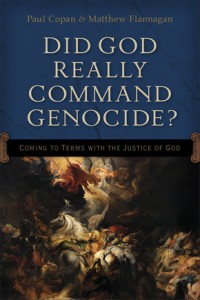 A common objection to belief in the God of the Bible is that a good, kind, and loving deity would never command the wholesale slaughter of nations. In the tradition of his popular Is God a Moral Monster?, Paul Copan teams up with Matthew Flannagan to tackle some of the most confusing and uncomfortable passages of Scripture. Together they help the Christian and nonbeliever alike understand the biblical, theological, philosophical, and ethical implications of Old Testament warfare passages.