It is often affirmed, as an incontestable and obvious truth, that the Bible supports slavery. Walter Sinnott-Armstrong cites Leviticus 25:44 as evidence of this charge in “Why Traditional Theism is not an Adequate Foundation for Morality.”[1] Although Armstrong is not the alone in making this claim, I think the charge is mistaken; the Bible does […]
Entries Tagged as 'John Loftus'
Sunday Study: Slavery, John Locke and the Bible
June 28th, 2009 100 Comments
Tags: John Locke · John Loftus · Old Testament Ethics · Selection · Slavery · Sunday Study · Theology · Walter Sinnott-Armstrong
John W. Loftus on The Christian Illusion of Moral Superiority Part II
May 8th, 2009 5 Comments
In my previous post, John W. Loftus on The Christian Illusion of Moral Superiority Part I, I argued that Loftus’ position was based on a confusion between ontological and epistemological foundations. I will now address his arguments against divine command theory. Loftus’ Arguments Against a Divine Command Theory After misconstruing the divine command theory as […]
Tags: Alvin Plantinga · Atheism · Divine Command Theory · God and Morality · John Loftus · Robert Adams · William Wainwright
John W. Loftus on The Christian Illusion of Moral Superiority Part I
May 7th, 2009 14 Comments
Several Christian thinkers, most notably, C S Lewis, John Hare, Robert Adams and William Lane Craig have argued that Theism provides a superior foundation for moral obligation than Naturalism does. Most of these thinkers defend this notion by developing and defending a divine command theory.[1] John W Loftus is aware of this and in The […]
Tags: Atheism · Divine Command Theory · God and Morality · John Loftus · Philip Quinn · Robert Adams · Stephen Evans · William Alston

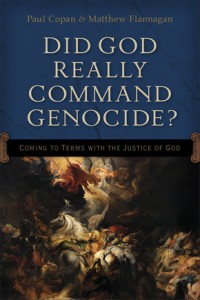 A common objection to belief in the God of the Bible is that a good, kind, and loving deity would never command the wholesale slaughter of nations. In the tradition of his popular Is God a Moral Monster?, Paul Copan teams up with Matthew Flannagan to tackle some of the most confusing and uncomfortable passages of Scripture. Together they help the Christian and nonbeliever alike understand the biblical, theological, philosophical, and ethical implications of Old Testament warfare passages.