One of the most common objections to the Christian faith is the problem of evil. Of all objections mounted against the Christian faith, prima facie, it does seem the most compelling, one of the hardest things for us to get our heads around. How does a Christian reconcile the fact of evil and suffering in […]
Entries Tagged as 'Philosophy of Religion'
The Problem of Evil: Why does God Allow Suffering?
April 12th, 2009 74 Comments
Tags: Alvin Plantinga · Apologetics · Philosophy of Religion · William Alston
Maverick Philosopher on the Historical Atrocities Argument
April 11th, 2009 7 Comments
In making their case against theism many of the “new atheists” (indeed many of the old) commonly appeal to historical atrocities allegedly committed by believers in God. I was discussing this phenomena recently with Doug Geivett in the aftermath of the Craig v Hitchens debate. I cited the need for Christian apologists to rebut not […]
Tags: Alvin Plantinga · Apologetics · Atheism · Christian History · Christopher Hitchens · Philosophy of Religion · Walter Sinnott-Armstrong · William Lane Craig
The Foundations of the Alexandrian Argument against Feticide Part III
April 11th, 2009 3 Comments
This is the next installment in my series examining whether the Septuagint (LXX) translation of Exodus 21:22-25 is a mistranslation of the Hebrew Masoretic Text (MT). See the previous posts beginning here for the context that this post falls in.Is the Harm to the Woman or the Fetus?The RSV renders the word ason> in v […]
Tags: Abortion · Ethics · Feticide · Philosophy of Religion · The Alexandrian Argument · Theology
The Foundations of the Alexandrian Argument against Feticide Part II
April 9th, 2009 9 Comments
In my previous post I gave a brief introduction to The Alexandrian Argument against feticide and noted Harrison’s claim that this argument is based on a mistranslation of the Hebrew by the LXX. In this post I will look at whether the passage refers to a miscarriage. Does the Case Deal with a Miscarriage?The RSV […]
Tags: Abortion · Ethics · Feticide · Philosophy of Religion · The Alexandrian Argument · Theology
The Foundations of the Alexandrian Argument against Feticide Part I
April 8th, 2009 2 Comments
Implicit, if not overtly explicit, in much historic Christian moral reflection on feticide is a simple three-premise position. Firstly, that there is a divine law prohibiting homicide, the killing of a human being without adequate justification; secondly, a formed conceptus, a fetus, is a human being; and thirdly, that in all or most cases of […]
Tags: Abortion · Ethics · Feticide · Philosophy of Religion · The Alexandrian Argument · Theology
Craig v Hitchens: Dissecting the Debate UPDATE 2
April 6th, 2009 42 Comments
The debate between atheist journalist Christopher Hitchens and Christian Philosopher and Theologian Dr William Lane Craig has finished. There is an, albeit very brief, summary of the debate here and a more comprehensive one from a Philosopher here. One point of interest is that Hitchens appears to have given up towards the end and “yields […]
Tags: Atheism · Christopher Hitchens · Debates · Philosophy of Religion · William Lane Craig
Does God Exist? Christopher Hitchens v William Lane Craig
April 4th, 2009 13 Comments
A live blog debate will be held between atheist journalist Christopher Hitchens author of the best-selling God is Not Great and Christian Philosopher and Theologian Dr William Lane Craig author of too many things to list here. They will debate the topic: Does God Exist? Catch the live blog debate here on Sunday 5 April […]
Tags: Atheism · Christopher Hitchens · Debates · Philosophy of Religion · William Lane Craig

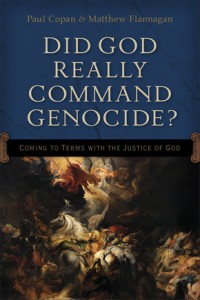 A common objection to belief in the God of the Bible is that a good, kind, and loving deity would never command the wholesale slaughter of nations. In the tradition of his popular Is God a Moral Monster?, Paul Copan teams up with Matthew Flannagan to tackle some of the most confusing and uncomfortable passages of Scripture. Together they help the Christian and nonbeliever alike understand the biblical, theological, philosophical, and ethical implications of Old Testament warfare passages.