A little while ago I wrote a post criticising Michael Martin’s contention that the Bible commands a rape victim to marry her rapist, Does the Bible Teach that a Rape Victim has to Marry her Rapist? To summarise briefly, Martin cited Deuteronomy 22:28-29 and interpreted it as, Here the victim of rape is as treated […]
Entries Tagged as 'Ethics'
Sunday Study: The Bible and Rape – A Response to Michael Martin
September 27th, 2009 9 Comments
Tags: Bible · Ethics · Hermeneutics · Michael Martin · Old Testament Ethics · Rape · Sexual Morality · Sunday Stu · Sunday Study · Theology
Walter Sinnott-Armstrong and Infantile Religious Morality
September 24th, 2009 71 Comments
In “Why Traditional Theism Cannot Provide an Adequate Foundation for Morality” Walter Sinnott Armstrong criticises William Lane Craig’s contention that theism, if true, provides an adequate foundation for morality. Armstrong contends that Craig’s position is “incredible”[1] and subject to a “cavalcade of devastating objections.”[2] He goes on to conclude that his criticisms do not just […]
Tags: Divine Command Theory · Ethics · God and Morality · Patrick Nowell Smith · Philosophy of Religion · Richard Mouw · Walter Sinnott-Armstrong
Tekton E-Book: John Loftus’ Why I Became an Atheist Refuted Feat. MandM
September 17th, 2009 5 Comments
Tekton Education and Apologetics ministries have released an online book, John Loftus’ Why I Became an Atheist Refuted, as a special edition for their E-Block Online Journal. While most of the book is authored by JP Holding, Chapter 2 is not completely, Chapter 2: “The Christian Illusion of Rational and Moral Superiority” — Two part […]
Tags: Divine Command Theory · E-Book · God and Morality · John Loftus · JP Holding · Tekton Apologetics Ministries
Sunday Study: Interpreting the Sixth Commandment Part II
September 13th, 2009 11 Comments
In a previous post, Sunday Study: Interpreting the Sixth Commandment Part I, I discussed some translations of the sixth commandment of the Decalogue. I began with the King James Version (KJV), “thou shall not kill.”[1] I looked at problems with this translation most famously raised by Augustine. The New International Version (NIV) and New Revised […]
Tags: Augustine · Ethics · Old Testament Ethics · Sunday Study · Ten Commandments · Theology
Sunday Study: Interpreting the Sixth Commandment Part I
September 6th, 2009 5 Comments
One of the most well known biblical commands is the sixth commandment of the Decalogue (according to protestant enumeration). This commandment occurs in the 20th chapter of the book of Exodus and the fifth chapter of the book of Deuteronomy. In its most well-known rendition, the King James Version (KJV), this commandment states “thou shalt […]
Tags: Old Testament Ethics · Sunday Study · Ten Commandments · Theology
Contra Mundum: What’s Wrong with Imposing your Beliefs onto Others?
September 1st, 2009 30 Comments
The assumption that ‘it is wrong to impose your moral beliefs onto others’ is almost unilaterally accepted in society. Everyone knows this, only zealous religious types seem to believe that it is acceptable to try to foist their morality onto others; the concept of respecting other people’s beliefs seems to be lost on the religious. […]
Tags: Bad Reasoning · Contra Mundum · Ethics · Investigate Magazine · Ken Perrott · Leslie Cannold
Sunday Study: Does the Bible Teach that Children Should be Executed for Swearing?
August 23rd, 2009 3 Comments
One command in the Old Testament which is frequently lampooned by sceptical readers is Leviticus 20:9, If anyone curses his father or mother, he must be put to death. He has cursed his father or his mother, and his blood will be on his own head. Some contend that that this passage commands the courts […]
Tags: Capital Punishment · Hermeneutics · Old Testament Ethics · Sunday Study · Swearing

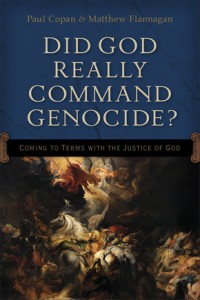 A common objection to belief in the God of the Bible is that a good, kind, and loving deity would never command the wholesale slaughter of nations. In the tradition of his popular Is God a Moral Monster?, Paul Copan teams up with Matthew Flannagan to tackle some of the most confusing and uncomfortable passages of Scripture. Together they help the Christian and nonbeliever alike understand the biblical, theological, philosophical, and ethical implications of Old Testament warfare passages.