I just received word from the Editor of The Journal of Ethics and Medicine that my article “Boonin’s Defense of the Sentience Criteria: A Critique” has been accepted for publication in a future issue (the exact issue is still being decided). There may be some minor amendments made but at present the following is the […]
Entries Tagged as 'Ethics'
New Publication
November 21st, 2007 Comments Off on New Publication
Tags: Abortion · David Boonin · Ethics · Feticide · Published
Imposing Your Beliefs Onto Others: A Defence
November 7th, 2007 1 Comment
Recently an acquaintance forwarded me a some comments about this blog on a internet forum. The critic, who goes by the handle Kaiwai stated: Matt Flanagan I find, yes, some of the things I agree with but there is generally speaking, a huge difference; I don’t set out to impose my views by way of […]
Tags: Abortion · Bad Reasoning · Feticide · Kaiwai · Leslie Cannold · Religion in Public Life
The Euthyphro Objection Part III: The Redundancy of God is Good
November 1st, 2007 8 Comments
My first post in this series, The Euthyphro Objection Part I: Against Divine Commands & Avoiding Strawmen, I examined Peter Singer’s version of the Euthyphro argument and demonstrated that it relies upon a strawman. In my Part II I criticised Singer’s utilisation of the arbitrariness objection against divine command theory. Singer’s last objection comes as a rejoinder […]
Tags: Divine Command Theory · Edward Weirenga · Ethics · Euthyphro Dilemma · God and Morality · Paul Faber · Peter Singer · Philosophy of Religion
The Euthyphro Objection Part II: Arbitrariness
October 31st, 2007 4 Comments
In his work Practical Ethics Singer proposes a version of the Euthyphro dilemma to criticise a divine command theory of ethics, Some theists say that ethics cannot do without religion because the very meaning of “good” is nothing other than “what God approves”. Plato refuted a similar view more than two thousand years ago by […]
Tags: Divine Command Theory · Ethics · Euthyphro Dilemma · God and Morality · James Rachels · Mane Hajdin · Peter Singer · Philosophy of Religion · Roy Perrett
The Euthyphro Objection Part I: Against Divine Commands & Avoiding Strawmen
October 28th, 2007 2 Comments
Perhaps the most common argument against an appeal to divine commands in ethical reasoning is the Euthyphro dilemma, first articulated by Plato and utilised by numerous critics of divine commands ever since. A representative example of this line of argument occurs in Peter Singer’s widely-acclaimed monograph Practical Ethics. In the first chapter of Practical Ethics, […]
Tags: Divine Command Theory · Edward Weirenga · Ethics · Euthyphro Dilemma · God and Morality · John Hare · Peter Singer · Philip Quinn · Philosophy of Religion · Robert Adams · William Alston
Abortion and Capital Punishment and Craig Young
October 25th, 2007 8 Comments
An acquaintance of mine sent me a copy of this article at Gaynz.com by Craig Young. Craig and I have a kind of knack at studying the very same topics at the same time. He wrote a PhD thesis criticising conservative Christian views on abortion around the same time I started writing my PhD thesis […]
Tags: Abortion · Bad Reasoning · Capital Punishment · Craig Young · Feticide · Jim Peron · NAMBLA
Spot the Difference
October 25th, 2007 5 Comments
A few weeks ago wide publicity was given to a study that concluded that NZ women are the most promiscuous in the world. (The fact that, this study had some serious scientific shortcomings having neither a control group nor a random sample group was not so widely publicised.) What was interesting was the reaction by […]
Tags: Sexual Morality

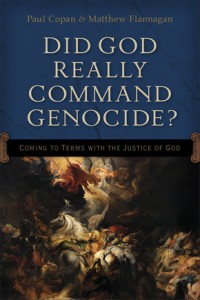 A common objection to belief in the God of the Bible is that a good, kind, and loving deity would never command the wholesale slaughter of nations. In the tradition of his popular Is God a Moral Monster?, Paul Copan teams up with Matthew Flannagan to tackle some of the most confusing and uncomfortable passages of Scripture. Together they help the Christian and nonbeliever alike understand the biblical, theological, philosophical, and ethical implications of Old Testament warfare passages.