Category: Sexual Morality

  • John Corvino on Liberals and Being Judgemental

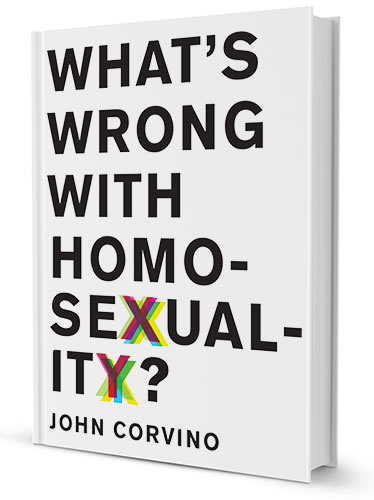
    0199856311bRecently I have been reading John Corvino’s book, “What’s wrong with Homosexuality?” Corvino describes himself as a religious sceptic and is one of the leading defenders of the moral permissibly of homosexual conduct, and also an articulate defender of what is commonly called “gay rights”. In terms of the conclusions we each have, Corvino and I are on very different pages. Yet despite our significant differences, I was pleasantly surprised at how much of his book I agreed with, particularly, his attempt to bring a degree of clear thought to the issue as opposed to the emotionalistic sloganising and rhetorical bullying that so often accompanies this issue.

    I want to share with my readers this gem, which comes from the first chapter:

    “Some people claim that morality is a “private matter” and that, in any case, people’s rights shouldn’t hinge on others’ moral opinions. I think this view is badly mistaken. Morality is about how we treat one another, and thus it is quintessentially a matter for public concern. It’s about the ideals we hold up for ourselves and others. It’s about the kind of society we want to be: what we will embrace, what we will tolerate, and what we will forbid. And while it’s true that a free society grants a good deal of personal latitude here, avoiding legal force except where transgressions infringe upon others’ liberty, it doesn’t follow that morality is irrelevant to the law. People’s moral views strongly influence how they vote, and thus, ultimately, what laws get passed. There’s a philosophical connection as well. Laws depend on moral foundations, broadly speaking, for their legitimacy, and the commitment to “liberty and justice for all” is a moral commitment. So it irks me when my fellow liberals insist that “we ought not judge one another.” I understand where they’re coming from: Moralistic finger-wagging is tiresome, not to mention counterproductive, and nobody likes a know-it-all. One might also point to Biblical support for the directive, though presumably in that context it means that humans have no business making “Final Judgments,” not that we can’t make judgments at all. But as a general rule, the claim that we ought not judge one another is misguided—logically, rhetorically, and morally.  It’s misguided logically because it’s self-refuting. (If we ought not judge one another, then why are you telling me what to do?) It’s misguided rhetorically because it makes liberals seem as if they have conceded “moral values” to the other side, leaving them in the  untenable position of being “opposed” to moral values. And it’s misguided morally, because people have a moral responsibility not only to behave well themselves but also to promote standards of right conduct. The moral tone of society is everyone’s responsibility, liberals included.  This is not to say that we ought to become moral busybodies. Humility is a moral virtue, as is kindness, and those who wield morality as a weapon are at least as confused as those who insist that it’s a “private matter.” But we shouldn’t confuse the rejection of bad moralizing with the rejection of moralizing altogether. Morality is too important for that.”

    Excluding the phrase “my fellow liberals”, I could not agree more with  Corvino’s sentiments.

  • Matt to speak at the 2014 Evangelical Theological Society in San Deigo

    ETS ProgramThis blog’s Matthew Flannagan has had his paper “Abortion as Self Defence” accepted for the 66th Annual Meeting of the Evangelical Theological Society (“ETS”) in San Diego, USA, from 19-21 November 2014. The abstract for Matt’s paper is as follows:

    Abstract
    Eileen McDonagh has proposed an ingenious argument for abortion rights; she concedes, for the sake of argument, that a fetus is a human being but argues that a fetus’ presence inside the womb of a woman who does not consent to pregnancy constitutes unjust aggression. Consequently, the woman has a right to expel and kill the fetus in self-defence.

    In this paper I will sketch a critique of this line of argument suggested decades ago by Alan Donagan. Donagan argues that, in cases where a woman has not been raped, the woman is has acquired parental obligations to the fetus. Parental obligations are acquired through the act of begetting. If  a person brings a child into existence through voluntary sexual intercourse then he or she has a duty to provide the necessities of life for that child. The fetus is, therefore, not an unjust aggressor.

    I will defend this argument against two influential objections. First, the objection that a woman who does not consent to getting pregnant cannot have parental obligations to her offspring. Second, the objection that, even if  a woman does have parental obligations to her offspring, these obligations do not include a duty to provide bodily life support. I will argue that both objections fail.

    This year’s Annual Meeting theme is “Ecclesiology”. Plenary speakers for this year’s meeting are  Gregg R. Allison (Professor of Christian Theology, Southern Baptist Theological Seminary), Joseph H. Hellerman (Professor of New Testament Language and Literature, Talbot School of Theology, Biola University) and Miroslav Volf (Henry B. Wright Professor of Systematic Theology, Founding Director of Yale Center for Faith and Culture, Yale Divinity School).

    (Matt has also had a paper accepted for the Evangelical Philosophical Society’s Annual Meeting, which is also in San Diego around the same time.)

    As with previous years, we will need to fundraise to raise the $2,500 NZD shortfall in our budget needed to get him there. Family life on one modest, full-time income with a special needs child, who is unable to go to school, makes it very hard. Almost all of Matt’s philosophical and theological work on this blog is the result of his unpaid commitment to the field. Donations, no matter how modest, are greatly appreciated.

  • Religious Freedom and Non-Discrimination

    Currently I am working on a post on the issue of non-discrimination rights and the morality of discrimination. In the mean-time  I thought I would highlight the thoughtful commentary from James-Michael Smith in this video.

  • MandM on Same-Sex Marriage and on being “sneaky”

    In his Letter from Birmingham Jail, Martin Luther King wrote there are two types of laws: just and unjust.” He went on to ask “How does one determine whether a law is just or unjust? A just law is a man-made code that squares with the moral law or the law of God. An unjust law is a code that is out of harmony with the moral law.”

    While King was protesting segregation, his argument drew on a theological tradition going back to Augustine, Aquinas, Locke and others, namely, that right and wrong is not defined by governments but by the law of God. Governments are under God’s authority and cannot command absolute allegiance. Of course the state can and often has good reasons for tolerating actions contrary to divine law but if the states endorses them,  is complicit in their commission or attempts to legitimate them as valid, then it usurps its authority. When it does this its citizens have the right to resist it.

    MarriageThis theological tradition is the reason many Christians oppose same-sex marriage. King was correct to claim that the law of God grants equal dignity to all people regardless of race; the law of God also instituted marriage as a union of one man and one woman. Sexual activity between people of the same-sex is morally wrong, just like people of the same family or sexual activity with multiple partners at the same time. The state may have good reasons in a fallen society for tolerating such actions but has no right to declare them valid.


    We believe that given certain defensible theological presuppositions this position is defensible and robust.

    The above summarises the basis for our opposition to same-sex marriage; this is why we believe the Marriage (Definition of Marriage) Amendment Bill should not be passed. Over at Whale Oil our guest post, “Critiquing the Case for Same-Sex Marriage“, offers rebuttals of the arguments that have been advanced by proponents of the Bill.

    Readers of both this post and the one at Whale Oil will note that in this post we appeal to theological premises – this is because we are describing why we oppose it and we, as Christians, accept these theological views – but on Whale Oil we are offering a rebuttal of other people’s arguments; hence, there we draw on premises that those who support the Bill are likely to be committed to.

    In the comments section at Whale Oil we have been accused of being sneaky in taking this approach. We disagree. We are quite happy to speak about our own position; however, that was not what we were doing on Whale Oil. What we were doing on Whale Oil was offering a critique of our opponents’ position – the dialectical context was not the same. Offering reasons why we accept something is not the same thing as offering our opponents reasons why they should reject certain arguments they have advanced. Far from doing anything sneaky, we are simply trying to engage our opponents on their own terms.

    When there is a fundamental difference in presuppositions between one’s opponent and oneself then a critique of one’s opponents’ argument only provides them with reasons for rejecting the argument if the critique appeals to premises they accept or are logically committed to by virtue of their presuppositions.

    Appealing to theological beliefs they do not themselves hold provides them with no reason for accepting anything. Incidentally, the converse is also true: attempts to rebut theologically based positions do not provide religious people who hold such positions any rational reason for abandoning them unless those rebuttals appeal to premises the religious person accepts and is logically committed to. This is not being sneaky, it is called effective rational dialogue. The alternative is simply talking past each other in a dialectical stand-off of assertion and counter-assertion where neither side is listening to each other, no true engagement occurs and no understanding is possible.

    So that said, check out our guest post: “Critiquing the Case for Same-Sex Marriage“.

    Aside
    For all those who state that the passage of the Marriage (Definition of Marriage) Amendment Bill will not have any impact on Christians like us consider section 56 of the Marriage Act 1955, then consider the statement we made at the outset of this post expressing our religious viewpoint in light of the Marriage Act being amended as proposed (and no, the proposed Bill does not propose amending this section):

    56 Offence to deny or impugn validity of lawful marriage

    (1) Every person commits an offence against this Act, and shall be liable on summary conviction to a fine not exceeding $200, who—

    (a) alleges, expressly or by implication, that any persons lawfully married are not truly and sufficiently married;

  • Is Ethical Naturalism More Plausible than Supernaturalism? A Reply to Walter Sinnott-Armstrong: Part II

    This is the second part of the paper I presented to the Naturalisms in Ethics Conference at Auckland University last year.

    In my previous post, I noted that Robert Adams has argued that if God exists, then divine commands “best fill the role assigned to wrongness by the concept”.[1] He argues that if moral obligations are divine commands this explains the fact, that (i) “wrongness is an objective property of actions,”[2], (ii) it accounts “for the wrongness of a major portion of the types of action that we have believed to be wrong,”[3]   (iii) it “plays a causal role … in their coming to be regarded as wrong”,[4]  (iv) it explains how moral obligations constitute a “supremely weighty reason” for acting or refraining from an action,   and (v) he contends that DCT explains the intuition that moral duties comprise “a law or standard that has a sanctity greater than that of any merely human will or institution”.[5]

    Moreover, in my last post, I also argued that, for Armstrong to conclude his arguments call into question any theistic account of ethics, he must argue that his harm account of moral obligation provides a better explanation of all these features. Failing that, if his account doesn’t preserve these features of moral obligation, then he must provide us with a reason to suppose that they are not part of the concept of moral obligation. Or he must provide reasons for revising our concepts.

    In his monograph “Morality without God” he attempted to do this. It’s my contention that he has failed in this task.

    1. Social Requirements

    Let’s begin with (v), In “Morality without God”, Armstrong purports to address this line of argument, he claims that “the best line of argument-because it is the only argument is that moral laws require a lawgiver”[6]. He attributes to popular writer Dinesh D’Souza. He then proceeds to make short work of D’Souza’s argument.

    However, this is neither the best, nor the only argument offered in favour of a DCT. In subsequent articles and a monograph, Adam’s has developed (v) in some detail.[7] Adam’s proposes a “social requirement theory” of obligation whereby “being obligated to do something consists in being required (in a certain way under certain situations) by another person or groups of persons not to do it”[8]. Obligations are a kind of social relationship where one person makes a demand on another, failure to comply results ruptures in the relationship expressed in terms of blame, censure, punishment and alienation, which can be expiated by forgiveness. Adam’s offers a sustained argument that the role of guilt, censure, punishment, social inculcation, moral motivation, moral knowledge and forgiveness plays in our concept of obligation, make a social requirement theory plausible.[9] Nowhere in Armstrong “Morality without God” does Armstrong even (more…)

  • Contra Mundum: “Till Death do us Part” Christ’s Teachings on Abuse, Divorce and Remarriage

    Anne was clearly angry. She relayed how her former husband had been abusive, had beaten her and sexually violated her. Despite this, however, he had never – as far as she knew – had an affair. Did this mean she had sinned before God for leaving her marriage? Was she now required to remain celibate for the rest of her life? Anne recited Jesus’ words with palpable sarcasm, “whoever divorces his wife, except for adultery, and marries another woman commits adultery.”

    Christian MarriageAnne’s story was the real life face of an intellectual journey and struggle I had faced some years earlier during my theology studies. How should I understand the bibles teaching on divorce? When I was at Bible College I remember two approaches vividly.

    The first was from a marriage counsellor who, when I asked him if we should counsel battered spouses to leave their marriages, responded “no, until death do we part”. He refused to take with any seriousness my suggestion that in some cases the death of one spouse might be a realistic outcome if the battered spouse does not leave.

    The second was a lecturer who argued that the New Testament did not speak unequivocally on this topic. While Matthew’s gospel allowed an exception for adultery, Mark’s gospel seemed to condemn divorce outright with no exceptions. On the other hand Paul, in his epistle to the Corinthians, contended that a person abandoned by their spouse “is not bound”. The Greek in this epistle alluded to the wording of a Jewish divorce certificate, which stated that the person in question had a right to remarry. The lecturer, quite correctly, concluded that Paul allowed divorce and remarriage for abandonment. The lecturer then suggested that because Paul added to Jesus’ teaching so could we.

    Both approaches seemed to me to be evidently problematic. My questions remained equally unsolved by the Pastor who told me that he accepted Jesus’ teaching as correct but did not follow it because it was “impractical” in the real world and in his experience. I was underwhelmed by the author who suggested that because Mark, Paul and Matthew disagreed, we should just choose the one we find the most congenial.

    Then I discovered a study, which to my mind answered my questions and addressed Anne’s concerns. The book was Divorce and Re-Marriage in the Bible: The Social and Literary Context by David Instone-Brewer. Brewer is a scholar of first century rabbinical writings. In his book he places Christ’s teaching within the cultural context of first century Judaism; the results are interesting and enlightening.

    The passage Anne cited comes from Matthew 19. This passage begins with a question from the Pharisees – the Jewish religious scholars at that time – which asked, “Is it lawful for a man to divorce his wife for any reason?” In the dialogue the (more…)

  • What Sex is Not

    Recreational ActivityChildren cannot, either by themselves or by proxy, give valid consent to sexual intercourse.

    Children can give consent, by themselves or by proxy, to casual recreational activities.

    Therefore, sex is not merely a casual recreational activity.