In my last posts, beginning Religious Restraint and Public Policy: Part I, I set out the doctrine of religious restraint and critiqued some of the key arguments in support of it. I looked at the objection that the argument from respect is too thin, that applied consistently it excludes too much and Audi’s response to […]
Entries Tagged as 'Religion in Public Life'
Religious Restraint and Public Policy: Part V
November 30th, 2009 1 Comment
Tags: Christopher Eberle · Doctrine of Religious Restraint · Edward Feser · Freedom of Religion · Jurisprudence · Law Studies · Philosophy of Religion · Political Philosophy · Public Policy · Religion in Public Life · Terence Cuneo
Religious Restraint and Public Policy: Part IV
November 27th, 2009 Comments Off on Religious Restraint and Public Policy: Part IV
In my last posts, beginning Religious Restraint and Public Policy: Part I, I set out the doctrine of religious restraint and critiqued some of the key arguments in support of it. I looked at the objection that the argument from respect is too thin, that applied consistently it excludes too much and Audi’s response to […]
Tags: Christopher Eberle · Doctrine of Religious Restraint · Freedom of Religion · Gerald Gaus · Glenn Peoples · Jurisprudence · Law Studies · Philosophy of Religion · Political Philosophy · Public Policy · Religion in Public Life · Robert Audi · Terence Cuneo
Religious Restraint and Public Policy: Part III
November 25th, 2009 3 Comments
In my last posts, beginning Religious Restraint and Public Policy: Part I, I set out the doctrine of religious restraint and touched on some criticisms of it. I looked at and critiqued some of the key arguments in support of the doctrine of religious restraint. In this post I will look at the objection that […]
Tags: Christopher Eberle · Doctrine of Religious Restraint · Freedom of Religion · Gerald Gaus · Glenn Peoples · John Rawls · Jurisprudence · Law Studies · Nicholas Wolterstorff · Philip Quinn · Philosophy of Religion · Political Philosophy · Public Policy · Religion in Public Life · Robert Audi
Religious Restraint and Public Policy: Part II
November 24th, 2009 2 Comments
In my last post, Religious Restraint and Public Policy: Part I, I set out the doctrine of religious restraint and touched on some criticisms of it. In this post, I begin looking at and critiquing some of the key arguments in support of the doctrine of religious restraint. II Arguments for the Doctrine of Religious […]
Tags: Christopher Eberle · Doctrine of Religious Restraint · Freedom of Religion · John Rawls · Jurisprudence · Law Studies · Lydia McGrew · Matthew Flannagan · Nicholas Wolterstorff · Philosophy of Religion · Political Philosophy · Public Policy · Religion in Public Life · Robert Audi
Religious Restraint and Public Policy: Part I
November 23rd, 2009 31 Comments
In this series I set out the doctrine of religious restraint, the idea that in a pluralistic, liberal, society religious beliefs should not be utilised in the formation of public policy. I note that this doctrine entails an asymmetrical treatment of religious and secular beliefs, which appears to conflict with the central notion of liberal […]
Tags: Christopher Eberle · Doctrine of Religious Restraint · Freedom of Religion · Jurisprudence · Law Studies · Nicholas Wolterstorff · Philip Quinn · Philosophy of Religion · Political Philosophy · Public Policy · Religion in Public Life · Stephen Carter · Terence Cuneo
Audi and the Infallibility of Religious Reasons
November 7th, 2009 6 Comments
In “Liberal Democracy and the Place of Religion in Politics”,[1] Robert Audi defends the liberal thesis that religious reasons should not be utilised in debate on issues of public policy. Instead he contends that “one should not advocate or support any law or public policy that restricts human conduct unless one has, and is willing […]
Tags: Ethics · Philosophy of Religion · Religion in Public Life · Robert Audi
September 11
September 11th, 2009 15 Comments
Today I reflect, as do many, where I was and what I was doing when I first heard about the attacks on the World Trade Tower. Like my parents generation’s remembrance of where they were and what they were doing when Kennedy was assassinated and their parents remembrance of the news of V-Day this was […]
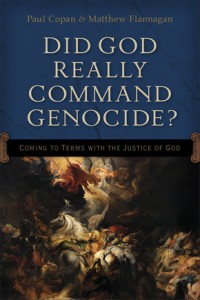 A common objection to belief in the God of the Bible is that a good, kind, and loving deity would never command the wholesale slaughter of nations. In the tradition of his popular Is God a Moral Monster?, Paul Copan teams up with Matthew Flannagan to tackle some of the most confusing and uncomfortable passages of Scripture. Together they help the Christian and nonbeliever alike understand the biblical, theological, philosophical, and ethical implications of Old Testament warfare passages.